
A Complete Guide to UV DTF Transfers for Custom Printing
Think of UV DTF transfers as next-level, industrial-strength decals. They’re made with special UV-curable inks and let you put a permanent, vibrant design on almost any hard surface—glass, metal, plastic, you name it—all without a heat press.
What Exactly Are UV DTF Transfers and Why Do They Matter?
Imagine you could slap a detailed, full-color design onto a coffee mug, a phone case, or even a metal sign with the ease of a sticker, but get the permanence of a pro-level print. That's the magic of UV DTF transfers. This technology finally closes the gap between digital printing and decorating hard goods, knocking down a ton of old barriers that used to trip up small businesses.
This isn't for t-shirts. Where standard DTF shines on fabric, UV DTF picks up where it leaves off, excelling on all the tricky stuff—the non-porous, the oddly-shaped, and the heat-sensitive items.
A Whole New World of Custom Products
The real game-changer with UV DTF is its sheer versatility. For a small shop, that means opening up new ways to make money without a massive upfront investment. All of a sudden, you can start offering things like:
- Promotional Gear: Crisp, detailed logos on keychains, pens, or USB drives.
- Custom Drinkware: Personalized tumblers, water bottles, and wine glasses without the hassle.
- Tech Accessories: Unique skins for laptops, phone cases, and headphones.
- Decor and Awards: Bespoke designs on glass trophies, wooden boxes, or acrylic signs.
This flexibility is why the industry is booming. The global UV DTF market was valued at US$ 215 million in 2024 and is on track to hit US$ 442 million by 2031, according to market insights on reports.valuates.com. That growth is all about the demand for tough, high-quality prints that can go on just about anything.
At the end of the day, UV DTF is about giving you more freedom. It lets you say "yes" to more jobs, play around with new product ideas, and produce high-margin custom items without the steep learning curve and expensive gear of older methods.
How Does UV DTF Compare to Traditional Methods?
To really get why this is such a big deal, it helps to put UV DTF side-by-side with methods we already know for hard goods, like heat-press vinyl or screen printing. While those techniques still have their place, UV DTF often delivers a much more streamlined and flexible solution for rigid surfaces. And when you're ready to scale, you can learn how to maximize your prints with UV DTF gang sheets to make your workflow even more efficient.
The table below gives you a quick rundown of the key differences, showing where UV DTF really pulls ahead for businesses looking to branch out from apparel.
UV DTF Transfers vs Traditional Methods at a Glance
Here’s a quick look at how UV DTF compares to common alternatives for decorating hard goods. This isn't about which is "best," but which is the right tool for the job you need to do.
| Feature | UV DTF Transfers | Heat-Press Vinyl | Screen Printing |
|---|---|---|---|
| Ideal Surfaces | Hard, non-porous (glass, metal, plastic, wood) | Heat-resistant fabrics and some hard goods | Mostly flat surfaces (fabric, paper, wood) |
| Heat Required | No, pressure-sensitive application | Yes, requires a heat press | Yes, for curing ink (on most surfaces) |
| Color Detail | Excellent, full-color, and complex gradients | Limited by vinyl colors; layering is complex | Limited colors per screen; complex setup |
| Application Speed | Fast "peel and stick" process | Slower; involves cutting, weeding, and pressing | Very slow for small batches; setup is intensive |
| Durability | High scratch and water resistance | Varies; can peel over time with abrasion | Very durable but can scratch on hard goods |
As you can see, for small-batch, high-detail work on a wide variety of hard surfaces, UV DTF brings a level of speed and simplicity that the older methods just can't match.
How UV DTF Technology Actually Works
Forget thinking of UV DTF transfers as simple stickers. A better way to picture them is as highly engineered, multi-layered graphics built for serious staying power. Each layer has a distinct purpose, and they all work in concert to give you a vibrant, tough-as-nails final product. It’s a pretty slick process that merges advanced printing with adhesive tech.
It all starts with a dedicated UV DTF printer. This isn't your standard desktop machine. It meticulously builds the transfer layer by layer onto a special carrier sheet, which we call the "A-Film." This sheet is just the temporary foundation for the magic that's about to happen.
The Multi-Layer Printing Process
The first thing the printer puts down on the A-Film is a specialized adhesive, but only in the exact shape of your design. This isn't your everyday craft glue; it’s a powerful, precisely formulated adhesive meant to grab onto hard surfaces and not let go.
Right after the adhesive, the printer starts laying down the inks. It almost always begins with a solid foundation of white UV ink. This white base is absolutely critical—it’s what makes your colors pop with full opacity, even if you’re applying the transfer to a black or dark-colored item. Without it, the design would look washed out and weak.
Next, the full-color (CMYK) inks are printed on top of the white, bringing your design to life. The final touch is a layer of clear varnish printed over the whole thing. This acts as a protective shield, adding scratch resistance, fighting off UV fading, and giving the transfer a professional, glossy finish.
But here’s the real secret sauce: in between each printed layer, powerful UV lamps inside the printer instantly cure the liquid ink, hardening it into a solid, durable plastic. This instant curing process is what gives UV DTF transfers their signature raised feel and impressive durability straight off the printer.
This simple diagram breaks down the workflow from start to finish.
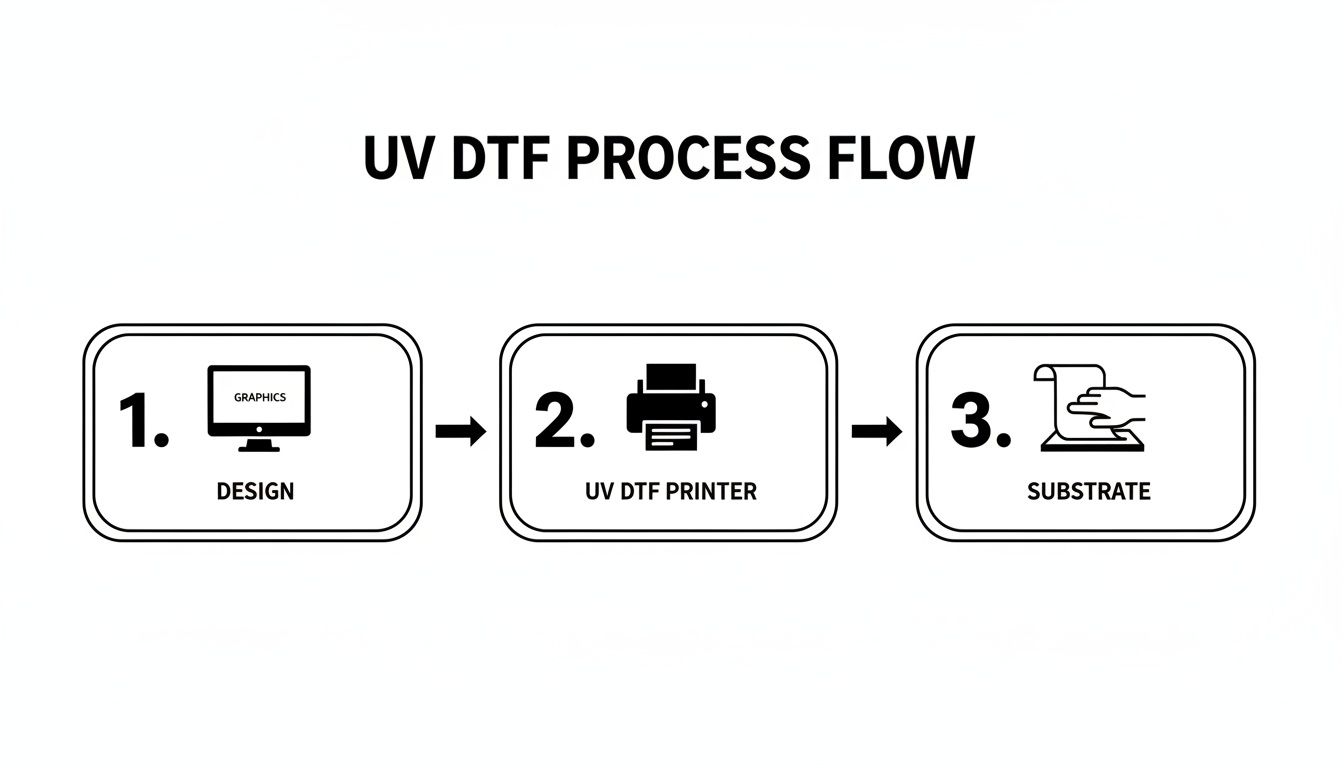
As you can see, it’s a streamlined path from your digital file to a physical transfer that’s ready to go, cutting out a lot of fussy intermediate steps you might find in other processes.
From Print to Product Application
Once the printing and curing cycle is done, you've got a finished transfer sitting on the A-Film. The next move is to laminate a second sheet, the "B-Film," over the top. Think of this B-Film as the transfer tape; its job is to lift the finished design cleanly off the A-Film and hold everything together for application.
Actually applying the transfer is where this technology truly shines because it's so straightforward.
- Prepare the Surface: Make sure the item you're decorating is completely clean. Any dust or oils will prevent a good bond, so a quick wipe-down with isopropyl alcohol is a great idea.
- Position and Press: Peel the backing off the A-Film, carefully position your transfer, and then press down firmly with a squeegee. This pressure is what activates the adhesive.
- Peel the Film: Slowly and carefully peel back the B-Film. The vibrant, fully cured design will be left behind, perfectly bonded to your product.
And that's it. Notice what's missing? A heat press. There's no heat press required, which is a game-changer. You can now decorate heat-sensitive materials like certain plastics, acrylics, or even some electronics without worrying about melting or damage. This simple "peel and stick" application saves a ton of time, reduces your equipment overhead, and unlocks a whole new world of products that used to be a nightmare to customize.
The unique ink chemistry is a massive part of this equation. You can learn more about the specifics of DTF printer ink to get a deeper understanding of how it all contributes to the final quality and toughness.
Choosing Between UV DTF and Standard DTF
It’s a question I hear all the time from print shops: "What's the real difference between UV DTF and the standard DTF I'm already using?" Mixing them up is an easy mistake to make, but it can be a costly one—wasting time, materials, and maybe even a good client relationship.
While both technologies share the "Direct-to-Film" name, they're built for completely different jobs. Think of it like having two specialized tools in your workshop; you wouldn’t grab a hammer when you really need a screwdriver. The key to getting it right is asking one simple question: what am I decorating? Your answer will immediately point you to the right technology.
The Great Divide: Surface Material
At its heart, the choice is incredibly straightforward. Standard DTF is, and always will be, the undisputed champ for textiles and apparel. Its magic comes from a heat-activated adhesive powder that literally melts into fabric fibers when you press it, creating a soft, flexible design that stretches and moves with the garment.
UV DTF transfers, on the other hand, are engineered exclusively for hard, non-porous surfaces. They use a powerful, pressure-sensitive adhesive that latches onto materials like glass, metal, plastic, and treated wood with a vengeance. No heat needed—it's a pure "peel and stick" application.
This specialization helps explain why the Direct to Film printing market, valued at a whopping USD 2,720 million in 2024, is growing so fast. UV DTF is opening up new worlds beyond clothing, letting businesses customize all sorts of rigid products that were once a pain to decorate. At the same time, dedicated standard DTF printers—which still hold a massive 45% market share in 2024—continue to dominate the apparel industry, fueled by the endless demand for custom fashion. You can dive deeper into these market trends in this comprehensive industry report from Grand View Research.
Application Method and Equipment Needs
This is where the two processes really go their separate ways, and it directly impacts your workflow and what equipment you need to buy.
- Standard DTF: You absolutely need a heat press. No exceptions. It's the precise combination of heat, pressure, and time that activates the adhesive and permanently fuses the design into the fabric.
- UV DTF Transfers: The process is completely heat-free. Application is a simple, manual task. You just use a squeegee to apply firm pressure, ensure there are no air bubbles, and then peel away the carrier film.
This is a critical distinction. If your bread and butter is t-shirts, hoodies, and tote bags, a quality heat press is a non-negotiable part of your setup. But if you're looking to branch out into phone cases, tumblers, or acrylic awards, UV DTF lets you jump in without having to invest in any bulky or expensive heating equipment.
The core takeaway is this: Standard DTF uses heat to bond with fabric. UV DTF uses pressure to stick to hard goods. Trying to use one for the other's purpose will always end in failure.
A Head-to-Head Comparison
To make the decision crystal clear, let's put these two technologies side-by-side. This quick comparison will help you figure out which one aligns with your products, your customers, and your production style.
Key Differences: UV DTF vs. Standard DTF
| Aspect | UV DTF Transfers | Standard DTF Transfers |
|---|---|---|
| Primary Use Case | Hard, non-porous items (glass, metal, plastic) | Textiles and fabrics (cotton, polyester, blends) |
| Application Method | Pressure-sensitive adhesive (peel and stick) | Heat-activated adhesive powder |
| Equipment Needed | Squeegee or application tool | Heat press is mandatory |
| Ink Type | UV-curable inks (cured with UV light) | Water-based pigment inks |
| Final Feel | Raised, slightly glossy, hard finish | Soft, flexible, matte finish |
| Ideal Products | Mugs, tumblers, keychains, phone cases, signs | T-shirts, hoodies, tote bags, hats, jerseys |
In the end, this isn't about which technology is "better." It's about picking the right tool for the job you need to do. Once you understand their unique chemistries, applications, and ideal surfaces, you can confidently invest in the technology that will help you grow your business and deliver amazing results every single time.
Unlocking New Revenue with UV DTF Transfers
Alright, we've covered the "how." Now for the fun part: turning that knowledge into profit. Bringing UV DTF transfers into your shop is like finding a hidden door in your workshop. Behind it is a massive opportunity to offer high-margin products without needing a ton of new, expensive equipment. It's all about growing your catalog beyond t-shirts and hoodies and tapping into entirely new markets.
The real game-changer here is diversification. You're no longer limited to things that can survive a 300-degree heat press. All of a sudden, your potential product list just exploded. This lets you serve a much bigger audience, from corporate clients needing branded gear to individuals looking for that perfect, one-of-a-kind gift.
High-Profit Products You Can Start Making Today
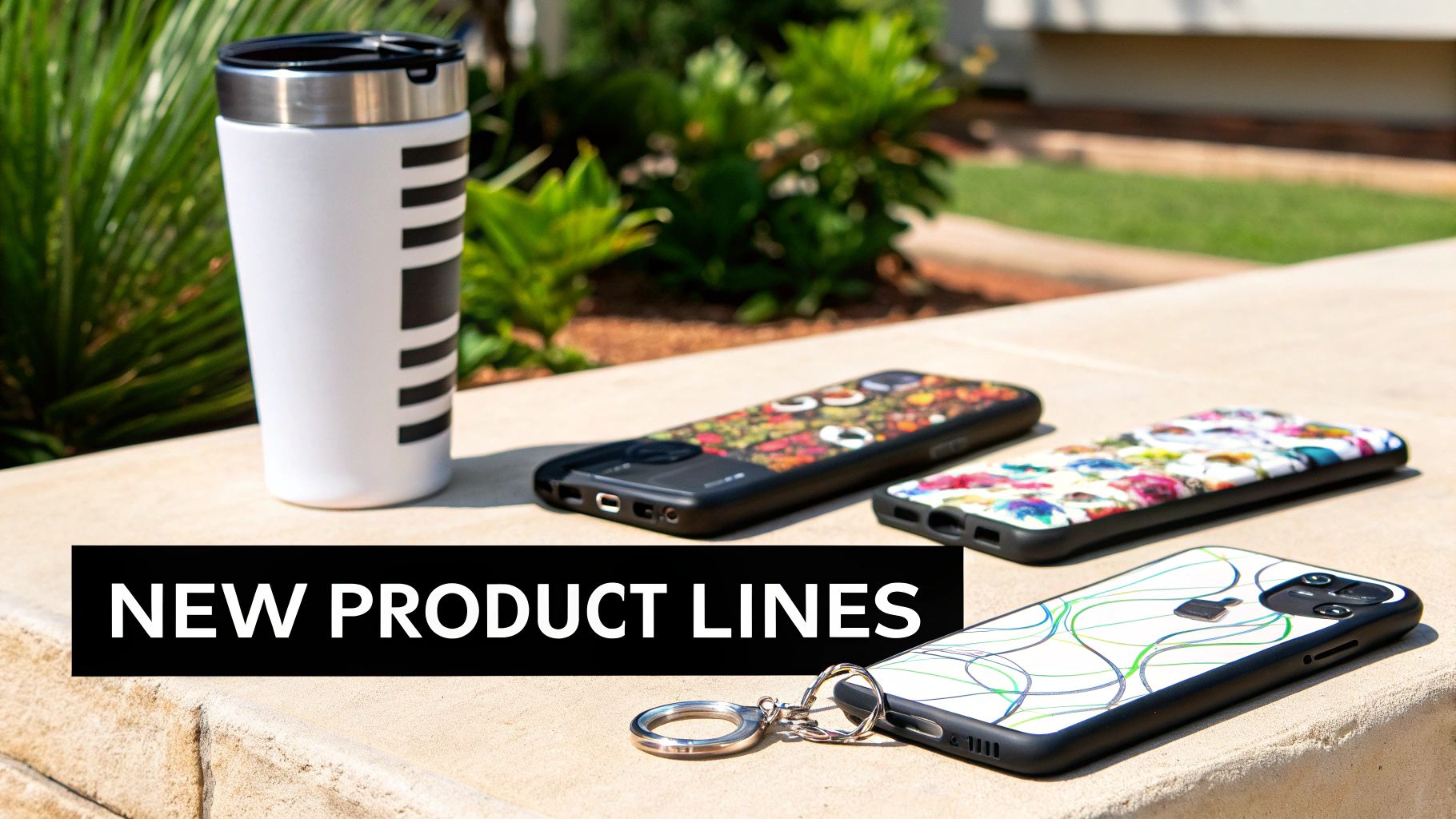
Let's get practical and talk about real-world items that can make you money right away. These are products people are always looking for, and with UV DTF, you can customize them with incredible detail.
- Custom Drinkware: Go way beyond basic mugs. You can now wrap full-color, intricate designs on stainless steel tumblers, glass water bottles, wine glasses, and ceramics. The market for weddings, corporate gifts, and personalized keepsakes is absolutely enormous.
- Tech Accessories: Just about everyone has a phone and a laptop, right? That’s a huge, hungry market. Start offering custom phone cases, laptop decals, earbud cases, and tablet covers. The fact that the finish is durable and scratch-resistant is a major selling point.
- Promotional Merchandise: Businesses, event planners, and big companies are constantly on the hunt for cool swag. With UV DTF, you can create branded keychains, pens, USB drives, and acrylic coasters that actually look premium and leave a great impression.
- Home Decor and Signage: Think smaller-scale but high-value. You can apply stunning designs to wooden keepsake boxes, acrylic office signs, glass awards for corporate events, or even metal plaques. This opens up work with interior decorators, event coordinators, and other businesses.
This isn't just about adding more SKUs to your website. It's about becoming the solution for more customer problems. When a local brewery needs branded tumblers and keychains for their taproom, you can be their one-stop shop.
The real beauty of this is how easy it is to get started. You don’t need to drop thousands on another heat press or find space for more bulky machinery. With the transfers and a simple squeegee, you can be producing professional-quality hard goods almost instantly.
Tapping into New Customer Segments
When you offer a wider variety of products, you naturally start attracting different kinds of customers. A shop that only sells custom shirts is talking to one specific crowd. But a business that also sells personalized hard goods? You've just opened the door to several new groups.
- The Corporate Client: Companies always need branded merchandise for trade shows, new employee welcome kits, and client gifts. They value a high-quality, professional look—which is exactly what UV DTF delivers.
- The Event Planner: From weddings to big birthday bashes, personalized everything is in high demand. We're talking custom wine glasses for a bridal party or unique acrylic table numbers for a reception.
- The Etsy and E-commerce Seller: Small online shop owners are always searching for new, unique products to add to their stores. You can become the go-to supplier for entrepreneurs who want to sell personalized phone cases or drinkware without making it themselves.
- The Local Community: Schools, sports teams, and local clubs are a goldmine. They need awards, personalized water bottles for the team, and items for fundraisers. UV DTF makes it profitable to handle these kinds of small-batch orders.
Expanding your product line like this is one of the smartest ways to grow. It doesn’t just bump up your average order value; it makes your business stronger by not relying on just one type of product. If you keep your process smooth, you can also explore different ways for how to reduce production costs and really maximize your profit on these new items.
Ultimately, adding UV DTF transfers is a strategic move. It helps future-proof your business, creates new ways to make money, and positions you as the go-to expert for all kinds of custom products in your area.
Finding a Reliable US-Based Supplier
Alright, so you're sold on bringing UV DTF transfers into your shop. The next step is a big one, and frankly, it can make or break your experience: choosing a supplier. The quality of your transfers, the speed you get them, and the consistency of the product all flow directly from this decision. It impacts your profit, your customers' happiness, and, let's be honest, your own stress levels.
It’s easy to get tempted by what looks like a lower price tag from an overseas supplier. But I've seen it happen time and time again—that initial savings gets eaten up by hidden costs and massive headaches.
Imagine you just landed a huge order for custom tumblers, but the deadline is tight. You place your order with an international supplier and the waiting game begins. That two-week shipping estimate slowly bleeds into three, then four. Your package is stuck in customs, and now you're being hit with surprise fees you never planned for. When the transfers finally show up, the quality is all over the place. Some prints are off-color, others won't adhere right. Now you're left with wasted products and a frantic scramble to save the order.
This isn't just a worst-case scenario; it's a frustratingly common story for small print businesses. Dealing with international logistics is a minefield of delays, language barriers, and a total loss of control once your package is on its way.
The Strategic Advantage of Sourcing Domestically
This is exactly why so many smart business owners are turning to reliable, US-based suppliers. When you partner with a domestic company like Cobra DTF, you completely change the game. You're trading unpredictability for rock-solid reliability, and the difference is night and day.
Instead of biting your nails for weeks, you can get your UV dtf transfers delivered in just 1-3 days. That kind of speed means you can confidently say "yes" to rush orders. It also lets you keep your inventory lean, which frees up cash you can use to grow your business. With same-day fulfillment for orders placed by 1 PM CST, there’s virtually no lag time between you needing transfers and them being on their way.
The real win with a US-based supplier isn't just faster shipping—it's about building a more resilient and agile business. When you can count on your supply chain, you can make promises to your customers and actually keep them.
Comparing Supplier Models Head-to-Head
Let’s lay it all out. The practical differences between an overseas supplier and a domestic partner are stark, and they make the choice pretty clear for any business that values its time and reputation.
| Feature | Overseas Supplier | US-Based Supplier (like Cobra DTF) |
|---|---|---|
| Shipping Time | 2-4+ weeks, often unpredictable | 1-3 business days guaranteed |
| Hidden Costs | Prone to customs fees, tariffs, and import duties | Transparent pricing with no hidden fees |
| Quality Control | Inconsistent, hard to resolve issues | High-quality, 100% USA-made materials |
| Customer Support | Difficult time zones, language barriers | Accessible, US-based support team |
| Economic Impact | Supports foreign economies | Supports American jobs and the local economy |
While the global UV DTF market is growing fast—projected to hit around USD 1.5 billion by 2033—American businesses have a strategic choice. You can sidestep the chaos of international shipping and still get competitive pricing by partnering with a domestic supplier.
At the end of the day, choosing a US-based supplier is an investment in your business’s stability and future. It's about getting your transfers quickly, consistently, and without the drama that pulls you away from what you do best: making incredible products for your customers. Once you're ready, see for yourself how easy it is to place an order for your transfers and experience a seamless, domestic workflow. By prioritizing reliability, you build a stronger, more profitable business from the ground up.
Your UV DTF Transfers Questions Answered
Jumping into a new printing method always kicks up a lot of questions. While the potential of UV DTF transfers is exciting, it's the practical, day-to-day details that really tell you if it’s the right move for your business. This last section cuts right to the chase, tackling the most common questions head-on to give you clear, straightforward answers.
Think of this as your quick-reference guide. We’ll get into the nitty-gritty of how well these things hold up, common mistakes people make, and the real-world cost of buying from a US supplier versus one overseas. Let's get these critical questions sorted so you can start creating with confidence.
How Durable Are UV DTF Transfers and Are They Waterproof?
This is usually the first thing people ask, and for good reason. The answer is a resounding yes—they are incredibly durable and absolutely waterproof. The magic is all in the UV-curing process. The ink doesn't just air-dry; a blast of UV light triggers a chemical reaction that instantly hardens it into a tough, solid layer.
This cured design is remarkably resistant to scratches, everyday bumps, and fading from sunlight. Once you’ve properly applied a transfer to a clean, non-porous surface, it forms a powerful, waterproof bond. That means you can confidently use them on items like tumblers, water bottles, and even outdoor signage without worry.
But what about the dishwasher? While they can handle hand washing with ease, the dishwasher is a different story. The combination of intense heat, high-pressure water jets, and harsh detergents can slowly eat away at the adhesive over time. To make sure your creations last as long as possible, it's best to advise your customers to gently hand wash any decorated drinkware.
Can I Apply UV DTF Transfers to Fabric Like T-Shirts?
This is a huge point of confusion, but the answer is a firm no. UV DTF transfers are engineered for one specific job: sticking to hard, rigid, non-porous surfaces. The pressure-sensitive adhesive they use is formulated to grab onto materials like glass, metal, plastic, and sealed wood with incredible strength.
Fabric is a completely different world—it's soft, porous, and constantly flexing. For materials like cotton, polyester, and their blends, you absolutely need to use standard DTF transfers. Those use a special heat-activated powder adhesive that melts during the heat press process, literally fusing into the textile fibers. This creates a design that can stretch and move right along with the garment.
Think of it this way: UV DTF is like a powerful epoxy for hard goods, while standard DTF is like a specialized fabric glue. Using the wrong one for the job will always end in a failed application and a wasted product.
What Are the Most Common Application Mistakes to Avoid?
The "peel and stick" process seems simple, but your technique really matters. Almost every failed application comes down to a few small, preventable errors. Nail these steps, and you'll get a perfect, bubble-free finish every single time.
Here are the most common slip-ups:
- Skipping Surface Prep: This is the #1 reason for adhesion failure. No matter how clean a surface looks, it’s covered in microscopic oils, dust, or residue. A thorough wipe-down with isopropyl alcohol is non-negotiable; it creates a pristine surface for the adhesive to grab onto.
- Touching the Adhesive: The oils on your fingertips are the enemy of a strong bond. Even briefly touching the sticky side of the transfer can create a weak spot that will lift or peel later on. Always handle transfers by the edges of the carrier film.
- Applying Uneven Pressure: Just placing the transfer on the item isn't enough. You have to use a squeegee to apply firm, even pressure across the entire design. This step, called burnishing, forces out any trapped air bubbles and ensures the adhesive makes 100% contact with the surface.
- Peeling the Film Too Quickly: This is where a little patience pays off. After burnishing, don’t just rip the carrier film off. Peel it back slowly and at a low, sharp angle. This gives the design time to release cleanly from the film and stay fully bonded to your product.
Taking your time with these simple steps is the secret to a professional, long-lasting application.
Is It More Expensive to Buy from a US-Based Supplier?
At first glance, the price per sheet from an overseas supplier might look tempting, but that’s almost always a misleading number. The sticker price rarely shows you the true total cost. Once you factor in sky-high international shipping rates, surprise customs fees, and import tariffs, that "cheaper" option suddenly gets a lot more expensive.
And that's before you even consider the hidden costs of time and inconsistent quality. Waiting weeks for a shipment can mean missing out on profitable rush jobs for your customers. Plus, quality control from overseas factories can be all over the place, leading to a higher rate of defective transfers that force you to waste material and redo orders.
In contrast, a domestic supplier like Cobra DTF offers clear, competitive pricing with no hidden fees. Our fast 1-3 day shipping across the USA means you get your transfers predictably and quickly. Sourcing high-quality, 100% USA-made products delivers far greater overall value, protecting your profits, your timeline, and your hard-earned reputation.
Ready to experience the difference a reliable, US-based supplier makes? At Cobra DTF, we provide premium, American-made UV DTF transfers with lightning-fast shipping and unbeatable quality. Explore our products and start creating today!