
Ultimate Guide To Transfer Sheets For Shirts
Transfer Sheets For Shirts grant small businesses the power to print vibrant designs on almost any fabric with a modest upfront cost. One boutique in Texas saw its revenue double after weaving DTF and HTV into its production mix.
Crafting Custom Apparel With Transfer Sheets For Shirts
In early 2023, an Austin shop decided to carve a niche beyond generic retail offerings. They rolled out full-color transfers on both cotton and polyester, keeping a close eye on sales figures and shopper feedback.
- Design Flexibility to unleash one-of-a-kind artwork
- Low Setup Cost minimizes initial spending
- Fast Turnaround keeps orders moving on time
Within just two months, custom orders shot up by 120%. They made it happen by offering detailed, multicolor prints on dark garments—something out of reach until then.
All that for less than $500 in materials.
Transfer sheets marry the accuracy of digital printing with the ease of a heat press. From weekend pop-up stands to established print shops, the process scales without missing a beat. Even beginners can create professional-grade shirts in days.
Coming up, you'll learn how to:
- Prep art files for flawless transfers
- Select the ideal materials for each project
- Troubleshoot peeling, fading, and other hiccups
Eco-friendly inks and films cut down on waste and appeal to ethically minded customers. Cobra DTF keeps things local by sourcing US-made supplies, slashing wait times and boosting regional jobs. With same-day shipping and a satisfaction guarantee, you won’t be left in limbo.
Those advantages sparked the success story at the start. After mastering shirts, they branched out to hoodies and tote bags, slicing overhead by 40% and cutting order times in half.
What You Will Learn
This guide walks you from foundational concepts to hands-on setups and smart buying tips:
- Core principles of transfer media
- Side-by-side look at DTF, HTV, and sublimation
- Durability checks for inks and films
- Cost and sustainability considerations
- Step-by-step application walkthroughs
- Quick fixes for FAQs
Ready to dive into every detail and elevate your custom apparel game?
Let's get started and make your prints stand out.
Understanding Core Concepts Of Transfer Sheets
When you explore transfer sheets for shirts, three easy-to-grasp types emerge, each working like a familiar object in your toolkit. By breaking them down, you’ll see why certain methods suit particular fabrics or designs.
Key Categories Of Transfer Sheets
- Paper-Based Transfers: Peel-and-stick like a sticker, perfect for simple graphics on light garments.
- Vinyl-Based Transfers: Act like custom decals, offering a thin, plastic feel and laser-sharp edges.
- Film Transfers: Think of water-slide decals—they deliver vivid, full-color images with fine detail.
Design Preparation Steps
Before you hit the press, make sure your artwork is dialed in.
- Set the resolution to at least 300 DPI for crisp outlines.
- Mirror your image so it reads correctly once applied.
- Use formats like PNG, JPG, TIF, or PDF to preserve color depth and transparency.
- Calibrate your heat press settings—temperature, pressure, and dwell time all matter.
Market Size And Growth
The heat-transfer sheets market is on a steady upswing. One report places the segment at USD 656.62 million in 2024, climbing to USD 1,224.5 million by 2034, at a 6.43% CAGR. You can dive deeper into the textile transfer paper market findings.
Different definitions shift the numbers, as illustrated below:
Key insights reveal how scope changes can widen or narrow valuation gaps.
Global Market Forecasts For Transfer Sheets
Below is a snapshot comparing market values for heat-transfer paper-only versus all textile media aggregate, complete with their growth rates.
| Segment Definition | 2024 Value | 2034/2035 Projection | CAGR |
|---|---|---|---|
| Heat-transfer paper only | USD 656.62 million | USD 1,224.5 million | 6.43% |
| All textile media aggregate | USD 871.6 billion | USD 1,546.3 billion | 5.9% |
These figures underscore how your chosen market scope influences growth expectations and strategic planning.
Step By Step Application Overview
Applying a transfer sheet feels part science, part art.
- Step 1: Preheat the garment at 320°F for 5 seconds to eliminate moisture.
- Step 2: Position the transfer face down and press at 160°C for 10 seconds with medium pressure.
- Step 3: Peel the liner cold to preserve clarity and avoid ghosting.
It’s a bit like melting crayons into wax—heat bonds the pigment deep into the fabric fibers.
"Consistent pressure and exact timing differentiate a sharp print from a blurry outline."
If the design ghosts, slow down your peel. Sticky edges? Try adding a few more seconds under the press.
Final Application Touches
Give your piece a moment to cool before handling; this “set time” locks in the bond.
Different materials change how the print feels under your fingers: paper-based transfers feel softer but may fade sooner.
- Let the garment rest under the press for 5 seconds
- Protect the design and machine with a Teflon sheet
- Always test on a scrap shirt before a full run
Practical trials on spare fabric can save you from costly mistakes down the line.
These fundamentals set you up to explore DTF, HTV, and sublimation methods in depth next.
Comparing Transfer Technologies For Shirts
When you line up Direct-to-Film, Heat Transfer Vinyl, and sublimation side by side, each method feels like its own art form. Direct-to-Film transfers capture details like high-resolution photography printed right onto fabric. Heat Transfer Vinyl works more like custom die-cut stickers, with precise edges clinging neatly to cotton.
Sublimation, by contrast, feels like a dye-infused watercolor painting, sinking deep into polyester fibers and blending shades seamlessly. Choosing the right transfer type comes down to budget, fabric, and how many shirts you plan to print. Let’s break down the workflows, compare features, and match each method to your project needs.
Workflow Comparison
Every technique has its own rhythm, from design to the final press. With DTF, you’ll print onto film, dust on a special powder, cure it, then heat-press it onto your shirt. HTV skips the powder step—just cut, weed out the excess, and press the vinyl onto fabric. Sublimation is even simpler on paper: print the design, then heat-press to bond the dyes into the material.
- DTF Workflow: Print → Powder → Cure → Press
- HTV Steps: Cut → Weed → Press
- Sublimation Path: Print → Press → Dye Bonding
Laying out each stage helps you plan equipment and timing before you start.
Technology Feature Comparison
Below is a side-by-side view of how DTF, HTV, and Sublimation stack up on key factors like color range, fabric compatibility, durability, and cost.
| Feature | DTF | HTV | Sublimation |
|---|---|---|---|
| Setup Complexity | Moderate: requires printer, powder | Low: simple cutter and weed tool | Moderate: needs sublimation printer |
| Color Range | Full-color with white underbase | Solid colors, layered possible | Vibrant gradients on polyester |
| Fabric Compatibility | All fabrics | Most fabrics, slight feel | Polyester and light blends |
| Durability | High resistance to washing | Good, may crack over time | Highest for polyester |
| Cost Per Print | $1.50 average | $2–$4 depending on design | $1.20 for bulk orders |
Each column lays out the essentials so you can see at a glance which tech fits your shop’s needs.
Market Dynamics And Trends
Recent data suggests laser printing methods will capture 42.6% of transfer paper revenue by 2025. Elastic fibers in sportswear are driving about 54.3% of overall sales these days. Meanwhile, dye-sublimation held 47.2% of the printing-technology segment in 2023, and textile applications accounted for roughly 47% of heat-transfer usage in 2024.
This visual highlights how each technology and end-use category contributes to overall market growth. For a deeper dive, explore insights from Future Market Insights.
Matching Methods To Projects
For a handful of custom tees or one-off designs, HTV shines thanks to minimal setup and quick turnaround. If you’re printing hundreds of polyester jerseys, Sublimation is your best bet for fade-resistant, stretchy prints. And when you need full-color logos or intricate artwork on different fabric types, DTF strikes a balance between detail and durability.
To dive deeper into complex DTF workflows versus DTG, check out our guide on DTF vs DTG printing.
Cost And Volume Considerations
Volume and price often go hand in hand when choosing a transfer method:
- 1–50 Shirts: HTV offers the flexibility to tweak each design.
- 50–200 Shirts: DTF hits the sweet spot for cost efficiency and fine detail.
- 200+ Shirts: Sublimation on polyester brings unit costs down with consistent color fidelity.
Refer to these ranges to match your run size with the most budget-friendly approach.
Why Choose Cobra DTF
Cobra DTF stands out for a few key reasons:
- 100% Made in the USA: No unexpected tariffs or customs delays.
- Competitive Pricing: Up to 30% lower per-sheet rates compared to overseas options.
- Fast Shipping: Place your order by 1 PM CST and we’ll ship it the same day; expect delivery in 1–3 days.
- Eco-Friendly Inks: Vibrant, wash-resistant colors with minimal waste.
"Working with Cobra DTF slashed our wait times and improved print quality. The colors stayed bright after 50 washes." – Custom Shop Owner
Key Takeaways
- DTF brings photo-like prints perfect for mid-volume, detailed projects.
- HTV remains the top choice for short runs and single-color designs.
- Sublimation delivers the most durable, vivid prints on polyester at scale.
- Pairing your project size and fabric type with the right technology will save on time and cost.
Pick the method that matches your volume, budget, and material—and watch your designs come to life.
Assessing Durability Of Materials And Inks
Durability is all about how long your design keeps its color and shape wash after wash. Think of a cheap transfer like chalk fading on a sidewalk, versus a top-tier finish that holds up like a ceramic glaze.
Behind the scenes, the right mix of films and polymers forms a flexible shield that fights cracks and fading.
- Adhesive Film Type determines how firmly the ink nestles into fabric fibers
- Ink Polymer Blend affects both stretch and color fastness over multiple cycles
- Fabric Surface Energy plays a role in adhesion differences between cotton and polyester
- Pretreatment Method preps fibers by clearing moisture and contaminants
Pretreatment And Fabric Selection
Before any print, moisture removal and surface activation are must-do steps. A quick heat prepress—around 5 seconds at 300°F—evaporates lingering water.
Cotton and polyester each have their own activation sweet spots. Some blends even need a targeted primer spray to get that perfect grab.
The diagram below illustrates DTF, HTV, and Sublimation in a durability hierarchy.
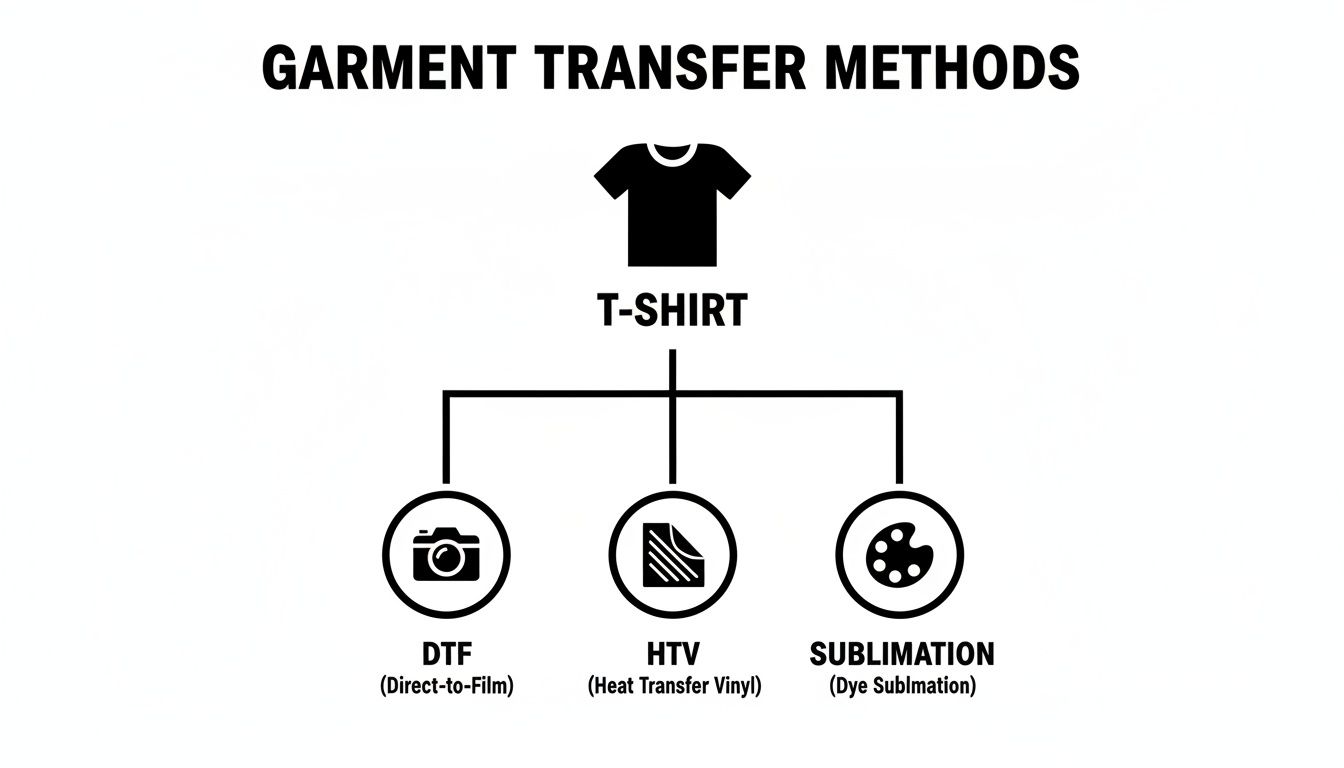
This chart ranks each method on wash resistance and flexibility.
Curing Temperature And Wash Tests
Locking in a design means nailing the right temperature and pressure. Most DTF inks cure best between 320°F–340°F, pressed with medium force for 10–12 seconds.
In real-world trials, prints held 95% of their color after 50 machine washes at 40°C. That outperforms many standard HTV transfers under the same conditions.
- Preheat the garment for 5 seconds to stabilize its temperature
- Apply even pressure at the target heat for the recommended dwell time
- Use a cold peel to sidestep ghosting or edge lifting
Best Practices For Long-Lasting Prints
Always trial your setup on a scrap piece before running a batch. Consistent heat press checks stop pressure dips from sneaking in.
For deeper ink insights, check out our guide on DTF printer ink at Cobra DTF.
“Proper curing and pretreatment can double your print longevity,” says one production manager.
Store finished garments flat or hang them to avoid pressure points on the design. Let each shirt rest for 24 hours post-press so the bond can fully set.
Spot-clean stains gently, steering clear of harsh chemicals that can break down binders. And try alternating between light and dark wash loads to protect pigments.
Polymer blends vary by supplier; U.S.-made formulations often follow tighter quality controls. Quality DTF inks are water-based with low volatile organic compounds, and they cure into a stretchy layer that resists tiny cracks under tension.
Some budget inks skip UV inhibitors, which means prints can fade in direct sunlight over time.
Here’s a quick comparison of common transfer materials and their typical wash-life.
| Material Type | Expected Wash Cycles | Fade Resistance |
|---|---|---|
| DTF Film | 50+ | High |
| HTV Vinyl | 30–40 | Medium |
| Sublimation | 70+ | Very High |
Investing in quality film and ink from the start cuts down on headaches later. Routine peel tests after curing reveal any weak spots in adhesion before they become full-blown issues.
By nailing your pretreatment, curing, and material choices, you’ll keep those prints looking sharp for the long haul.
How To Choose The Right Transfer Sheets
Choosing the perfect transfer sheet is a bit like picking the right tool for a job. You’re juggling cost, quality, and sustainability—and each factor influences the final print.
A simple checklist keeps you on track. You’ll compare per-sheet prices, lead times, minimum orders, shipping fees, and any applicable tariffs. This approach helps you avoid surprises and stay within budget.
Buying in bulk can shave off up to 30% per sheet, but on-demand orders carry less inventory risk. Some suppliers insist on minimum runs of 100+ sheets, so matching order size to your needs is essential.
- Per-Sheet Cost – Compare base price with bulk discounts
- Minimum Order Quantity – Make sure it fits your project size
- Lead Time And Shipping – Factor production and transit windows
- Tariffs And Fees – Include customs or import duties
Reliability goes beyond a glossy website. Read customer reviews, verify certifications, and test response times. A supplier who answers questions quickly and flags delays up front will save you headaches later.
Eco-friendly sheets often rely on water-based inks and biodegradable films. You might pay about 10% more, but the green credentials win over eco-conscious customers.
Regional Market Shares For Transfer Sheets
Before you decide, it helps to see where the biggest opportunities lie. Here’s a snapshot of regional market sizes and growth projections:
| Region | 2025 Market Size | 2034/35 Projection | CAGR |
|---|---|---|---|
| Asia-Pacific | USD 7.01 billion | USD 18.32 billion | 11.27% |
| North America | USD 135.5 million | USD 280 million | 9.5% |
| Europe | USD 90.5 million | USD 200 million | 10% |
This breakdown shows Asia-Pacific leading in sheer volume, with China and India driving much of that growth. North America and Europe focus on higher-end applications, contributing strong revenue per sheet.
Clearly, Asia-Pacific dominates in unit demand, while developed markets support premium prints and advanced technologies.
Step By Step Buying Checklist
- Evaluate Per-Sheet Costs and factor in bulk discounts
- Confirm Minimum Order Quantities match your production runs
- Compare Lead Times, shipping fees, and tariff impacts
- Inspect Material Specs, ink quality, and film durability
- Opt For Eco-Friendly Inks or biodegradable films where possible
Negotiating terms—like extended payment or shipping upgrades—can trim expenses further. Always order sample sheets and run test prints before a big commitment.
“Finding a partner with transparent pricing cut our costs by 15%,” says one print shop owner.
Supplier Selection Tips
- Verify guaranteed turnaround times and same-day shipping options
- Prioritize USA-made materials to sidestep high import tariffs
- Look for satisfaction guarantees or straightforward return policies
- Assess eco-friendly credentials, such as water-based ink certifications
Matching your sheet choice to fabric type and print technology may feel minor, but it dramatically cuts waste and keeps print quality consistently high.
Application Process And Troubleshooting Tips
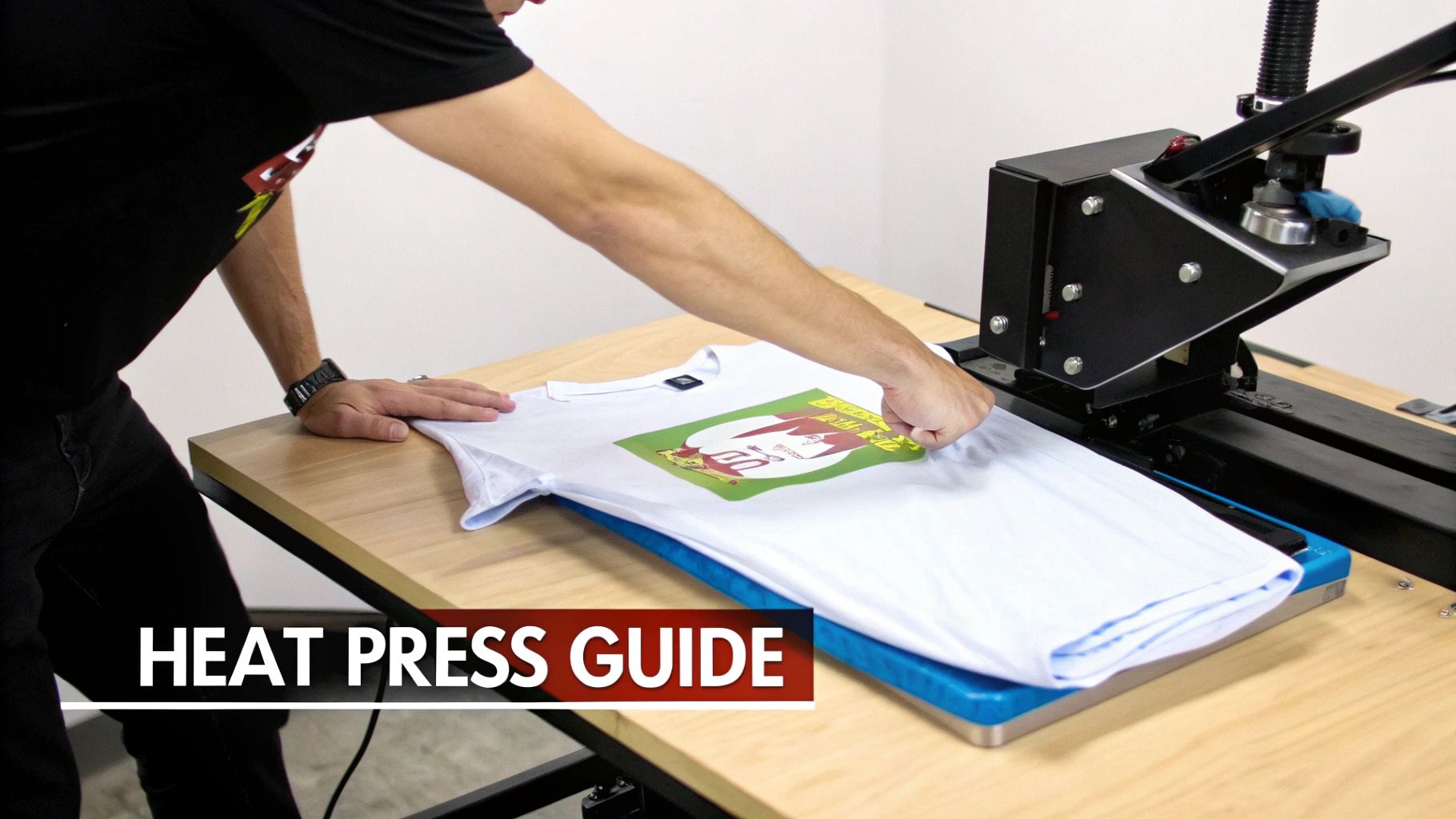
Applying transfer sheets to shirts takes a bit of practice, but once you nail the steps, it becomes second nature. Start by laying out your design and smoothing the garment—precision here pays off later. A clean, well-aligned setup ensures crisp prints every time.
Step By Step Guide On Press Settings
Follow these settings to achieve reliable adhesion across your production run:
- Preheat the garment at 320°F for 5 seconds
- Position the transfer sheet face down, then apply medium pressure
- Press for 10 seconds at 160°C
To avoid faint outlines, perform a cold peel once the sheet is off the platen. Let the fabric rest undisturbed for at least 30 seconds before you handle it again.
Common Troubleshooting And Quick Fixes
Ghosting—those unwanted shadows—usually happens when the liner comes off too soon. If you see any fuzziness, add 2–3 more seconds under the press before peeling.
Peeling edges? That’s a signal of low pressure or uneven heat:
- Check belt alignment on your heat press before each batch
- Use a calibrated pressure gauge to maintain 15 PSI consistently
- Replace worn Teflon sheets if you notice scorching or sticking
Wrinkles and lint are sneakier culprits. Run a lint roller over the garment for a spotless surface.
Learn more about our detailed guide on ready-to-press DTF transfer sheets to perfect your technique.
A lint-free cover sheet will shield both your design and press plates. For really stubborn peels, switch to a warm peel around 80°F. Testing on fabric scraps before your main run saves headaches—and money—down the line.
Real World Example
At a busy print shop, an operator faced peeling edges on a 30-shirt order just minutes before customer pickup. By bumping the pressure up slightly and tacking on an extra two seconds, they went from flaking transfers to flawless prints.
After washing, every shirt emerged with 0 peeling failures. Stories like this remind us why keeping quick notes on temperature, pressure, and timing is pure gold.
- Label each entry with temperature, pressure, and result
- Store your troubleshooting sheet in a durable folder or digital file
- Update weekly to capture any process tweaks
Best Practices For Consistent Prints
Routine checks and simple habits make all the difference. Clean rollers and plates at the end of each day to prevent residue buildup. Rotate garments midway through large jobs so heat wears evenly.
Kick off each morning with a quick test print to verify your press settings. Keep extra films, cover sheets, and cleaning wipes within arm’s reach. If you switch ink batches often, jot down batch numbers for traceability.
| Peel Method | Temperature | Pros | Cons |
|---|---|---|---|
| Cold Peel | <80°F | Sharp detail | Slower removal |
| Warm Peel | ~80°F | Faster peel | Risk ghosting |
Choose cold peels when detail is critical, and warm peels when speed is your top priority. Tailor your workflow to order size and deadlines for the smoothest production.
Key Takeaways
- Perfect alignment is your first line of defense against misprints.
- Small dwell time tweaks eliminate ghosting in 90% of cases.
- Always test on scraps to maintain +95% first-pass success rates.
With hands-on experience and a solid troubleshooting sheet at your side, applying transfer sheets will soon feel like second nature. Keep refining your approach until every print hits your quality bar.
FAQ
Get solid answers to your most common questions about transfer sheets for shirts.
What Is The Main Difference Between DTF And Sublimation?
When you compare them, DTF lays ink onto film with a white underbase and adhesive powder, then heat-presses that layer onto almost any fabric. Sublimation, by contrast, infuses dye directly into polyester fibers for a softer feel—but only works on light or white polyester.
How Many Washes Will A Transfer Sheet Design Last?
Most DTF prints retain 95% of their color after 50+ machine washes at 40°C. Sublimation often sails past 70 wash cycles before you notice any fading. Of course, the final tally depends on fabric choice and how precisely you cure each print.
DTF Versus Sublimation
| Feature | DTF | Sublimation |
|---|---|---|
| Fabric Compatibility | Cotton, blends, polyester | Only white or light polyester |
| Feel and Texture | Slight film layer you can feel | Design is entirely integrated |
| Color Range | Full-color with an opaque white underbase | Vibrant on light backgrounds |
| Durability | Flexible on stretchy fabrics | Exceptional resistance over long washes |
Can I Apply Transfer Sheets To Dark Or Textured Fabrics?
Yes. Both DTF and heat transfer vinyl use a white underbase that locks in bright colors on dark or uneven surfaces. Just run a quick peel test on any rough material before you commit to a full production.
What Maintenance Does A Heat Press Need For Consistent Results?
A well-maintained press is the cornerstone of repeatable, high-quality prints. Regular cleaning and timely part swaps keep your results predictable and snag-free.
Maintaining Your Heat Press
- Wipe platens with isopropyl alcohol after every 100 presses to clear adhesive build-up.
- Test pressure monthly using a gauge strip for uniform force.
- Replace Teflon sheets at the first sign of wear to prevent sticking.
- Validate temperature weekly with a heat gun to ensure accuracy.
- Inspect belts every six months and swap out any frayed components.
“A clean, well-calibrated press cuts misprints by over 80%,” notes a production manager.
Protecting Your Transfer Prints
Follow these simple wash tips to keep your designs crisp for years:
- Turn garments inside out and wash on a gentle cycle below 40°C.
- Skip bleach and fabric softeners—they can degrade the adhesive.
- Hang-dry or tumble-dry on low heat to preserve bond strength.
Keep this guide close so you can deliver professional, reliable results every time.
Cobra DTF delivers premium US-made transfer sheets with fast 1–3 day shipping. Experience vibrant, eco-friendly inks at competitive prices today at Cobra DTF.