
A Guide to the Highest Quality T Shirts for Printing
If you want your prints to look incredible, you have to start with the right canvas. The highest-quality T-shirts for printing are almost always made from 100% combed and ring-spun cotton. They also feature a higher thread count (30 singles or more) and are built with side-seamed construction.
These features aren't just fancy buzzwords; they create a super-smooth, stable surface that allows for vibrant, sharp, and durable prints.
What Actually Defines a High-Quality T-Shirt for Printing?
Before you press a single design, you need to know what separates a premium blank from a potential headache. The secret to a fantastic final product isn’t just one thing—it’s the perfect blend of fabric, construction, and fit. Think of it like a chef choosing ingredients; the quality of the raw materials absolutely determines how good the final dish will be.
Getting this right is more important than ever. The custom T-shirt printing industry is booming, and customers have developed a real taste for premium fabrics. Top-tier options like ring-spun cotton or tri-blends have 20-30% higher ink adhesion rates compared to those basic, cheap tees. That means designs pop with vibrant colors and actually resist cracking after 50+ washes.
In fact, shops that make the switch to premium blanks see, on average, 15% fewer returns due to print quality issues. You can dive deeper into these custom t-shirt market trends to see where the industry is heading.
To give you a quick overview, here are the essential features that make or break a t-shirt's printability.
Quick Guide to Quality T-Shirt Features
| Feature | What to Look For | Why It Matters for Printing |
|---|---|---|
| Fabric Type | 100% combed & ring-spun cotton, or high-quality blends (tri-blends, CVC). | Creates a super-smooth, consistent surface for sharp, vibrant prints. Fewer loose fibers mean cleaner results. |
| Yarn Count | Higher numbers are better. 30 singles (or higher) is the sweet spot. | A higher yarn count means finer, tighter threads, resulting in a softer feel and a flawless printing surface. |
| Construction | Side-seamed construction. Avoid tubular (seamless) shirts. | Side seams give the shirt a structured, tailored fit that won't twist after washing, keeping your print straight and centered. |
| Fabric Weight | Typically 4.2 - 5.5 oz. (light-to-midweight). | This weight range offers a great balance of breathability and durability without being too thin for opaque prints. |
Understanding these basics is the first step, but let's break them down even further.
The Core Components of a Superior Blank
To really master your craft, you have to look beyond the price tag and get hands-on with the garment itself. The best shirts provide a flawless canvas for your art, ensuring it looks professional and holds up for years.
We'll dig into these elements in detail, but here are the key factors you need to be evaluating:
- Fabric Composition: The material itself—whether it's ring-spun cotton or a poly-blend—directly impacts how ink absorbs, how vibrant the colors look, and the final feel against the skin.
- Fabric Weight & Knit: The density and tightness of the fabric’s weave affect everything from durability to how smoothly a DTF transfer or a layer of screen printing ink can be applied.
- Construction Quality: This is where the details matter. Things like side-seamed construction versus a cheaper tubular design dictate the shirt's shape, how it fits, and whether it will look good after a dozen washes.
A great print on a cheap shirt is a temporary success. A great print on a quality shirt builds a lasting brand reputation.
Knowing how these elements work together is the first step toward producing garments that don't just look incredible on day one, but also feel amazing and make your customers proud to wear them again and again.
The Science of Fabric and How It Impacts Your Print
If you're getting into the world of custom apparel, the single most important thing to wrap your head around is the fabric itself. It’s not just about how a shirt feels; the material is the foundation of your print. Getting this right is the first and most critical step to creating designs that pop and products that people love to wear.
Think of it like painting a picture. You wouldn't grab a rough, bumpy piece of cardboard for your masterpiece, right? You’d want a smooth, high-quality canvas. A T-shirt is your canvas. Its properties will dictate everything—how the ink takes, how bright your colors look, and whether the design is still there after a few dozen washes.
Cotton vs. Polyester: The Sponge and The Shield
Most of the time, you'll be working with two main players: cotton and polyester. They couldn't be more different in how they handle ink. I like to think of it as the "sponge versus the shield."
100% Cotton (The Sponge): Natural cotton fibers are thirsty. They love to soak things up. When you're printing with methods like Direct-to-Garment (DTG), the ink absorbs right into these fibers. This gives you that classic soft-hand feel where the print feels like it's part of the fabric. That absorbency is exactly why cotton is the go-to for certain print jobs.
100% Polyester (The Shield): On the flip side, polyester is a synthetic material—basically a type of plastic. Its fibers are non-absorbent and repel moisture. They act like a tiny shield. This quality makes it perfect for methods like sublimation, where ink becomes a gas and fuses with the fibers, or for DTF, where the printed transfer sits crisply on top of that smooth surface.
This core difference is everything. If you try to force a print method onto the wrong fabric, you’ll end up with faded colors, peeling designs, and unhappy customers. For a more detailed breakdown, check out our guide on cotton vs. polyester for printing where we dive even deeper.
Why Fabric Weight Matters More Than You Think
Okay, so you've picked your material. The next spec you need to look at is fabric weight. This is usually measured in GSM (Grams per Square Meter), which is just a fancy way of saying how dense and heavy the fabric is. A higher GSM number means a beefier shirt.
While a thin, lightweight tee might be great for a hot day, a heavier fabric almost always makes for a better printing canvas.
- Better Opacity: A heavier shirt (think 180-220 GSM) is less see-through. This means your design won't be visible from the back, and more importantly, the shirt's own color won't dull down the vibrancy of your print.
- More Durability: A denser fabric simply holds up better. It’s less likely to stretch, warp, or lose its shape in the wash, which keeps your print looking sharp for the long haul.
- A Premium Feel: Let's be honest, a substantial shirt just feels more expensive and well-made. That feeling of quality elevates your entire product and can easily justify a higher price tag.
The numbers back this up. Experienced printers consistently gravitate toward heavier fabrics in the 180-220 GSM range. With DTF transfers, this kind of premium blank can deliver up to 40% better color vibrancy, especially if it's a combed, ring-spun cotton. In markets where DTF is taking off, shops are reporting 25-35% higher customer satisfaction scores just by switching from flimsy, cheap blanks to these more substantial options. It's a clear trend that connects quality materials with better business results.
Pairing the Perfect Shirt with Your Printing Method
Knowing the science behind fabrics is the first step. But the real magic happens when you apply that knowledge to your printing process. Let’s be clear: there’s no single “best” shirt for everything. The perfect blank is completely tied to your printing technology, because each method plays by a different set of rules when it comes to fabric.
Think of it like picking tires for a car. You wouldn't throw slick racing tires on an off-road truck and expect a good outcome. It’s the same idea here. Mismatching the shirt and the printing method will only lead to poor performance, wasted inventory, and unhappy customers. My goal is to help you match the right "tire" to your "vehicle" every single time.
This little flowchart is a great starting point. It helps you see how the details in your artwork can point you toward the right fabric for a top-tier final product.
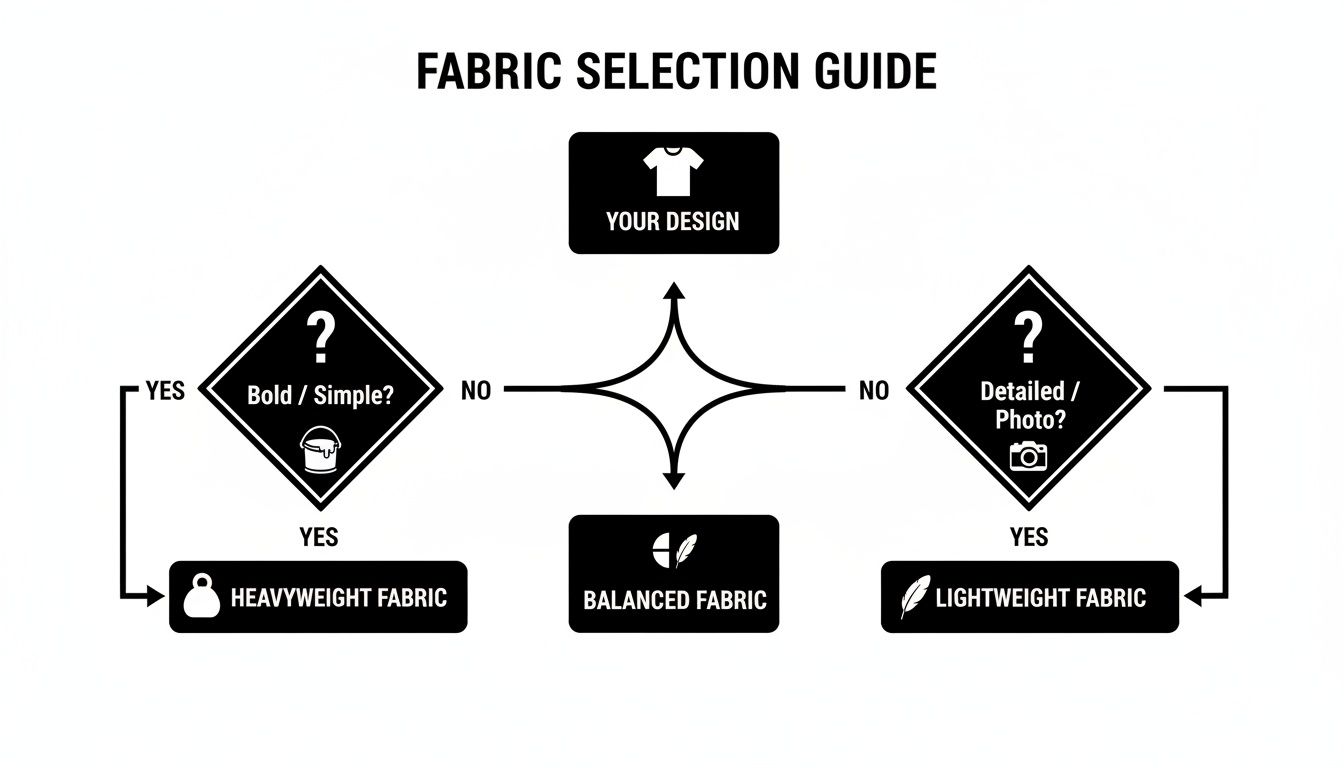
As you can see, big, bold designs often look incredible on heavyweight fabrics that give them a solid, structured canvas. On the flip side, super-detailed or photographic art really pops on lightweight materials that offer a smoother, flatter surface.
Direct to Garment (DTG): The Cotton Champion
DTG is basically an inkjet printer for clothes. Its water-based inks are specifically designed to soak into and chemically bond with natural fibers. That’s why 100% combed and ring-spun cotton is the undisputed king for DTG printing. You get an incredibly smooth, absorbent surface that drinks up the ink, resulting in stunningly vibrant and detailed prints that feel soft and breathable.
Trying to print on polyester or even a low-cotton blend with DTG is just asking for trouble. The ink has nothing to hold onto, which means you'll get a faded, blotchy mess that will likely wash out after the first cycle. If you’re a DTG shop, stick with high-quality cotton. It’s the only way to get the sharp, durable results your customers are paying for.
Screen Printing: The Versatile Workhorse
Screen printing is a classic for a reason. You're pushing ink through a mesh screen directly onto the fabric. While this technique is incredibly versatile, it still has its favorites. Heavyweight cotton and sturdy cotton-poly blends are fantastic choices here. Their robust structure can handle thick layers of plastisol ink without the design getting stretched or distorted.
A nice, tight weave from a quality ring-spun cotton shirt gives you a beautiful surface for screen printing, making sure your lines are crisp and the ink doesn't bleed. While you can screen print on a lot of different materials, you'll always get your best work from fabrics that are stable and have a smooth face.
Direct to Film (DTF): The All-Surface Superstar
And now we get to the real game-changer. With DTF, you print your design onto a special film, coat it with an adhesive powder, and then heat-press the whole thing onto the garment. Because the design is essentially a super-advanced, flexible decal, it doesn't really care what the fabric is made of.
DTF transfers bond beautifully to a massive range of materials, including 100% cotton, 100% polyester, and any blend in between. This versatility is its greatest strength, allowing you to print the exact same vibrant, durable design on a soft cotton tee, a sleek polyester performance shirt, or a cozy 50/50 hoodie.
This flexibility opens up a world of possibilities. You can dramatically expand your product offerings without ever needing to change your printing setup.
To make things even clearer, here's a quick cheat sheet to help you pair your printing method with the right fabrics.
Best T Shirt Fabric for Each Printing Method
| Printing Method | Best Fabric Choice | Good Fabric Choice | Fabric to Avoid |
|---|---|---|---|
| Direct to Film (DTF) | 100% Cotton, 100% Polyester, Cotton/Poly Blends, Tri-Blends | Pretty much anything that can handle a heat press. | Fabrics that can't withstand heat (e.g., some delicate synthetics). |
| Direct to Garment (DTG) | 100% Combed & Ring-Spun Cotton | High-Cotton Blends (80%+) | Polyester, Tri-Blends, 50/50 Blends. |
| Screen Printing | Heavyweight 100% Cotton, 50/50 Cotton/Poly Blends | Ring-Spun Cotton, CVC Blends | Very thin, stretchy fabrics (can distort), some performance polyesters. |
| Heat Transfer Vinyl (HTV) | Cotton, Polyester, Cotton/Poly Blends | Tri-Blends, Canvas | Textured fabrics (e.g., pique polo) or fabrics sensitive to heat. |
This table should serve as a solid starting point. Once you understand how each method interacts with different materials, you can pick the perfect blank for every single project with confidence.
For a more detailed breakdown of these technologies, check out our guide on the best t-shirt printing method to see which one aligns best with your business goals.
Looking Beyond Fabric to Construction and Fit
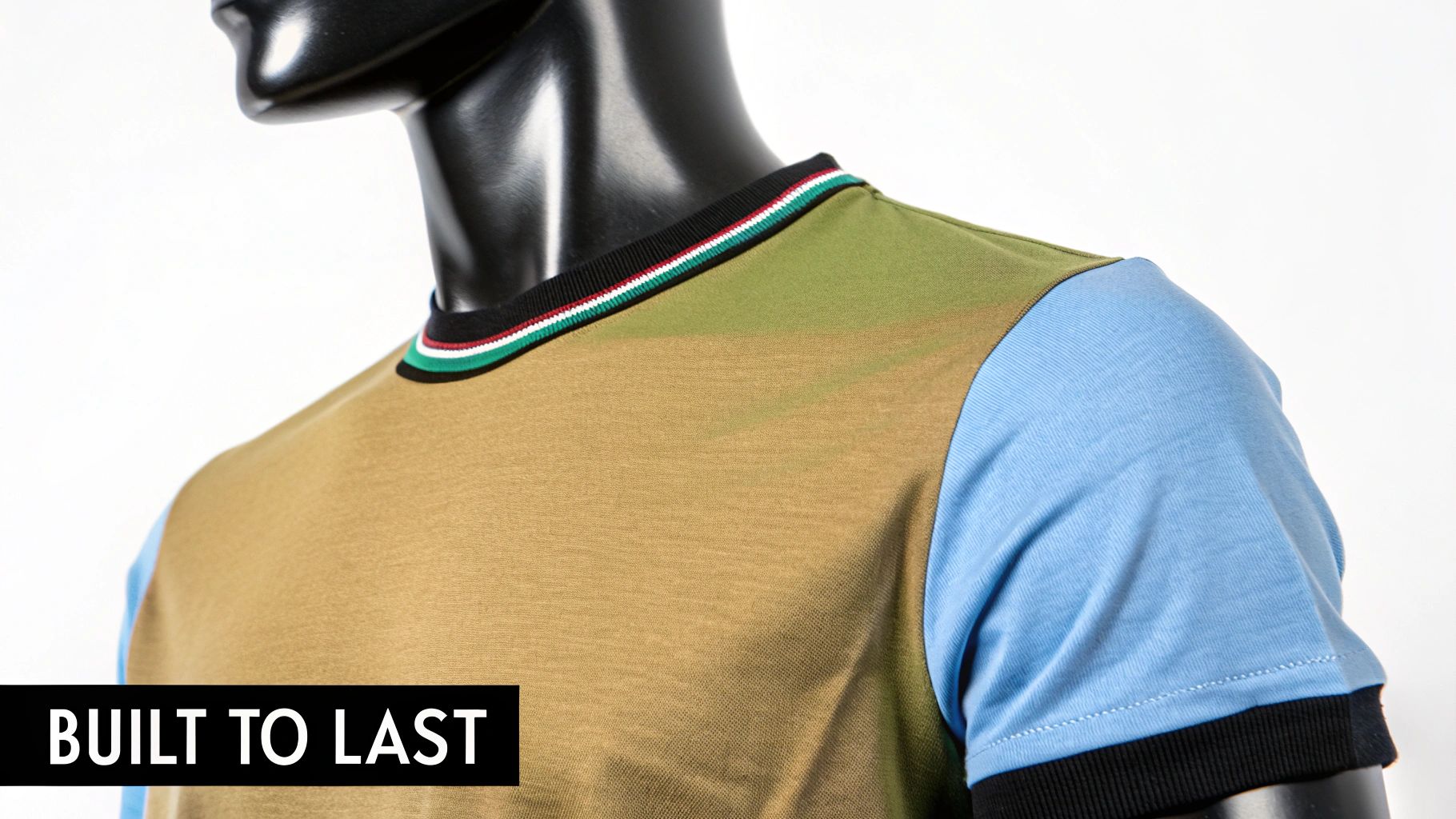
We've talked a lot about fabric, but even the best material can't save a poorly made shirt. The small details in a T-shirt's construction are what truly separate a premium garment from a disposable one. These are the things that make sure your print doesn't just look great on day one but holds up for the long haul.
Think of it this way: fabric is the quality of the wood, but construction is the joinery. You can start with the finest oak, but if the pieces are just slapped together, the final product won't last. The same goes for the highest quality t shirts for printing—you need both top-tier materials and expert craftsmanship.
The Side Seam Advantage
One of the first things I check on a blank is the seam construction. This is a dead giveaway for quality. On the market, you'll mainly run into two types: side-seamed and tubular.
-
Side-Seamed Shirts: These are built more like a traditional garment, with separate front and back panels sewn together along the sides. This method creates a structured, modern fit that actually follows the contours of the human body. More importantly for us, it prevents the shirt from twisting in the wash, which keeps your print straight and where it’s supposed to be.
-
Tubular Shirts: These are literally knit as a single tube of fabric, making them way faster and cheaper to produce. The downside? They have no real structure. After a few washes, they almost always warp, leading to that dreaded "bacon neck" and a side seam that migrates toward the front. For any serious printer, that’s a deal-breaker.
A side-seamed shirt gives you a stable, reliable canvas that respects your design. Simply choosing a side-seamed blank over a tubular one is one of the easiest ways to instantly boost the perceived value of your finished product.
Reading the Garment for Durability
Beyond the main seams, a few other tell-tale signs point to a well-made shirt that can handle the printing process and repeated wear. Learning to spot these is a skill that will save you a lot of headaches.
Double-Needle Stitching Take a close look at the sleeve hems and the bottom hem of the shirt. You want to see double-needle stitching—two neat, parallel lines of thread. This adds serious strength to high-stress areas, preventing them from unraveling and helping the garment keep its shape. A single stitch is a major red flag that corners were cut to save money.
High-Quality Ribbed Collars The collar is another make-or-break feature. A good collar is made from ribbed knit fabric that has a little bit of spandex or lycra blended in. This gives it the stretch to go over a head easily but allows it to snap right back into shape, avoiding that wavy, stretched-out look. Also, feel for taped neck and shoulder seams. This is a strip of fabric sewn over the seam that adds comfort and reinforces the shirt’s structure.
Once you know how to "read the garment" for these construction cues, you can pick your blanks with confidence. You’ll know you’re choosing a shirt that not only takes a print beautifully but will also maintain its shape and feel, ensuring your customers get a premium product that lasts.
Top Brands and Where to Source Them
Okay, so you know what makes a good shirt. That's the first half of the battle. Now, where do you actually find the brands that deliver on that quality time and time again?
Walking into the world of blank apparel can feel like a sensory overload. There are hundreds of brands, all claiming to be the best. The secret is to do what the pros do: stick with the names that have already proven themselves in print shops nationwide. These are the brands that have built a reputation on killer fabric, solid construction, and sizing you can trust—everything we've just covered.
The Go-To Brands for Professional Printers
When you're ready to buy blanks that will make your designs pop, a few names always come up in conversation. Each has its own vibe and price point, but they all share a serious commitment to quality.
- Bella+Canvas: Honestly, many consider this brand the gold standard, especially for soft, modern-fitting shirts. They use 100% Airlume combed and ring-spun cotton, which gives you an incredibly smooth canvas that's a dream for DTF and DTG printing.
- Next Level Apparel: A major contender that goes toe-to-toe with Bella+Canvas. Next Level is known for its super-soft fabrics, slightly more athletic fits, and excellent CVC and tri-blend options. They hit a real sweet spot between quality and cost.
- Comfort Colors: If you're going for a different feel entirely, Comfort Colors is the king of garment-dyed tees. This process creates that soft, pre-washed, "lived-in" look that's hugely popular with boutique brands and lifestyle apparel. The shirts have a heavier, more substantial feel.
Sourcing is more than just a price hunt; it's about building a supply chain you can depend on. Who you buy from is just as important as what you buy. For a deeper dive, check out our guide on finding wholesale blank apparel suppliers.
Why You Should Seriously Consider USA-Made Blanks
Here's a pro tip: one of the smartest moves you can make is to source T-shirts made right here in the USA. Think about it. When you press an American-made DTF transfer onto an American-made shirt, you're creating a product that tells a powerful story. But this is more than just patriotism; it's a solid business strategy.
Opting for USA-made blanks gives you a much more stable supply chain. That means faster shipping and no more sweating over international customs delays or surprise tariffs. That kind of reliability is gold when you have deadlines to meet and customers waiting.
Domestic mills are also often at the forefront of fabric innovation. For example, premium American Apparel fine jersey tees can score over 95% in wash fastness tests, which means they hold their color and shape even after being hammered in industrial laundry cycles. The numbers don't lie: shops that switch to high-quality, sustainable U.S. blanks have seen their profit margins climb by up to 12%, all thanks to happier customers who keep coming back.
Once you have your supply of great shirts lined up, the next piece of the puzzle is getting them to your customers efficiently. It’s worth looking into how successful D2C companies handle their logistics, and a good place to start is understanding apparel fulfillment services for D2C brands. At the end of the day, spending a little more upfront on a better blank is an investment that pays for itself through incredible print results and a rock-solid brand reputation.
Got Questions About T-Shirt Quality? We've Got Answers.
When you're sourcing blank tees, a lot of questions pop up. It's a world filled with jargon and tiny details that make a huge difference. Let's clear the air and tackle some of the most common things printers ask when they're on the hunt for the perfect shirt.
What's the Single Biggest Factor for a Killer Print?
Construction and fit are a big deal for the person who ends up wearing the shirt, but for the print itself? It all comes down to the fabric surface. You're looking for a smooth, tight-knit canvas, which you typically get with 30 singles or higher combed and ring-spun cotton.
A premium surface like that keeps the ink sitting sharp and clean on top, preventing it from getting fuzzy or bleeding into the fibers—a nightmare called fibrillation. It's like trying to draw on a paper towel versus a piece of high-quality cardstock. The surface you start with defines what's possible.
Does a Higher Price Tag Always Mean a Better Shirt for Printing?
Not always, but you definitely get what you pay for. A higher price usually means you're getting better raw materials (like soft ring-spun cotton instead of scratchy open-end cotton), smarter construction (side-seamed for a better fit vs. a boxy tubular cut), and important extras like pre-shrinking.
Instead of just looking at the price, think about the value. A mid-priced shirt with a high yarn count and a smooth face will run circles around a cheap, rough alternative every single time. Spending a little more upfront pays off big time in customer happiness and protects your brand's reputation.
An investment in a better blank is an investment in your brand. It pays off through fewer returns, better reviews, and customers who are proud to wear your work.
Can I Use the Same T-Shirt for DTG and DTF?
You bet. A high-quality 100% cotton shirt is a fantastic choice for both. That premium ring-spun cotton we keep talking about? It has the perfect absorbency for DTG inks to sink in just right, and it provides that smooth, stable surface for DTF adhesives to grab onto. It's a true workhorse.
The real magic of DTF, though, is its versatility. It opens up a whole new world of fabrics that DTG just can't handle, like 100% polyester and all sorts of poly-blends. So while a great cotton tee works for both, DTF lets you expand your catalog way beyond the basics.
How Should I Test a New Blank Before a Big Order?
Never, ever skip the test run. Trust me on this. The best way to know if a shirt is worthy is a simple "wash and wear" test.
- Print a sample: Grab one shirt and print your design on it, exactly as you would for a customer.
- First impressions: Right off the press, how does it look? Are the details crisp? Are the colors popping?
- Run it through the laundry: Wash and dry it at least 3-5 times. Follow the shirt's care instructions to the letter.
- The final verdict: Now, take a hard look. Did the print crack, peel, or fade? What about the shirt itself—did it shrink up to a doll's size, get twisted at the seams, or lose its shape completely?
This little bit of prep work is your best insurance policy against a mountain of wasted inventory and a flood of angry customer emails. It’s a non-negotiable step for anyone serious about quality.
Ready to pair your high-quality shirts with the best transfers on the market? At Cobra DTF, we provide vibrant, durable, and American-made DTF transfers that bring your designs to life. Experience the difference with our fast, reliable service by visiting the Cobra DTF website today.