
Dtf t shirt printing: A Complete Guide to Custom Tees
DTF t-shirt printing is a game-changer for custom apparel. Think of it as creating a high-quality, durable sticker for your fabric. We print a design onto a special film, add a powdered glue, and then heat-press it right onto the t-shirt. The result? Vibrant, full-color designs that work on all sorts of fabrics, from cotton to polyester and everything in between. It's quickly become the go-to method for detailed, long-lasting custom gear.
What Is DTF T-Shirt Printing?
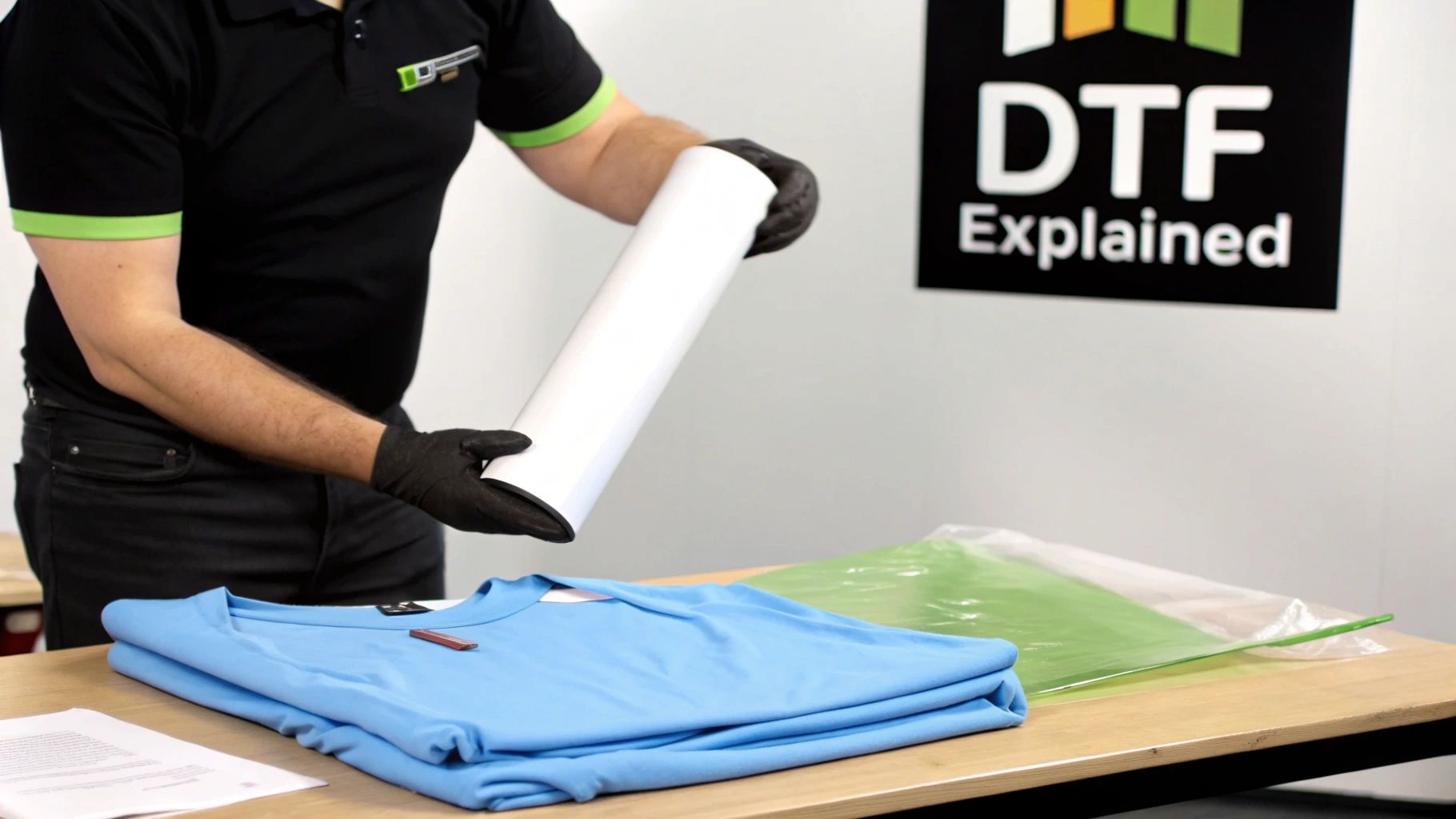
DTF stands for Direct-to-Film, and it’s a modern way to decorate clothing that has really taken the industry by storm. The process itself is surprisingly straightforward but incredibly effective. It's a bit like making a high-tech decal that you can press onto almost any fabric, giving you amazing detail and a print that lasts.
Unlike methods like Direct-to-Garment (DTG) where ink goes straight onto the shirt, DTF flips the script. Your design is first printed onto a sheet of special PET (polyethylene terephthalate) film. This creates a ready-to-go graphic—a transfer—that can be applied to your garment whenever you're ready.
The Rise of a Flexible Printing Solution
The reason DTF has become so popular comes down to one word: flexibility. Many printing techniques box you in, limiting you to certain types of fabric. DTF breaks those rules. It works beautifully on a massive range of materials, making it the perfect solution for just about any apparel project you can dream up.
Here’s why so many people are making the switch:
- Fabric Versatility: You can press DTF transfers onto cotton, polyester, nylon, leather, and even tricky blends without a problem.
- Vibrant Colors on Any Garment: The process starts with a layer of white ink under your design. This means your colors will pop with incredible brightness and opacity, even on a black t-shirt.
- No Pre-Treatment Required: Other methods often require you to spray a chemical pre-treatment on the garment, which adds time, cost, and another step to the process. DTF skips that entirely.
- Durability and Feel: The finished print feels soft and has great stretch. It moves with the fabric instead of fighting against it, so you don't have to worry about the cracking and peeling you see with lower-quality prints.
The real magic of DTF is how it blends the best of other methods. You get the incredible color and pop of screen printing combined with the fine detail of DTG, but with a versatility that neither can offer alone. It’s the ultimate hybrid for today's custom apparel.
Why It Matters for Small and Large Businesses
DTF technology has really opened doors for apparel creators of all sizes. For small businesses or anyone just starting out, DTF t-shirt printing is incredibly accessible because there are no hefty setup costs for one-off orders. You don't need to create expensive screens for every color, which makes small runs with lots of colors totally affordable.
For bigger brands, DTF delivers pure efficiency. You can print—or "gang"—a ton of different designs onto a single sheet of film, which cuts down on waste and seriously speeds up production. This scalability means businesses can use the exact same high-quality process for a single custom order or a massive run of merchandise. At the end of the day, DTF provides a reliable, top-tier way to bring any digital design to life on almost any piece of clothing.
How a DTF Transfer Comes to Life Step by Step
Ever wondered how a digital design file on a computer screen becomes a vibrant, wearable piece of art? The DTF t-shirt printing process is a fascinating journey from pixels to fabric. It’s a precise, multi-stage method, but it’s actually pretty straightforward when you break it down. Think of it as a carefully choreographed dance between ink, film, adhesive, and heat.
This systematic approach is a huge reason for the industry's explosive growth. The global market for direct-to-film printing has soared, all thanks to its incredible versatility and lower setup costs compared to old-school methods like screen printing. This surge shows just how effective and reliable the process is for creating custom apparel. You can read more about this market growth in this comprehensive industry report.
Let's walk through each stage to see exactly how your design makes the leap from screen to shirt.
Step 1: Artwork Preparation
It all starts with a good digital file. Before any ink ever touches the film, the artwork has to be perfect. This means saving the design at a high resolution—we're talking 300 DPI (dots per inch)—to guarantee every line is sharp and clear. Anything less, and you risk a blurry, pixelated final print.
The background of the design also has to be transparent. This is non-negotiable. The printer reproduces exactly what it sees, so a transparent background ensures that only your graphic gets printed, not a clunky white or colored box around it.
Step 2: Printing onto the Transfer Film
Once the art file is dialed in, it’s sent to a specialized DTF printer. This isn't your typical office machine; it’s purpose-built to handle special inks and the unique transfer film. The printer starts by laying down the full-color layer of your design using CMYK (Cyan, Magenta, Yellow, Black) inks.
Right after the color goes down, the printer lays a layer of brilliant white ink directly on top of it. This white layer is the secret sauce behind DTF's success. It does two critical things:
- Opacity on Dark Garments: It acts as a solid foundation, making sure your design’s colors pop, even when you press them onto a black or navy shirt.
- Adhesive Bonding: It creates the perfect tacky surface for the adhesive powder to grab onto in the next step.
Step 3: Applying the Adhesive Powder
While the ink is still wet, the printed film is coated with a special thermoplastic polyurethane (TPU) adhesive powder. It gets a generous dusting, but the powder only sticks to the wet ink, leaving the blank areas of the film completely clean.
Think of this powder as the "glue" that will permanently bond your design to the fabric. Any excess is shaken off, leaving a perfectly coated graphic that’s ready for the next phase. This clever step is what gives the final transfer its amazing durability and flexibility. For a deeper dive into how these elements work together, check out our guide on DTF custom transfers.
Step 4: Curing the Transfer
Now it's time to cure the powdered film. It’s passed through a special curing oven or placed under a heat press that hovers just above the surface. The heat melts the powder, turning it into a smooth, even layer that basically shrink-wraps the ink.
This curing process is absolutely essential. It stabilizes the whole transfer, creating a single, solid sheet that's dry to the touch and ready for application. If you skip or rush this, you'll end up with a messy, failed transfer.
Step 5: Pressing onto the T-Shirt
Finally, the moment of truth! We bring the design and the t-shirt together. The cured DTF transfer is placed exactly where you want it on the garment. Then, a heat press comes down, applying firm pressure at a specific temperature (usually around 300-325°F) for about 10-15 seconds.
This combination of heat and pressure reactivates the adhesive, allowing it to fuse deep into the fabric's fibers. After pressing, the film is peeled away, and what's left behind is a crisp, vibrant, and incredibly durable print. The result is a professional-quality custom t-shirt with a design that feels soft and is truly built to last.
Comparing DTF Against Screen Printing and DTG
Picking the right way to decorate your t-shirts can feel like a tough choice. You've got the old-school champ, screen printing, and the high-tech option, Direct-to-Garment (DTG). So, where exactly does DTF t-shirt printing fit into the picture? The secret is knowing the unique pros and cons of each method. That's how you'll make a smart, cost-effective decision for your project.
Think of these three as different tools in a workshop. You wouldn't use a sledgehammer to hang a picture frame, right? In the same way, the best printing method really depends on what you're trying to create. Things like your design's complexity, how many shirts you need, the type of fabric, and even the feel you're going for all play a huge role.
This diagram lays out the simple, step-by-step workflow for a DTF transfer, taking a design from a digital file to a finished shirt.
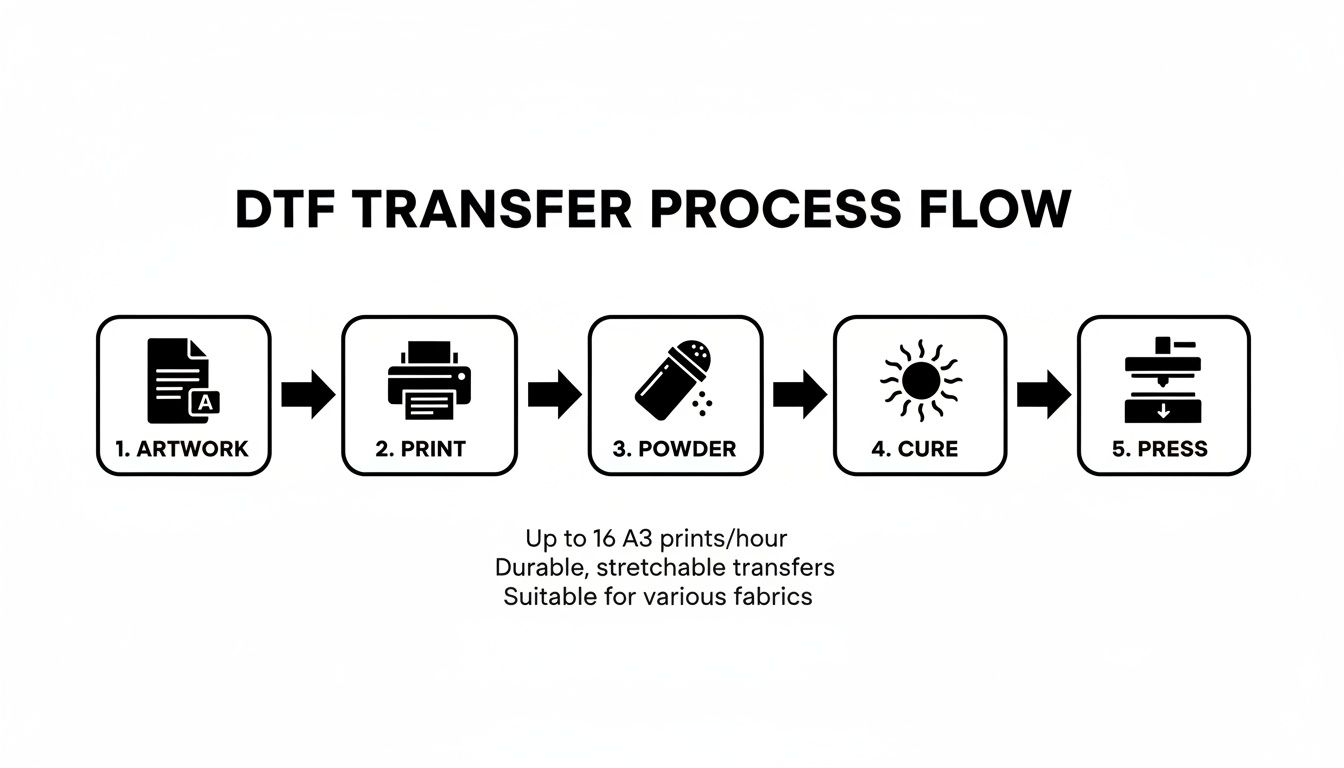
The straight-line efficiency you see here—artwork, print, powder, cure, and press—is a huge reason why so many businesses are jumping on the DTF train to get orders out the door faster.
H3: DTF vs. Screen Printing: The Classic Showdown
For massive orders with simple graphics, screen printing is still the undisputed king. The process is a bit like making a stencil (the "screen") and pushing ink through it onto the shirt. It's incredibly efficient for big runs of the same one or two-color design, making it the perfect choice for things like 5K race shirts or basic company logos. As you print more, the cost per shirt plummets.
But that strength is also its biggest weakness. You need a brand new screen for every single color in your artwork. A photorealistic image or a design with a rainbow of colors quickly becomes a complicated and expensive nightmare, with hefty setup fees for each screen. DTF, on the other hand, prints every color at once with zero setup, making it the clear winner for detailed, full-color designs in small to medium batches.
Screen printing shines with high-volume, low-color jobs where cost is king. DTF completely changes the game with its ability to handle complex, full-color designs affordably at any quantity—from one to one thousand.
H3: DTF vs. DTG: The Modern Competitor
Direct-to-Garment (DTG) printing is basically an inkjet printer for clothes. It sprays water-based inks that soak directly into the fibers of a shirt. The result is a print with an unbelievably soft feel that you can't even feel on the shirt—it’s completely breathable. For designs going on light-colored, 100% cotton shirts, DTG creates a beautiful, soft finish that's tough to top.
The big catch with DTG is that it's a bit of a diva. It really only loves 100% cotton, and it almost always needs a chemical pre-treatment spray, which adds another step, another cost, and another chemical to the process. It also has a tough time with polyester and other synthetic fabrics, and the colors can look a bit washed out on dark shirts compared to how they look with DTF.
DTF elegantly solves these issues. Since the design is printed on a film first and then transferred, it can be pressed onto almost any material you can think of—cotton, polyester, blends, nylon, even leather—with no pre-treatment needed. That crucial white ink base layer ensures your colors pop just as brightly on a black hoodie as they do on a white tee. If you want to dive deeper, check out our complete guide comparing DTF vs. DTG printing.
H3: Making the Right Choice for Your Project
So, how do you decide? To make it easy, we've put together a quick comparison chart that lays out the key differences. This should help you line up what your project needs with the best tool for the job.
DTF vs Screen Printing vs DTG At a Glance
This table breaks down the three most popular t-shirt printing methods across the factors that matter most, helping you choose the right one for your specific needs.
| Feature | DTF (Direct-to-Film) | Screen Printing | DTG (Direct-to-Garment) |
|---|---|---|---|
| Best For | Full-color, detailed designs on any fabric, in any quantity. | Large runs (100+) of simple, low-color designs. | Soft-feel prints on 100% cotton light-colored garments. |
| Design Complexity | Excellent; perfect for photos, gradients, and fine details. | Poor; costly and complex for multiple colors. | Excellent; handles photorealistic images and details well. |
| Fabric Compatibility | Widest range; works on cotton, polyester, blends, and more. | Good; works on most fabrics but can require special inks. | Limited; best results are almost exclusively on 100% cotton. |
| Print Feel | Soft and flexible, sits on top of the fabric. | Can be thick and heavy, especially with many colors. | Extremely soft and breathable, as ink soaks into fibers. |
| Cost-Effectiveness | Highly affordable for small-to-medium runs of any design. | Most affordable for very large quantities of simple designs. | Good for one-offs and small orders of full-color designs. |
| Durability | Excellent; rated for 50+ washes without cracking or fading. | Very durable, often outlasting the garment itself. | Good, but can fade faster than DTF or screen printing. |
The explosion in DTF's popularity comes down to its incredible balance of performance. The custom t-shirt market is a massive $8.17 billion industry, and DTF has already carved out 15-20% of that space. Print shops using DTF often report turning jobs around up to 40% faster, helping them keep up with the huge demand for on-demand, personalized gear.
Ultimately, while screen printing and DTG are great at what they do, DTF printing offers the most versatile, vibrant, and durable solution for the huge variety of apparel decoration jobs people need today.
So, What Are the Real-World Benefits of DTF?
Okay, we've covered the technical side, but what does DTF printing actually mean for you and your t-shirt project? Let's get down to the practical advantages. This is where you'll see why so many creators, brands, and event planners are making the switch.
From the freedom to print on pretty much anything to the incredible visual pop, DTF solves a lot of the common headaches that come with custom apparel. Here’s what you can realistically expect.
Print on Almost Any Fabric
This is probably the biggest game-changer. One of the main frustrations with other printing methods is how picky they are about fabrics. DTF isn't like that. You can apply these transfers to a huge range of materials without a hitch.
This means you’re no longer stuck with just 100% cotton. You can let your creativity run wild across all sorts of apparel.
- Cotton & Blends: Your standard t-shirts, hoodies, and sweatshirts will look fantastic.
- Polyester & Performance Wear: Perfect for athletic jerseys, team gear, and those moisture-wicking fabrics that other methods struggle with.
- Tougher Materials: You can even press DTF transfers onto denim, canvas, leather, and nylon.
This versatility makes DTF a true all-in-one solution. You can use it to create a line of premium cotton tees one day and brand a set of polyester gym bags the next.
Get Stunning Color and Incredible Detail
When it comes to visual quality, DTF really shines. If your design has vibrant colors, photorealistic images, complex logos, or soft gradients, this is the method you want. The results are consistently sharp and brilliant.
The secret weapon here is the white ink base layer that's printed under your design. It acts as a perfect, opaque primer, making sure every color pops—even on a black or dark-colored shirt.
Think of it this way: DTF gives you the full-color, high-resolution capabilities of a top-tier digital printer combined with the bright, solid opacity you get from traditional screen printing. Your designs will have a richness and clarity that truly stands out.
A Print That’s Both Durable and Soft to the Touch
A great-looking shirt is only half the battle. It also has to feel good to wear and hold up over time. DTF transfers score high on both points. The finished print has a smooth, soft feel that doesn’t feel like a heavy, plastic shield sitting on the fabric.
More importantly, it’s built to last. The ink and adhesive are engineered to stretch and move with the fabric, so you don't have to worry about cracking, peeling, or fading. With proper care, these prints can easily handle 50+ washes and still look great. It’s a print that’s actually made to be worn, not just admired.
Save Money on Any Order Size
Let's talk about cost, because this is a huge reason for DTF's popularity. The bottom line? No setup fees. Unlike screen printing, which requires a new, costly screen for every single color in your design, DTF prints all the colors at once.
This makes it incredibly affordable for small batches, one-off samples, or orders with a bunch of different designs. It’s why the industry produced over 7.2 billion prints last year—DTF can bring the cost of a full-color shirt down to just $2-4 per unit, while a small screen print run can easily cost $5-8. You can dig into more of the numbers on DTF's market impact and cost advantages.
This pricing structure is a lifesaver for small businesses and independent creators. You can produce professional-quality gear without having to order hundreds of units upfront.
A Smarter, More Sustainable Choice
In a world that’s (rightfully) becoming more eco-conscious, DTF offers a cleaner way to print. The process itself is simply less wasteful than many of the alternatives.
Because the ink goes directly onto the film, there's very little overspray or wasted ink. It also uses a tiny fraction of the water required for methods like DTG, which often need extensive pre-treatment and wash cycles. This focused use of resources makes DTF t shirt printing a more responsible choice for bringing your apparel ideas to life.
Preparing Your Artwork for Flawless DTF Prints
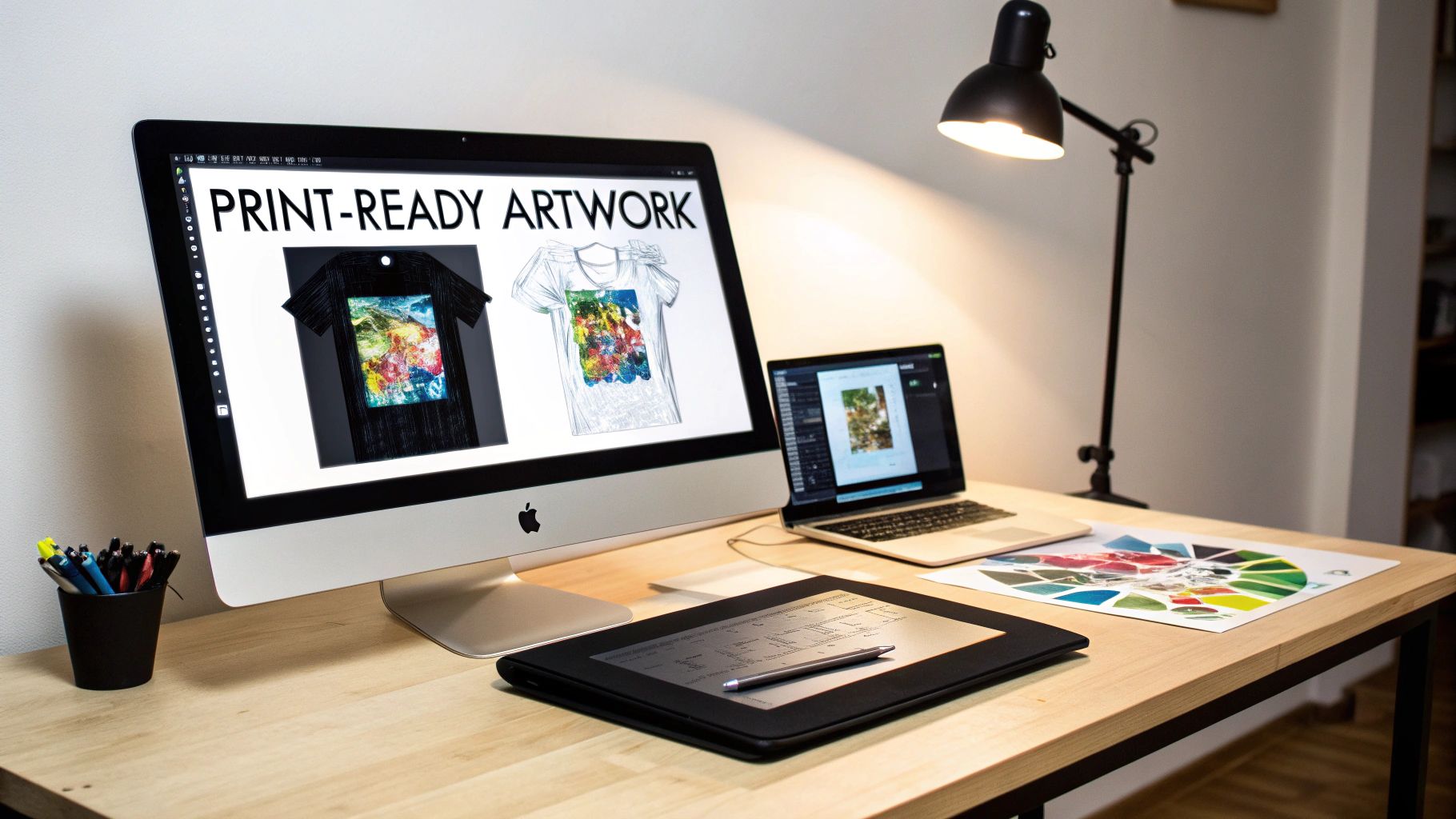
The incredible quality you get from DTF t shirt printing doesn't just happen at the printer. It all starts with your digital artwork. Think of your design file as the blueprint for your final shirt—if the blueprint has flaws, you can bet the finished product will, too.
Getting your art right from the get-go is the single most important thing you can do to ensure a professional, vibrant, and sharp print. It saves a ton of time, prevents frustrating reprints, and guarantees your design looks just as amazing on fabric as it does on your screen.
The Non-Negotiable Rule of 300 DPI
First up, let's talk resolution. Your artwork absolutely must be created and saved at 300 DPI (dots per inch). This isn't just a suggestion; it's the industry standard for high-quality printing, and for DTF, it's critical.
Ever seen a small photo blown up to fit a massive billboard? It becomes a blurry, pixelated mess. The same exact thing happens here. A low-resolution file, like a 72 DPI image you might grab from a website, simply doesn't have enough data for the printer to create crisp, clean lines. Sticking to 300 DPI ensures every last detail is rendered with professional clarity.
Your artwork’s resolution is the foundation of a great print. Starting with a 300 DPI file is the difference between a blurry, amateurish result and a sharp, retail-quality t-shirt that truly impresses.
File Formats and Why Transparency is Key
The type of file you send over is just as important as its resolution. We often see files like JPEGs, which are great for web photos, but they're a no-go for DTF. Why? Because they don't support transparency. This means any "empty" space around your design will print as a solid white box on the shirt.
To avoid that dreaded white box, you have to use a file format that supports a transparent background. This ensures only your actual design gets printed, giving it that clean, professional look.
Here are your best bets:
- PNG (Portable Network Graphics): This is the go-to for most people. It’s perfect for pixel-based art, handles high resolutions, and most importantly, keeps your background transparent.
- AI (Adobe Illustrator), EPS, or PDF: These are all vector formats. Instead of pixels, they're made of mathematical equations, which means you can scale them to any size without losing a drop of quality. They are the top choice for logos and graphics with sharp, clean lines.
Pro Tips for Perfect Prints
Once you have the basics of resolution and file type down, a few extra details can take your prints from good to truly flawless. Paying attention to these things helps make sure even the most complex parts of your design translate beautifully to fabric.
Fine Lines and Small Text DTF can handle amazing detail, but even it has its limits. Extremely thin lines or tiny text can be a problem because there isn't enough surface area for the adhesive powder to grab onto. As a rule of thumb, try to keep lines at a minimum thickness of 2-3 points and make sure your text is big enough to be easily legible. This ensures it not only prints clearly but also sticks around for the long haul.
Gradients and Special Effects DTF does a fantastic job with gradients and color blends. For the smoothest possible transition, however, you’ll want to make sure your gradient doesn't just end abruptly at full transparency. A pro tip is to add a subtle "dither" or noise effect to the edge of your gradient. This little trick helps create a much softer, more natural-looking fade on the final print.
For a deeper dive into getting your design just right, check out our detailed guide to DTF printing on shirts.
Got Questions About DTF T-Shirt Printing? We've Got Answers.
As you dive into the world of custom apparel, it's totally normal for questions to pop up. The technical specs are one thing, but what you really want to know is how DTF t-shirt printing holds up in the real world. This is where we tackle the most common questions we hear every day, giving you straight-up answers to help you feel confident in your choice.
We'll cover everything from how long your prints will last and how to care for them, to what the design actually feels like on the shirt. Think of this as your practical, no-fluff guide to DTF.
How Long Do DTF Prints Last and How Do I Care for Them?
This is usually the first thing people ask, and for good reason—you want your hard work to last. The fantastic news is that DTF prints are built to be incredibly durable. When they’re applied correctly and you take care of them, a high-quality DTF transfer is rated to handle 50+ wash cycles without cracking, peeling, or fading away.
The secret sauce is the powerful bond between the thermoplastic adhesive and the fabric's fibers. This creates a print that’s not just strong but also flexible. Of course, a little bit of care on your part goes a long way in making it last even longer.
Following a few simple tips will keep your prints looking sharp for years.
Washing and Care Best Practices
To get the absolute most life out of your DTF-printed gear, just follow these simple guidelines:
- Turn the Garment Inside Out: This is the single best thing you can do. It protects the print from rubbing against other clothes and the machine, drastically reducing friction and wear.
- Go Cold and Gentle: Wash your shirts in cold water on a gentle cycle. Hot water can be tough on both the fabric and the print, and it might weaken the adhesive over time.
- Use a Mild Detergent: Stick to basic, mild detergents. Steer clear of harsh chemicals, bleach, and fabric softeners, as they can break down the inks and adhesive.
- Hang Dry or Tumble Dry Low: The absolute best way to dry your shirt is to hang it up. If you're in a hurry and need to use a dryer, make sure it's on the tumble dry low or even a no-heat setting. High heat is the ultimate enemy of any printed shirt.
- Never Iron Directly on the Print: If you need to get some wrinkles out, just make sure the shirt is still inside out. A hot iron placed directly on a DTF transfer will melt it and cause permanent damage.
Follow these steps, and you'll keep that print looking as vibrant and feeling as flexible as the day you first pressed it.
What Does a DTF Print Feel Like on a Shirt?
This is another big one—what's the "hand," or the feel of the print? Nobody wants a design that feels like a thick, plastic shield on their chest. Thankfully, one of the best things about DTF t-shirt printing is how remarkably soft and lightweight the final transfer feels.
While the print sits on top of the fabric instead of soaking in like DTG, it’s incredibly thin and flexible. The layer of cured ink and adhesive is engineered to stretch and move right along with the garment. That means when you're wearing the shirt, the design flexes with you instead of feeling stiff or restrictive.
The best way to describe it is smooth and almost seamless. It's a world away from the heavy feel of old-school vinyl or some screen printing transfers, giving you a premium feel that matches the professional look.
Can DTF Print Vibrant Colors on Dark Shirts?
Absolutely. In fact, this is where DTF truly shines. Getting bright, punchy colors to show up on dark fabrics has always been a huge hurdle for other printing methods. DTF was practically built to solve this exact problem.
The magic is in the automatic white ink underbase. As the transfer is being printed, a solid layer of bright white ink is laid down first, directly underneath your colored design. This white layer acts like a primer on a wall, creating an opaque canvas for your artwork.
So when you press that transfer onto a black, navy, or forest green shirt, the underbase stops the fabric's dark color from peeking through. The result? Your colors stay true, bright, and pop just as vividly on a black hoodie as they would on a plain white tee.
What Is a Realistic Turnaround Time for a DTF Order?
Turnaround time is often the deciding factor, especially when you're on a deadline for an event, a new product drop, or a team order. A huge advantage of DTF is that it skips the long, complicated setup needed for methods like screen printing. This means production can get going much, much faster, especially for small to medium-sized batches.
A realistic turnaround time depends on a few things:
- Order Size: A smaller order of a few dozen transfers can often be printed and out the door in just one business day. Naturally, larger orders for thousands of prints will take a bit longer.
- Supplier Location: This is a big one. Choosing a US-based supplier like Cobra DTF slashes shipping time compared to ordering from overseas, where you could be stuck waiting for weeks.
- Artwork Readiness: If your art file is good to go (300 DPI, transparent background), we can get started right away. If files need to be fixed or adjusted, that can add a little time.
For most standard orders with a domestic supplier, you can realistically expect a production time of 1-3 business days, plus another 1-3 days for shipping. That kind of speed is a game-changer for businesses that need top-quality custom apparel without the long wait.
Ready to experience the quality, speed, and versatility of American-made transfers? Cobra DTF offers premium DTF transfers with same-day shipping and a satisfaction guarantee. Start your order today and see the difference for yourself.