
What Is Heat Transfer Vinyl? A Crafter's Guide
If you’ve ever wondered how custom t-shirts get those crisp, vibrant graphics, you’ve probably encountered heat transfer vinyl, or HTV for short. It's essentially a special vinyl material that lets you transfer custom designs onto fabrics like shirts, hats, and bags using heat. Think of it like a high-tech, super-durable version of the iron-on decals you might have used as a kid.
The Foundation of Custom Apparel
So, what exactly is heat transfer vinyl? At its core, it’s a cleverly engineered material with a few distinct layers. The first is a clear plastic carrier sheet on top that holds everything together and keeps your design perfectly aligned.
The middle layer is the star of the show—the actual colored, patterned, or textured vinyl that will become your design. And on the bottom, you have a special heat-activated adhesive.
When you bring heat and pressure into the mix with a heat press, that adhesive melts and fuses directly into the fibers of the fabric. Once it cools, the vinyl becomes a permanent part of the garment. This is how you get those sharp, professional-looking designs that can handle wash after wash.
The real magic of HTV is its ability to transform a plain piece of clothing into a personalized statement. It's the go-to method for creating everything from sports team jerseys to custom-branded merchandise for small businesses.
To give you a better idea of the creative possibilities, let's look at a few of the most popular types of HTV. Each one offers a completely different look and feel, so you can pick the perfect material for whatever project you have in mind.
Quick Guide to Common HTV Types
| HTV Type | Best For | Key Feature |
|---|---|---|
| Standard/Matte | Everyday T-Shirts & Logos | A smooth, non-shiny finish that's flexible and durable. |
| Glitter | Fashion Apparel & Accessories | Contains sparkling flakes for a vibrant, textured effect. |
| Flock | Letterman Jackets & Hoodies | A soft, fuzzy, suede-like texture that adds dimension. |
| Holographic | Specialty Designs & Bags | An iridescent, rainbow-like sheen that changes with light. |
As you can see, the options go way beyond a simple, flat color. From the soft touch of flock to the eye-catching shimmer of holographic vinyl, there's an HTV out there for just about any look you can imagine.
How Heat Transfer Vinyl Actually Works
So, how does a digital design end up permanently stuck to a t-shirt? The process behind heat transfer vinyl is actually pretty clever, combining precision cutting with the straightforward physics of heat and pressure. It’s way more robust than just slapping a sticker on fabric.
It all starts with your design on a computer. You feed that file to a digital cutting machine—think of a Cricut or a Silhouette—which then meticulously cuts your design out of a sheet of HTV. The key here is that it cuts the design in reverse, a mirror image of the final product.
From Digital Cut to Physical Design
After the cutter has done its job, you get to do a surprisingly satisfying step called weeding. This is just a fancy term for peeling away all the extra vinyl that you don't want in your final design, leaving only your graphic behind on its clear plastic carrier sheet.
That clear carrier sheet is your best friend. It holds all the separate parts of your design perfectly in place for the next step, which is where the real magic happens: applying heat.
Every piece of HTV has a special heat-activated adhesive on its backside. When you press it with a heat press or an iron, that adhesive gets hot, melts, and becomes like a liquid. The pressure from the press then squishes that melted glue deep into the fibers of the fabric. It's a similar principle to other crafting materials like fusible interfacing, which also uses heat to create a bond.
Once it cools down, the adhesive hardens again, creating a permanent bond right inside the fabric's weave. This is why a good HTV design can stretch with the shirt and survive countless trips through the washing machine.
This simple infographic gives you a great visual of the different layers involved.

From the carrier sheet that holds everything together to the adhesive that makes it permanent, each layer has a critical job. The core concept is something you see in other apparel decoration methods, too. In fact, if you're curious, you can see the parallels when you learn more about how transfer paper works in our other guide.
The Essential Tools for Your First HTV Project

Ready to stop thinking about it and start making things? Getting into heat transfer vinyl is a lot easier than you might think. You only need a handful of key items to get your first project off the ground. Think of this as your starter pack for turning plain old t-shirts into something special.
To get your design cut and ready, you really only need three core tools:
- Heat Transfer Vinyl (HTV): This is the main event! HTV comes in a wild variety of colors and finishes, so you can always find the perfect material for your idea.
- A Cutting Machine: This little workhorse is what takes your design from a digital file on your computer to a physical decal. Popular machines like a Cricut or Silhouette are perfect for getting started.
- A Weeding Tool: It might look like a dental pick, but this tiny hook is your best friend for pulling away all the little bits of extra vinyl from your cut design.
Once you have these three things, you're all set to prep any HTV design. But the final piece of the puzzle is where the real magic happens: applying the heat.
Choosing Your Heat Source
To get your design to stick permanently, you need a combination of heat and pressure. You've got two main options here, and the best choice really comes down to your budget and the kind of results you're after.
A dedicated heat press is what the pros use, and for good reason. It delivers perfectly even heat and pressure across your entire design, which is the key to making sure your transfer won't peel or crack after a few washes. If you're planning to sell your creations, a heat press is a must-have investment.
That said, a standard household iron can absolutely get the job done when you're just starting out. It's a fantastic, low-cost way to try HTV without a big commitment. You'll just need a bit of patience and elbow grease to get the pressure right. If you go this route, check out our guide on how to properly iron on a transfer for some pro tips.
Once you know what each tool does, it's a lot less intimidating to gather your supplies and dive into your first project.
Dive Into the Creative World of HTV Finishes
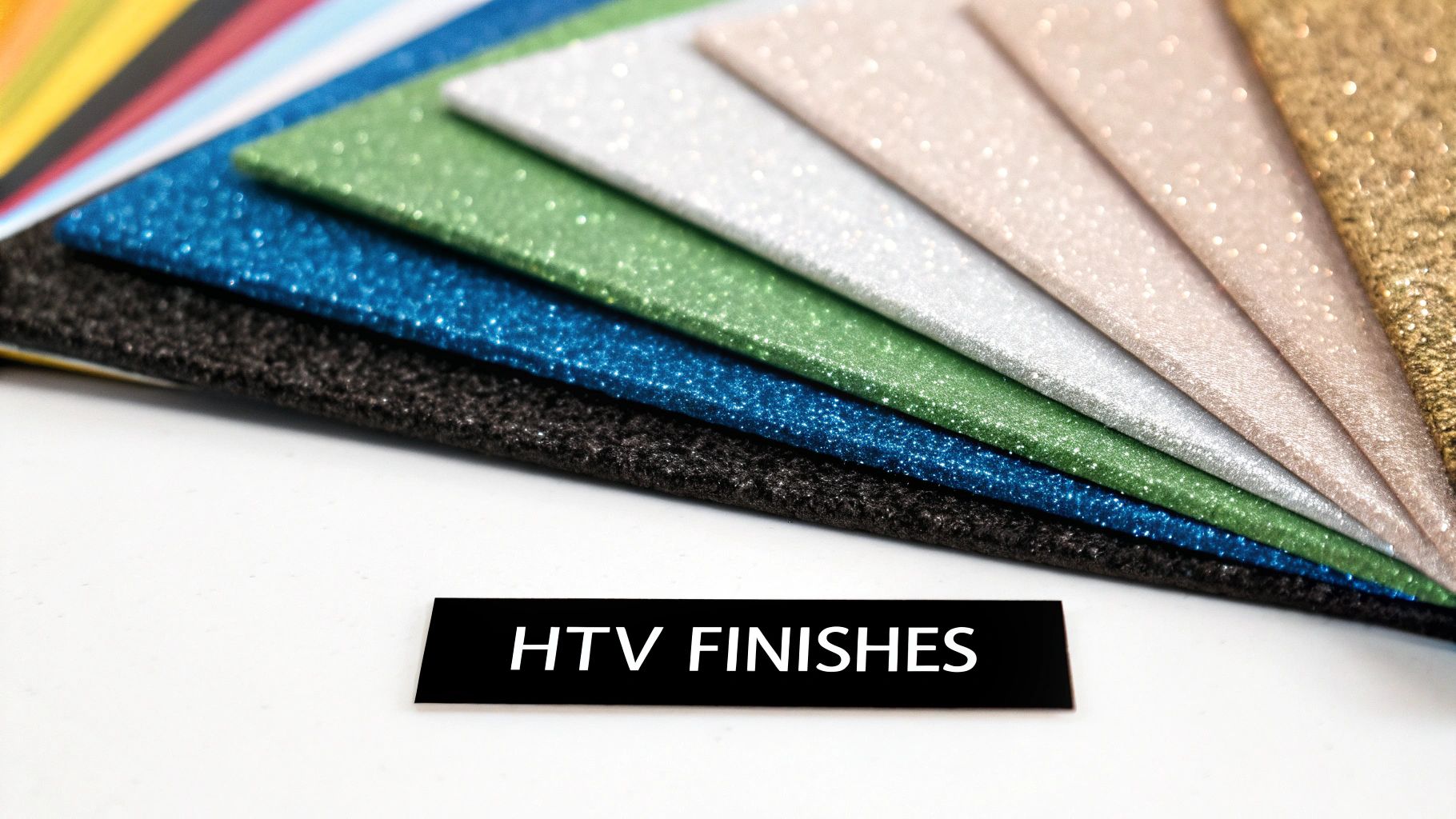
Once you get the hang of standard, smooth-finish vinyl, a whole new world of creative options opens up. This is where the real fun begins. We're talking about specialty finishes that can elevate a simple project into something truly spectacular.
These unique materials add texture, dimension, and eye-catching effects that a plain color just can't replicate. Instead of a flat graphic, imagine adding a brilliant sparkle or a soft, velvety feel that makes people want to reach out and touch your design.
The best part? These specialty options are usually just as easy to work with as the basics, but they deliver a much bigger "wow" factor. It's this demand for unique, custom touches that is really pushing the industry forward.
Popular Specialty HTV Finishes to Try
Getting to know the different finishes helps you pick the perfect material for the vibe you're going for. Here are a few of the most popular choices that both hobbyists and professional shops keep on hand:
- Glitter HTV: This isn't your grade-school craft glitter that gets everywhere. It's packed with fine, brilliant flakes for a textured sparkle that’s permanently embedded, so it won't flake off. It’s a go-to for adding some serious bling to fashion apparel, tote bags, and accessories.
- Flock HTV: If you can imagine a soft, fuzzy, suede-like texture, that's flock. It adds a raised, velvety feel to designs, making it perfect for retro lettering on hoodies or giving a logo a premium, tactile touch.
- Holographic HTV: This one is a real showstopper. It has an iridescent, rainbow-like sheen that shifts colors as it catches the light, giving your designs a futuristic and almost magical look.
- Puff HTV: This stuff is pretty cool. It applies flat but expands under the heat press, creating a unique 3D "puffy" effect. It’s a fantastic way to add dimension and a fun, touchable quality to your graphics.
- Stretch HTV: Engineered with extra elasticity, this is your vinyl for performance wear like leggings, yoga pants, and athletic shirts. It’s designed to move and stretch right along with the fabric without cracking or peeling.
You don't have to take my word for it—the numbers back it up. The global market for these materials is projected to grow from $1.49 billion in 2025 to over $2.1 billion by 2033, and it's all driven by the booming popularity of personalized apparel. You can find more details on the heat transfer vinyl market growth on globalgrowthinsights.com.
By playing around with these different finishes, you can start creating some truly unique and professional-looking custom gear.
Common HTV Projects You Can Start Today
Alright, you've got the rundown on the tools and finishes. So, what can you actually make with heat transfer vinyl? This is where the fun really begins. HTV is incredibly versatile, making it the perfect starting point for hobbyists and budding entrepreneurs alike.
T-Shirts: The Classic Starting Point
The most common entry into the world of HTV is, without a doubt, the custom t-shirt. It's the quintessential project for a reason. Think about it: matching shirts for a family vacation, hilarious tees for a bachelorette party, or just a cool graphic shirt that's 100% you. HTV gives you a clean, professional finish that holds up wash after wash.
More Than Just Shirts
But don't stop at t-shirts. Once you get the hang of it, you'll see opportunities to customize all sorts of fabric goods.
Here are a few popular ideas to get your gears turning:
- Personalized Tote Bags: Slap a witty quote or a slick design on a plain canvas tote, and you've got a great custom accessory for the grocery store or the library.
- Custom Hats: A small, crisp logo on a cap or beanie is a fantastic way to brand your own merch or create really thoughtful, personalized gifts.
- Team Jerseys: HTV is the MVP for adding names and numbers to sports jerseys. It delivers the sharp, clean lines you need, and it’s flexible enough to move with the athlete.
What makes HTV a powerhouse is its combination of precision and durability. It’s perfect for designs with fine details and for items that are meant to be used daily, ensuring your work stays looking sharp.
This reliability and adaptability are why the global heat transfer vinyl market hit a value of $371.4 million in 2024. And it's not slowing down. As more people want unique, customized products, the market is expected to climb to nearly $552 million by 2034. You can see the full breakdown in the heat transfer vinyl market report.
When you're picking your canvas, remember that HTV plays well with common fabrics like cotton and polyester. If you're stuck on which to choose, our guide on the differences between cotton vs. polyester can help you decide.
Got Questions About HTV? We've Got Answers.
When you're first starting out, a few questions always come up. Getting these sorted out early will save you a ton of headaches (and wasted vinyl), so let's jump right into the big ones.
Can I Just Use a Regular Iron Instead of a Heat Press?
You sure can! A standard home iron is a perfectly fine, budget-friendly way to get your feet wet with heat transfer vinyl. Just know that it takes a bit more finesse to get the consistent heat and even pressure you need for a really solid, long-lasting design.
If you’re planning to sell your stuff, a heat press is a game-changer. It delivers that professional, peel-proof finish every single time. But for personal projects and just trying things out? Your iron will get the job done.
What Kind of Fabric Should I Use?
For the best results, stick with cotton, polyester, and cotton/poly blends. These fabrics are champs at handling the heat, and their texture gives the HTV adhesive something to really grab onto for a permanent bond.
You’ll want to be careful with materials like nylon or anything that has a waterproof coating on it, as these can stop the adhesive from sticking properly. When in doubt, always check the garment's tag to see what you're working with.
Here's a quick pro-tip: To see if a fabric has a water-repellent coating, just place a single drop of water on it. If the water beads up into a little ball instead of soaking in, standard HTV is going to have a tough time sticking.
How Do I Wash My Custom Shirts So They Don’t Get Ruined?
Proper care is everything if you want your designs to look great for the long haul. It's actually pretty simple.
- Wait at least 24 hours after pressing before you even think about washing it.
- Turn the shirt or garment inside out.
- Wash in cold water on a gentle cycle.
- Tumble dry on low, or better yet, just hang it up to dry.
Following these steps is the best way to prevent cracking and peeling, keeping your creations looking as good as the day you made them.
Ready to create stunning, professional-quality apparel without the hassle? Explore the vibrant, durable, and easy-to-use DTF transfers from Cobra DTF. All our products are proudly made in the USA, shipping to you in just 1-3 days. Start creating with Cobra DTF