
A Business Owner's Guide to UV DTF Wraps
Think of the most vibrant, durable sticker you can imagine, one that molds perfectly to almost any hard surface. That’s essentially what a UV DTF wrap is—a game-changing way to customize tricky items that traditional printing just can't handle.
What Are UV DTF Wraps and How Do They Work?
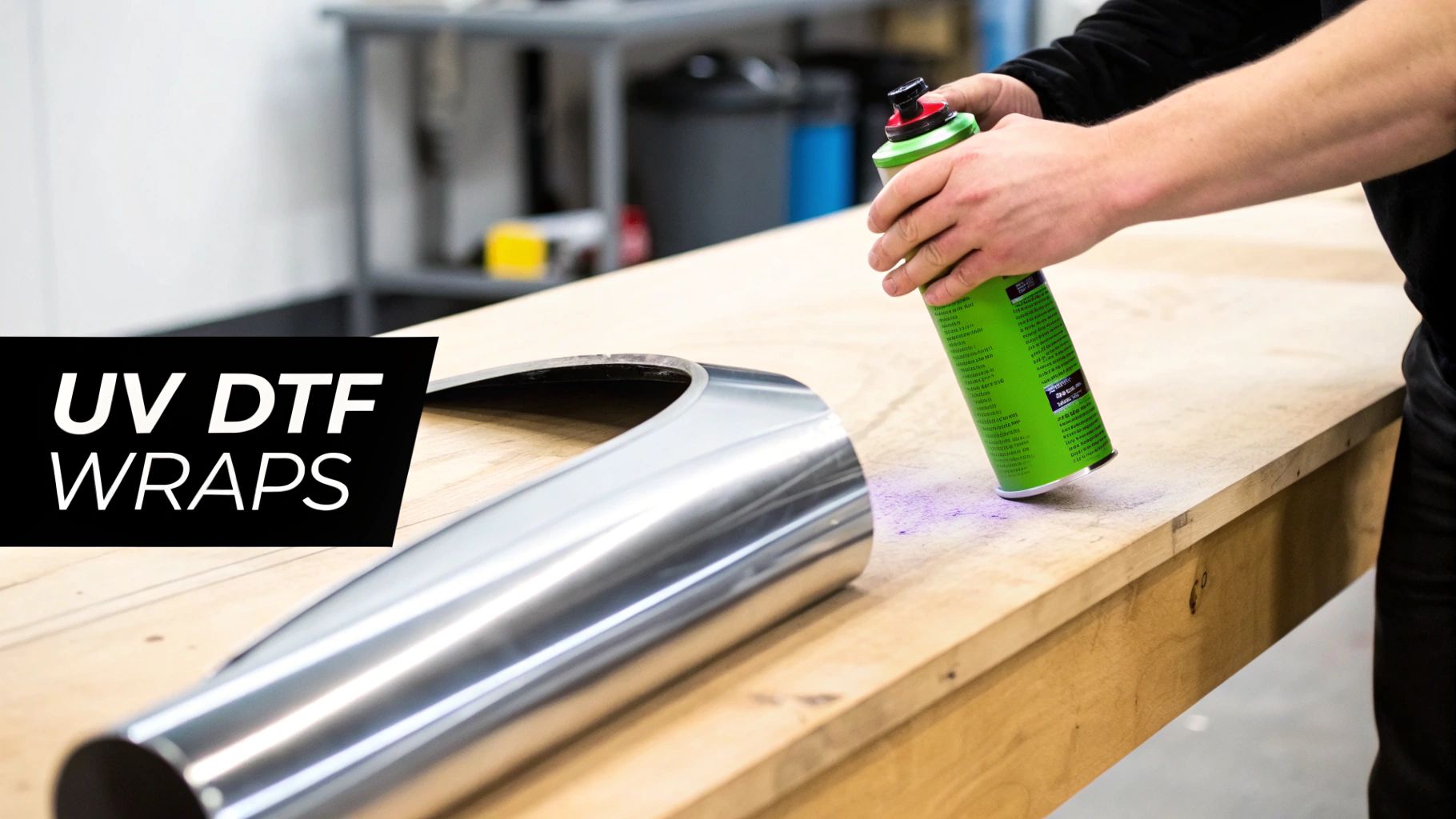
At its heart, a UV DTF wrap is a super-powered decal for hard goods. But instead of being a simple piece of vinyl, it's a multi-layered transfer created with special UV-curable inks and a strong adhesive.
The "UV" part is key. It stands for the ultraviolet light used to instantly cure the ink, hardening it from a liquid into a tough, solid design. This process lets you create incredibly detailed, full-color graphics that stick to all sorts of non-porous surfaces, no heat press or special tools needed.
The Magic Behind the Layers
So how does it all come together? The process starts by printing your design onto a special sheet known as the "A" film. This isn't just a single pass; layers of color are printed, often over a white base for vibrancy, followed by a layer of adhesive. Then comes the cool part: a powerful UV lamp zaps the ink, curing it on the spot.
Once cured, a second "B" film (the carrier sheet) is pressed over the top, creating a neat little sandwich with your design and the adhesive protected inside. When you're ready to decorate something, you just peel the backing away, stick the design down, give it a good press, and lift off the top carrier film. What's left behind is a crisp, permanent graphic.
The final result is a bright, slightly raised design with a glossy finish that looks and feels like it was printed directly on the item. That tactile, premium feel is something you just don't get with other methods like sublimation.
Why This Matters for Your Business
For a small business, this tech is a huge deal. It finally solves the problem of how to decorate things like mugs with handles, tapered tumblers, or other oddly shaped products. Being able to create these tough, professional-looking transfers opens up completely new product lines.
By working with a dependable American supplier like Cobra DTF, you can get high-quality UV DTF wraps shipped fast, letting you expand your offerings without worrying about long international shipping delays. You can learn more about the specifics of the process in our detailed guide to UV DTF printing.
How UV DTF Stacks Up Against Standard DTF Printing
When you’re looking at printing methods, it’s easy to get lost in the jargon. But figuring out the difference between UV DTF wraps and standard DTF is actually pretty simple. While they both produce incredible transfers, they are built for completely different jobs. Think of them as two specialized tools in your workshop—each perfect for its own task.
Let's break it down with an analogy. Standard DTF is a lot like ironing a high-quality patch onto a jacket. You use heat to fuse the design right into the fabric, so it becomes part of the garment—soft, flexible, and able to stretch with every movement. It’s made for textiles, through and through.
UV DTF, on the other hand, is more like applying a super-durable, high-tech emblem to a hard surface. There’s no heat involved. Instead, it uses a powerful adhesive backing and UV-cured ink to create a tough, slightly raised design that sits right on top of the object. This is your go-to for adding a glossy, premium finish to things like glass, metal, or plastic.
Application Surfaces: The Great Divide
The biggest—and most important—difference comes down to what you can actually decorate. This is the first thing you need to consider.
-
Standard DTF: This one is a fabric specialist. It works beautifully on cotton, polyester, and blends, and you can even use it on tougher stuff like canvas and denim. The whole point is flexibility.
-
UV DTF Wraps: This technology is your ticket to the world of hard goods. It opens up a massive range of products you can customize: drinkware, phone cases, keychains, and all sorts of promotional items made from metal, wood, plastic, or ceramics.
Trying to swap them just won't fly. A UV DTF wrap would crack and peel right off a t-shirt, while a standard DTF transfer simply wouldn’t stick to a metal tumbler properly and wouldn't have the durability to last.
The Process: Heat vs. Light
The technology driving each method is completely different, which directly impacts the gear you need. Standard DTF is all about heat. Once a design is printed, you need a heat press to apply it, usually somewhere in the 300-325°F range, to bond the ink to the fabric fibers.
Conversely, UV DTF wraps skip the heat press entirely. All the magic happens when the design is being printed. A set of powerful UV lamps cures the ink instantly, hardening it into a solid, durable layer. Applying it is as simple as peel, stick, and press.
This is a game-changer for small businesses. Standard DTF means investing in a heat press. With UV DTF, all you need is a simple squeegee to get started, which makes it incredibly accessible for anyone wanting to customize hard goods.
The Final Look and Feel
Finally, the finished products feel and look like they come from two different worlds. A well-applied standard DTF transfer is soft to the touch and sinks right into the fabric, giving you a finish that’s often compared to top-tier screen printing but with the benefit of full, vibrant color.
A UV DTF wrap offers a totally different experience. The design is slightly raised, creating a dimensional, high-gloss effect you can both see and feel. It’s that tactile quality that gives products a premium, professional edge.
To really nail down the differences, let's look at them side-by-side.
UV DTF vs Standard DTF: A Quick Comparison
This table cuts through the noise and gives you a clear snapshot of what sets these two powerful printing methods apart.
| Feature | UV DTF Wraps | Standard DTF Transfers |
|---|---|---|
| Primary Use | Hard, non-porous surfaces (glass, metal, wood, plastic) | Textiles and fabrics (cotton, polyester, blends) |
| Application | Manual pressure-sensitive adhesive (no heat) | Requires a heat press for thermal application |
| Final Feel | Raised, glossy, and tactile finish | Soft, flexible, and integrated into the fabric |
| Durability | Scratch and water-resistant for hard goods | Machine washable and stretch-resistant for apparel |
| Flexibility | Rigid; not suitable for items that bend or stretch | Highly flexible; moves with the fabric |
Ultimately, choosing between them isn’t about which one is "better" but which one is the right tool for what you want to create. Each has its own strengths and opens up different creative possibilities.
How UV DTF Printing and Application Actually Works
Getting a design from your computer screen onto a finished product using a UV DTF wrap can feel like magic, but it’s a pretty logical process once you break it down. If you've ever felt a little intimidated by it, don't be. Let's walk through each step together, from the digital file all the way to that peel-and-reveal moment.
This quick visual shows you exactly where UV DTF shines—on hard goods—and how it's different from the standard DTF process used for t-shirts and other fabrics.
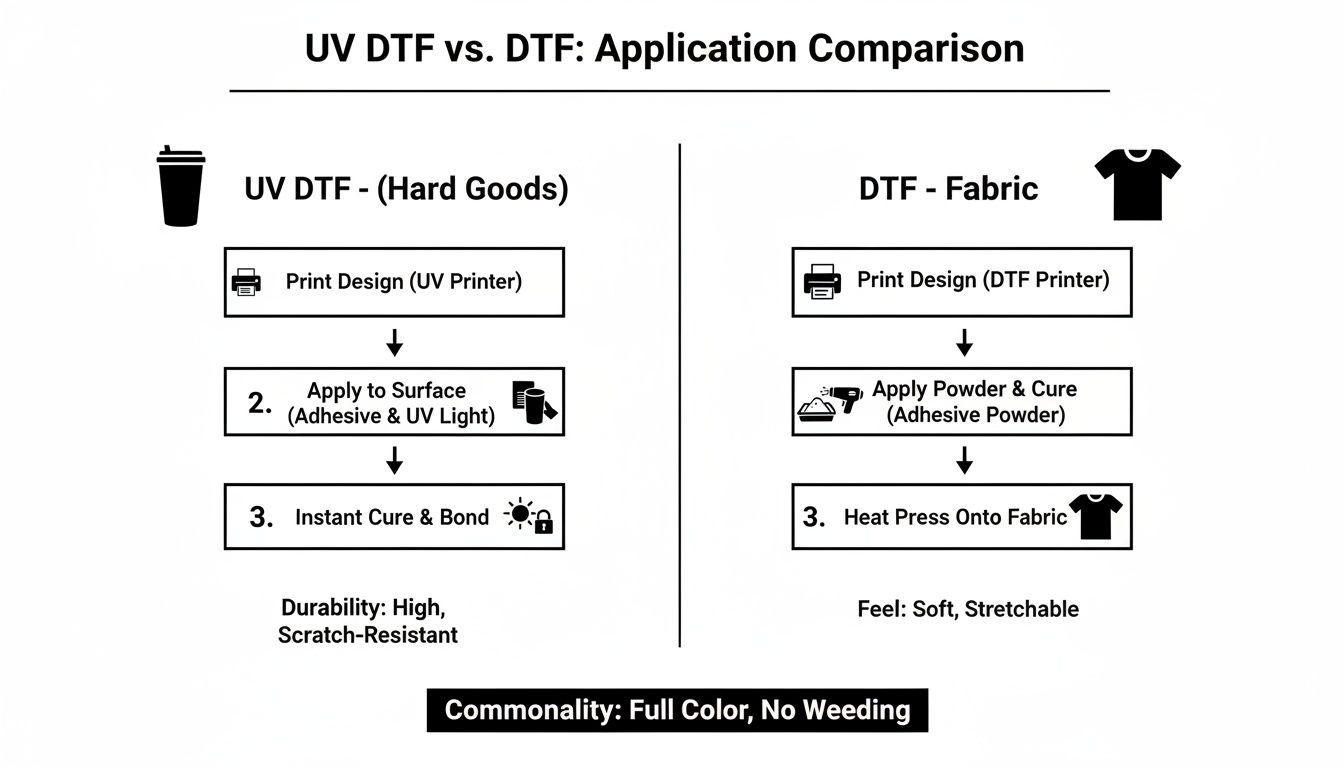
As you can see, even though they both share the "DTF" name, their purposes are completely different. One is for decorating things like glass and metal, the other is for textiles.
Phase 1: The Design and Printing Stage
Everything starts with your artwork. Nailing this first step is the key to a professional result, especially if you're wrapping something like a tumbler where the edges have to meet perfectly.
-
Measure Your Canvas: Before you even open your design software, grab a measuring tape. You need the exact height and circumference of the item you're decorating. Use those numbers to set up your artboard in a program like Adobe Illustrator or Canva—it’s the only way to guarantee a perfect fit.
-
Go High-Res: Always, always design at 300 DPI (dots per inch). This is the industry standard for a reason. Anything less, and you risk a blurry, pixelated final product, and nobody wants that.
-
Printing on the 'A' Film: Your design gets printed directly onto a special sheet called the "A" film. A high-tech UV DTF printer lays down the color, usually on top of a solid white base to make the colors pop, then adds a layer of varnish and a final layer of adhesive glue.
-
Instant Curing: Here’s where the "UV" part comes in. As the film exits the printer, it passes under a powerful UV lamp that instantly hardens—or "cures"—the wet ink. This locks the design into a durable, slightly raised finish.
Phase 2: Lamination and Prep Work
With the design printed and cured, it's time to turn it into a transfer you can actually use. This involves marrying the printed film to a clear carrier sheet.
The printed A film gets laminated with a "B" film, which is essentially a clear, sticky-backed sheet. Whether you use a laminator or just a squeegee, the goal is to get a smooth, bubble-free bond. Now, your design is sandwiched and ready to go.
If you're printing a bunch of smaller designs at once, you’ll want to arrange them efficiently on a single sheet. We have a whole guide on how to create UV DTF gang sheets to maximize your material. Once laminated, just trim the individual decals down to size.
Pro Tip: Your biggest enemy here is dirt. Before you apply a single thing, wipe your item down with isopropyl alcohol and a lint-free cloth. Any dust, oil, or fingerprints left on the surface will sabotage the adhesive, so a squeaky-clean surface is non-negotiable.
Phase 3: The Application
This is the fun part. Unlike regular DTF, you can put that heat press away. All you need is a bit of patience and some good, old-fashioned pressure.
-
Peel the Backing: Gently peel the white paper backing off the transfer. This will expose the sticky side of your design, so try not to touch it with your fingers.
-
Position with Care: Hold the wrap by the edges and carefully line it up on your object. I like to tack down just one edge lightly first, double-checking that everything is straight before I commit to pressing the rest down.
-
Apply Firm Pressure: Once it’s in place, start smoothing the wrap down, working from the center out. A felt-tipped squeegee is perfect for this, but your thumb works in a pinch. The goal is to push out any air bubbles and ensure full contact.
-
Remove the Carrier Film: Now, give the whole design a really good rubdown for about 30-60 seconds. This helps the adhesive grab hold. When you're ready, start at one corner and slowly peel the clear carrier film away at a sharp angle. If you see any part of the design lifting, just lay the film back down, press on that spot again, and then continue peeling.
Once the carrier film is off, your job is almost done. Just let the item sit for at least 12-24 hours. This gives the adhesive time to fully cure, creating a permanent bond that’s ready for action.
What Materials Can You Actually Use with UV DTF?
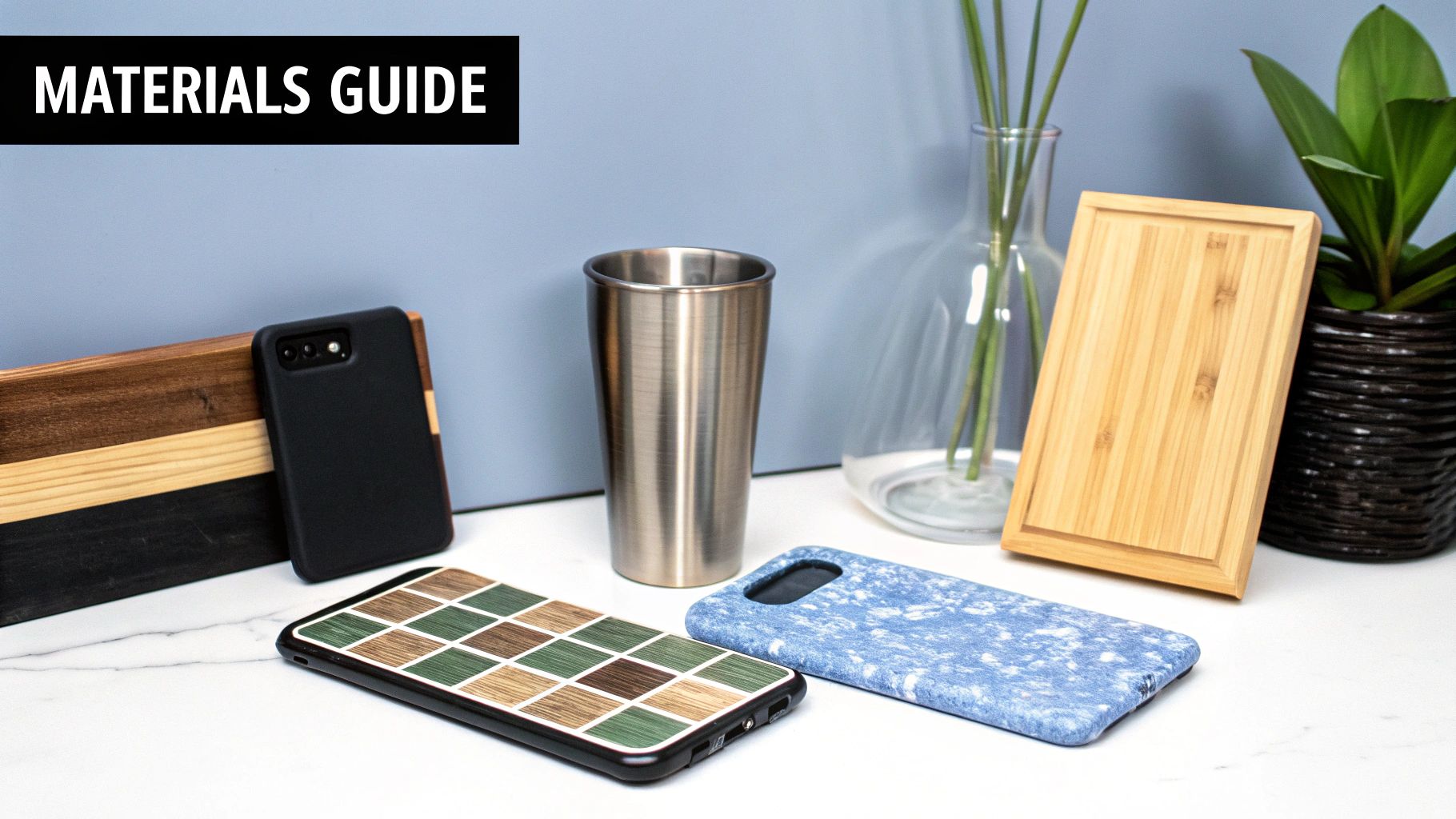
The real magic of UV DTF wraps is their incredible versatility. This is the technology that unshackles your business from the "fabric-only" mindset and opens up a huge world of hard goods and promotional products. It’s your ticket to building a diverse, high-margin product line with just one straightforward application process.
Think about it: you can move beyond t-shirts and hoodies into custom drinkware, tech accessories, and unique home goods. With UV DTF, you’re not just tacking on a new service; you're unlocking entirely new ways to make money that used to require expensive, specialized gear like direct-to-object UV printers.
The Best Surfaces for a Perfect Stick
UV DTF adhesives are specifically designed to grab onto hard, non-porous surfaces. Basically, if it's smooth, solid, and doesn't bend or stretch, you're good to go. This is where these wraps really shine, creating a permanent, vibrant decoration that has a premium, almost embossed feel.
Here are some of the most popular and profitable items people are customizing:
- Glass: A huge winner. Perfect for creating branded pint glasses for local breweries, personalized wedding flutes, or those custom 16oz Libby glass can tumblers you see everywhere online.
- Metal: Think stainless steel tumblers, aluminum water bottles, and shiny metal keychains. The glossy finish of a UV DTF wrap creates an amazing contrast against brushed or polished metal.
- Plastics: The possibilities here are almost endless. You can decorate everything from phone cases and laptop covers to acrylic signs and plastic storage bins.
- Wood: As long as it's a smooth, sealed wood surface, it’s an excellent canvas for custom signs, coasters, and decorative boxes. The slightly raised, glossy texture of the wrap looks incredibly professional.
- Ceramics: Go beyond the basic coffee mug. You can apply detailed designs to ceramic tiles, holiday ornaments, and planters to create truly unique gift items.
Know Your Limits: Materials to Avoid
Just as important as knowing what works is knowing what doesn't. Trying to force a UV DTF wrap onto the wrong surface is a surefire way to waste time, money, and leave a customer unhappy. The cured ink is rigid—it can't handle flexing or porous textures.
The rule of thumb is simple: if the surface is soft, porous, or flexible, UV DTF is the wrong tool for the job. The adhesive needs a solid, non-porous foundation to form a permanent bond.
Stay away from these materials completely:
- Fabric and Textiles: This is the number one mistake people make. UV DTF wraps will crack and peel right off of clothing, hats, and bags. For all your apparel, stick with standard DTF.
- Silicone: The non-stick, slippery nature of silicone means the adhesive has nothing to grip onto.
- Unfinished or Raw Wood: The porous surface of unsealed wood just soaks up the adhesive, resulting in a weak bond that's destined to fail.
- Powder-Coated Surfaces: This one can be tricky. While some might work, many powder-coated finishes have a slight texture that gets in the way of good adhesion. Always test a small, hidden area first.
A Huge and Growing Market for Hard Goods
This move into hard good customization isn't just a small trend; it's a booming market. In 2024, the global UV DTF market was already valued at a hefty US$215 million, and it's projected to more than double to US$442 million by 2031. This explosive growth is fueled by the massive demand for high-quality printing on pretty much anything but textiles. You can get more details on this expanding market and its projected growth.
By working with a reliable US-based supplier like Cobra DTF, your small business can get a piece of that action. You can confidently offer a whole range of customized products, from branded metal tumblers to personalized phone cases, all without investing in bulky, expensive equipment. This is how you scale your business quickly, meeting customer demand with high-quality, durable goods.
The Business Case for UV DTF Wraps: Why It’s a Game-Changer
Let's move past the technical details and talk about what really matters: how UV DTF wraps can make a real difference for your business. This isn't just about adding another product to your lineup; it's a strategic shift that can directly boost your profits, streamline your workflow, and help you carve out a niche in a competitive market. It’s about working smarter.
The first thing you'll notice is how much more cost-effective this method is. Old-school techniques like screen printing or direct-to-object UV printing have always been a headache for small runs, with steep setup costs, minimum order quantities, and a tough learning curve. UV DTF pretty much erases those barriers, opening the door for businesses of all sizes.
Lower Costs, Better Margins
With UV DTF, the cost to customize a single item is low and stays that way. This means you can finally sell one-off custom products and still make a good profit. That’s a model that’s practically impossible with the screen prep for screen printing or the massive investment needed for direct UV machinery.
Think about these financial wins:
- No More Minimum Orders: You can print one custom mug or a hundred with the same level of efficiency. Say goodbye to the waste and risk of unsold inventory.
- Forget Expensive Equipment: You don't need a giant, pricey heat press. Since these wraps are applied by hand, the initial investment to get into the hard goods game is incredibly low.
- Premium Look, Premium Price: The glossy, slightly raised texture of a UV DTF wrap makes products look and feel high-end, which means you can charge more for them.
This accessibility is a huge part of why the entire direct-to-film market is booming. Valued at USD 2,720 million in 2024, the market is expected to climb to USD 3,920 million by 2030. That growth is fueled by the exact flexibility and cost-effectiveness that UV DTF brings to the table, helping businesses keep up with what customers want. You can read the full analysis about the direct-to-film printing market's expansion.
Gaining an Edge with Speed and Reliability
In the custom goods business, speed is everything. Customers want their personalized items now, and if you have long lead times, they’ll find someone else who can deliver faster. This is where getting your UV DTF wraps from a US-based partner like Cobra DTF completely changes the game.
When you work with a domestic supplier, you get to skip all the common headaches of international shipping. No more worrying about customs delays, surprise tariffs (which added an extra 20-30% to import costs in 2024), or trying to communicate with someone in a completely different time zone.
With Cobra DTF's same-day shipping and 1-3 day delivery, you can confidently promise—and deliver on—faster turnarounds. That kind of reliability keeps customers happy and lets you grab those profitable last-minute orders that used to be a logistical nightmare.
Expand Your Product Catalog and Customer Base
Maybe the biggest advantage of all is the sheer creative freedom that UV DTF gives you. You're no longer stuck just printing on t-shirts. Suddenly, you can offer an entire catalog of branded and personalized hard goods.
This diversification does more than just open up new revenue streams; it strengthens your entire brand. You can use a tool like an AI sticker generator to quickly mock up unique designs for UV DTF stickers, making it even easier to expand your product line with fresh visuals. Think about it: you can start catering to corporate clients who need promotional swag, wedding planners who want custom favors, or Etsy shoppers looking for that perfect, one-of-a-kind gift.
On top of all that, this technology is right in line with what modern consumers care about. The UV-LED curing process uses less energy, and when you source high-quality, USA-made inks and films from a partner like Cobra DTF, you're supporting a more responsible supply chain. That eco-friendly angle isn't just a talking point—it's a powerful marketing tool that resonates with a growing number of shoppers who want to buy with their values.
How a Reliable Supplier Can Accelerate Your Growth
It’s easy to see the incredible potential of UV DTF wraps, but your printer and your creativity are only part of the equation. The quality of your materials and the reliability of your supply chain are just as crucial to getting ahead. Partnering with the right supplier isn't just a transaction; it's a strategic move that can either hold you back or slingshot your business forward.
Choosing a dependable, US-based partner like Cobra DTF turns operational headaches into a real competitive edge. It’s the difference between guessing when your supplies might show up and knowing they’re already on the way. A solid partnership amplifies all the benefits we've discussed—from product versatility to cost-effectiveness—by adding speed and trust into the mix.
From Frustration to Fulfillment
If you're running a small business, you know the frustrations that come with overseas suppliers can be crippling. We’re talking about long shipping times, surprise customs delays, and communication barriers that create a constant state of uncertainty. It's nearly impossible to give your customers a firm deadline when you don't have one yourself.
A US-based supplier just erases those problems. Instead of waiting weeks for a shipment to clear customs, you get your products in days. This means you can confidently take on those last-minute rush orders and keep your production schedule humming along without a hitch.
A strong domestic partnership means you can focus on creating amazing products and serving your customers, not tracking international shipments or dealing with surprise tariffs. It puts you back in control of your business.
The Tangible Benefits of a US-Based Partner
When you work with a company like Cobra DTF, you get practical advantages that directly impact your bottom line and make your customers happier. The benefits aren't abstract—they're immediate and measurable.
- Same-Day Shipping: Get your order in by 1 PM CST, and it ships out that very same day. This gets your UV DTF wraps into your hands faster than you thought possible.
- 1-3 Day Delivery: This rapid turnaround means you can keep less inventory on hand and jump on market trends almost instantly, giving you a huge leg up on the competition.
- Zero Tariffs or Customs Delays: Everything is 100% made and shipped from Texas. You never have to worry about the hidden costs and delays that plague international orders.
- Satisfaction Guarantee: A real commitment to quality shows you’re working with a partner who is invested in your success, not just in making a quick sale.
Choosing the right supplier is every bit as important as choosing the right printer. For those exploring different fulfillment models, understanding your options is key. You can find valuable insights in our complete guide to finding reliable print on demand suppliers. By building a strong partnership, you can confidently scale your custom printing business, knowing you have the support and speed to succeed.
Your Top Questions About UV DTF Wraps Answered
Jumping into a new printing method always brings up a few questions. Let's clear up some of the most common ones we hear from business owners about UV DTF wraps so you can get started with total confidence.
How Durable Are UV DTF Wraps, Really?
Honestly, these things are built to last. The UV-cured ink creates an incredibly tough layer that stands up well against scratches, water, and sunlight. That’s why they’re perfect for items that get handled every day, like tumblers, phone cases, and mugs.
While the bond is permanent, the best way to keep the design looking sharp for years is to recommend gentle hand-washing with a mild soap. A little care goes a long way in preserving that vibrant, day-one look.
Can I Really Wrap These Around Any Curved Surface?
UV DTF wraps are fantastic on smooth, hard surfaces, and they handle simple curves like a champ. Think about the gentle contour of a tumbler, a pint glass, or a water bottle—they conform to those shapes beautifully.
Where they struggle is with complex or compound curves. Picture trying to wrap a sphere or an object with lots of sharp, different angles. The semi-rigid film just can't lay flat without wrinkling or failing to stick properly.
The rule of thumb is a smooth, non-porous surface. Gentle, consistent curves are fine, but sharp angles or ball-like shapes won't allow the wrap to create a secure, flat bond.
If you’re ever unsure about a tricky object, it’s always a good idea to test a small piece first.
Do I Need Any Special Equipment to Apply Them?
Nope, and that’s a huge plus! Unlike traditional DTF that needs a heat press to transfer the design onto fabric, UV DTF wraps are a completely heat-free, hands-on process.
You don't need any expensive machines. All you do is peel the backing, carefully place the wrap on a clean surface, give it a good rubdown with a squeegee (or even just your fingers), and then peel away the top carrier film. It’s that straightforward.
How Is the Finish Different from Sublimation?
The biggest difference comes down to texture and feel. With sublimation, the ink actually becomes part of the material by dyeing the surface. The result is perfectly smooth, with zero texture—you can't feel the design at all.
A UV DTF wrap, on the other hand, sits right on top of the item. This gives you a slightly raised, glossy finish that has a tangible, premium feel. It adds a cool dimensional effect that really makes hard goods pop.
Ready to add some eye-catching, durable designs to your product line? Cobra DTF offers premium, USA-made UV DTF wraps with same-day shipping and a satisfaction guarantee. Explore our UV DTF wraps and start creating today!