
Metallic DTF Transfers: The Complete Guide
A customer asks for a shirt with a gold logo. You load the same artwork and press profile you use for ordinary DTF, then discover the result looks dull, the small lettering has softened, and one corner starts lifting after the first wash. The transfer itself wasn't necessarily defective. Metallic DTF transfers expose weak artwork preparation, incorrect white-ink handling, poor pressure calibration, and rushed peeling far more quickly than standard CMYK DTF.
Metallic work can produce a premium finish, but it isn't just regular DTF with a shiny color added. The film, ink architecture, adhesive, press cycle, and cooling time all have to cooperate. The sections below focus on the decisions that determine whether a metallic job looks intentional and profitable, or becomes an expensive reprint.
What Metallic DTF Transfers Are and Why They Matter
A small apparel shop usually discovers metallic DTF through a customer request, not a technical evaluation. Someone wants a silver emblem for a streetwear drop, a gold mark for a boutique, or reflective lettering for a special event. The operator already knows standard DTF, so the natural assumption is that the same file and settings will work. That assumption causes many of the first failures.
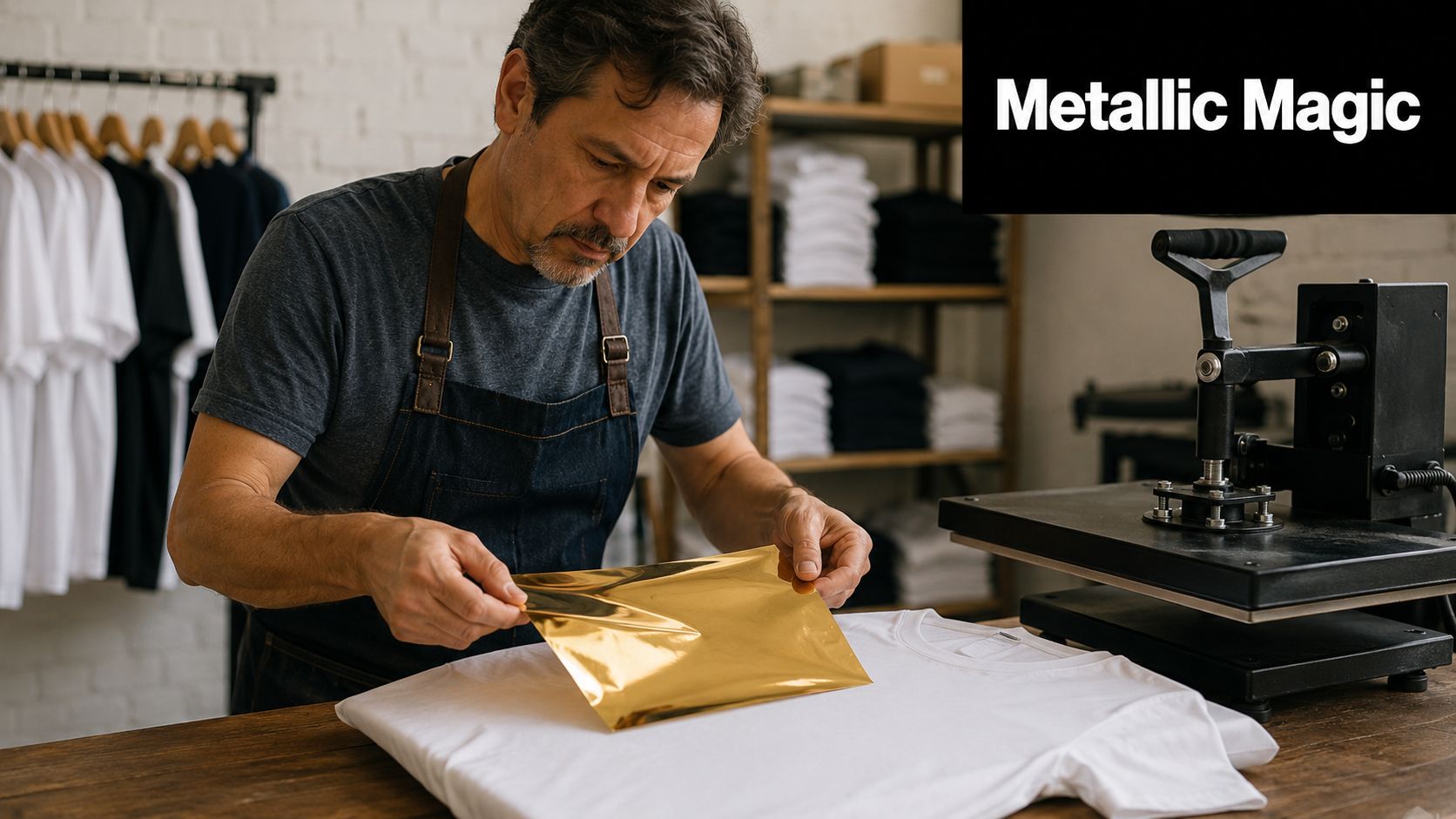
Metallic DTF is an extension of the DTF process, not a completely separate decoration category. Product references describe the film as a PET-based transfer film with a metallic mirror finish. The film layer is commonly around 20 μ thick, with a printable support layer around 130 μ, according to the metallic DTF film reference from Brildor. Those construction details matter because the reflective surface has to remain visible through the design rather than being buried beneath an opaque white underbase.
How the reflective effect is created
Standard DTF relies on CMYK pigment ink and usually uses white ink to create opacity on dark garments. Metallic systems change that visual relationship. Gold or silver comes from the reflective film surface, so the artwork and ink stack must allow that surface to show through the intended areas.
That produces a luminous mirror-like effect without weeded vinyl or solvent printing. It also means the operator isn't printing a normal CMYK color that happens to look metallic. The system is using a specialized film and adhesive arrangement to create the appearance.
A useful distinction is:
- Standard DTF: CMYK color provides the visible image, with white ink supporting opacity where needed.
- Metallic DTF: The metallic film supplies the reflective appearance, while the printed architecture controls where that effect remains visible.
- Metallic artwork: Fine geometry, unnecessary white coverage, and dense layers can reduce the sheen or obscure small features.
Why standard settings disappoint
The transfer needs enough heat, time, and pressure for the hot-melt adhesive to wet out across the garment. It also needs a cold-peel workflow, because removing the film while the adhesive and surface are still hot can disturb the metallic layer or weaken the bond.
That process sensitivity is why a job can look acceptable on the press but fail visually after cooling. Metallic DTF rewards disciplined testing. Treat each film and transfer supplier as its own material until a sample confirms the correct cycle.
The market context also supports treating this as a serious specialty option rather than a novelty. The global DTF printing market was valued at about USD 1.2 billion in 2022, and one market review reported more than 7.2 billion DTF prints globally in 2024, with almost 30% year-over-year growth, as summarized by ZipDo's DTF industry statistics. Metallic transfers sit inside that expanding ecosystem, but their value comes from controlled specialty production, not from applying ordinary DTF habits to a different film.
Comparing Metallic DTF to Foil, Plastisol, and Heat Transfer Vinyl
Metallic DTF isn't automatically the best metallic decoration method. It earns its place when the design needs a reflective finish alongside shapes, color, or detail that would be awkward with a simpler process. For a single bold word, metallic HTV or foil may be faster. For a large repeat order, metallic plastisol can make more sense once screens are prepared.
A shop should compare the full production path, not just the transfer price. Setup, artwork cleanup, press consistency, rework risk, and minimum order requirements all affect the cost per unit.
Metallic decoration methods comparison
| Method | Cost per Unit | Design Complexity | Durability | Setup Time |
|---|---|---|---|---|
| Metallic DTF | Specialty transfer cost is usually justified when the design needs detail or mixed artwork | Handles intricate graphics and metallic accents, subject to film and artwork limits | Can perform well when adhesive wet-out and pressure are correct | Low setup for ready-made transfers, but calibration is important |
| Metallic foil transfers | Often efficient for simple, high-impact designs | Strong shine, but fine details and complex textures can be difficult | Depends heavily on adhesive coverage and pressing | Moderate, with foil handling and careful application |
| Metallic plastisol screen printing | Can become economical for repeat production after setup | Strong for bold graphics and controlled spot colors | Generally robust when properly cured | Higher, because screens, registration, and ink preparation are required |
| Metallic HTV | Practical for straightforward names, numbers, and shapes | Limited color complexity and intricate multi-color artwork | Varies by vinyl quality, garment, and application | Low for small jobs, with cutting and weeding required |
Where each method wins
Metallic DTF is the flexible choice for detailed logos, small batches, and designs that combine metallic elements with ordinary printed elements. It avoids weeding, which is useful for internal cutouts and complex outlines, but it requires a more exact heat-press routine than ordinary CMYK DTF.
Foil produces a powerful shine and can look excellent on clean, uncomplicated artwork. It becomes less attractive when the design includes delicate lines, many internal openings, or color transitions. Foil also introduces a separate handling step, so careless alignment can waste an otherwise usable garment.
Plastisol screen printing remains compelling when durability and repeatability matter more than fast setup. The trade-off is front-loaded preparation. A shop must account for screens, registration, ink behavior, curing, and a sensible order quantity before the method becomes efficient.
Metallic HTV works well for names, numbers, mascots, and simple lettering. It can be a practical entry point for a craft seller, but cutting and weeding become frustrating as designs grow more complex. Anyone comparing broader heat-applied methods can use this heat transfer printing guide for additional process context, while this heat transfer vinyl guide helps clarify where HTV fits.
Shop-floor rule: Choose metallic DTF for design flexibility, foil for uncomplicated brilliance, plastisol for planned repeat production, and HTV for simple personalization.
Ask four questions before quoting: How intricate is the artwork? How many garments are required? How quickly must the job ship? Can the customer accept a separate metallic-only transfer when the design mixes regular and metallic elements? The answers usually reveal the right method before production starts.
Step-by-Step Application Process and Critical Settings
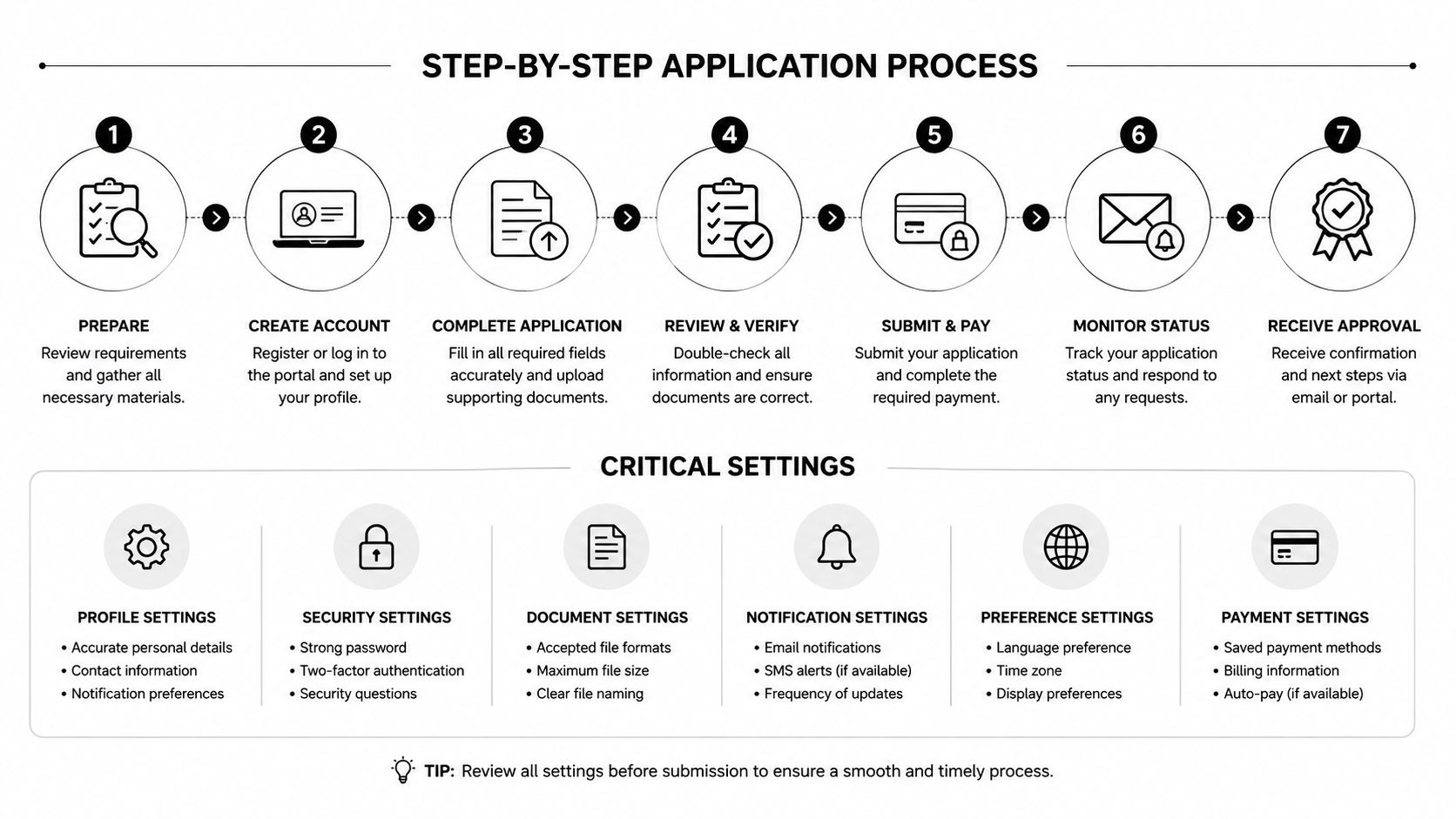
Metallic DTF jobs usually fail before the press closes. A file with too much white coverage, a platen with uneven contact, or an unrecorded garment profile can turn an attractive transfer into rework. Separate artwork preparation from press validation, then document the combination that performs reliably.
Prepare the artwork for the film
Confirm the supplier's file requirements before production. Metallic film guidance commonly calls for:
- Mirror-mode artwork: Flip the design before printing so it reads correctly after application.
- Reduced or disabled white ink: Heavy white underbase coverage can cover the reflective layer and flatten the finish.
- CMYK composite black where specified: A dense composite can define the printed image or adhesive structure without unnecessarily blocking the metallic surface.
- Minimum detail control: Keep text at least 17 pt and internal gaps at least 6 mm, based on the metallic DTF artwork guidance from Brildor.
- Separate metallic elements when needed: Designs mixing standard and metallic areas may need a metallic-only file or transfer instead of treating gold or silver as a regular CMYK color.
Reflective film needs a clear visual path. Tiny counters, narrow openings, and dense white layers can close during powder curing or pressing, even when the source artwork looks clean on screen.
Press the garment consistently
Pre-press the garment using your normal fabric workflow to remove moisture and wrinkles. Place the transfer on a clean, stable surface, then follow the film supplier's recommended temperature, dwell, pressure, and peel sequence. The heat press settings for DTF guide provides broader calibration context, but metallic film and garment tests should determine the production profile.
Before testing, check platen flatness with a test sheet or pressure-indicating method. A transfer that adheres in the center but lifts at the edges often reflects contact variation rather than a defective film. Also confirm that the garment sits squarely and that seams, pockets, or thick collars are outside the design area.
Treat cooling as part of the process, not an afterthought. Thin cotton shirts may release sooner than thick fleece, while textured garments can need more cooling before the carrier separates cleanly. Follow the supplier's cold-peel requirement and avoid judging adhesion while the transfer is still warm.
Pressing insight: Change one variable at a time. Record the film, garment type, press, artwork version, and result so a successful profile can be repeated instead of rediscovered.
After peeling, inspect the design under angled light. Check for dull patches, incomplete corners, pinholes, and closed counters. A second finishing press may be appropriate only when the supplier permits it. Store the approved profile by film, garment, and press, because a setting that works on a smooth cotton shirt may behave differently on a textured hoodie.
Troubleshooting Common Metallic DTF Problems
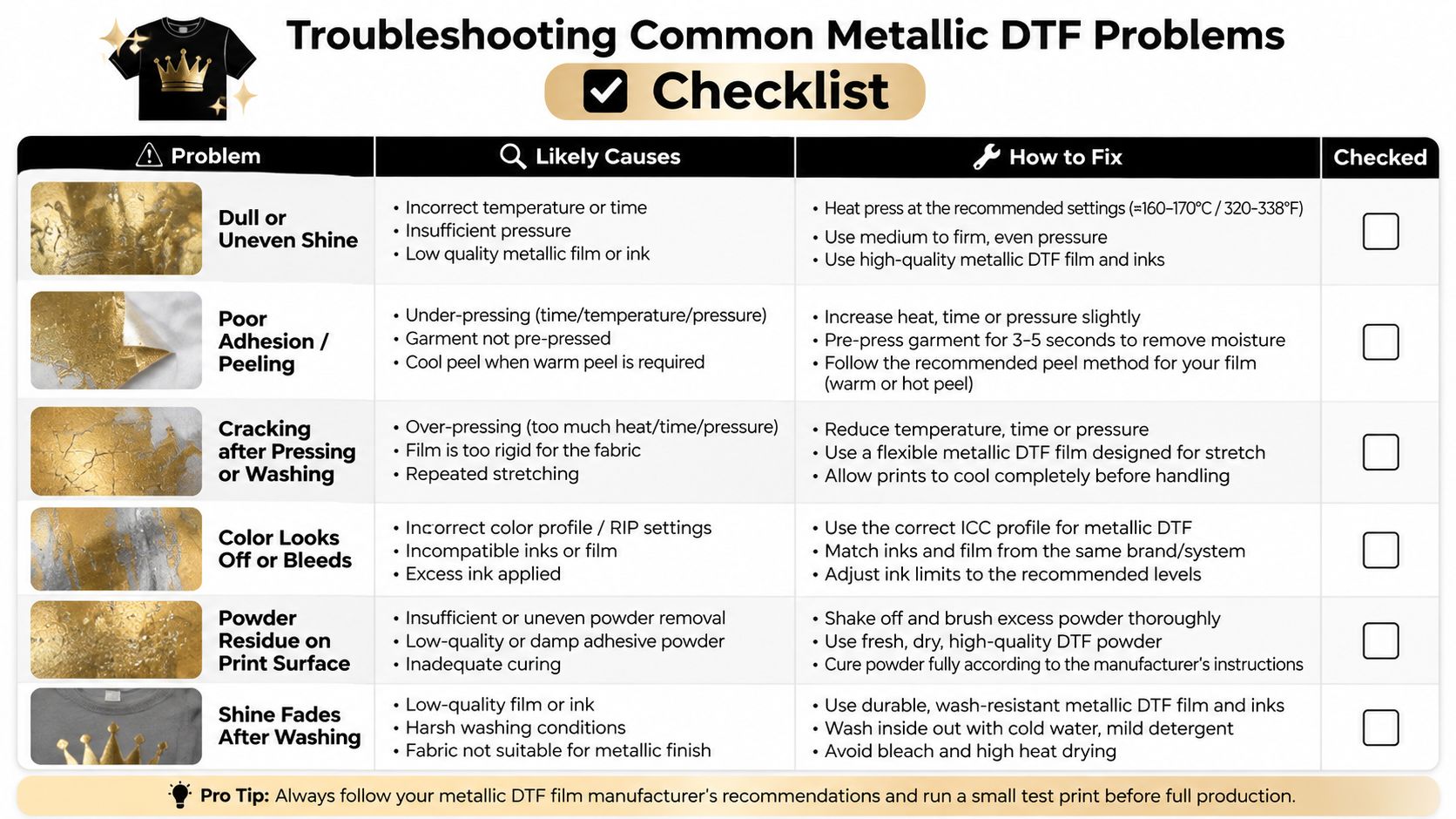
Most metallic failures have a visible symptom and a mechanical cause. Treating every problem as an ink problem wastes time. The press, film temperature, adhesive activation, artwork stack, and pressure distribution each leave different clues.
Dull or uneven metallic sheen
A patchy finish usually points to incomplete adhesive wet-out or inconsistent pressure. If the press doesn't deliver enough heat or dwell time, the adhesive may not flow evenly into the fabric surface. A cold peel won't repair an under-pressed transfer.
Check the platen temperature with a reliable surface measurement method, verify that the garment sits flat, and confirm that the press applies even pressure across the full design. Metallic systems often use approximately 150 to 170°C and 15 to 20 seconds, with medium-to-heavy pressure, but the correct profile depends on the film and fabric. Change one setting at a time and compare samples.
Fine details blur or disappear
Small lettering and narrow internal gaps can close when the file carries too much white underbase or when the design falls below the film's practical detail limit. Metallic film depends on reflection, so excessive white coverage can make a section appear gray, muted, or visually clogged.
Return to the artwork file. Reduce or disable white ink where the process calls for it, simplify delicate geometry, and preserve at least 17 pt text and 6 mm internal gaps where those specifications apply. Don't solve a design problem by increasing pressure. Extra pressure may improve contact while worsening the appearance of already fragile details.
Edges lift after application or washing
Lifted corners usually indicate incomplete bonding, uneven pressure, contamination, or a garment surface that prevented proper contact. The edge is often the first place to reveal a weak press profile because it has less surrounding adhesive area to support it.
Run a controlled test on the actual garment blank. Confirm that the transfer lies flat, the press closes evenly, and the dwell time is long enough for the adhesive to activate. If the center looks excellent but the perimeter fails, inspect platen pressure and garment seams before changing the artwork.
A practical quality-control loop
Use one approved test garment before starting a production run. Record the film, garment composition, temperature, dwell, pressure, peel condition, and visual result. Then perform a basic adhesion and appearance inspection after the garment has cooled.
Diagnostic rule: If the metallic finish is dull everywhere, check the film and ink architecture. If only parts are dull, check pressure distribution and garment contact. If detail is missing, return to the file before adjusting the press.
Ideal Use Cases and Cost-ROI Considerations
Metallic DTF makes financial sense when the customer is buying visual distinction, not merely a printed shirt. The finish supports premium positioning for limited-edition apparel, luxury-inspired branding, holiday collections, event merchandise, and promotional garments where gold or silver is central to the design.
The category is better treated as a specialty, higher-margin segment than as a broad-volume commodity. Recent coverage identifies metallic and gold effects as a strong seasonal aesthetic and describes continuing interest in luminous specialty films, while also noting that standard DTF printers can't produce metallic colors on their own. That fragmentation creates an opportunity, but it also means the shop must explain the process clearly.

When the premium is easier to justify
A metallic transfer is a strong candidate when:
- The design has a focal metallic element: A gold crest, silver wordmark, or chrome-style emblem can carry the product's perceived value.
- The order is limited or personalized: Avoiding screens makes small runs easier to manage, while ready-made transfers reduce setup work.
- The garment is already premium: A specialty finish pairs more naturally with a quality hoodie, structured tee, tote, or boutique uniform.
- The sales window is seasonal: Holiday, celebration, nightlife, and launch apparel can benefit from a finish that photographs differently under changing light.
- The artwork is detailed but controlled: Metallic DTF is more suitable than HTV when the design has intricate contours, provided the detail meets the film's limitations.
The economics change when the design is a simple metallic word repeated across a large, predictable order. In that case, compare plastisol and foil before committing to DTF. A method with more setup may produce a better unit economics profile once the order is large enough to absorb preparation.
Build the quote around risk, not just material
Don't price metallic work by adding a small material surcharge to a standard DTF quote. Include artwork preparation, test pressing, slower inspection, possible separate metallic files, and the cost of a failed garment if the workflow isn't already validated.
A useful internal decision is to classify each job as premium-ready, standard DTF, or alternative-method candidate. Premium-ready jobs have a clear visual reason for metallic. Standard DTF jobs don't benefit enough from the finish to justify extra handling. Alternative-method candidates have simple artwork or a production volume that may favor foil, HTV, or screen printing.
Margin principle: Sell the metallic effect as a design feature with defined care and appearance expectations, not as an invisible upgrade to the same standard product.
Why Small Businesses Should Choose a US Supplier Like Cobra DTF
Small shops don't lose money only through transfer prices. They lose it when a shipment arrives late, customs holds a package, a batch behaves differently from the previous one, or a quality issue takes too long to resolve. For metallic work, those risks are more serious because the workflow already has narrower tolerances than standard DTF.
A domestic supplier can reduce logistical uncertainty. Overseas sourcing may involve tariffs, customs fees, long transit windows, and less predictable communication. Those costs don't always appear in the initial product quote, but they affect delivery promises, customer satisfaction, and the amount of inventory a shop must keep on hand.
Consistency is part of the material cost
A metallic transfer supplier should provide clear artwork requirements, application instructions, and responsive support when a test doesn't behave as expected. Consistent film and ink quality also matters because a press profile built around one batch may not translate cleanly to another.
Cobra DTF positions itself as a family-owned Texas business supplying 100% USA-made products, with USA-sourced inks and films and a satisfaction guarantee. Its stated fulfillment terms include same-day shipping for orders placed by 1 PM CST and guaranteed delivery within 1 to 3 days, as described in the company information provided for this guide. Those details are particularly relevant when a small business has a firm event date or a short product-launch window.
For shops evaluating domestic sourcing more broadly, this guide to made-in-USA suppliers offers useful context for comparing local production claims and fulfillment expectations.
Support matters when settings are specialized
Metallic jobs often need a conversation that goes beyond “What size should I order?” You may need to confirm whether white ink should be disabled, whether the transfer is cold peel, and which garment types have already been tested. A supplier that can answer those questions quickly helps you avoid treating a material issue as a press issue.
Domestic support doesn't guarantee that every transfer will work without testing. It does make troubleshooting more direct, reduce time-zone friction, and help a small shop protect its production schedule. For a specialty product, that operational reliability belongs in the purchasing decision alongside material price.
Your Metallic DTF Implementation Checklist
Use this checklist before adding metallic DTF transfers to a product line:
- Prepare the file: Mirror the artwork, minimize or disable white ink where required, and protect small details.
- Check geometry: Keep text at least 17 pt and internal gaps at least 6 mm when the film specification calls for those limits.
- Calibrate the press: Test around 150 to 170°C, 15 to 20 seconds, and medium-to-heavy pressure, then adjust one variable at a time.
- Cold peel completely: Don't remove the film while the transfer is still hot.
- Inspect every test: Check sheen, edges, counters, pinholes, and coverage under angled light.
- Price for labor and risk: Include artwork preparation, testing, inspection, and the premium visual value.
- Set customer expectations: Explain that metallic appearance depends on lighting, garment choice, care, and correct application.
- Choose the right supplier: Use a domestic source when predictable fulfillment and responsive support matter more than a low initial quote.
Cobra DTF offers USA-made DTF transfers, including specialty options suited to shops that want to test metallic apparel without relying on unpredictable overseas fulfillment. Visit Cobra DTF to review the available transfer options and build a repeatable metallic workflow for your next premium apparel job.