
Unpacking the DTF Printing Meaning
DTF printing is a game-changer for custom apparel. Instead of printing directly onto a shirt, you print your design onto a special transfer film first. Then, you use a heat press to transfer that design onto the fabric.
Think of it like a high-tech, super-durable iron-on, but the result is a soft, flexible graphic that feels like it's part of the material itself. This Direct-to-Film method is what makes it possible to get incredibly vibrant, full-color images on almost any type of fabric you can imagine.
What Exactly Is DTF Printing?
At its heart, DTF printing is a brilliantly simple idea. We bypass printing ink directly onto the garment, which can be tricky depending on the fabric. Instead, we use a specialized printer to lay the design onto a sheet of PET (polyethylene terephthalate) film. This film acts as the perfect carrier for your artwork.
The process is a bit like creating a temporary tattoo. You have the design on a special sheet, ready to be applied. With DTF, we add a crucial step for permanence. Right after the design is printed, a fine adhesive powder is sprinkled over the wet ink. This powder is the secret sauce—it acts as a powerful glue that bonds the ink to the fabric's fibers when heat and pressure are applied.
DTF Printing At a Glance
To quickly get a handle on what makes DTF tick, this table breaks down its key attributes. It's a snapshot of why this technology has become so popular.
| Attribute | Description |
|---|---|
| Process | Designs are printed onto a special film, coated with adhesive, then heat-pressed onto fabric. |
| Fabrics | Works on a massive range of materials, including cotton, polyester, blends, leather, and nylon. |
| Color Capability | Delivers full, vibrant colors, including a bright white base, for stunning photorealistic prints. |
| Feel | The final transfer is soft, flexible, and stretches with the fabric without cracking. |
| Durability | Highly resistant to washing and fading, often outlasting the garment itself. |
| Ideal For | Small to medium-sized custom orders, complex multi-color designs, and on-demand printing. |
This combination of flexibility, quality, and durability is precisely why both small shops and large-scale operations are turning to DTF.
The Core Components of DTF
The magic of DTF comes from a few key ingredients working together perfectly. It’s a straightforward system, but each part plays a vital role.
- PET Transfer Film: This isn't just a random sheet of plastic. It's engineered with a special coating that holds the ink perfectly and releases the design cleanly once heat is applied.
- Specialized DTF Inks: These aren't your standard desktop printer inks. They are textile inks formulated to be vibrant and incredibly flexible, especially the crucial white ink that serves as a base. This ensures the design can stretch without breaking apart.
- Adhesive Powder: This granulated hot-melt powder is the real workhorse. It melts during the heat-press stage, creating an unbreakable bond between the ink and the garment fibers. This is what gives DTF prints their famous durability.
This technology is taking the custom apparel world by storm, especially in North America. The market is set to grow at a CAGR of 5.5% between 2025 and 2032, and here in the United States, it’s projected to become an $81.6 million market. This boom is fueled by how easy it is for small businesses to get started and how efficient it is for one-off custom jobs. You can dive deeper into the numbers with the North America Direct To Film Printing Market research.
How the DTF Printing Process Works
To really get what DTF printing is all about, you need to see how it works in action—from a simple digital file to a finished, wearable piece of art. It might sound a bit technical, but the whole process is surprisingly straightforward. Think of it like a simple recipe; each step is essential for getting that perfect, durable print.
Step 1: Print Your Design on Film
It all starts with your design on a computer. A specialized DTF printer takes that artwork and prints it directly onto a sheet of PET (polyethylene terephthalate) film. This isn't your average plastic sheet; it’s specifically engineered to hold the ink perfectly and then release it cleanly when heat is applied.
First, the printer lays down all the colors of your design (CMYK). Then, in a brilliant move, it prints a solid layer of white ink directly on top of the colors. This white base is the secret sauce—it ensures your design looks bright and vibrant, even on a black t-shirt.
Step 2: Apply the Adhesive Powder
While the ink is still wet on the film, it’s time for a little magic. A fine adhesive powder, made of thermoplastic polyurethane (TPU), is sprinkled evenly over the entire print. The powder only sticks to the wet ink, leaving the rest of the film clean.
Think of it like breading chicken; the coating only adheres where you want it to. After shaking off the excess powder, the design is ready for the next phase, where this powder will become the powerful glue that holds everything together.
This adhesive powder is what makes DTF so versatile. It’s the key ingredient that lets the ink bond to almost any fabric—from cotton and polyester to tricky materials like leather and nylon—which is something other printing methods just can't do.
This infographic breaks down the core stages of taking a design from film to fabric.
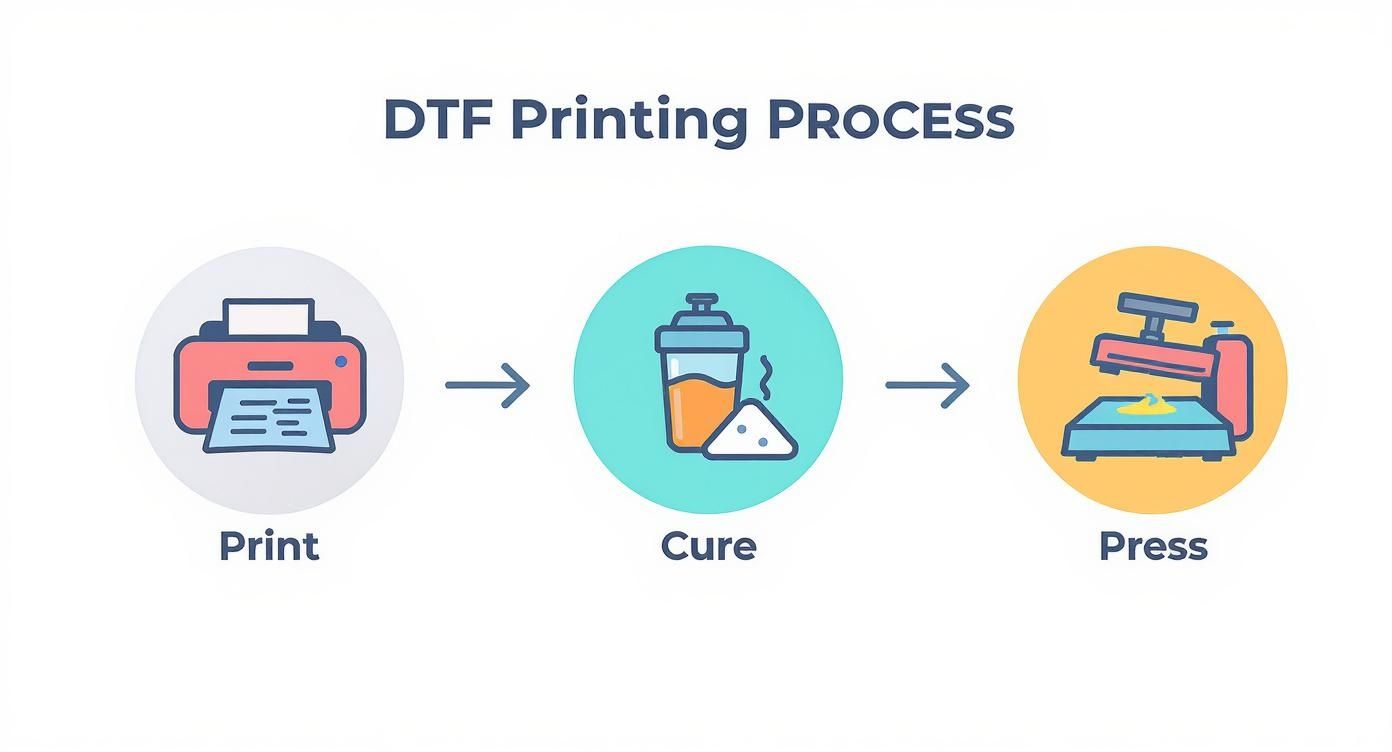
As you can see, the process moves logically from printing to curing and finally to pressing it onto the final product.
Step 3: Cure the Transfer
Next, we need to cure the transfer. The film, now coated with ink and powder, is placed in a special curing oven or under a heat press that hovers just above the surface. The temperature is typically set around 250-300°F (120-150°C).
This heat melts the adhesive powder, transforming it from a grainy texture into a smooth, solid layer of glue that completely covers your design. You're left with a ready-to-press transfer.
Step 4: Press the Design onto Fabric
Here's where it all comes together. The cured DTF transfer is positioned exactly where you want it on the t-shirt, hoodie, or bag. Using a heat press set to about 300-325°F (150-165°C), you apply firm pressure for around 10-15 seconds.
This final press reactivates the adhesive, melting it directly into the fabric's fibers for a permanent bond. Getting this step right is crucial for a print that lasts. For a foolproof guide, check out our detailed DTF press instructions to get it perfect every time.
Once it's done, you peel away the film, and what's left behind is a stunningly crisp, vibrant print that feels soft and is fully bonded with the garment.
Why Choose DTF Over Other Printing Methods
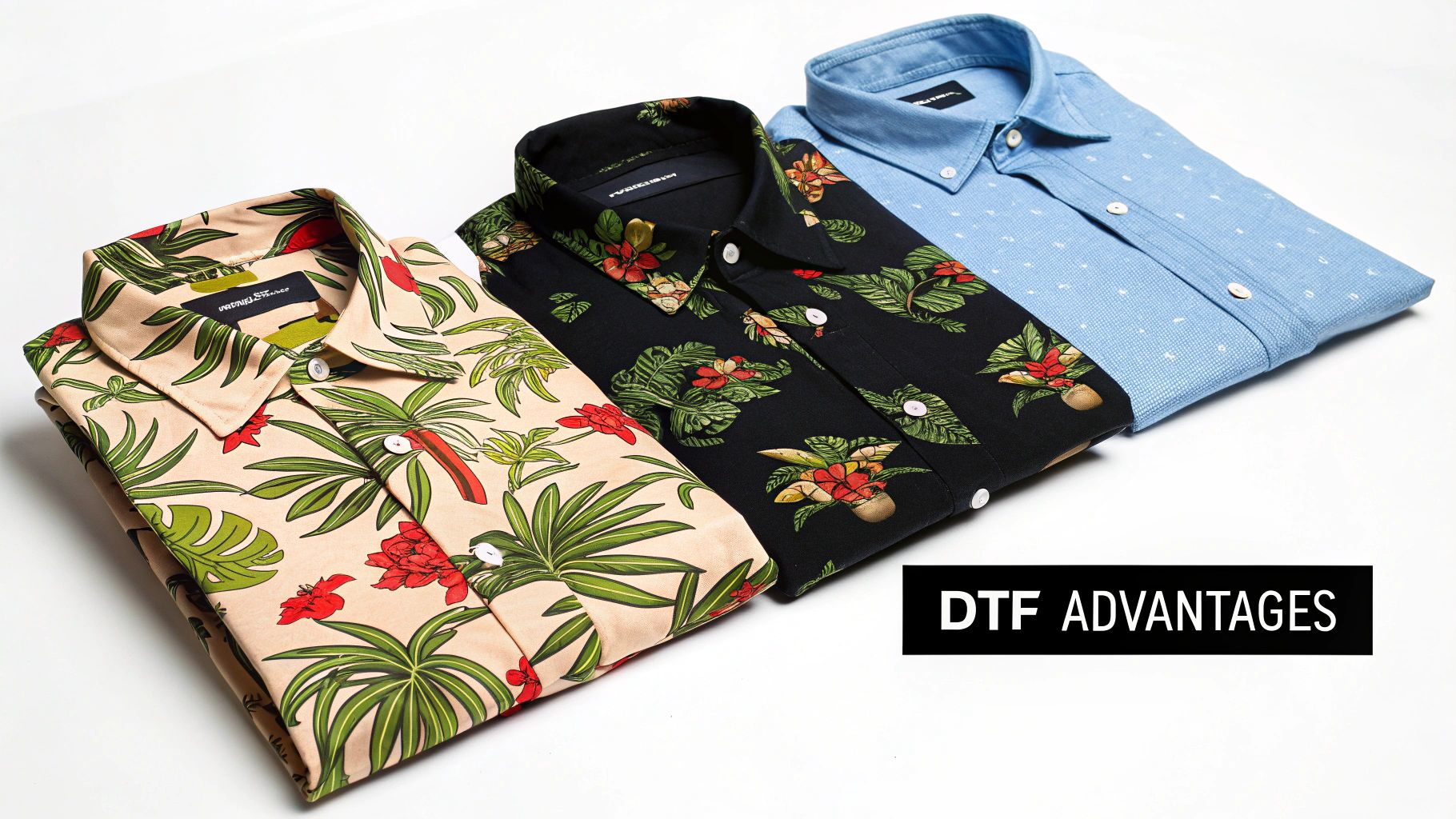
When you're looking for the right way to print custom designs, the choices can feel endless. But time and again, Direct-to-Film (DTF) printing comes out on top. It’s a fantastic all-rounder that neatly solves many of the headaches creators and businesses have struggled with using older methods.
The biggest game-changer is its versatility. Unlike Direct-to-Garment (DTG), which is pretty much limited to 100% cotton, DTF plays well with almost everything. You can press the exact same vibrant design onto a cotton t-shirt, a polyester athletic jersey, a tough canvas tote, or even a nylon windbreaker. No need to switch up your entire process.
Unmatched Vibrancy and Detail
The first thing you’ll notice with a DTF print is the color. It just pops. Because the design is printed onto a special film with a solid white ink base, the colors come out incredibly bright and solid, even when you press them onto a black shirt. This is a huge win over other methods where colors can look dull or washed out on dark fabrics.
DTF is also a master of detail. It can handle those really complex, multi-color designs with razor-sharp lines without breaking a sweat. You don't have to worry about the complicated, time-consuming setups you'd face with screen printing. This makes it perfect for photorealistic images or intricate logos that have to look absolutely perfect.
Superior Durability and Feel
Of course, a great-looking design is only half the battle. You need it to last. This is where DTF really shines. The prints are known for being incredibly tough, easily handling 50 or more washes without cracking, fading, or peeling away. The adhesive powder literally melts into the fabric, creating a bond that’s built to last.
But it’s not just tough; it feels great, too. The print is soft and flexible, moving and stretching with the garment. It doesn't have that stiff, plastic-y feel that can make a shirt uncomfortable. You get the best of both worlds: a premium feel and long-lasting quality that's ready for retail.
To see a direct comparison with its closest rival, check out our complete guide on DTF vs DTG printing.
DTF Printing vs Traditional Methods
To put it all into perspective, let's break down how DTF stacks up against the other big players in the custom apparel world: DTG and screen printing. Each method has its place, but seeing them side-by-side makes it clear where DTF excels.
| Feature | DTF Printing | DTG Printing | Screen Printing |
|---|---|---|---|
| Fabric Versatility | Excellent (cotton, poly, blends, etc.) | Limited (best on 100% cotton) | Good (but requires different inks) |
| Color Vibrancy | Excellent on all fabric colors | Good on light fabrics, muted on darks | Excellent, but each color needs a screen |
| Detail & Complexity | Excellent for complex, full-color designs | Very good for photorealistic prints | Limited by screen mesh and color count |
| Durability | Excellent (50+ washes) | Good, but can fade over time | Excellent, very long-lasting |
| Feel (Hand) | Soft and flexible | Very soft (ink soaks into fabric) | Can be thick and heavy, especially with many colors |
| Setup Costs | Low; no per-design setup | Low; direct from digital file | High (screens must be created for each color) |
| Best For | Small-to-large runs, various fabrics | One-offs, small batches on cotton | Large bulk orders (100+ items) |
Ultimately, this table shows that while screen printing is still king for massive, simple-design runs, DTF offers unparalleled flexibility and quality for the vast majority of custom apparel needs today.
Economic and Efficient Production
There's a reason the DTF market is booming. The global market was valued at USD 2.56 billion in 2023 and is on track to nearly double to USD 4.57 billion by 2033. This incredible growth is driven by how cost-effective it is for creating amazing custom products. Businesses can produce stunning, high-resolution prints on almost any material without the steep setup costs that come with screen printing. For more on this trend, you can dive into this detailed industry report.
Real-World Examples of DTF Printing
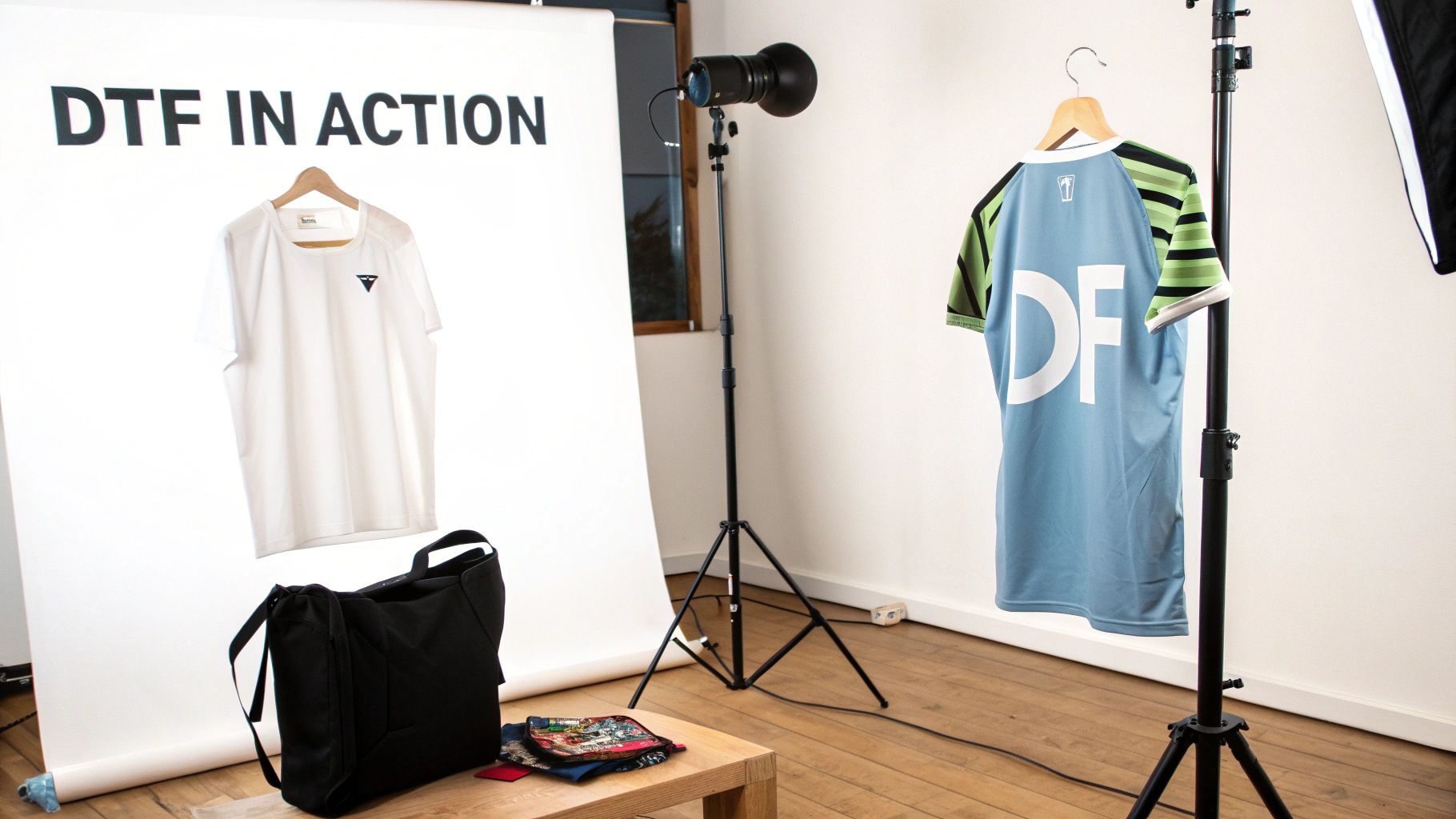
It’s one thing to understand the theory behind DTF printing, but seeing it in the wild is what really makes the lightbulb go on. This isn't just a technical process; it's the creative fuel behind countless products you probably see every day, from up-and-coming streetwear labels to your favorite artist's merch.
One of the biggest areas where DTF shines is in the independent apparel scene. Small brands can now launch entire collections with complex, full-color designs without the massive upfront costs and setup that screen printing requires. This means they can print small batches of t-shirts, hoodies, and jackets to test new ideas on the fly.
For instance, a graphic designer can take a super-detailed, photorealistic image and get a perfect replica on a dark polyester hoodie. That's a job that would be a nightmare—if not impossible—with older printing methods.
Custom Merchandise and Events
Musicians, creators, and event organizers have jumped on the DTF bandwagon, and for good reason. It’s the perfect solution for creating tour merchandise that not only looks incredible but also lasts. Fans want gear that holds up.
Think about a band on tour. They need to sell custom t-shirts at their shows. With DTF, they can slap that intricate album art on literally anything, including:
- 100% Cotton Tees: For that classic, soft-hand feel everyone loves.
- Polyester Blend Hoodies: A warmer, more premium option for die-hard fans.
- Canvas Tote Bags: A practical and stylish accessory that expands their merch table.
This kind of flexibility lets them grow their product line without a headache, all while keeping the branding and quality consistent. Best of all, the prints stay sharp and vibrant wash after wash, which is exactly what you want from fan-favorite apparel.
A great design deserves to be seen. Once you've created your custom products, presentation becomes everything. Consider exploring resources on capturing high-quality product images to ensure your online store does your work justice.
Beyond Standard Apparel
The real magic of DTF, though, is its ability to break free from the basic t-shirt. Its versatility blows the doors wide open for creative projects and businesses working with items that are notoriously tricky to print on.
Take custom sports teams, for example. DTF is perfect for putting names and numbers on those slippery, synthetic performance jerseys. The print actually stretches with the fabric and can withstand a ton of action without cracking or peeling off.
Businesses are also getting creative with DTF for all sorts of promotional products:
- Hats and Caps: Applying crisp, detailed logos to the curved surfaces of headwear.
- Shoes: Adding custom graphics to canvas or even leather sneakers.
- Workwear: Placing durable, full-color logos on tough work jackets and high-vis vests.
Every one of these examples showcases a core strength of DTF, whether it’s the ability to print on almost any fabric, its incredible level of detail, or its sheer durability. It’s a tool that genuinely empowers creators to bring just about any vision to life, on almost any surface imaginable.
Why US-Made DTF Transfers Matter
When you're getting started with DTF printing, it's natural to get caught up in the technical side of things. But where your transfers actually come from is just as crucial as the process itself. Choosing a US-based supplier like Cobra DTF isn't just about waving a flag; it's a smart business move that directly affects your final product quality, your operational reliability, and ultimately, your brand's reputation.
Think of it like this: a great chef can't make an amazing meal with subpar ingredients. In the same way, your custom apparel is only ever as good as the transfers you press onto it. US-made products are typically held to much stricter quality control standards, which means the films, inks, and adhesives you get are consistently first-rate.
Superior Quality and Consistency
When you stick with a domestic supplier, you're buying into consistency. Better materials made here in the States lead to real, tangible benefits that your customers will see and feel.
- Brighter, Bolder Colors: Premium inks mean your prints pop with vibrancy and stay true to your original design files.
- A Softer Hand Feel: High-quality adhesives and films create a transfer that feels less like a plastic patch and more like it's part of the fabric.
- Exceptional Durability: The bond is simply stronger. Your designs will hold up through dozens of washes without cracking, peeling, or fading away.
This level of quality isn't just a "nice-to-have"—it's everything. To dive deeper into how the right partner can make all the difference, check out our guide on the benefits of Made in USA suppliers.
A More Reliable Supply Chain
Putting the physical product aside for a moment, domestic production gives you a huge advantage in logistics. Ordering from overseas can feel like a gamble, with unpredictable delays, customs nightmares, and surprise tariffs that can wreck your budget and your deadlines. Sourcing from a US-based partner completely sidesteps those issues.
With a domestic supplier, you get faster, more predictable shipping times—often just 1-3 business days. This speed gives you the agility to say "yes" to last-minute jobs and keep your customers happy, all without the stress of tracking a package across the globe.
This reliability is a game-changer in a market that's blowing up. The global DTF printing market was valued at USD 2.72 billion in 2024 and is expected to reach USD 3.92 billion by 2030. That kind of growth, especially for roll-to-roll printing, proves you need a fast, scalable supply chain just to keep pace. You can read more about this explosive growth in this global market report.
At the end of the day, choosing US-made transfers is an investment in a smoother, more dependable business. For anyone serious about creating professional-grade custom apparel, the choice is clear. You’re not just buying a transfer; you’re buying peace of mind and a quality guarantee that elevates your entire brand.
Busting a Few Common Myths About DTF Printing
Like any popular tech, DTF printing has its fair share of myths and misunderstandings floating around. Let's clear the air and set the record straight on a few common ones that might be giving you pause.
Myth 1: The Prints Feel Like a Stiff, Plastic Patch
This is probably the biggest hang-up for people new to DTF. They picture a thick, uncomfortable plastic square stuck on a shirt. And to be fair, older heat transfer methods definitely had that reputation.
But modern DTF is a whole different ball game. High-quality transfers, especially the ones made with premium American adhesives, create a finish that’s surprisingly soft and flexible. The design actually stretches right along with the fabric, so you never get that stiff, “cardboard” feeling. The final product feels like it belongs on the shirt, not like a cheap afterthought.
Myth 2: The Process Is Way Too Complicated for a Small Shop
Another rumor is that DTF is only for big, industrial operations with a team of technicians. While setting up and running a full DTF printing system from scratch does take some know-how, using pre-made transfers is as simple as it gets.
Here’s the reality: if you can work a heat press, you can master DTF transfers. All the tricky parts—the printing, powdering, and curing—are done for you by your supplier. You just get a finished design that's ready to press, making the whole process quick and almost impossible to mess up.
Myth 3: DTF Prints Don't Last
Finally, there’s the question of durability. Can these prints really hold up to real-world wear and tear? Absolutely. In fact, when done right, their longevity is one of their biggest selling points. The special adhesive powder literally melts and fuses into the fabric's fibers, creating a super strong bond.
This bond allows the print to handle 50 or more washes without cracking, peeling, or fading away. As long as you use quality transfers and follow the pressing instructions, the DTF design will often outlast the garment it’s printed on.
Your Top DTF Printing Questions, Answered
Jumping into the world of custom printing always brings up a few questions. Let's tackle some of the most common ones about DTF to give you a clearer picture of how it all works.
DTF vs. DTG: What's the Real Difference?
So, what separates DTF from its cousin, DTG? The easiest way to think about it is how the ink gets onto the shirt.
Direct-to-Garment (DTG) printing is exactly what it sounds like—the printer applies ink directly to the fabric. It’s a great choice for 100% cotton, but it can be finicky with other materials.
DTF, on the other hand, stands for Direct-to-Film. Your design is first printed onto a special transfer film. From there, it's heat-pressed onto the garment. This simple two-step process is the secret to its versatility, allowing it to work flawlessly on cotton, polyester, blends, and even tricky surfaces like hats and bags.
How Long Do DTF Prints Actually Last?
Durability is a huge deal, and this is where DTF really shines. A properly applied, high-quality DTF transfer is built to last. You can expect it to endure anywhere from 50 to 100 washes before you see any hint of cracking, peeling, or fading.
Honestly, the print often outlives the t-shirt itself.
This incredible staying power is a game-changer for anyone selling custom apparel. It means you're creating a professional, retail-quality product that your customers will love for years, not just for a few wears. That kind of reliability is what makes DTF a go-to for serious creators.
Can I Just Use My Home Printer for This?
I get this question a lot, and the answer is a hard no. A standard home or office printer just isn't built for the job.
DTF printing requires a purpose-built machine. These printers handle special DTF inks (including a critical white ink base layer that home printers don't have) and are designed to print on PET transfer film. Your desktop printer simply doesn’t have the right guts or use the right ink to create a transfer that will actually work.
Ready to see what top-tier, US-made transfers can do for your projects? Explore the amazing quality and vibrant colors we offer at Cobra DTF. See how simple it is to bring your best ideas to life by checking out our selection at https://cobradtf.com.