
Direct to Film Printing The Ultimate Explainer Guide
So, what is this Direct to Film (DTF) printing everyone is talking about? In short, it’s a game-changing way to decorate apparel. We print a design onto a special transfer film, which is then heat-pressed onto a garment.
Think of it like creating a high-end, full-color sticker that, once pressed, becomes a permanent and flexible part of just about any fabric you can imagine—from cotton and polyester to leather and nylon. It’s this versatility and the stunningly vibrant results that have made it a favorite for custom apparel creators.
What Exactly Is Direct to Film Printing?
At its heart, direct to film printing brilliantly combines the ease of digital printing with the quality needed for professional fabric decoration. The magic lies in a simple but crucial difference: instead of printing ink directly onto a shirt like you would with Direct-to-Garment (DTG), the design is first printed onto a specialized polyethylene terephthalate (PET) film. This small shift in the process is what makes DTF so powerful.
Let’s say you have a really complex, multi-color design with tons of fine details. A dedicated DTF printer first lays down the colored ink onto this film, then follows it up with a critical layer of white ink. This white base is the key—it acts like a primer, making sure your colors pop with full opacity, even on dark fabrics like black hoodies or navy t-shirts.
The Key Players in the Process
Right after printing, while the ink is still wet, a fine adhesive powder is sprinkled over the design. This powder is the secret sauce that makes the transfer stick to the fabric permanently. The film is then passed through a heat source to cure, melting the powder into a smooth, even adhesive layer.
What you're left with is a ready-to-press transfer. The final step is simply placing the transfer onto your item—a t-shirt, a tote bag, a hat, you name it—and pressing it with a heat press. The combination of heat and pressure activates the adhesive, bonding the design to the material for good.
This method has quickly become the go-to for so many custom apparel businesses because it just works. It cuts out a lot of the usual printing headaches, giving you a straightforward way to produce brilliant, full-color graphics without messing with fabric pre-treatments.
This super-efficient process allows for incredible detail and color vibrancy on a huge range of materials. While other methods can be picky, often limited to cotton or light-colored fabrics, DTF excels on just about anything:
- Cotton and all sorts of cotton blends
- 100% Polyester fabrics (think athletic wear)
- Nylon and other synthetic materials
- Even tough stuff like leather and denim
It's this flexibility that makes direct to film such an incredible solution for anyone in the print world, from small-scale entrepreneurs to large print shops looking to broaden their horizons and solve those classic printing challenges.
How the Direct to Film Process Works Step by Step
Think of the direct to film process as a simple recipe. Once you see how a few key steps connect, the whole thing clicks, and you understand exactly how a digital design becomes a vibrant, wearable print. It's a surprisingly straightforward journey from your screen to the fabric.
It all starts with your digital artwork. Before a single drop of ink is used, your design file needs a little prep. You'll need to make sure it has a transparent background, is saved at a high resolution (we always recommend 300 DPI for sharp, clean lines), and is mirrored. This last part is critical—since you're essentially printing a reverse image that gets flipped onto the shirt, mirroring it ensures the final design reads correctly.
Step 1: Printing the Design onto PET Film
With the file prepped, it's time for the specialized DTF printer to do its thing. The first pass lays down all the colors of your design (the CMYK layer) directly onto a sheet of PET film. Right after the color goes down, the printer lays a layer of brilliant white ink on top. This white base is the secret sauce; it makes your colors pop on any garment and acts as a foundation for the adhesive.
Step 2: Applying the Adhesive Powder
This next step is where the magic happens. While the white ink is still wet, a fine, hot-melt adhesive powder is sprinkled evenly over the printed design. The powder clings only to the wet ink, leaving the rest of the film completely clean. This is how the adhesive is applied only where your design is, with no messy residue.
Step 3: Curing the Transfer
After it's powdered, the film heads to a heat source for curing. This could be a small curing oven or even the hover function on a good heat press. The heat melts the powder, turning it into a smooth, solid sheet of adhesive that sits perfectly on top of the ink. Now, your transfer is ready for the main event.
Step 4: Pressing the Transfer onto the Garment
This is the final step. The cured transfer is placed precisely where you want it on the garment. A heat press then applies a specific combination of heat, pressure, and time, which reactivates the adhesive and permanently bonds the design to the fibers of the fabric. For the exact settings we recommend, you can check out our detailed DTF press instructions.
Once the press is done and the transfer cools down (depending on if it's a hot or cold peel film), you simply peel away the PET film. What's left behind is a crisp, durable, and flexible design that feels great to the touch.
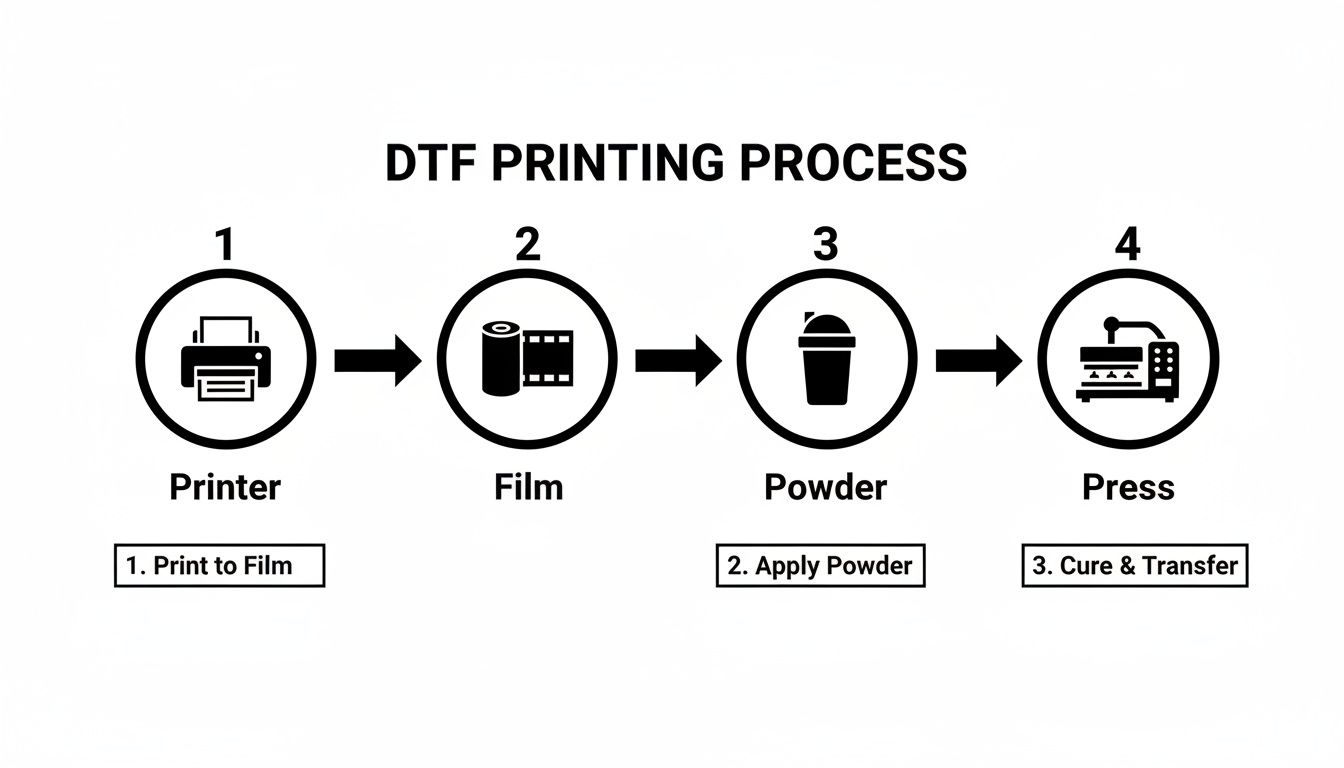
As you can see, the workflow is incredibly efficient, which is a big reason why DTF is taking the custom apparel world by storm. You can have a full sheet of transfers printed and ready to press in less than 10 minutes.
This speed has a massive impact on both cost and turnaround time. For small to medium-sized runs, DTF can slash production costs by up to 40% compared to setting up a traditional screen printing job. This makes it a perfect fit for on-demand businesses and the fast-paced world of e-commerce.
DTF vs. Other Printing Methods: A Head-to-Head Comparison
Picking the right printing method is one of the biggest calls you'll make for your apparel business. While direct-to-film (DTF) has exploded onto the scene, it's smart to see how it really stacks up against the old guards: Direct-to-Garment (DTG), screen printing, and even heat transfer vinyl (HTV).
Each method has its place, and the "best" one truly depends on the job in front of you. This isn't about finding a single winner; it's about giving you the insight to choose the right tool for your specific project. We'll look at what really matters—the fabrics they work on, how the print feels, how it holds up, and of course, the costs.
DTF vs. Direct-to-Garment (DTG)
On the surface, DTF and DTG look like twins. Both are digital, both are fantastic for detailed, full-color designs. But the real difference is in how the ink gets on the shirt. DTG prints ink directly into the fabric's fibers. DTF prints onto a special film, which is then heat-pressed onto the fabric's surface. That one change makes a world of difference.
- Fabric Compatibility: This is where DTF really shines. DTG is picky, performing its best on 100% cotton. It can get a bit fussy with polyester and synthetic blends, often leading to duller prints. DTF, on the other hand, is the universal problem-solver. It works beautifully on cotton, polyester, nylon, leather, and just about any blend you can throw at it, light or dark.
- Feel and Finish: Since DTG ink soaks right in, the final print has a super soft, barely-there feel. A good DTF transfer is also lightweight and flexible, but since it sits on top of the fabric, it has a feel many describe as a soft, modern version of a screen print.
- Workflow: DTG requires you to pre-treat garments, especially dark ones. This adds an extra step, extra cost, and another chance for things to go wrong. DTF completely skips the pre-treatment step, which is a massive time and labor saver.
If you're stuck between these two digital powerhouses, our guide on Direct-to-Film vs. Direct-to-Garment gets into the finer details to help you make the right call.
DTF vs. Screen Printing
For decades, screen printing has been the undisputed king of high-volume apparel printing. It's known for being incredibly durable and cheap for massive orders. The process involves pushing ink through a mesh screen onto the shirt, but here's the catch: you need a separate screen for every single color in your design.
This is where the conversation turns to volume and complexity. If you have a one-color design for a 1,000-shirt order, screen printing is tough to beat on price. But the setup is messy and takes a lot of work.
For small to medium runs, or any design with a handful of colors, DTF is the clear winner. There are zero screens to set up, letting you print full-color, photo-quality images for the same cost as a single-color design. This makes it perfect for on-demand jobs and custom orders.
The durability is neck-and-neck, with both methods holding up for dozens of washes. A big plus for DTF, though, is that it has a much softer feel than the thick plastisol inks often used in screen printing, especially on multi-color graphics.
DTF vs. Heat Transfer Vinyl (HTV)
Heat transfer vinyl (HTV) is the go-to for simple stuff. Think names and numbers on the back of jerseys. The process involves cutting a design from a sheet of vinyl and then using a heat press to stick it on the garment.
HTV's biggest weakness is complexity. You're pretty much limited to simple shapes and solid colors, since every color needs its own layer of vinyl to be cut and applied. Trying to "weed" (the tedious process of removing the extra vinyl) an intricate design is a great way to lose your patience.
This is exactly where DTF comes to the rescue. It handles unlimited colors, smooth gradients, and tiny details without breaking a sweat, all in a single transfer that's ready to press. While HTV is great for personalizing a single T-shirt, DTF is the far better choice for producing detailed logos and full-color graphics at any scale.
Printing Methods at a Glance: DTF vs. DTG vs. Screen Printing
To make things even clearer, here’s a quick side-by-side look at how these three major players compare across the most important factors for any apparel business.
| Feature | Direct to Film (DTF) | Direct to Garment (DTG) | Screen Printing |
|---|---|---|---|
| Best For | Small-to-large runs, full-color designs, any fabric | Small runs, detailed prints, soft feel | High-volume orders (100+), simple designs (1-4 colors) |
| Fabric Type | Cotton, polyester, blends, nylon, leather (any color) | Best on 100% cotton; struggles with synthetics | Works on most fabrics, but ink may vary |
| Feel of Print | Soft, flexible, slightly raised | Very soft, breathable, no feel | Can be thick and heavy, especially with multiple colors |
| Durability | Excellent (50+ washes) | Good (25-50 washes), can fade over time | Excellent (50+ washes), very durable |
| Color Complexity | Unlimited colors and gradients at no extra cost | Unlimited colors, great for photos | Each color adds significant cost and setup time |
| Setup Cost | Low (no screens or pre-treatment) | Medium (pre-treatment machine required) | High (screen creation is expensive and time-consuming) |
| Cost Per Print | Consistent and low for small-medium runs | Low for light garments, higher for darks (white ink) | Very low at high volumes, very high for small runs |
Ultimately, the best method comes down to your business model. Are you fulfilling one-off custom orders, or are you printing a thousand shirts for a local event? Understanding these core differences is the key to profitability and happy customers.
The Essential Gear for a DTF Printing Setup
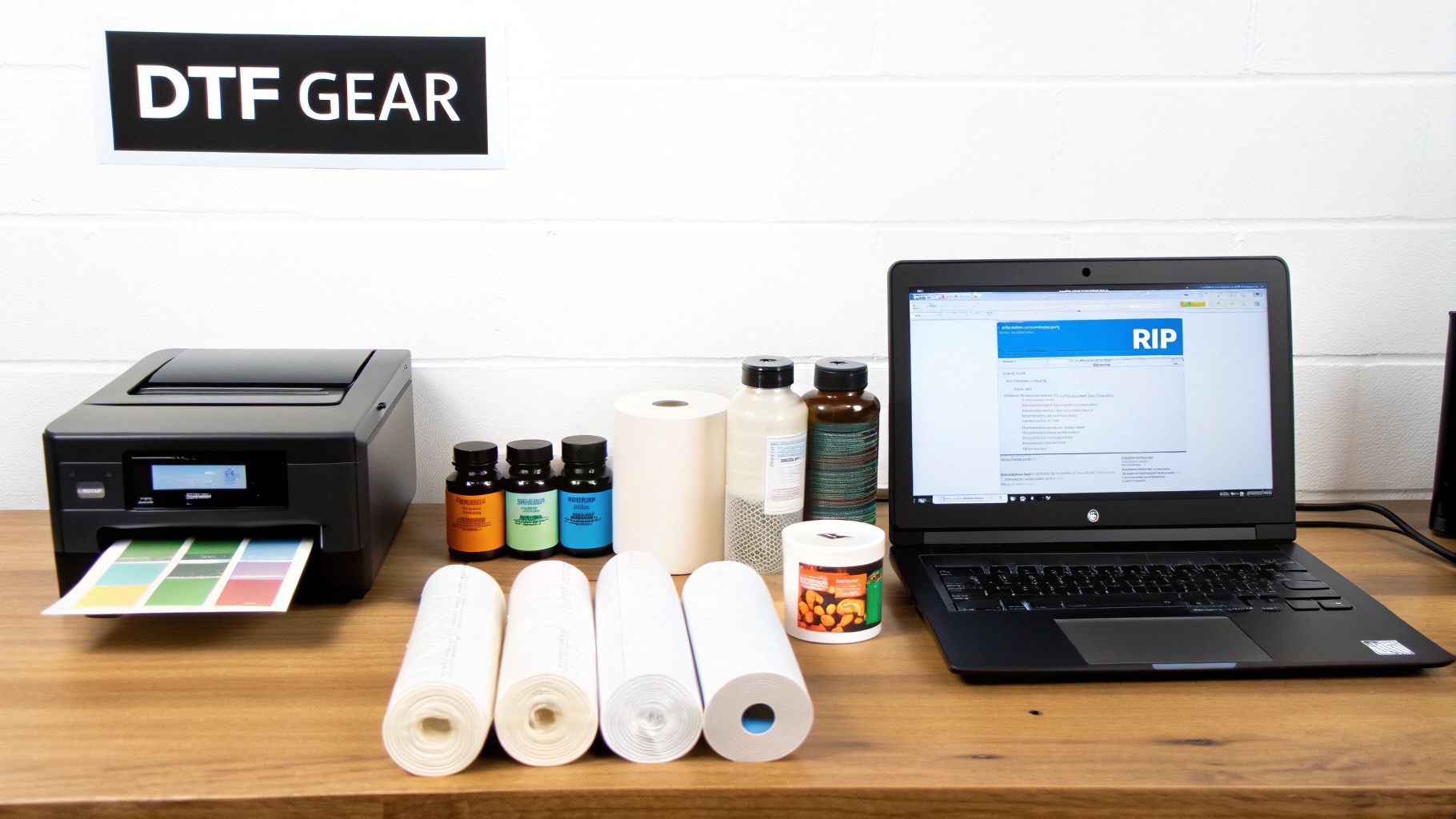
Jumping into direct-to-film printing means you'll need to assemble a team of specialized equipment and supplies. Each piece plays a critical role in turning a digital design into a durable, vibrant transfer. Think of it like a high-tech assembly line—every station has to do its job perfectly to get that high-quality finished product.
From the printer that lays down the ink to the heat press that makes it permanent, getting a handle on each piece of gear is the first step toward building an efficient and profitable DTF operation. Let's break down the must-haves.
The DTF Printer and RIP Software
The heart of any DTF setup is, of course, the DTF printer. This isn't your average office machine. These printers are built to handle thick textile inks and print onto special rolls of PET film. They work hand-in-hand with Raster Image Processor (RIP) software, which is really the brains of the whole operation.
This software does a lot more than just hit "print." It gives you control over crucial details like ink droplet size, color profiles, and how the colored and white inks are layered. Without good RIP software, trying to get accurate colors and a solid white base would be a frustrating, if not impossible, task. For a deeper look into picking the right machine, check out our guide on finding the best DTF printer for a small business.
The DTF market has been booming, with projections showing it'll jump from USD 2.72 billion to USD 3.92 billion by 2030. That growth is driven by printers and ink technologies that deliver the kind of brilliant, fade-resistant colors the apparel industry demands. You can read more about these trends and the explosive growth of DTF printing on 360iresearch.com.
Essential Consumables: Film, Inks, and Powder
Once you have the hardware, you need the supplies that actually create the transfer. These three materials work together in a very precise way.
- PET Film: This is the special sheet your design gets printed on. Films come in different finishes and peel types. Hot peel films can be pulled off right after pressing, which is great for speed, while cold peel films have to cool down first, often leaving a different finish.
- DTF Inks: These aren't just any inks; they're formulated specifically for textiles. A standard setup uses CMYK (Cyan, Magenta, Yellow, Black) for the color and a separate channel for a thick, opaque white ink. A high-quality white ink is absolutely non-negotiable if you want your designs to pop on dark fabrics.
- Adhesive Powder: This fine, white powder is the magic ingredient. It's a thermoplastic polyurethane (TPU) that acts like a glue. It sticks only to the wet ink on the film and, once heated, melts to create the adhesive layer that fuses your design to the garment.
The quality of your consumables directly impacts the quality of your final product. Using premium inks, film, and powder is the surest way to guarantee vibrant colors, a soft feel, and excellent wash durability for your customers.
The Curing and Pressing Equipment
The final steps in creating a DTF transfer are all about heat. You need two more key pieces of equipment to make sure your prints are permanent and look professional.
First, a dedicated curing oven or a shaker/dryer unit is used to melt the adhesive powder onto the printed film. This is a crucial step that turns that loose powder into a smooth, even adhesive layer, getting the transfer ready for the main event. For smaller shops, you can even use a heat press in "hover" mode to get the job done.
Finally, a good heat press applies the finished transfer to the T-shirt or garment. It delivers the perfect mix of time, temperature, and pressure needed to activate the adhesive and bond the design right into the fabric's fibers. A reliable press with even heat is your best defense against prints peeling or cracking down the road.
Why Businesses Are Choosing Direct to Film
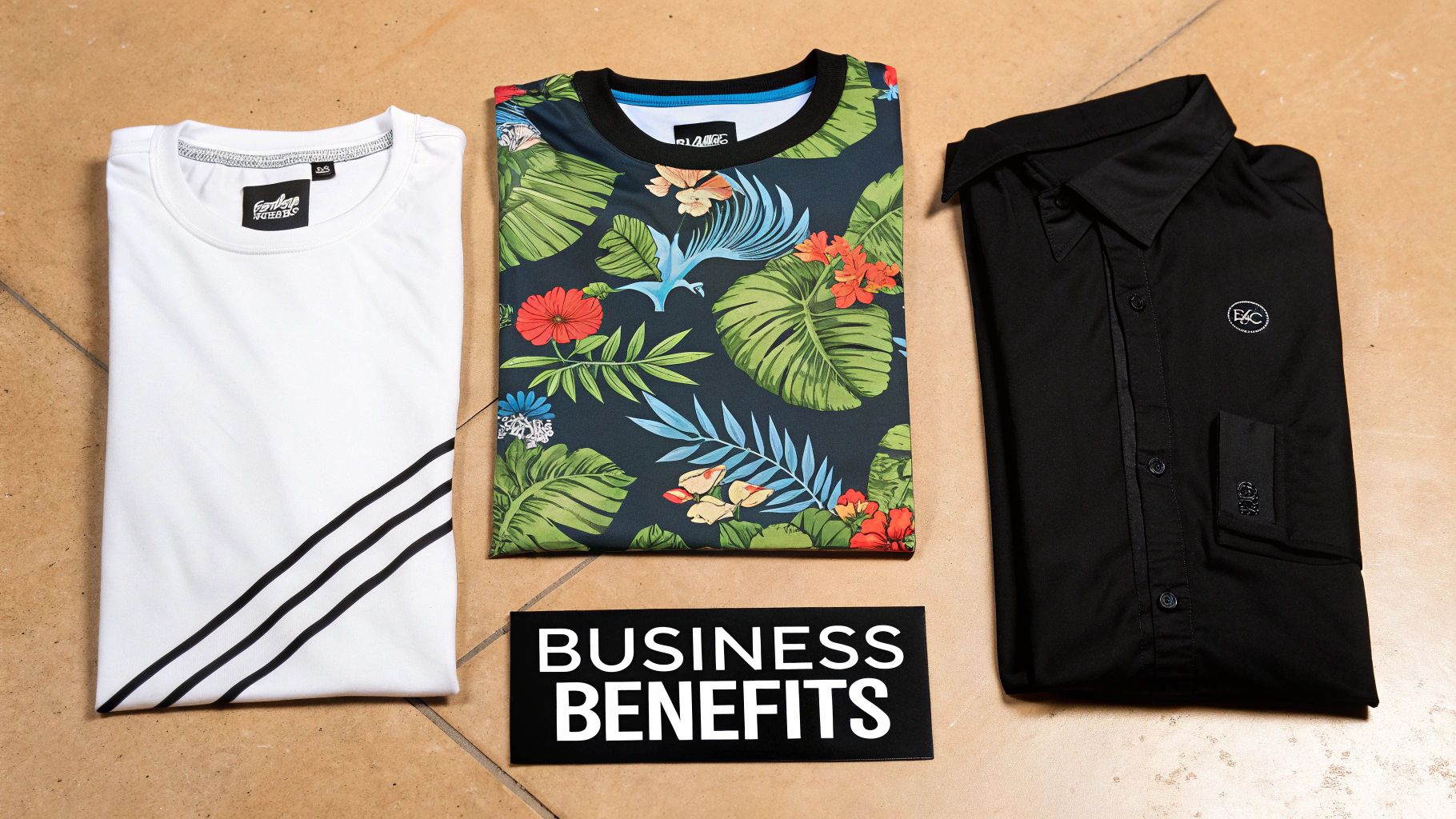
So, what’s behind the huge shift to direct to film printing? It’s pretty simple: it solves the real-world headaches that apparel businesses face every day. This isn't just about a flashy new technology; it's about practical advantages that directly boost profits, efficiency, and customer happiness.
From small Etsy shops to large-scale print operations, business owners are turning to DTF because it hits a sweet spot. It delivers a powerful mix of versatility, quality, and affordability that other methods just can't quite match.
Unmatched Fabric Versatility
One of the oldest frustrations in apparel decoration is being limited by the fabric. Direct-to-Garment (DTG), for example, is fantastic on 100% cotton but can struggle on the polyester and blended fabrics that are so popular in today's athletic wear market.
Direct to Film completely shatters these old barriers. Because the design is printed on a film and then transferred onto the fabric's surface, DTF works beautifully on almost anything. This alone can open up entirely new product lines.
- Cotton and Blends: Your go-to for classic t-shirts and hoodies.
- 100% Polyester: Perfect for sports jerseys, performance gear, and team apparel.
- Nylon and Leather: Think custom jackets, hats, and unique accessories.
- Denim and Canvas: Works for everything from custom jeans to tote bags.
Being able to say "yes" to more projects, no matter the material, is a massive competitive edge. It lets a business serve a much wider range of customers without having to invest in several different types of printing equipment.
Brilliant Color and Lasting Durability
Let's be honest, customers want prints that pop and prints that last. DTF delivers on both. The process lays down a bright white ink base, which makes the colors on top look incredibly rich and solid, even on black or dark-colored garments.
The true test of any print is the washing machine. A properly applied DTF transfer is built to last, capable of handling 50+ wash cycles without any major fading or cracking. That kind of durability builds customer trust and a reputation for quality.
The versatility of direct to film means you can produce full-color, photo-quality designs that keep up to 95% of their vibrancy after dozens of washes. This kind of performance is a big reason the market is growing so fast, as detailed in the full market analysis on Grand View Research.
Streamlined Workflow and Cost Effectiveness
In this business, time is money, and the DTF workflow is designed for efficiency. Unlike DTG, there is absolutely no need for fabric pre-treatment. Skipping that one step saves a huge amount of time, labor, and money on every single order.
This simplified process makes DTF incredibly cost-effective, whether you're printing one shirt or fifty. You don't have to burn screens like you do with screen printing, which makes it the perfect solution for on-demand orders and small-to-medium production runs.
This efficiency can slash production time by nearly 50% compared to methods that require a ton of prep work. For any business, that saved time goes straight to the bottom line as higher profit margins and faster turnaround for customers.
Got Questions About Direct to Film? We've Got Answers.
Jumping into any new printing method is going to bring up some questions. It's only natural. Whether you're trying to figure out what equipment you really need or just wondering how the final print actually feels, getting solid answers is the first step. Let's tackle some of the most common questions people have about direct to film.
We'll cover the big ones: durability, what kind of printer you need, how the print feels on a shirt, and whether it's an eco-friendly choice. My goal here is to give you straight-up, practical information you can actually use.
How Durable Are Direct to Film Transfers Compared to Screen Prints?
This is probably the number one question I hear, and for good reason. The great news is that high-quality direct to film transfers are incredibly tough. They easily hold their own against screen prints and, in many cases, will outlast them.
When a DTF transfer is applied correctly with heat and pressure, the adhesive powder creates a super strong bond with the fabric's fibers. This isn't just sitting on top; it's fused into the material. The result? A print that can handle 50 to 100 washes without cracking, peeling, or fading away. That thermoplastic adhesive is the key—it creates a durable layer that’s still flexible enough to stretch and move with the shirt. You can confidently sell products that are built to last.
Can I Use a Standard Inkjet Printer for DTF Printing?
I wish I could say yes, but this one is a hard no. You absolutely cannot use your standard office or photo inkjet printer for direct to film printing. They might both squirt ink, but that's where the similarities end. The technology and materials are worlds apart.
A real DTF setup is a specialized system. Here’s why:
- Special Inks: DTF printers use unique textile pigment inks. The white ink, in particular, is thick and opaque—something a regular printer just can't handle.
- Film Handling: These machines are built to print on rolls of PET film, not standard sheets of paper.
- RIP Software: This is the brain of the operation. DTF requires special RIP software to manage the ink layers (laying down white first), control how much ink is used, and get the colors just right. Your standard printer driver has no idea how to do this.
Trying to rig a regular printer for DTF is a recipe for disaster. You won't get a usable transfer, and you'll almost certainly destroy the printheads. It pays to invest in the right equipment from the get-go.
What Is the Main Difference in Feel Between a DTF and a DTG Print?
The "hand" of a print—how it feels on the shirt—is a huge deal. The difference between DTF and DTG all comes down to how the ink meets the fabric.
A Direct-to-Garment (DTG) print is famous for being incredibly soft and breathable. That’s because the ink soaks right into the cotton fibers of the shirt. On a light-colored tee, you can barely feel it's there.
A direct to film print is different. It's a transfer that sits on the surface of the fabric. But don't let that fool you; modern DTF isn't like the thick, plasticky transfers of the past. Today’s high-quality transfers are impressively thin, light, and flexible.
We often describe the feel as a soft, modern screen print. It has a bit more substance than a DTG print, but that's exactly what gives DTF its superpower: stunning, vibrant colors on any fabric and any color, including those dark polyester shirts that DTG just can't handle.
Is Direct to Film Printing an Eco-Friendly Process?
Compared to traditional methods like screen printing, direct to film is definitely a step in a greener direction. The single biggest win is that it's a waterless process. Screen printing uses a ton of water for preparing screens, using chemical emulsions, and cleaning up afterward. DTF cuts all of that out.
Beyond that, the quality of your ink and powder really matters. Good suppliers will offer water-based inks that are Oeko-Tex certified. This certification is a big deal; it means the inks have been tested and are free from over 100 substances that are harmful to people.
By working with a supplier who cares about providing high-quality, certified materials, you can significantly reduce your shop's environmental footprint. It’s a responsible way to create amazing products.
Ready to elevate your apparel business with vibrant, durable, and versatile prints? Cobra DTF offers premium, USA-made DTF transfers that ship the same day, so you can start creating without the wait. Order your custom DTF transfers today!