
Different Types of T-Shirt Printing Methods for Your Brand
From old-school screen printing for huge runs to modern digital methods like Direct-to-Garment (DTG) for super-detailed, one-off prints, you've got options. And that's not even counting versatile newcomers like Direct-to-Film (DTF), tough-as-nails heat transfers, or the classic, high-end look of embroidery. Each one shines in different situations, depending on the fabric, order size, and the look you're going for.
Choosing Your Perfect T-Shirt Printing Method
Let's be real—picking the right printing technique isn't just a small detail. It's a core decision that shapes everything: the quality of your final product, how much you spend, and ultimately, how happy your customers are. The world of custom apparel can feel a little overwhelming at first, but it really comes down to one thing: matching the right tool to your specific goal.
Whether you're starting an online brand known for its wild, full-color art or you're gearing up to print a massive order for a corporate event, there's a perfect method waiting for you. Getting a handle on what makes each technique tick is the first step toward making a choice that helps your business thrive.
Key Factors to Consider
Before we jump into the nitty-gritty of each method, it helps to think through a few key questions. Your answers will point you in the right direction.
- Design Complexity: Is your artwork a simple, one-color logo? Or is it a photorealistic masterpiece with tons of gradients and fine lines?
- Order Quantity: Are you making a single custom shirt as a gift, or are you printing 500 for a company-wide giveaway?
- Fabric Type: Are you working with classic 100% cotton, moisture-wicking polyester, or a tricky tri-blend?
- Desired Feel: Do you want the ink to feel like it's part of the fabric—super soft and breathable? Or are you okay with a thicker print that sits on top of the shirt?
This flowchart gives you a great visual starting point for how your design and order size can steer your decision.
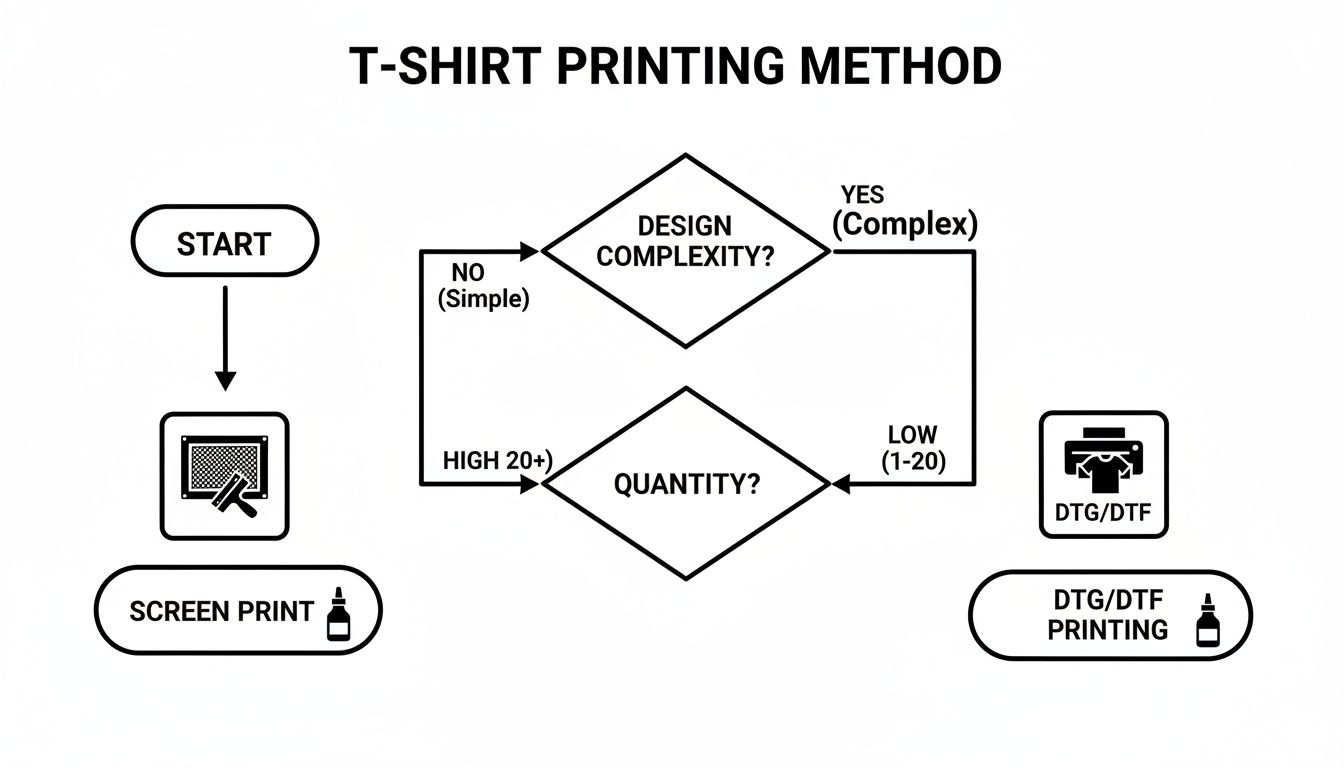
As you can see, simple designs for big batches are classic screen printing territory. But when you need complex graphics for a small run, digital methods like DTG or DTF are the way to go.
To give you a quick cheat sheet, I've put together a table that breaks down the most popular methods. Think of it as a starting point to quickly see which options might be a good fit for your project.
Printing Methods at a Glance
This table offers a quick comparison of popular t-shirt printing techniques, highlighting their best use cases, fabric compatibility, and key characteristics for an initial assessment.
| Printing Method | Best For | Fabric Compatibility | Feel and Finish |
|---|---|---|---|
| Screen Printing | Large batches (100+) with simple, bold designs (1-4 colors). | Cotton, blends, polyester. Very versatile. | Thick, durable layer of ink on top of the fabric. |
| DTG Printing | Small batches or one-offs with complex, full-color, or photo-realistic designs. | Primarily 100% cotton and high-cotton blends. | Soft, breathable feel as ink soaks into the fibers. |
| DTF Printing | Detailed, full-color designs on a wide variety of fabrics, including polyester & blends. | Cotton, polyester, blends, nylon, treated leather. Extremely versatile. | Smooth, flexible film that sits on the fabric. Softer than vinyl. |
| Heat Transfer Vinyl (HTV) | Simple, single-color graphics, names, and numbers on small orders. | Cotton, polyester, blends. | A slightly raised, plastic-like feel. Varies by vinyl type. |
| Sublimation | All-over, full-color prints on light-colored polyester garments. | 100% polyester or high-polyester blends (light colors only). | No feel at all. The dye becomes part of the fabric. |
| Embroidery | High-end logos and text for professional apparel like polos and hats. | Heavier fabrics like cotton, denim, fleece, and twill. | Textured, raised, and durable stitch with a premium look. |
This overview should help you narrow down the field. Now, let’s dive deep into each one of these methods to see how they really work and where they truly shine.
Screen Printing: The Time-Tested Workhorse of T-Shirt Printing
When you think of a classic band t-shirt or a corporate event giveaway, you're almost certainly picturing a screen-printed shirt. This method is the undisputed veteran of the apparel industry, a true workhorse responsible for the look and feel of millions of garments worldwide. It’s a craft that perfectly blends art and mechanical precision.
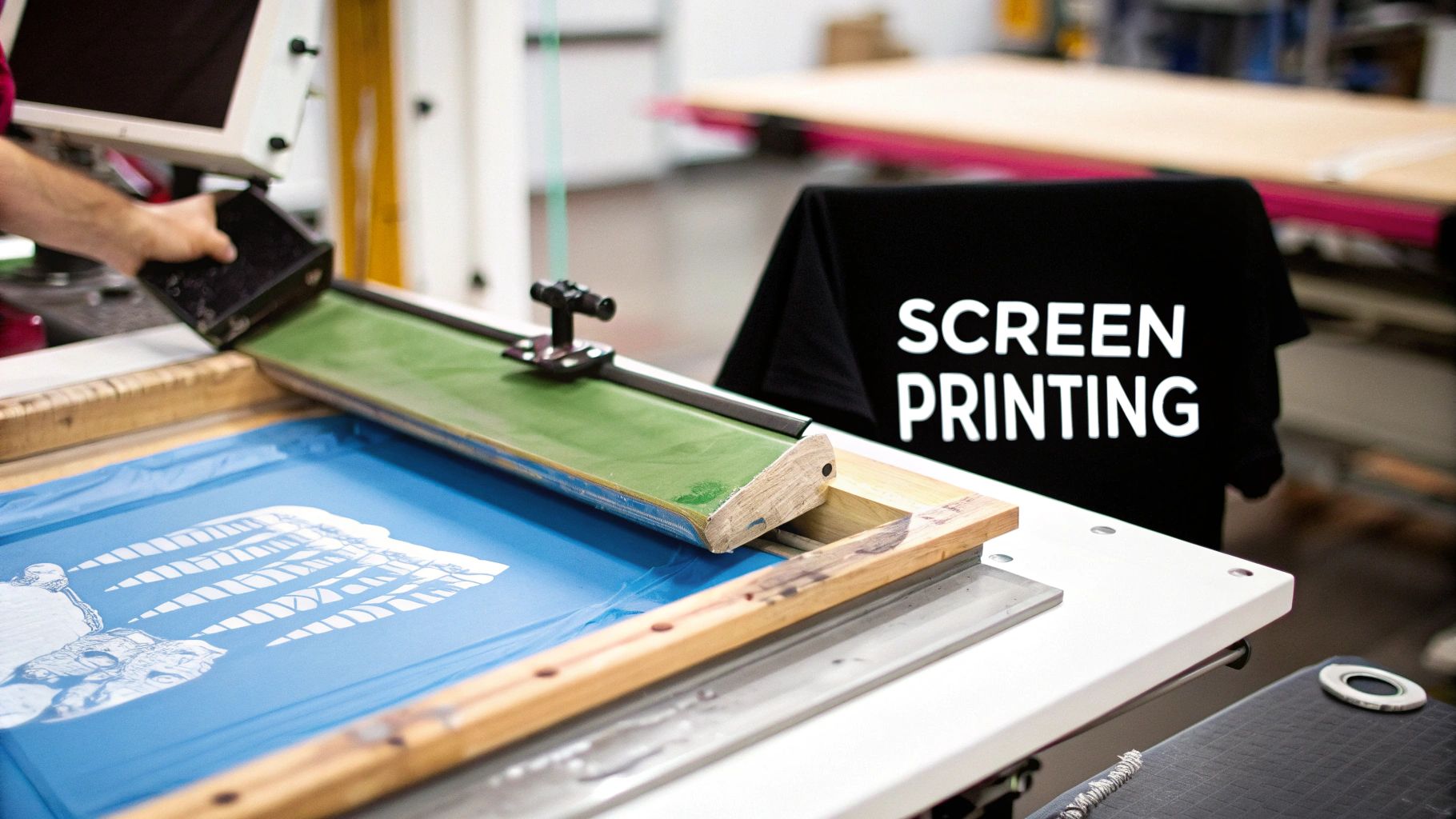
At its core, screen printing is a sophisticated stenciling technique. Think of it this way: for every color in your design, a separate mesh screen is prepared. This screen is coated with an emulsion that blocks out everything except the part of the design for that specific color, creating a stencil.
Ink is then flooded onto the screen, and a squeegee is used to press it through the open areas of the mesh directly onto the fabric. This process is repeated with a new screen for each color, building the design layer by layer. Once all colors are applied, the shirt is run through a large dryer to cure the ink, creating a permanent, durable bond. The result is a print that sits slightly raised on the fabric, with a classic, tactile feel you can instantly recognize.
Why It's Still King for Bulk Orders
The real power of screen printing kicks in when you need to print a lot of shirts. The initial setup—creating the screens for each color—is where most of the labor and cost lies. But once those screens are on the press, you can churn out hundreds of shirts with incredible speed.
This is what makes screen printing the champion for large-scale production. The setup cost gets spread out across the entire run, so the price per shirt drops dramatically as your order quantity goes up. For anyone needing to outfit a team, stock a retail shop, or order merchandise for a big event, it’s often the most logical and economical choice.
If you're planning a run of 50 shirts or more, screen printing hits the sweet spot. The balance of quality, durability, and cost-efficiency becomes very hard to beat as the numbers climb.
The numbers don't lie. Screen printing still holds a massive 56% revenue share in the custom t-shirt world, a clear indicator of its value for bulk jobs. Its ability to produce vibrant, fade-resistant prints on everything from cotton to polyester blends keeps it at the top of the list for serious apparel production. For a deeper dive into market trends, you can find more t-shirt industry statistics on Printful.com.
Print Quality and Durability
One of the biggest draws of screen printing is the sheer quality and toughness of the print. The inks, whether traditional plastisol or modern water-based options, lay down a thick, opaque layer. This creates incredibly bright and solid colors that really stand out, especially on dark garments where other methods can fall short.
Better yet, these prints are built to last. A well-made, properly cured screen-printed shirt can survive years of washing and wear without cracking, peeling, or fading. It’s this ruggedness that makes it the go-to for workwear, sports uniforms, and any merchandise that needs to hold up to some serious abuse.
The Good, The Bad, and The Inky
No printing method is perfect for every job. Screen printing shines in certain areas and has its limitations in others. Knowing the difference is key to making the right call.
-
Pros of Screen Printing:
- Awesome for Bulk: The more you print, the cheaper each shirt gets. It’s a game of volume.
- Vibrant Colors: Delivers exceptionally bright, opaque colors that have serious punch, even on black shirts.
- Built Like a Tank: These prints are incredibly durable and will likely outlast the shirt itself.
- Specialty Inks: It’s the best method for using cool effects like puff, metallic, and glow-in-the-dark inks.
-
Cons of Screen Printing:
- Bad for Small Runs: The high setup cost makes it a poor choice for just one or a handful of shirts.
- Color Limitations: Every color needs its own screen, so designs with lots of colors or photorealistic images get complicated and expensive fast.
- Environmental Concerns: Traditional plastisol inks are plastic-based and not very eco-friendly, though better water-based alternatives are becoming more common.
Diving Into Digital Printing: DTG vs. DTF
The custom apparel world has been completely reshaped by digital printing. If you're looking for speed, incredible detail, and the flexibility to print just one or one hundred shirts, two methods stand out: Direct-to-Garment (DTG) and Direct-to-Film (DTF). They both deliver amazing full-color prints, but they get there in very different ways, solving different problems for a print shop owner.
Think of Direct-to-Garment (DTG) printing like your office inkjet printer, but built for t-shirts. You load the shirt onto a platform (called a platen), and the machine sprays special water-based inks directly into the cotton fibers. It's an incredible process that allows for photorealistic images, intricate designs, and those smooth color gradients you could never achieve with screen printing.
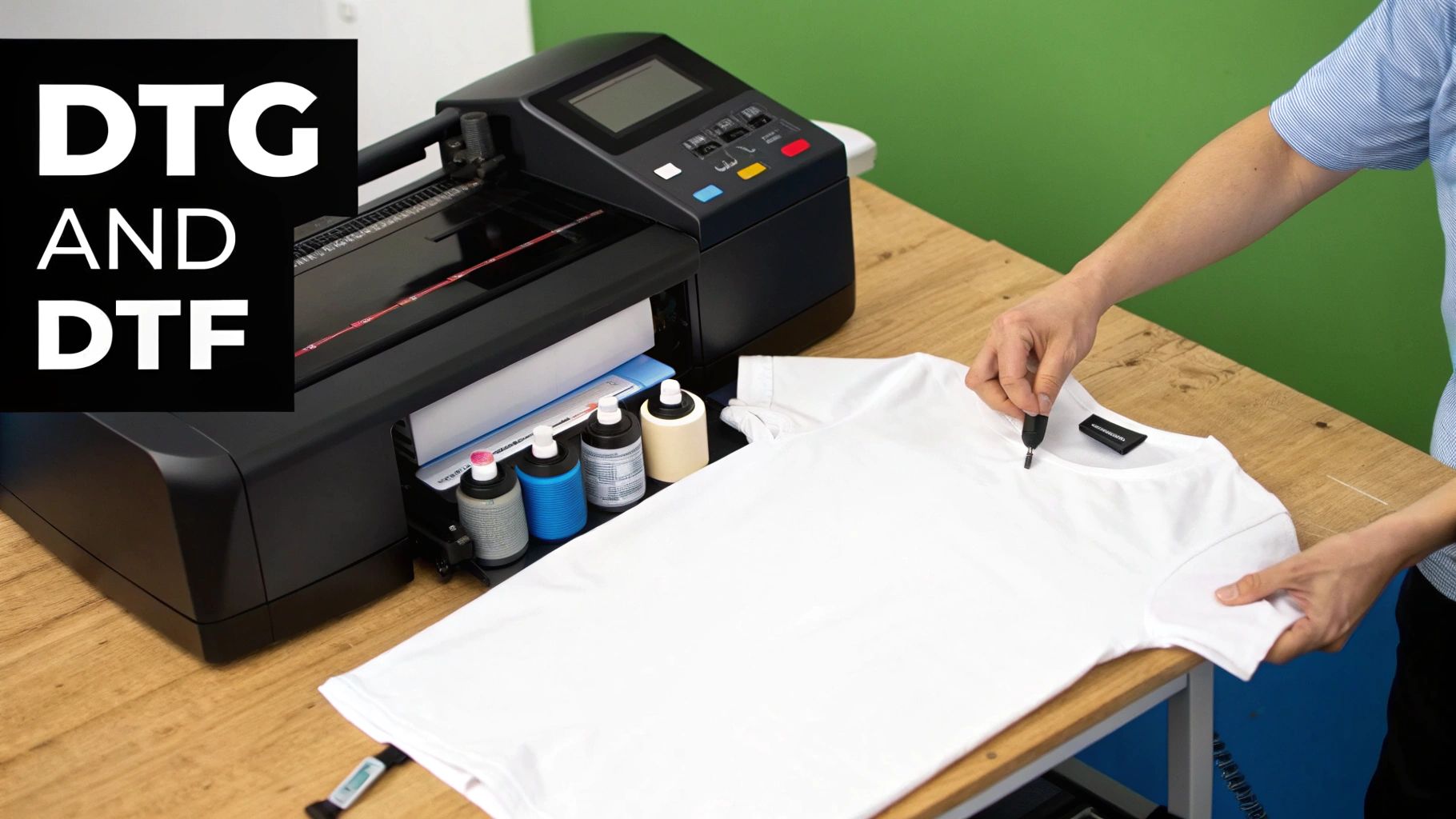
Because the ink literally becomes part of the fabric, the final print feels super soft and breathable. But there’s a catch: this method really only shines on natural fibers, with 100% cotton being the undisputed champion.
Meet DTF: The Versatile Challenger
Now, let's talk about the game-changer: Direct-to-Film (DTF). With DTF, you aren't printing on the shirt at all—at first. Instead, you print your design onto a special sheet of clear film. While the ink is still wet, a fine adhesive powder is applied and then melted, creating a durable, ready-to-go transfer. You can then press this transfer onto pretty much any garment with a heat press.
This two-step approach is DTF's superpower. It completely shatters the fabric limitations you face with DTG, letting you put stunning, detailed graphics on an almost endless variety of materials.
DTF printing frees your creativity. It empowers you to put the exact same vibrant, full-color design on cotton, polyester, nylon, treated leather, and all sorts of blends—all with one simple, consistent process. For any business looking to expand its catalog, this adaptability is a massive win.
This means the logo you print for a cotton company picnic shirt can go right onto a polyester sports jersey or a nylon windbreaker without you having to change a thing about your setup. If you want to really get into the nitty-gritty, our guide on DTF vs DTG printing breaks down the technical details even further.
Key Differences That Actually Matter for Your Business
Choosing between DTG and DTF isn't about which one is "better." It's about which one is the right tool for the job you have in front of you. The decision usually boils down to the fabric you're using, the feel you want, and how well the print needs to hold up.
- Fabric Flexibility: This is the big one. DTG is a cotton specialist. DTF is the all-rounder, working great on nearly any fabric you can imagine putting under a heat press.
- The Feel of the Print: A DTG print sinks into the fabric, making it feel incredibly soft and part of the shirt itself. A DTF print sits on top as a thin, flexible layer. It’s smoother to the touch than DTG but worlds softer and more pliable than old-school heat transfer vinyl.
- Vibrancy on Dark Colors: DTG needs to lay down a white ink underbase on dark shirts, which can sometimes make the colors on top seem a little less punchy. With DTF, the white layer is printed onto the film, acting as a perfect, brilliant canvas. This makes your colors pop like crazy, no matter how dark the garment is.
Making the Right Digital Call
So, how do you decide? It all comes back to what you're selling and who you're selling it to.
If you run a brand focused on high-end, artistic t-shirts made from 100% organic cotton, the premium, breathable feel of DTG is probably your best bet. Customers who value that soft-hand feel will appreciate the quality.
On the other hand, if your business outfits sports teams, creates corporate workwear, or handles a wide range of promotional items, the universal power of DTF is a no-brainer. Its ability to stick to polyester, synthetics, and blends makes it a far more practical and scalable solution. The vibrant colors and tough durability mean logos and designs will look crisp and professional on everything from performance gear to canvas tote bags.
Heat Transfer Methods for Every Creator
Not every t-shirt printing empire starts with a giant, factory-sized machine. For most people just starting out, and even for established small businesses, the world of heat transfer printing is the most practical and accessible way to get going. These methods all use the same basic principle—heat plus pressure—to bond a design onto a shirt, striking a great balance between affordability, quality, and creative control.
The concept is straightforward. Your design is prepped on a special carrier material. You lay that carrier onto the shirt, pop it in a heat press, and clamp it down. The machine delivers precise heat and pressure for a specific amount of time, which activates an adhesive and locks the design into the fabric's fibers for good. It’s a remarkably clean process that opens up a ton of creative doors without a monster learning curve.
Heat Transfer Vinyl (HTV): The DIY Champion
If you've seen custom shirts made at a local mall kiosk or by a friend with a Cricut, you've likely seen Heat Transfer Vinyl. Known simply as HTV (or iron-on vinyl), it's a massive favorite for startups, crafters, and small-batch producers. Picture it as a sheet of colored material with a heat-activated glue on the back. You use a digital cutter, like a Cricut or a Silhouette, to precisely slice your design from the vinyl sheet.
After the machine finishes cutting, you have to "weed" out the negative space—peeling away all the bits of vinyl that aren't part of your design. What's left is your graphic on a clear, sticky carrier sheet. You place this on the tee, press it, and peel the carrier away. The result? A vibrant, slightly raised design with super sharp edges. This is the classic method for putting names and numbers on sports jerseys or creating bold, single-color logos and text designs.
The real power of HTV is its simplicity and the wild variety of textures and finishes you can get. It’s not just about solid colors. You can find vinyls for just about any look:
- Glitter: For that sparkly, textured finish that really pops.
- Metallic: Gives you a shiny, foil-like effect for a more premium vibe.
- Puff: This one is fun. It expands under the heat to create a cool, raised 3D feel.
- Flock: Feels soft and fuzzy, almost like suede. It adds a touch of luxury.
This flexibility makes HTV a workhorse for customizing small orders on nearly any fabric you can think of—cotton, polyester, blends, you name it.
Dye Sublimation: The Art of Infusion
While HTV sits on top of the fabric, dye sublimation does something totally different—it’s almost like magic. Instead of applying a layer, sublimation infuses the ink directly into the fabric itself. The process turns solid ink straight into a gas, which then becomes a permanent part of the garment.
Here's how it works: you print your design onto special transfer paper using sublimation inks. When you press this paper onto a polyester shirt, the heat works its magic. The ink turns to gas, and the pressure forces it deep into the polyester fibers. As it cools, the gas turns back to a solid, but now it's locked inside the fabric, not on top of it.
The result of dye sublimation is a print you literally cannot feel. Run your hand over it, and there’s zero texture. Because the design is part of the material, it will never crack, peel, or fade, no matter how many times it goes through the wash.
This incredible durability comes with two big rules, though. First, it only works on 100% polyester or fabrics with a very high polyester count. Second, the ink is transparent, so it has to be printed on white or very light-colored garments for the colors to show up properly. That makes sublimation the undisputed king for full-color sportswear, photo gifts, and any apparel where a soft feel and ultimate permanence are the top priorities.
If you want to dive deeper into how these methods compare, check out our comprehensive guide to heat transfer shirt printing to see a full breakdown.
Finding Your Edge with Specialty Printing Techniques
While the main methods we've covered will handle most of your t-shirt jobs, sometimes you need a little something extra to really make a design pop. This is where specialty techniques come in. They create unique looks and textures that can turn a standard tee into something far more premium, letting you tap into niche markets and charge more for your work.
These aren't just about laying ink on fabric. We're talking about more involved processes—like chemically removing a shirt's color, creating a screen-printed "sticker" you can press on later, or literally building a design with thread. Each one produces a distinct feel that the standard methods just can't touch, giving you a serious advantage.
Create Vintage Looks with Discharge Printing
Ever seen a bright design on a dark shirt that has absolutely no feel to it? That’s the magic of discharge printing. Instead of putting down a thick, heavy layer of white ink to act as a base, this method uses a special water-based ink that actually removes the dye from the shirt itself.
You can think of it as a very precise, controlled bleaching process. A chemical agent in the ink neutralizes the fabric's dye, bringing it back to its natural, lighter cotton color. From there, you can either leave it as is for a subtle look or mix pigments into the ink to lay down a new color where the old one was. The final print is incredibly soft and breathable because it's in the shirt, not on it—perfect for that high-end, vintage vibe.
The catch? Discharge printing is a bit particular. It works best on 100% cotton fabrics because the chemical reaction is most predictable with natural fibers. Try it on a synthetic blend, and you're likely to get muddy, inconsistent results. So, choosing the right blank is everything with this technique.
Plastisol Transfers: The Best of Both Worlds
What if you want that classic, vibrant look of screen printing but also need the flexibility to print shirts on demand? Say hello to plastisol transfers. This clever hybrid method gives you professional quality without having to commit to a massive screen printing run every time you get an order.
Here’s how it works: you screen print your design with plastisol ink—the same tough stuff used in traditional screen printing—but onto a sheet of special release paper instead of a shirt. You can then stack and store these printed transfers for months. Whenever an order comes in, you just grab a transfer, place it on the garment, and lock it down with your heat press.
This two-step system is a game-changer for a few scenarios:
- Live Events: Print a ton of transfers for a concert or festival and press them onto different shirt sizes or styles as they sell out. No more guessing games.
- Small Batches: You can fill a small, custom order with genuine screen print quality without the costly setup of a traditional run.
- Selling the Transfers: Some businesses even build a model around selling the pre-made transfers directly to other small shops or hobbyists.
Embroidery: The Premium Textured Finish
When you want to signal quality and professionalism, nothing beats embroidery. This isn't printing at all, really. It’s the craft of stitching a design directly into the fabric with thread, creating a textured, 3D graphic that feels durable and looks incredibly sharp.
Embroidery is the undisputed champion for corporate logos on polos, clean lettering on hats, and university crests on jackets. That stitched-in design has a certain weight and permanence that immediately elevates the garment, making it a perfect fit for premium brands, uniforms, and any apparel built to last. While you can't do photorealistic images or smooth color gradients, for crisp logos and text, its classic finish is simply in a league of its own.
Why DTF Transfers Are a Game Changer
So, we've walked through the pros and cons of the major printing methods. You've seen how screen printing is the king of bulk orders, but not so great for small batches. DTG is brilliant for complex, full-color designs, but only really loves cotton. And HTV is a solid choice for simple graphics, but can get complicated with intricate details.
This is exactly where Direct-to-Film, or DTF, comes into the picture. It’s not just another option on the list; it’s a genuine problem-solver that cleverly combines the best features of other methods into one flexible, powerful process.
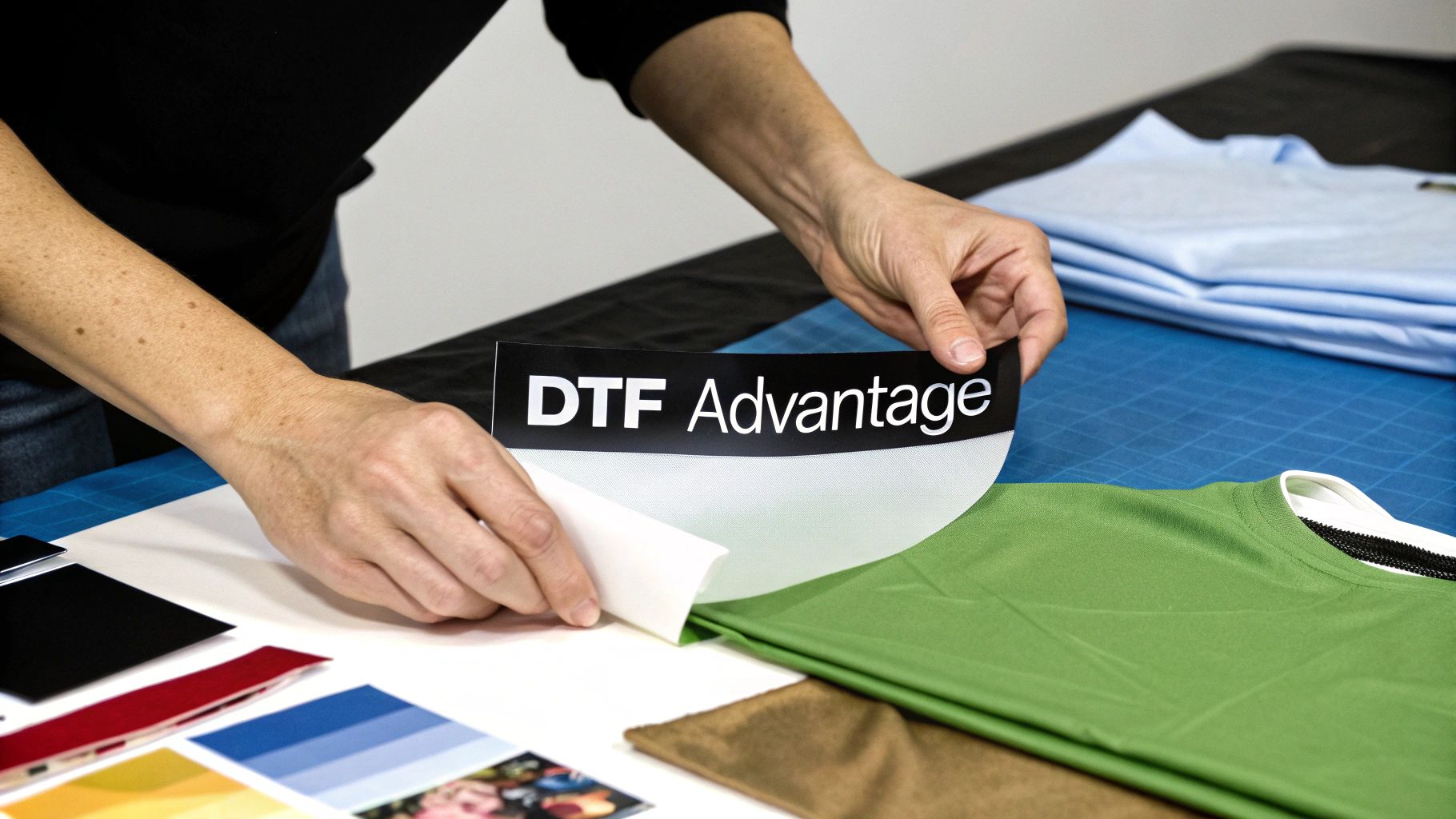
Imagine this: you get to offer the rich, photorealistic detail of a DTG print, but you can put it on almost any type of fabric. That’s the magic of DTF. It tears down the walls that used to force a choice between a great-looking design and the right material. Whether a client wants a complex photo on a classic cotton tee, a sharp logo on a polyester jersey, or a custom graphic on a tricky tri-blend hoodie, DTF handles them all with the same incredible quality.
Unlocking Unmatched Versatility and Quality
The secret sauce for DTF is that it’s an indirect printing process. Instead of shooting ink right onto the shirt, the design is printed onto a special transfer film first. This film acts as the perfect canvas, capturing razor-sharp details and eye-popping colors, all backed by a perfectly laid white ink underbase. An adhesive powder is then applied and melted, turning the whole thing into a durable, ready-to-press graphic.
This clever two-step method brings some serious advantages to the table:
- Fabric Freedom: This is the big one. You can press DTF transfers onto cotton, polyester, nylon, treated leather, denim, and all those popular poly-blends without breaking a sweat. No more worrying about how the ink will react or if the colors will look dull.
- Vibrant Colors on Any Garment: Since the entire design is self-contained on the transfer, the colors look just as bright and saturated on a black polyester shirt as they do on a white cotton one. The fabric color underneath doesn’t mute your design.
- Impressive Durability: A professionally made DTF transfer is built to last. It stretches with the fabric without cracking and holds up to dozens of wash cycles, easily rivaling the longevity you’d expect from a classic screen print.
This incredible adaptability really changes the game for an apparel business. You no longer need separate workflows or different machines for your cotton and polyester product lines. For a deeper dive into the nitty-gritty of the technology, our guide on what DTF transfers are breaks it all down.
Scaling Your Business Without the Overhead
For a small business or a brand that’s just starting to grow, maybe the best part of DTF is that you don't need a massive investment to get in on the action. There's no need to buy a six-figure printer and curing setup right out of the gate. You can just order pre-made, ready-to-press DTF transfers.
This model completely flips the script. All you need is a reliable heat press. It allows you to pour your capital into what really matters: creating killer designs, marketing your brand, and stocking quality blank apparel. You can offer a huge catalog of full-color products on demand, staying nimble and keeping financial risk low.
By ordering transfers only when you get orders, you can test new designs with absolutely zero waste. When a design takes off, you can scale up production instantly. This "print-on-demand" transfer model lets you compete with the big players on quality and variety, all while running a lean, efficient operation.
The Smart Choice for Modern Apparel
When you boil it all down, DTF marks a real turning point among the different types of t-shirt printing. It solves those age-old trade-offs between quality, what you can print on, and how much it costs.
It gives creators the power to say "yes" to more projects, whether it’s a single, highly-detailed shirt for an individual or a hundred uniforms on performance wear for a local team. By removing fabric limitations and making it easy to produce complex, durable designs, DTF transfers offer a clear and efficient path forward for any apparel business looking to grow.
Common Questions About T-Shirt Printing
Diving into the world of t-shirt printing can feel like learning a new language. You've got all these acronyms and methods, and it's easy to get overwhelmed. Getting clear answers is the first step to making smart decisions for your brand and avoiding those expensive beginner mistakes. Let's break down some of the most common questions we hear from people just starting out.
What Is the Most Cost-Effective Printing Method for a Startup?
If you're looking for the absolute rock-bottom cost to get started, Heat Transfer Vinyl (HTV) is tough to beat. All you really need is a vinyl cutter and a heat press, and you're in business. It's a great way to dip your toes in the water.
However, if you're thinking about long-term growth and professional quality right out of the gate, ordering pre-made Direct-to-Film (DTF) transfers is a much smarter play. This strategy lets you offer incredible, full-color designs on literally any fabric with just a heat press. You get a top-tier product from day one without dropping thousands on a printer.
Which Printing Type Lasts the Longest?
When it comes to pure durability, screen printing and dye sublimation have long been the kings of the hill. A well-cured screen print can easily last longer than the shirt it's on. Sublimation is even more permanent—the ink becomes part of the polyester fabric, meaning it will never fade, crack, or peel. It’s there for good.
High-quality DTF prints are a very strong contender, though. They hold up amazingly well in the wash and have a flexibility that often outperforms what you'd see from DTG or basic heat transfers. Your designs will stay looking sharp for years.
The Verdict on Durability: For a design that will literally never die, sublimation on polyester is untouchable. For all-around toughness across any fabric, you can't go wrong with screen printing or a premium DTF transfer.
Should I Choose DTG or DTF for Full-Color Designs?
This one really boils down to what you're printing on. If your business is focused exclusively on 100% cotton garments and you want the softest possible feel, Direct-to-Garment (DTG) is a fantastic option.
But for just about everything else? DTF is the clear winner. It works beautifully on polyester, cotton/poly blends, dark-colored shirts, and even tricky performance fabrics. DTF gives you brighter, more consistent colors across a massive range of materials, making it a far more versatile and scalable choice for most businesses.
Ready to see what premium DTF can do for your brand? Cobra DTF offers top-quality, USA-made transfers that get to you fast, so you can grow your business without the headache. You can explore our high-quality DTF transfers and really see the difference for yourself.