

Deep V Neck Shirts Guide for Custom Apparel Pros
V-neck T-shirts account for an estimated 21.6% of the global T-shirt market, according to a 2026 B2B apparel guide summarized through Wikipedia's neckline reference. That makes V-necks a substantial commercial category, not a narrow fashion experiment. For custom apparel shops, the deeper version creates a useful opportunity, but it also exposes weaknesses that a standard crew neck can hide.
A deep V changes the garment's geometry, stretch behavior, print area, and fit expectations. A transfer placed safely on a crew neck may sit too high on a plunge, while a loose neckband can make an otherwise sharp DTF design appear warped after washing. The best results come from treating the neckline as part of the production system, not as a small decorative variation.
Introduction
Deep V neck shirts combine a strong visual silhouette with practical production challenges. Customers may choose them for fashion collections, layering, resort wear, athleisure, or boutique merchandise, while custom shops must manage the interaction between fabric, neckline construction, artwork placement, and customer expectations.
This guide moves from the basic anatomy of the neckline to fabric selection, sizing, DTF printing, styling, and care. You'll learn why V depth and V width must be considered together, how neckband tension affects shape, and why a printed design needs a different placement strategy on a plunging front.
The commercial benefit is practical. Clearer product specifications can reduce avoidable fit complaints. Better placement tests can protect print quality. More useful care instructions can help customers preserve both the garment and the transfer, which supports a stronger brand reputation over time.
For a custom apparel professional, the central lesson is simple: a deep V neck shirt is not just a regular T-shirt with more fabric removed at the collar. It's a different canvas, with a different risk profile and a different set of decisions before production begins.
Understanding Deep V Neck Shirts
A deep V neck shirt is defined by more than a visible V shape. The neckline's depth runs from the high point shoulder, commonly abbreviated as HPS, to the lowest point of the V. Its width or opening describes how far the neckline spreads across the chest. These two measurements work as a pair.
A narrow, deep V can look controlled and elongated. A wide, deep V creates a more exposed, relaxed effect, but it also has a greater chance of gaping if the fabric and neckband don't provide enough recovery. Increasing depth without controlling width can also reduce undergarment coverage and make the neckline less stable during movement. Technical deep V-neck specifications treat these dimensions as production controls, not merely style preferences.
From familiar V-necks to a deeper plunge
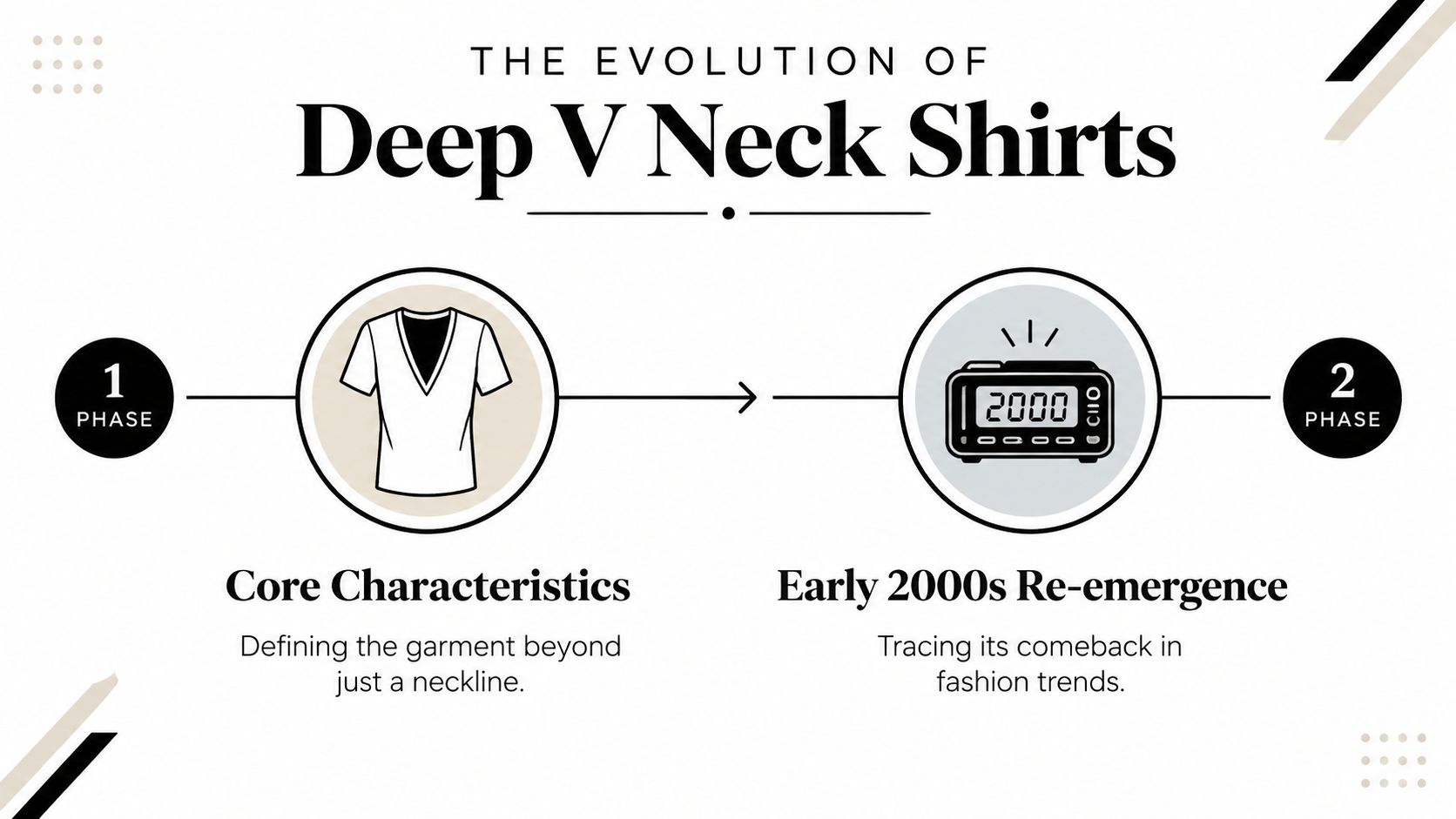
Shallow V-necks had already become familiar as outerwear by the 1970s. The recognizable deep V-neck trend re-emerged in the early 2000s, and fashion commentary from Mr Porter connects that shift with renewed interest in a more revealing menswear silhouette. A 2009 Metro Silicon Valley article reported that popularity had been building since 2007 and noted heavy use of deep V-necks in spring 2009 lines from Calvin Klein, Salvatore Ferragamo, and Burberry, as discussed in Mr Porter's fashion commentary.
For a custom shop, that history matters because it explains the garment's dual identity. It can read as a bold standalone fashion piece, or as an adaptable layering base under an open shirt, cardigan, or jacket. A moderate V offers more coverage and broader customer appeal. A true deep plunge makes a stronger visual statement but requires tighter control over measurements and placement.
Shops comparing different silhouettes can also use this shirt neckline styles guide to help customers distinguish a standard V from a deeper, more fashion-led profile before they approve a blank garment.
Choosing Styles and Fabrics
Fabric determines how a deep V hangs, stretches, and responds to printing. A lightweight cotton knit may feel breathable and casual, but its soft structure can allow the V point to relax during wear. A denser knit behaves more like a steady waterfall, holding a cleaner line as it falls from the shoulders. A very fluid fabric behaves more like a silk ribbon, producing movement but demanding more careful stabilization.
Match the material to the use case
Lightweight cotton knits suit relaxed everyday shirts, warm-weather collections, and soft promotional pieces. Their comfort can be appealing, though the shop should inspect recovery around the neckline before approving a large order.
Performance blends can support activewear-inspired designs because stretch and moisture management are often central to that category. The blend also changes how the fabric behaves under heat and pressure, so the transfer manufacturer's application guidance should guide testing.
Natural fibers offer distinctive hand feel and drape. Linen-like textures, silk-like surfaces, and other natural-fiber constructions can enhance a boutique garment, but a custom printer should test the actual blank rather than assume every fiber blend will respond identically.
A useful fabric comparison appears in this cotton versus polyester guide, particularly when a shop is choosing between a soft fashion blank and a more resilient performance-oriented base.
Control the neckline during construction
The deep V's bias-cut edges need support. Construction guidance recommends staystitching the neckline and clipping the seam allowance at the apex so the point can turn cleanly without distortion. The apex is the place where small errors become visible, much like the corner of a neatly constructed pocket. If the seam allowance can't spread correctly, the point may twist, pucker, or pull away from its intended line.
Production rule: Choose the fabric and V profile together. A deeper shape needs enough recovery and construction control to maintain its geometry after handling, pressing, and washing.
Fit and Sizing Guide
Fit charts often provide useful measurements without explaining how those measurements behave on a body. A product page may list a garment chest, body length, and Front Neck Drop, yet leave the buyer to decide whether that depth will remain comfortable while bending, sitting, or layering. One existing size chart separates front neck drop by size, confirming that the neckline changes across sizes, but measurement data alone doesn't tell a customer which profile suits their movement or coverage preference. See the deep V-neck size chart example for the kind of information buyers may encounter.
Read the chart as a set of relationships
Start with the customer's chest and shoulder fit, then examine the front neck drop. A deep drop on a close-fitting chest can create a sharper, more dramatic line, while the same nominal drop on a roomier garment may spread differently across the body. Depth and width should be reviewed together, because a wide opening can expose more of the chest even when the measured drop appears modest.
Ask three practical questions before recommending a blank:
- How much coverage is required? A customer seeking an everyday shirt may prefer a moderate plunge or a narrower opening.
- How much movement will the garment allow? A shirt worn for active work needs a neckline that remains stable when the wearer reaches, bends, or lifts.
- Will the shirt be layered? A camisole, tank, undershirt, blazer, or cardigan can make a deeper profile easier to wear.
Reduce international sizing confusion
Retailers use different measurement systems and size conventions across US, UK, Italian, French, and inch-based charts, as shown by this international apparel listing. The label alone shouldn't determine the recommendation. Ask for the customer's body measurements, compare them with the garment's own chart, and confirm where the V point will sit relative to the chest.
For custom collections, offering more than one V depth can be more useful than forcing every customer into a single dramatic shape. Describe each option by coverage and intended use, not only by labels such as “deep” or “regular.”
DTF Printing Considerations
DTF printing on deep V neck shirts begins with artwork placement, but it succeeds or fails through stretch management. The V point interrupts the normal rectangular print field, and the neckline edges can move independently from the center body. A design positioned too close to the apex may follow the point's distortion instead of remaining visually balanced.
Build a safe print zone
Keep the primary graphic below the lowest part of the V when the design needs a stable, centered presentation. The exact distance depends on the blank, the artwork, and the intended visual balance, so test placement on the actual garment rather than relying on a generic template.
A left-chest logo can work well because it avoids the most unstable center point and preserves the neckline's visual line. Large front graphics need more caution. If the design reaches toward both upper edges of the V, the artwork may stretch differently on each side when the wearer moves.
Before pressing, mark the HPS, center front, V point, and intended transfer boundaries. A simple paper or transparent placement template can reveal whether the artwork feels too high, too wide, or visually crowded by the opening.
Neckband tension changes the printing surface
The neckband keeps the neckline flat through controlled negative ease. A technical sewing guide recommends using approximately 85% of the finished neckline circumference for self-fabric bands and approximately 75% when using ribbing, with a finished neckband height of roughly 1.5 to 2 cm. These figures come from Bernina's V-neck T-shirt tutorial.
| Material | Neckband Length (% of neckline) | Band Height (cm) |
|---|---|---|
| Self-fabric | About 85% | Roughly 1.5 to 2 |
| Ribbing | About 75% | Roughly 1.5 to 2 |
If the band is too long, the neckline can droop and change the relationship between the V point and the transfer. If it's too short, the apex may pucker or warp during wear and washing. That distortion can make a correctly printed design look poorly aligned even when the transfer itself has bonded properly.
Test pressing before production
Use a sample garment to test the full workflow. Check the transfer's position while the garment is flat, then inspect it again after the neckline has been handled and gently stretched. The goal isn't merely adhesion. The goal is a print that remains visually stable while the garment performs as designed.
Follow the transfer supplier's instructions for temperature, pressure, dwell time, and peel method. A shop developing a repeatable workflow can also consult this guide to shirts for DTF printing when comparing blanks. Cobra DTF offers DTF transfers for custom apparel shops, giving printers another supplier option to evaluate alongside their own blank and press tests.
Styling and Outfit Ideas
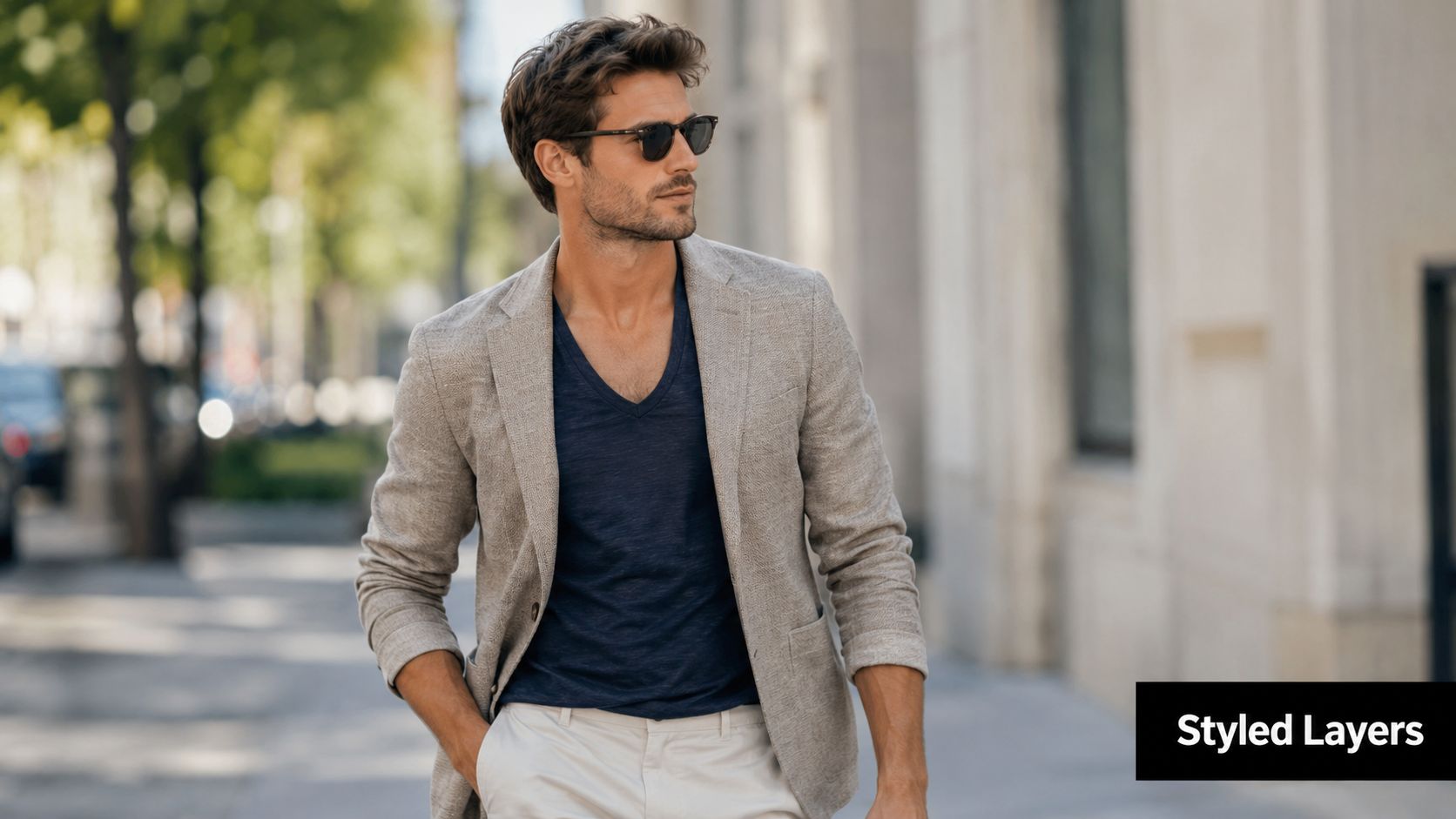
A deep V neck shirt can shift character quickly through styling. A lightweight version with a simple print can work as a warm-weather casual layer, while a cleaner, structured blank can sit beneath a blazer for a sharper outfit. The neckline becomes part of the composition, so the customer's layers and accessories should support, not fight, the open shape.
Build complete outfit suggestions
For a relaxed summer look, pair a soft deep V with lightweight trousers, shorts, or an open overshirt. A small, high-contrast DTF mark can remain visible without competing with the neckline. If the wearer wants more coverage, a tank or camisole beneath the V changes the garment from revealing to layered and intentional.
For autumn, a deeper shirt under a cardigan creates a vertical opening that keeps the outfit from appearing bulky around the neck. A restrained print works well here because the cardigan frames the design. Jewelry can follow the V line, while a heavy necklace may crowd the same space.
A blazer provides another route. The shirt can remain mostly plain, allowing the neckline to supply the visual interest, or it can carry a compact left-chest emblem. Shops serving customers who decorate their own garments can also share ideas for sewing enthusiasts, especially when a DTF transfer is combined with trim, appliqué, or other surface details.
Help customers buy the whole look
A product listing can show the same blank in a standalone outfit and a layered outfit. That presentation answers a common concern before purchase: whether the shirt is intended to be worn alone or styled with another layer. It also creates natural opportunities to recommend complementary tanks, cardigans, overshirts, or accessories without changing the core product.
Care Instructions for Deep V Neck Shirts
Wash deep V neck shirts inside out with a gentle detergent and a mild cycle. Avoid harsh agitation, and support the neckline when moving the garment from the washer.
Air-drying is the safest default for preserving shape and transfer quality. If a dryer is necessary, use low heat. Don't iron directly over the DTF print. Press from the reverse side or place a protective layer between the iron and transfer, and store the shirt flat or on a broad hanger so the V point doesn't stretch under concentrated weight.
Key Takeaways
A dependable deep V neck shirt program starts with measured geometry, not a vague style label. Record V depth, V width, front neck drop, fabric behavior, and neckband construction before approving artwork.
Keep primary DTF graphics away from the unstable apex, test the actual blank, and account for neckband recovery. Offer fit guidance based on coverage, movement, and layering rather than relying on size labels alone. Clear care instructions protect the neckline and print after delivery.
Shops tracking new opportunities can supplement product testing with resources focused on analyzing print-on-demand trends, then turn the most suitable ideas into controlled sample runs.
Cobra DTF supplies DTF transfers for custom apparel businesses that need consistent artwork application on challenging garments, including deep V neck shirts. Review your next blank, test placement and stretch behavior, and visit Cobra DTF to select transfers for your production workflow.