
Best shirts for dtf: Top picks for vibrant, durable prints
When you’re on the hunt for the perfect shirt for your next DTF project, you'll want to find that sweet spot between vibrant color, long-lasting durability, and a soft, comfortable feel. The big three in this space are 100% ringspun cotton for its incredible color pop, versatile cotton/polyester blends for their all-around strength, and high-end tri-blends for that super-soft, premium touch.
Getting the material right is the secret to making sure your direct-to-film transfers look sharp, feel great, and hold up wash after wash.
Choosing the Right Foundation for Your DTF Prints
Think of your blank shirt as the canvas for your masterpiece. You wouldn't use a cheap, flimsy canvas that will warp and ruin your painting, right? It's the same idea here. The wrong shirt can cause your beautiful design to peel, fade, or feel like a stiff, plastic patch. The goal is to find a garment that grabs that vibrant DTF ink and feels amazing to wear.
The direct-to-film printing market is booming, valued at an estimated USD 2,720 million in 2024 and expected to climb to USD 3,920 million by 2030. A huge part of that growth is driven by printers like us searching for the 'best shirts for DTF' to pair with this incredible technology. If you're curious about the numbers, you can dive into the full market report on Grand View Research to see how fabric choices are shaping the entire industry.
Quick Comparison of Top Shirt Fabrics for DTF Printing
To make things easier, let's break down how the most common fabrics stack up against each other for DTF printing. This table gives you a quick snapshot of what to expect from each material.
| Fabric Type | Vibrancy & Detail | Feel & Comfort | Durability | Best For |
|---|---|---|---|---|
| 100% Ringspun Cotton | Excellent | Very soft and breathable | Good | Bright, colorful retail designs and brand merch. |
| 50/50 Cotton/Poly Blend | Very Good | Soft with a slight stretch | Excellent | Everyday wear, team uniforms, and workwear. |
| Tri-Blend | Good | Supremely soft and lightweight | Very Good | Premium lifestyle brands, fitness apparel, and fashion-forward designs. |
| 100% Polyester | Good | Smooth and moisture-wicking | Excellent | Sportswear and athletic apparel where performance is key. |
Each fabric has its moment to shine. Your choice really comes down to balancing the look you want with how the shirt will be used.
Key Characteristics of a DTF-Ready Shirt
So, what exactly makes a shirt "DTF-ready"? It’s more than just the material. A few key characteristics separate a great blank from one that’s going to cause headaches.
- Heat Resistance: Your shirt has to withstand the heat press, typically around 300-325°F, without scorching or melting. This is a big reason why cotton and high-quality polyester blends are the go-to choices.
- Smooth Surface: A tight, even weave is non-negotiable for a crisp print. This is where ringspun cotton really outshines standard carded cotton—its ultra-smooth surface allows for sharper details and a stronger transfer bond.
- Durability: The shirt needs to survive the real world. A well-made garment will keep its shape and color through dozens of washes, protecting the DTF print from premature wear and tear.
- Minimal Shrinkage: Always, always go for pre-shrunk shirts. Applying a perfect transfer to a shirt that shrinks and warps in the first wash is a recipe for a cracked, distorted disaster.
This decision tree breaks it down even further, helping you choose the right path based on what's most important for your specific project.
As you can see, figuring out your main goal—whether it's the brightest colors, the softest feel, or maximum toughness—points you directly to the ideal fabric, taking a lot of the guesswork out of the process.
Why Your Fabric Choice Is Critical for DTF
Ever wondered why some of your DTF prints look absolutely stunning, while others start to peel, fade, or crack after just a couple of washes? The secret weapon isn’t just your printer or ink. It all comes down to the shirt itself.
Honestly, choosing the right fabric is probably the most important call you'll make. It’s the difference between an average print and a durable, professional product that keeps customers coming back.
Think of it like this: your blank shirt is the canvas for your art. You wouldn't use a cheap, flimsy canvas that would warp and ruin your paint job, right? It's the same idea here. A low-quality shirt with a rough, uneven texture just won't let the ink adhere properly, leaving you with a print that feels stiff and won't last.
The Science Behind the Bond
The real magic of DTF printing happens when the hot-melt adhesive powder meets the fabric fibers under the heat press. Picture that adhesive as a super-strong glue that only activates with heat. When you press the transfer, the adhesive melts and seeps into all the tiny nooks and crannies of the fabric's weave.
A high-quality shirt offers a smooth, uniform surface that allows the DTF adhesive to create a powerful, even bond. This is the key to achieving prints that are not only vibrant but also flexible and incredibly durable wash after wash.
This creates a strong mechanical bond, literally locking your design onto the garment for good. If the fabric surface is loose or inconsistent, you'll get a weak, patchy bond. That's when you start seeing designs peeling up at the edges after a wash.
Fiber Matters Most
Different fibers play by different rules when it comes to the DTF adhesive, which is why your fabric choice is so vital for finding the best shirts for DTF. Let's look at the two main players on the field:
- Cotton Fibers: Being a natural fiber, cotton is porous and absorbent. If you looked at it under a microscope, you’d see it's a bit fuzzy, which gives the melted adhesive a perfect texture to grab onto. This is exactly why 100% ringspun cotton is a fan favorite for DTF—it forges an incredibly strong bond, leading to sharp details and rich, vibrant colors.
- Polyester Fibers: On the other hand, synthetic polyester fibers are way smoother and non-absorbent, almost like tiny plastic threads. The adhesive doesn't sink in as deeply as it does with cotton, but it still forms a solid connection right on the surface. That super-smooth base is what makes prints on polyester pop with incredible brightness, making it a go-to for sportswear where you also need moisture-wicking.
Once you get this fundamental relationship between adhesive and fiber, you can start looking beyond just the brand name on the tag. When you know how it all works, you can pick a garment with confidence, knowing it's going to deliver a flawless transfer every single time.
Exploring the Top Three Fabric Choices
Alright, we've covered the science behind how fabric and adhesive work together. Now, let's put that theory into practice. When you're picking out the best shirts for a DTF project, you'll find that three fabric types consistently come out on top. Each one brings something different to the table—a unique mix of vibrancy, feel, and durability that's perfect for different kinds of jobs.
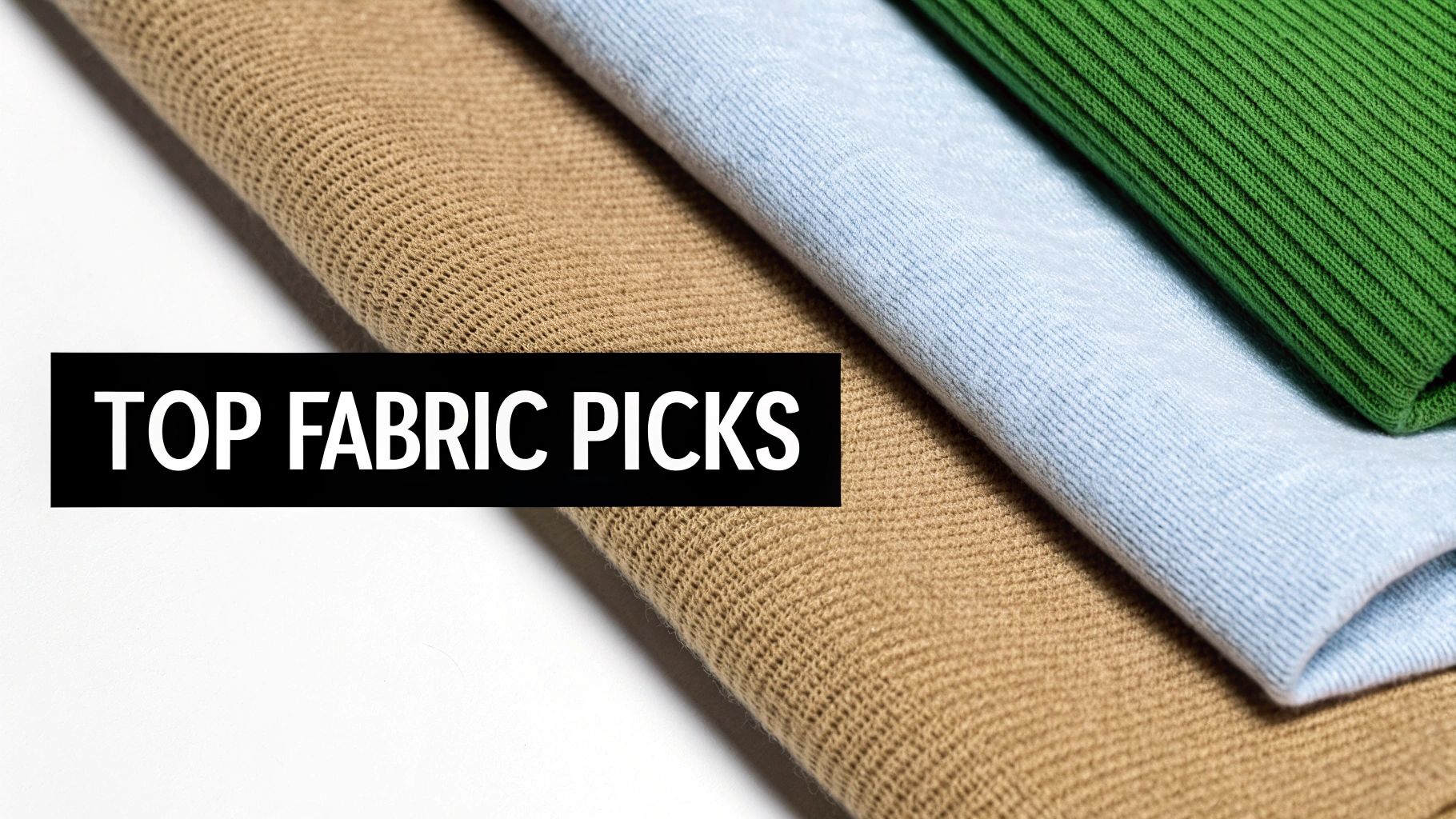
We're going to break down the big three: 100% cotton, cotton/polyester blends, and the ever-popular tri-blends. By the end of this, you'll have a solid gut feeling for which fabric to grab, whether you're printing high-end brand merch or some tough-as-nails team uniforms.
100% Cotton: The King of Vibrancy
If you need your prints to be razor-sharp with a classic, flat finish, 100% cotton is your undisputed champion. Its natural, porous fibers just drink up the DTF adhesive, creating a deep, solid bond. The result? Prints with colors that are rich, true to the original design, and just plain pop.
For the absolute best results, I always recommend looking for ringspun cotton. It’s a step up from standard cotton, with a smoother, tighter weave that gives you a perfect canvas for your transfers.
- Best For: High-end brand merchandise, band tees, or any design where getting the colors exactly right is the main goal.
- Key Advantage: You just can't beat its color vibrancy and ability to hold fine details.
- Keep in Mind: Cotton can shrink. Always check the label to see if it’s pre-shrunk to avoid any post-wash surprises.
Cotton/Polyester Blends: The Versatile Workhorse
When you need that perfect middle ground of softness, strength, and a friendly price point, a cotton/polyester blend is your go-to. The classic 50/50 mix gives you the breathability of cotton combined with the durability and wrinkle-resistance of polyester. This blend creates a seriously reliable shirt that holds its shape and color wash after wash.
The polyester fibers also add a bit of stretch and a smoother feel, which is why it’s so popular for everyday clothes. Blends are less likely to shrink than 100% cotton and are fantastic performers across a huge range of projects. To see a deeper dive into how these two fibers stack up, check out our guide on cotton vs. polyester shirts.
This versatility is a huge reason DTF is making such a big splash. Its main competitor, direct-to-garment (DTG), can be picky and works best on pure cotton. DTF's ability to print beautifully on blends gives it a real edge in a market that's already massive—the global DTG printing market reached USD 3.2 billion.
Tri-Blends: The Premium Choice
For that ultimate, buttery-soft, retail-ready feel, you have to go with a tri-blend. These shirts typically combine three materials: cotton for comfort, polyester for strength, and rayon for that silky-smooth drape and luxurious texture.
Tri-blends give prints a slightly heathered, almost vintage look that's incredibly popular in fashion and retail right now. The unique fabric texture creates a specific vibe that can turn a simple design into something that feels truly premium.
While your colors might not be quite as punchy as they would be on 100% cotton, the incredible comfort and modern fit make tri-blends a top pick for lifestyle brands, fitness apparel, and any shirt where the feel is just as important as the design. They’re the shirts people don't just wear—they live in them.
Picking the right fabric is a huge first step, but it's only half the battle for getting a perfect DTF print. The real magic happens when you start paying attention to the smaller details of a shirt's construction. Its weight, its weave, and even its color are what separate a good print from a truly professional one.
Getting these nuances right is what elevates your work. It's like this: two painters can use the same kind of canvas, but the artist who really understands how the canvas's texture and thickness affect the paint will always create the masterpiece. The same idea applies to printing on shirts. These details are the final polish that makes your designs pop.
The Importance of Weave and Weight
A shirt’s weave is basically its texture. For DTF, your goal is the smoothest surface you can find. A tight, even weave—like what you get with ringspun cotton—creates a perfect canvas. It helps stop those little fabric fibers from poking through your design after a few trips through the laundry. On the flip side, a looser, rougher weave gives you an uneven surface, which can mean weaker adhesion and a print that just doesn't look as sharp.
Then there's the garment weight, usually measured in ounces per square yard (oz) or grams per square meter (GSM). This plays a huge part in how the final print feels to the touch, or its "hand feel."
- Lightweight Shirts (4.0-5.0 oz): These feel great—soft, breathable, and perfect for summer. But they aren't always the best choice for a large, solid design. A heavy ink transfer can feel like a stiff patch on a really thin shirt.
- Heavyweight Shirts (6.0 oz and up): A thicker, sturdier shirt gives you more structure to work with. A big DTF print on a heavyweight tee feels more like part of the shirt itself, giving the whole garment a more premium, balanced feel.
Let's break down how these features directly affect your final product.
Shirt Feature Impact on DTF Print Quality
This table shows how different shirt characteristics like weave and weight affect the final DTF print outcome.
| Shirt Characteristic | Impact on Print Quality | Recommendation |
|---|---|---|
| Weave Tightness | A tight weave (e.g., ringspun) creates a smooth surface, leading to better adhesion and a crisper, more detailed print. | Always opt for tightly woven fabrics like ringspun or combed cotton for the best results. |
| Fabric Weight | Heavier shirts (6.0+ oz) support large designs better, making the print feel integrated. Lighter shirts (under 5.0 oz) can feel overwhelmed by heavy ink. | Match the shirt weight to your design. Use heavyweight blanks for large, solid prints and lighter ones for smaller, more delicate designs. |
| Surface Smoothness | Smooth, uniform surfaces prevent fibers from poking through the transfer, ensuring a clean look and better durability wash after wash. | Look for fabrics described as "soft-hand" or "combed" cotton, as they tend to have the smoothest printing surfaces. |
Ultimately, choosing the right combination of weave and weight isn't just about aesthetics; it's about creating a product that feels high-quality from the moment someone picks it up.
Color Considerations and the Power of the Pre-Press
DTF is incredibly versatile and works beautifully on both light and dark fabrics. However, the shirt's base color does subtly influence how the final print is perceived. A design on a crisp white shirt will almost always look a little brighter than the exact same design on a black shirt, even with a flawless white underbase. The surrounding color just tricks our eyes a bit.
This is where a simple but absolutely essential step comes into play: the pre-press. Before you even think about placing your transfer, press the blank shirt with your heat press for just 5-10 seconds. This does two incredibly important things. First, it zaps any lingering moisture out of the fabric, which can mess with the adhesive. Second, it flattens all the fibers, creating a perfectly smooth runway for your transfer to land on. To see how this fits into the whole workflow, check out our complete guide on heat transfer shirt printing.
A quick pre-press is your insurance policy for maximum vibrancy and durability. It’s a small effort that consistently yields a cleaner, more professional-looking result every single time.
When you nail these details, your customers notice. High-quality prints aren't just a nice-to-have; they're what keep people coming back. In fact, studies show that 68% of customers are more likely to buy custom apparel again if the print quality is top-notch. By taking the time to understand the interplay between weight, weave, and color, you're making sure your products always hit that high standard.
Go-To Shirt Models for Perfect DTF Prints
Alright, we’ve covered the theory—the fabrics, weights, and weaves that make a shirt DTF-friendly. But let's get down to brass tacks. Knowing the exact shirts the pros rely on can save you a ton of headaches, wasted materials, and money.
Here are a few battle-tested favorites that consistently knock it out of the park for DTF printing.
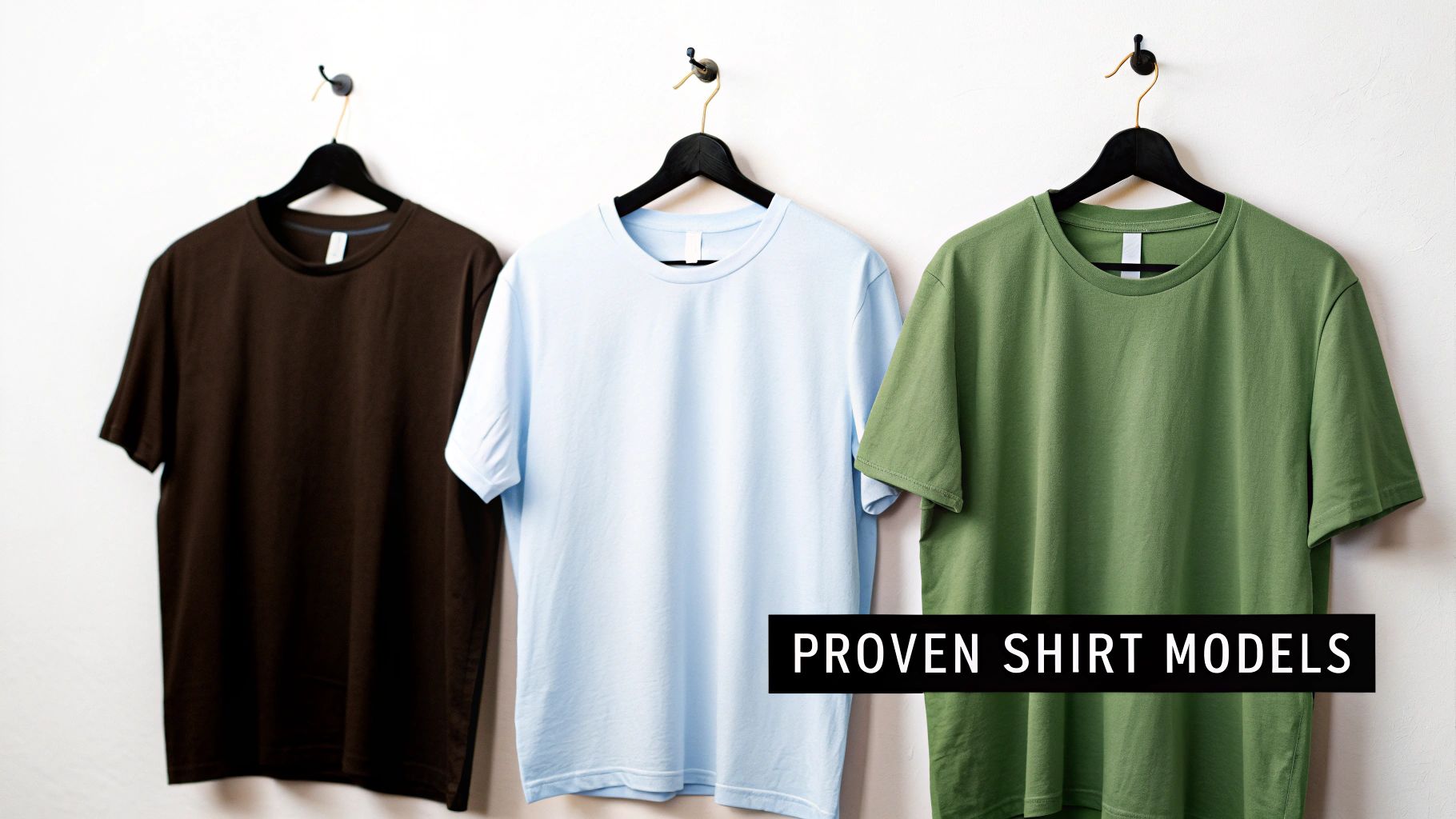
Think of this as your starting lineup. These aren't just random picks; they're known throughout the industry for their print quality, feel, and reliability. In short, they’re some of the best shirts for DTF you can get your hands on.
Bella + Canvas 3001 CVC: The Retail Favorite
If you're aiming for that premium, high-end feel you find in a boutique, look no further than the Bella + Canvas 3001 CVC. This shirt is legendary for its buttery-soft texture and modern, stylish fit. It’s not boxy or generic—it’s the kind of shirt people actually want to wear.
Its blend of Airlume combed and ringspun cotton with polyester creates an incredibly smooth canvas for your transfers to adhere to, making every detail pop.
- Fabric: 52% Airlume combed and ringspun cotton, 48% polyester.
- Feel: Seriously soft with a subtle heathered texture that looks great.
- Best For: E-commerce brands, high-end merchandise, or any project where you want customers to say, "Wow, this feels amazing."
The tight, consistent weave means your prints come out sharp, not fuzzy. Plus, the blend fights shrinkage and holds up beautifully wash after wash.
Gildan Heavy Cotton 5000: The Durable Workhorse
Sometimes, you just need a shirt that’s tough, reliable, and won't break the bank. That’s the Gildan Heavy Cotton 5000. It's an absolute industry staple for a reason. Made from 100% preshrunk cotton, it’s a beefier, more traditional tee that gives your DTF designs a solid base.
This is your go-to for staff uniforms, event giveaways, band merch, or any situation where durability is the name of the game. It might not have the slim, fashionable cut of the 3001, but its value is undeniable.
The Gildan 5000’s 5.3 oz heavyweight fabric is a huge plus for prints with a lot of ink. It helps the transfer feel more like a part of the shirt, rather than a "plastic patch" sitting on top of a flimsy garment.
Next Level 6210: The Tri-Blend Champion
When you want the absolute best of both worlds—softness and performance—the Next Level Apparel 6210 CVC Crew is a clear winner. This blend of combed ringspun cotton and polyester delivers a perfect mix of cozy comfort and lasting strength. If you want to dive deeper into finding the right blank, check out our guide on the best quality tee shirts for printing.
The 6210 is famous for its incredible hand-feel and flattering drape. It’s a favorite for lifestyle brands, gyms, and anyone who wants to create a shirt that feels like a well-loved vintage tee right off the press. The fabric takes DTF transfers beautifully and holds up great in the wash, making it a reliable and impressive choice.
Common Questions About Picking the Right Shirts for DTF
Stepping into the world of blank apparel can feel a little overwhelming, especially when you're trying to get that perfect DTF print. You've got questions, and getting solid answers is the key to avoiding expensive mistakes and making sure every shirt you press is a winner. Let's run through some of the most common things printers ask when picking out their shirts.
Think of this as your final pre-flight check. Answering these questions before you start pressing will save you a ton of time, materials, and headaches. It’s all about being 100% confident in your garment choice.
Can I Just Use Any 100% Cotton Shirt for DTF?
Here's a common misconception: while DTF works beautifully on cotton, not all cotton is the same. If you're aiming for professional results that last, you absolutely want to choose ringspun cotton over the standard, cheaper carded open-end cotton. The difference comes down to how the yarn is made, and it has a massive impact on your final print.
Ringspun cotton gives you a much smoother, tighter weave, which creates a flawless surface for your DTF transfer. This smooth canvas means sharper details, incredible adhesion, and it helps you avoid "fibrillation." That’s the technical term for those annoying little shirt fibers that poke through the ink after a few washes, making a crisp print look fuzzy and old.
Do I Really Need to Pretreat Shirts for DTF?
One of the best things about DTF is that, for the most part, no chemical pretreatment is required. This is a huge leg up on DTG (Direct-to-Garment) printing, where you have to apply a chemical solution just to get the ink to stick. With DTF, the magic happens on the film, not the fabric itself.
That said, you should always do a quick pre-press with your heat press for about 5-10 seconds. This simple step zaps out any lingering moisture hiding in the fabric and flattens the fibers. It's a tiny bit of effort that creates the perfect, flat surface for the transfer and pays off with a cleaner, more vibrant result.
What Shirt Materials Should I Stay Away From?
The biggest red flag is any fabric that can't take the heat. Your heat press is typically running somewhere between 300-325°F (150-165°C), and some materials will scorch, melt, or just discolor under that kind of temperature.
Until you've got a lot of experience under your belt, I'd steer clear of these:
- Delicate Synthetics: Materials like rayon and silk can be easily ruined by the heat.
- Certain Plastics: Nylon is notoriously heat-sensitive and can melt if you're not extremely careful.
- Loose Knits: Fabrics with a very open or textured weave are a nightmare for adhesion.
Sure, there are special low-temperature DTF powders out there for some of these tricky fabrics, but it's much safer to stick with cotton, polyester, and blends for consistent, reliable results. And if you’re ever in doubt, always test on a scrap piece first.
How Does the Shirt's Weight Change How a Print Feels?
The weight of the shirt makes a huge difference in the "hand feel"—how the print actually feels when you touch it. A big, solid DTF transfer on a really light shirt, say a 4.2 oz tee, can feel a bit heavy and stiff, almost like a patch just sitting on top of the fabric.
But take that same exact print and put it on a heavyweight 6.0 oz tee. It will feel much more natural and integrated, blending right into the thicker fabric.
For designs with a lot of ink coverage, going with a mid-to-heavyweight shirt usually creates a more premium, balanced feel that your customers will actually want to wear again and again.
Ready to stop guessing and start printing with confidence? At Cobra DTF, we provide high-quality, American-made DTF transfers that deliver vibrant, durable results on all the best fabrics. Explore our products and see the difference for yourself at https://cobradtf.com.