
Bulk Plain Hoodies: The Ultimate Sourcing Guide for 2026
You've got artwork ready, a launch date in mind, and a rough budget. Then you start looking at bulk plain hoodies and realize the blank itself can make or break the drop.
That's the part new brand owners often underestimate. A hoodie that looks fine on a supplier page can arrive with a limp hood, uneven sizing, a surface that fights your print, or fabric that shrinks into a different product after the first wash. When that happens, you don't just lose margin. You lose time, reprint costs, customer trust, and confidence in your next order.
The safest way to source bulk plain hoodies is to stop thinking like a shopper and start thinking like a product owner. Every choice has a cost if it's wrong. Fabric choice affects hand feel and print results. Construction affects fit and returns. Supplier location affects lead times, replacement speed, and how painful mistakes become when you need fixes fast.
Your First Big Decision Sourcing Bulk Hoodies
The first real decision isn't color or price. It's deciding what kind of product you're building.
If you're selling to streetwear customers, they'll judge the hoodie before they judge the print. They'll notice weight, drape, hood shape, cuff tension, and whether the body has structure. If you're printing for events, staff gear, or promotional use, your priorities may shift toward consistency, simpler replenishment, and a blank that behaves predictably.
That's why buying bulk plain hoodies isn't just procurement. It's product development.
Start with the failure points
Most expensive hoodie mistakes come from four areas:
- Wrong fabric for the brand. The hoodie feels cheaper or stiffer than your product photos suggest.
- Wrong fit spec. The sample fits well, but the bulk run lands differently.
- Wrong print surface. Transfers don't sit cleanly or wear the way you expected.
- Wrong supplier setup. Reorders, corrections, or replacements become slow and expensive.
A lot of new sellers also skip the resale math. If you're building inventory for ecommerce, this guide on bulk purchasing for Shopify resale is useful because it forces you to think beyond unit cost and into cash flow, storage, and sell-through.
Define the hoodie before you ask for quotes
Write your product brief first. Keep it simple and specific:
- Target customer. Streetwear buyer, team buyer, merch buyer, or casual retail buyer.
- Expected hand feel. Soft and light, structured and heavy, or balanced.
- Fit direction. Classic, relaxed, oversized, or drop shoulder.
- Decoration method. DTF, screen print, embroidery, or mixed use.
- Risk tolerance. Can you afford delays, substitutions, or inconsistent reorders?
If you're still building your supplier shortlist, this roundup of wholesale blank apparel suppliers helps narrow the field before you start ordering samples.
Practical rule: If you can't describe your blank hoodie in one sentence without mentioning price, you're not ready to source it.
Decoding Hoodie Fabrics and Weights
A new brand usually feels the cost of a bad fabric choice after the order lands. The hoodie looks fine in the carton, then starts causing problems fast. Prints sit rough, the body twists after wash, or the weight feels wrong for the price you need to charge. That mistake hits margin and customer trust at the same time.
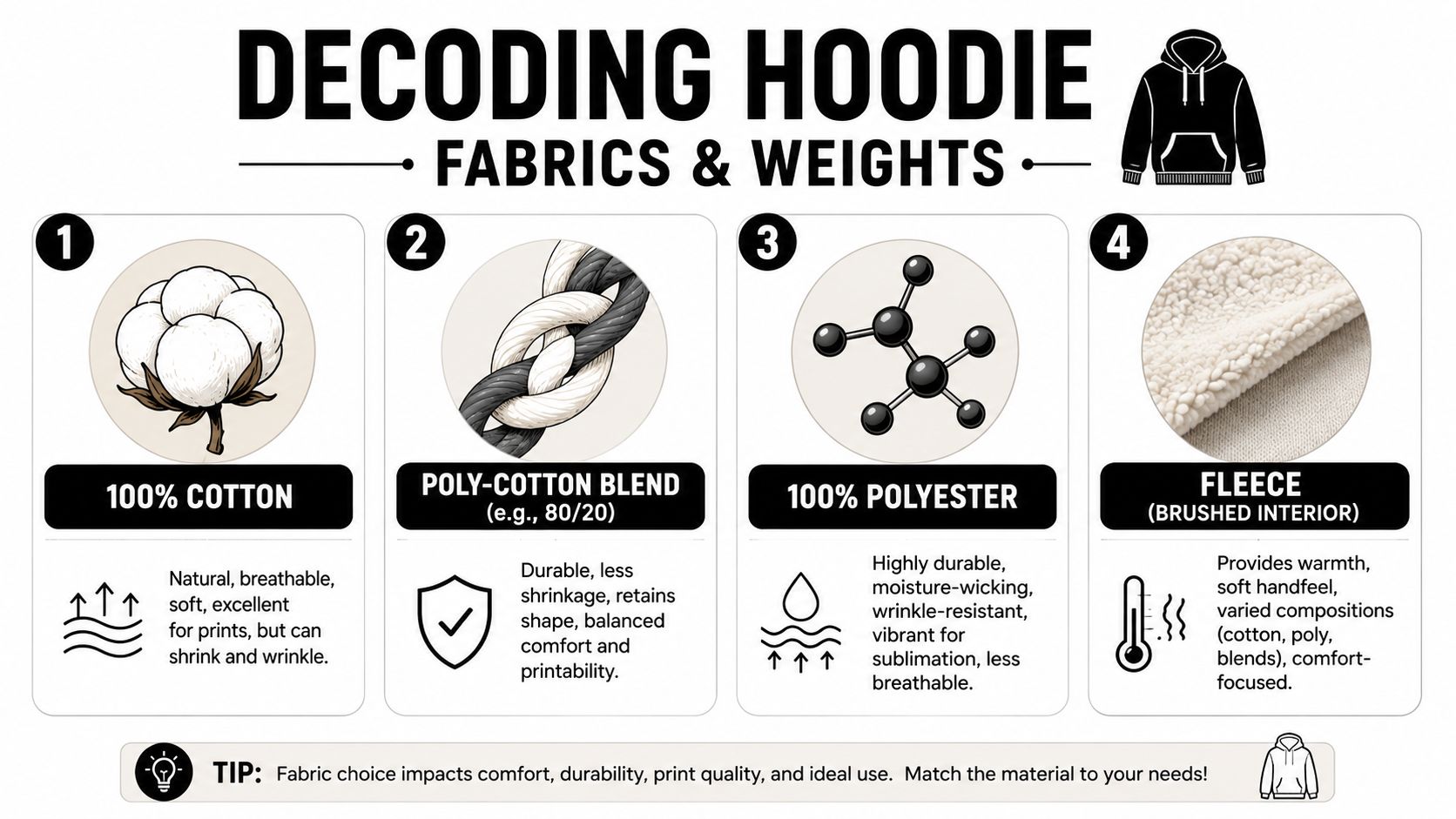
What the main fabric types actually do
Fabric choice is not just about comfort. It sets your print results, shrink risk, return rate, and whether reorders stay consistent.
| Fabric type | What works | What to watch |
|---|---|---|
| 100% cotton | Soft hand, natural feel, strong retail appeal, usually a better surface for fashion-focused decoration | Can shrink, can wrinkle more, and cotton fleece can vary a lot in face smoothness |
| Poly-cotton blend | Better shape retention, easier care, often safer for broad-market programs and repeat wear | Some blends feel less premium if the face looks shiny or synthetic |
| 100% polyester | Durable, fast-drying, useful for athletic or utility-focused products | Often less breathable, less natural in hand, and harder to position as premium casualwear |
| Fleece constructions | Warmth, comfort, fuller hand feel, familiar hoodie texture | Brushed interiors and face finishes vary heavily by mill and supplier |
One point trips up new buyers all the time. “Fleece” is a construction, not a fiber. It tells you about the knit and finish, especially the inside surface, but not the full story about printability or hand feel.
If you need a side-by-side comparison before narrowing samples, this guide to cotton vs polyester sweatshirt options helps clarify how fiber content changes feel, wear, and end use.
Why weight matters more than the sales photo
For bulk plain hoodies, GSM means grams per square meter. It is one of the fastest ways to estimate whether a hoodie will feel light, balanced, or heavy in hand.
Weight changes more than warmth. It changes drape, structure, hood shape, and how the garment supports decoration. A heavier hoodie can help a streetwear silhouette hold its shape and photograph better. It can also raise your freight cost, reduce year-round sell-through, and feel too stiff if the finishing is poor.
The reverse mistake is common too. A lightweight hoodie may keep your unit cost down, then disappoint buyers who expected substance from your product photos. That gap creates avoidable returns and discounting.
For a practical explanation of GSM ranges and how fabric weight affects end use, CottonWorks breaks down fabric weight and GSM basics. Use that as a reference point, then judge real samples in hand.
Match the fabric to the customer and the selling price
The right answer depends on who is buying and what promise your brand is making.
- Streetwear or premium retail. Heavier fleece with a clean face usually earns its keep because the garment needs structure and a higher perceived value.
- General merch or broad audience sales. Midweight programs are often easier to price, easier to wear across seasons, and safer for first orders.
- Athletic or performance use. Polyester-heavy options can make sense if durability, drying speed, or easy care matters more than natural hand feel.
- Print-first products. A smooth, stable face matters more than soft marketing language. If the hoodie is being bought for decoration, test the print surface before you fall in love with the hand feel.
USA-based sourcing matters here more than many first-time buyers expect. Domestic suppliers often give you faster sample turns, clearer fabric information, and fewer surprises on repeat orders. That does not guarantee better quality, but it does reduce the cost of fixing mistakes because communication, reorders, and replacement timelines are usually easier to manage.
Fabric mistakes that get expensive fast
The expensive errors usually start as small assumptions.
- Choosing by fiber label only. “100% cotton” does not tell you whether the face is smooth enough for clean decoration or stable enough after wash.
- Ignoring weight in relation to fit. Oversized patterns need enough body. Without it, the hoodie can look sloppy instead of intentional.
- Buying from photos instead of tested samples. Product styling hides weak fabric all the time.
- Assuming heavier means better. Heavy fabric with poor finishing can feel bulky, trap heat, and hurt wearability.
- Forgetting DTF compatibility. A hoodie can feel great and still be a poor print blank if the face is too uneven, too fuzzy, or inconsistent across dye lots.
For DTF programs, I always check the face first. If the surface has too much texture or loose fiber, transfer edges will not look as clean, and that shows up fast on dark colors and larger graphics. A blank that saves a dollar but creates print rejects is rarely the cheaper option.
The best fabric choice is the one that still works after wash testing, print testing, and a hard look at your margin. That is how you avoid paying twice for the same hoodie.
Mastering Sizing Specs and Garment Construction
Sizing problems are expensive because they create two losses at once. You pay for the hoodie, then you pay again in returns, exchanges, and customer support.
A supplier saying “standard fit” doesn't protect you. You need the actual spec sheet.
Read the spec sheet like a buyer, not a fan
Start with the measurements that shape customer perception fastest:
- Chest width tells you whether the hoodie wears slim, classic, or roomy.
- Body length affects whether the silhouette feels cropped, balanced, or long.
- Sleeve length changes comfort and how the hoodie sits in movement.
- Shoulder construction tells you a lot about the final look, especially on oversized pieces.
Classic-fit hoodies usually rely on a more traditional shoulder seam and cleaner side profile. Drop-shoulder styles shift that seam lower and create a wider, more relaxed upper body. That can look premium when the fabric has enough body. It can also look sloppy if the fabric collapses.
Construction details that separate good blanks from trouble
The small pieces matter more than many first-time buyers expect.
A weak rib cuff can make an otherwise decent hoodie feel worn out on day one. A floppy hood changes the whole silhouette in product photos. A kangaroo pocket that sits too high or too low throws off the front balance and makes the garment look cheap.
Use a review checklist when you inspect a sample:
- Check seam consistency. Look for puckering, twisting, or uneven stitch tension.
- Look at rib recovery. Stretch the cuff and waistband, then see how cleanly they return.
- Inspect the hood opening. It should hold shape without collapsing into itself.
- Check pocket placement visually. If it looks off while folded flat, it'll look worse on body.
- Compare multiple sizes together. Grading should look intentional, not random.
If a sample only looks good laid flat, it isn't a reliable blank.
Fit language can hide risk
“Relaxed,” “oversized,” and “retail fit” sound useful, but they're not technical standards. Two suppliers can use the same words and deliver very different garments.
Ask for the measurement chart. Then ask what tolerance the factory uses in production. If they avoid the question or answer vaguely, treat that as a warning. You're not being difficult. You're protecting your launch.
The strongest approach is to build your own approved spec reference from the sample you choose. Measure it yourself, note what you like, and use that as the standard for reorders. That gives you something concrete to compare against later runs when a supplier changes fabric, factory, or finishing.
Optimizing Your Hoodies for DTF Printing
A blank hoodie can feel great and still be wrong for DTF. That's where a lot of first orders go sideways.
DTF exposes problems fast. If the face is too textured, the print can lose visual sharpness. If the fabric finish is inconsistent, the transfer may not sit as cleanly across the whole run. If the hoodie shrinks or twists after application, the print can still be technically sound while the finished product feels wrong to the customer.
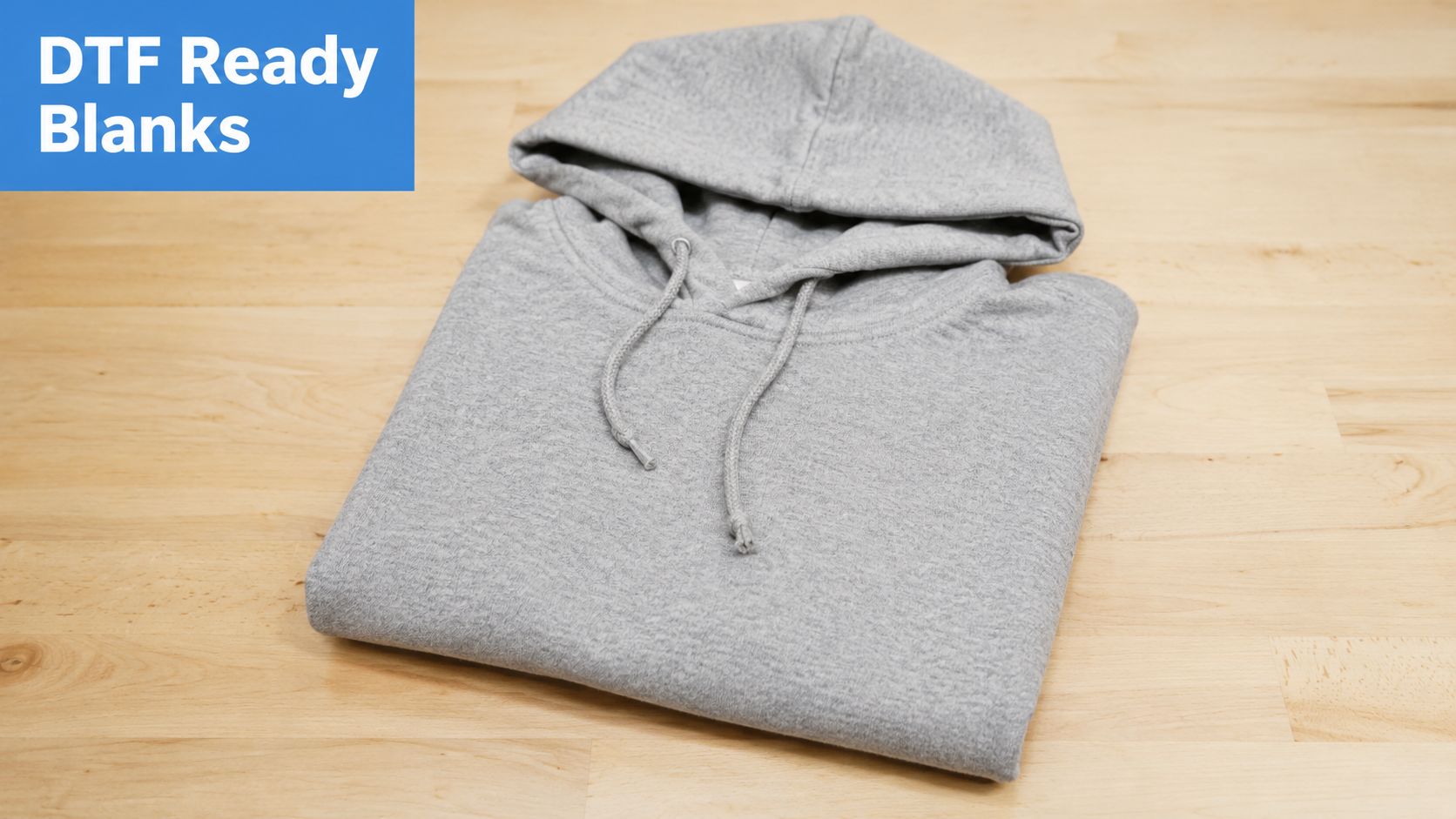
The best DTF hoodie isn't always the softest one
For DTF, surface quality matters. A hoodie with an overly fuzzy face can interfere with clean visual presentation. A heavily textured exterior can make artwork look less precise than it did on screen. That doesn't mean the hoodie is bad. It means it may be better suited to embroidery, casual merch, or a different decoration style.
The most dependable DTF blanks usually share a few traits:
- A smoother print face
- Stable construction
- Predictable shrink behavior
- Enough structure to support the transfer without feeling rigid
In practice, quality cotton-poly blends often work very well because they balance comfort with shape retention. A strong cotton face can also be excellent when the surface is tight and clean. What doesn't work is choosing based on fiber label alone and assuming print performance will follow.
What to test before you commit
Don't approve a blank for DTF until you've tested the full process.
Apply a real transfer to the sample. Wash it. Handle it again. Check how the print looks on seams, across the chest, and after the hoodie relaxes from wear. The right blank makes your print look intentional. The wrong blank makes even good artwork feel compromised.
Use this checklist:
- Surface check. Is the face smooth enough for crisp graphics?
- Heat response. Does the fabric tolerate application cleanly?
- Post-wash look. Does the hoodie distort around the print area?
- Color interaction. Does the garment base support the visual impact you want?
- Hand feel after pressing. Does the finished product still feel like a quality garment?
DTF compatibility saves money in ways people miss
Most buyers focus on whether the transfer sticks. That's too narrow.
A DTF-friendly blank reduces reprints, avoids awkward customer messages about feel or wear, and helps your product photos match what arrives in the mail. It also gives your production workflow fewer surprises. That matters when you're trying to scale and can't afford to troubleshoot every new color or batch.
A print can pass application and still fail the customer test.
The smart move is to treat the blank and the decoration method as one system. Bulk plain hoodies shouldn't be selected first and decorated second as an afterthought. Choose the garment with the end result in mind.
A Step-by-Step Sourcing and Quality Control Process
Your first bulk hoodie order rarely fails because of one dramatic mistake. It usually fails because a few small checks were skipped, then those misses stack up into chargebacks, reprints, late launches, and inventory you cannot sell at full price.
That is why good sourcing feels methodical. The process protects cash.
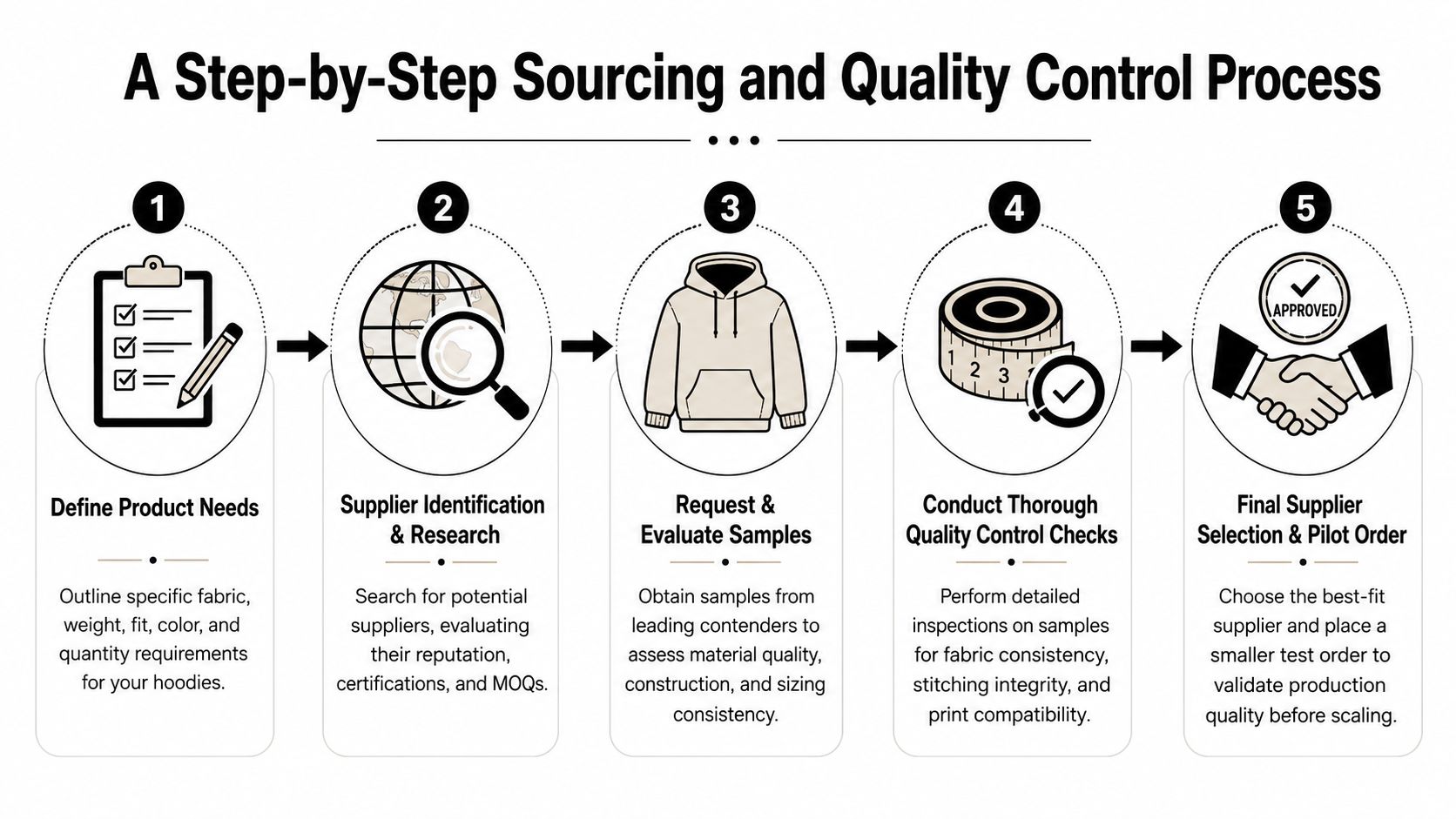
Build the workflow before placing the order
Start with an approval standard that is specific enough to reject the wrong hoodie quickly. Write down fabric composition, target weight, fit, shrinkage tolerance, color expectations, decoration method, and the finish you want on the face of the fabric. If those details live only in your head, suppliers will fill in the gaps their own way.
Then compare suppliers against that standard, not against each other's sales language. A supplier who answers technical questions clearly and sends consistent paperwork usually causes fewer expensive surprises than one who only wins on unit price. If you want a better operating framework for visibility and process control, Market With Boost's supply chain guide is a useful reference.
Request samples from at least two sources. Three is better if the quote spread is wide. One sample tells you whether a hoodie looks promising. Multiple samples show you where quality starts to drift.
Test samples hard enough to expose the expensive problems
A soft hand feel in the first five minutes does not mean much. You need to find out what changes after washing, pressing, measuring, and wearing.
Use a simple approval routine:
-
Measure the sample against the spec sheet
Check chest, body length, sleeve length, shoulder width, cuff opening, and hood dimensions. Record the numbers. Do not approve based on tagged size alone. -
Wash and dry it the way your customer will
Look for torque, shrinkage, surface fuzzing, rib distortion, and color shift. A hoodie that loses shape after one cycle becomes a returns problem, not just a product problem. -
Run a real decoration test
Use your actual transfer, press settings, and artwork size. The cost of getting DTF compatibility wrong shows up fast in repress labor, wasted transfers, and product photos that no longer match the delivered garment. -
Wear it for a day
Pay attention to hood balance, cuff recovery, hem stretch, and whether the body bags out. Cheap blanks often pass table inspection and fail on-body. -
Document approval with photos and notes
Save flat lay photos, close-ups of stitching, measurement results, and print results. This file becomes your reference if the bulk order drifts.
Fabric control deserves extra attention here. GSM variation, even when the hoodies look similar in a carton, can change print behavior, hand feel, and shrinkage. If you need a baseline on lower-cost blanks before testing, this guide to the cheapest blank hoodies for printing helps frame where savings can turn into quality risk.
For GSM testing and textile lab methods, use an authoritative standard such as the SGS fabric GSM testing overview. The practical point is simple. Confirm the fabric weight on received samples and bulk goods instead of trusting the listing.
Run arrival QC like a brand protecting margin
Bulk arrival is where buyers either catch problems early or absorb them internally.
Open cartons from different parts of the shipment. Check multiple sizes, not just mediums. Compare what arrived against the approved sample file, not against memory. Look for shade variation, stitching consistency, pocket alignment, panel symmetry, rib recovery, loose threads, and spec drift.
A simple intake sheet keeps this objective:
| Check area | What you're looking for |
|---|---|
| Fabric feel | Consistent hand and weight across cartons |
| Measurements | Match to approved sample and stated tolerance |
| Construction | Clean seams, secure pocket attachment, even topstitching, stable ribs |
| Color | Consistent shade across sizes and cartons |
| Decoration readiness | Smooth print area, no surface contamination, no distortion |
If the order is large, pull units from every carton range and isolate any suspect batch immediately. This matters even more with overseas production, where replacement time can wipe out a launch window. USA-based sourcing often earns its keep here because resolving a spec issue is faster, communication is tighter, and the cost of a correction stays contained.
Good QC is not about proving a supplier wrong. It is about catching expensive errors while you still have options.
Choosing a Supplier and Negotiating Your First Order
A cheap hoodie from the wrong supplier often becomes the most expensive hoodie you buy.
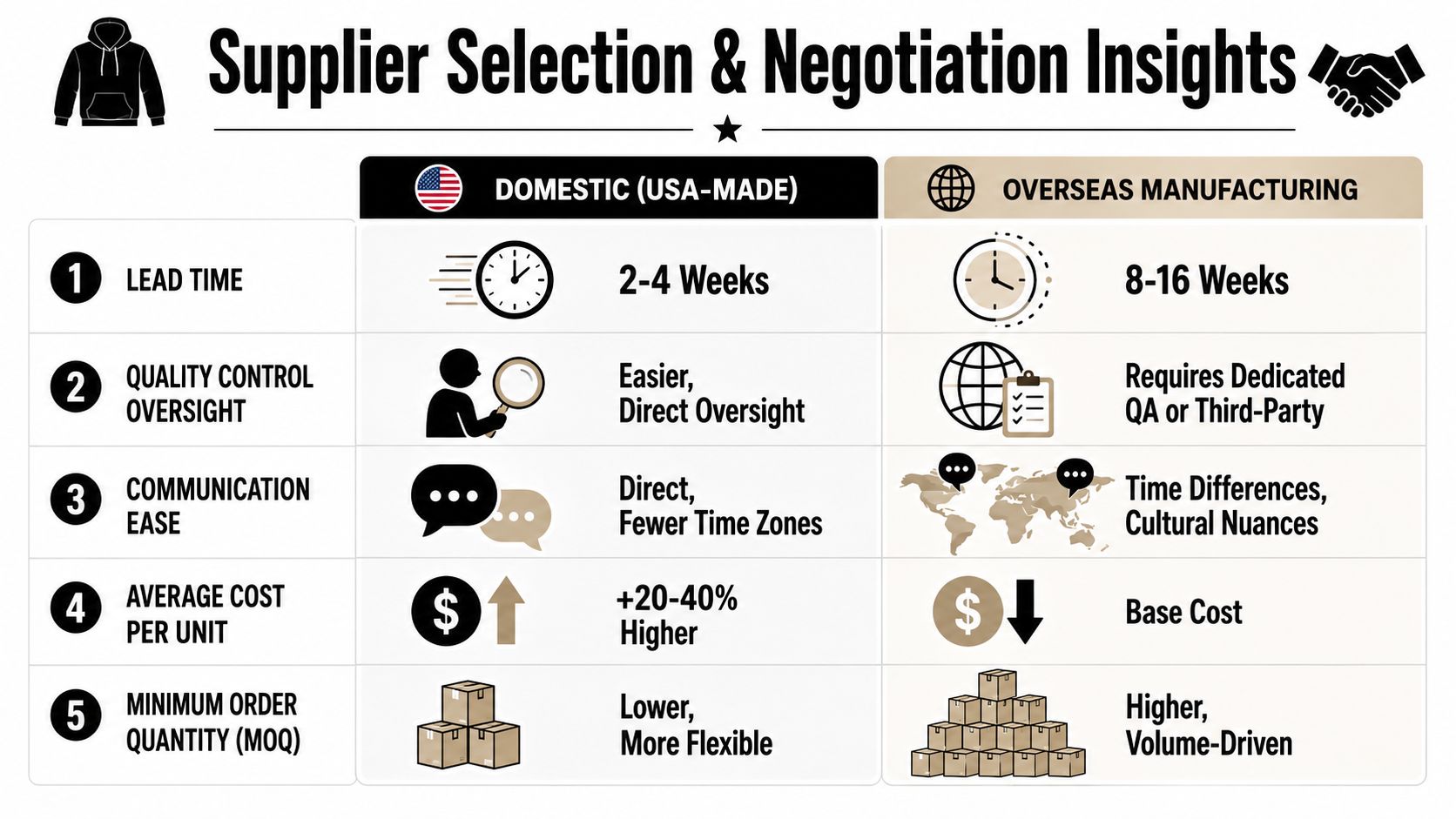
New buyers usually compare quoted unit prices and stop there. That's not enough. You need to compare the landed reality of the order. Lead time, freight, replacement speed, communication friction, and the cost of fixing mistakes all matter.
Why USA-based sourcing deserves a harder look
A lot of buyers still think domestic blanks are automatically too expensive. That assumption is weaker than it used to be.
Verified industry analysis shows that when U.S. importers face 25 to 30 percent tariffs on Asian-sourced cotton hoodies, combined with rising ocean freight costs, the landed cost advantage of overseas bulk hoodies can shrink from roughly 35 percent to about 12 to 15 percent, which makes domestic production more competitive for businesses that value speed and consistency, as noted in this tariff-adjusted bulk hoodie sourcing analysis.
That matters because the cost of getting it wrong changes with supplier distance. A spec issue from a domestic partner is often easier to correct. A spec issue tied up in ocean freight, customs timing, or long replacement cycles can wreck a launch window.
What to negotiate besides price
The best first-order negotiation usually isn't about squeezing the last bit out of unit cost. It's about reducing risk.
Focus on these points:
- Sample-to-bulk consistency. Confirm that the approved sample represents actual production.
- Reorder consistency. Ask whether the same fabric source and factory will be used.
- Color continuity. Important if you plan to restock core shades.
- Defect handling. Clarify the process before you need it.
- Production communication. Know who answers when something changes.
You can also use this guide to cheapest blank hoodies as a reference point when you're comparing low-cost options against better-built alternatives. Cheap can be useful. It just shouldn't be mistaken for low-risk.
Build for the second order, not only the first
A supplier relationship gets tested on the reorder.
If your first order succeeds, can they repeat it without drift? Can they move fast if you need a restock? Can they explain changes clearly if a fabric lot, dye lot, or finishing detail shifts? Those questions matter more than a polished sales message.
Here's a practical supplier scorecard:
| Supplier factor | Why it matters |
|---|---|
| Communication quality | Bad communication hides future production problems |
| Spec discipline | Reliable specs protect reorders and growth |
| Sample accuracy | A misleading sample creates false confidence |
| Replacement responsiveness | Problems happen. Speed matters |
| Domestic access | Useful when launch timing and correction speed matter |
For many small brands, USA-based sourcing isn't just a patriotic preference or a quality preference. It's a risk management choice. If your margins are thin and your audience is still learning to trust you, fewer surprises can be worth more than the lowest quote.
Building Your Brand on the Right Foundation
Customers don't experience your sourcing spreadsheet. They experience the hoodie.
That's why bulk plain hoodies deserve more scrutiny than most new brands give them. The wrong fabric leads to disappointing feel. The wrong construction leads to returns. The wrong supplier turns a small mistake into a costly one. The right blank protects your print, your margins, and your reputation.
After the product is right, presentation still matters. If you sell on marketplaces, this guide on how sellers optimized my listings on Amazon can help you tighten the product page side of the business so the quality you sourced comes through clearly online.
Apply more pressure before the order, and you'll deal with fewer fires after it.
If you're ready to pair the right hoodie blank with fast, dependable decoration, Cobra DTF offers USA-made DTF transfers with quick turnaround, vibrant color, and support built for growing apparel businesses that can't afford delays.