

Finding the Best Heat Press for Beginners
If you're just starting out, the best heat press for beginners is almost always a 15x15 inch clamshell model. Brands like RoyalPress or HTVRONT make fantastic entry-level machines that hit the sweet spot. They give you enough space for common projects like t-shirts, have easy-to-use digital controls, and won't break the bank—most fall in the $200 to $500 range. It's the perfect way to learn the ropes without a huge upfront investment.
How to Choose Your First Heat Press
Welcome to the exciting world of custom apparel and decor! Choosing your first heat press is your ticket to bringing creative ideas to life, and I promise, it's not as complicated as it looks.
Don't think of it as some scary industrial machine. At its core, a heat press is just a supercharged iron that gives you perfect, professional results every single time. Its only job is to deliver consistent heat and even pressure to fuse a design onto a surface, making it permanent.
This guide is designed to cut through the noise and focus on what actually matters for someone new. We’ll look at the different types of machines, decode the essential features you'll really use, and help you find a press that fits your projects and your budget. Getting this first step right makes all the difference.
Key Considerations for Beginners
When you're starting, it’s easy to get bogged down in technical specs and jargon. Let's ignore that for now and focus on what will make your life easier and your projects more successful. You want a machine that you can grow with, not one that you have to fight with.
Here are the big three things to keep in mind:
- Ease of Use: Is it straightforward? Look for a press with a clear digital screen for time and temperature. The simpler the controls, the more you can focus on being creative instead of fumbling with a manual.
- Versatility: The 15x15 inch platen—that’s the heated plate—is the go-to size for a reason. It's big enough to handle most adult t-shirts but still fits comfortably in a home craft room or workspace.
- Safety Features: This is non-negotiable. An insulated handle is a must to prevent burns, and an auto-shutoff feature adds a layer of safety for those times you get distracted.
The best heat press for a beginner is one that makes you feel confident. It should be reliable, straightforward, and capable of producing high-quality results without a steep learning curve or constant troubleshooting.
To make things even clearer, I've put together a simple checklist that breaks down exactly what to look for when you're shopping for your first heat press.
Beginner Heat Press Feature Checklist
| Feature | Why It Matters for Beginners | What to Look For |
|---|---|---|
| Machine Type | Clamshell models are compact and user-friendly, making them perfect for small spaces and simple projects like t-shirts. | A clamshell design with a sturdy handle and base. |
| Platen Size | A 15x15 inch platen offers the most versatility for common beginner projects without being too bulky or expensive. | Look for models advertised as "15x15" or "standard size." |
| Digital Controls | Simple, clear controls for time and temperature remove guesswork and ensure consistent, professional results every time. | A clear LED or LCD screen with push-button controls. |
| Even Pressure | Without even pressure, your designs will peel or fade. A good machine distributes pressure uniformly across the platen. | A center pressure adjustment knob and a solid, well-built frame. |
| Safety Features | These features protect you and your workspace. An auto-shutoff can prevent accidents if you forget to turn it off. | Auto-shutoff timer, insulated handles, and a stable base. |
| Budget | You don't need to spend a fortune. A solid beginner press falls in the $200-$500 range. | Well-reviewed models from reputable brands like RoyalPress or HTVRONT. |
Think of this table as your cheat sheet. If you find a machine that ticks these boxes, you're on the right track to making a smart purchase that will serve you well as you start your heat pressing journey.
Clamshell vs. Swing-Away: Which Press Is Right for You?
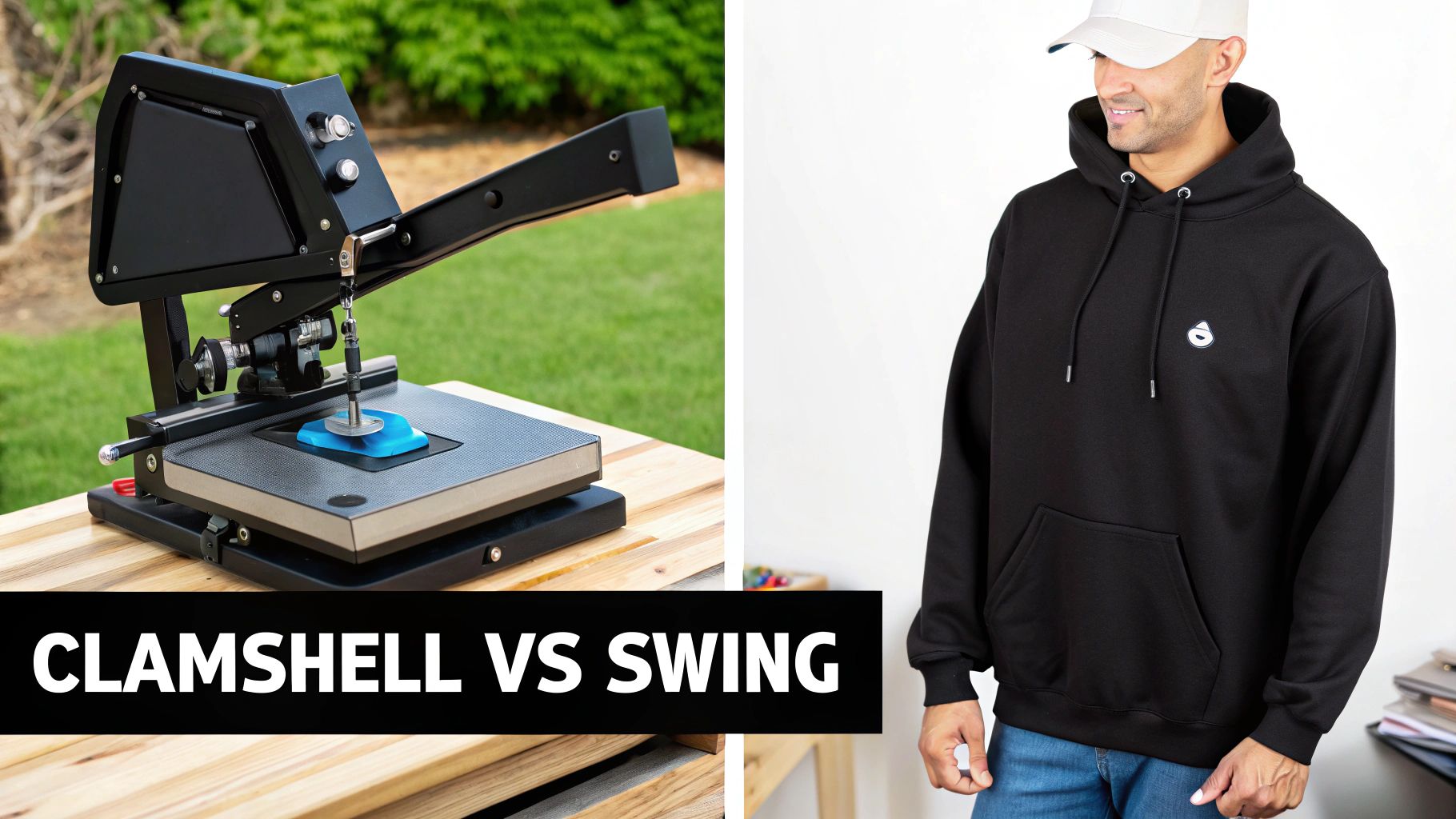
When you start shopping for your first heat press, you'll quickly notice they don't all open and close the same way. The two dominant styles are the clamshell and the swing-away, and picking between them is a bigger deal than you might think. This choice shapes your day-to-day workflow, how much room you'll need, and what kind of projects you can easily create.
Think of it like choosing a kitchen knife. A big chef's knife is versatile, but a smaller paring knife is better for detailed work. Both cut, but their design makes them suited for different jobs. Let's dig into how each of these presses works so you can find the perfect match for your craft space and creative goals.
The Compact and Speedy Clamshell Press
A clamshell press works exactly like its name suggests—it opens and closes on a hinge, kind of like a clam. The top platen (the hot part) lifts straight up, letting you access the bottom platen where you place your t-shirt and design.
This design is a huge hit with beginners, and for good reason.
Its main selling point is a compact footprint. Since the top platen just goes up and down, you don't need any extra side-to-side clearance. This makes it a fantastic option if you're working out of a small craft room, a corner of your garage, or on a sturdy desk where every inch counts.
That simple, direct motion also makes it a real workhorse for pressing flat, thin items. If you plan to crank out t-shirts, tote bags, and other simple garments, a clamshell is fast and incredibly efficient.
The trade-off, however, is the workspace. With the hot platen always hovering right above your hands, it can feel a little cramped when you're trying to line up a design. This can be especially tricky with thicker items like hoodies, where your knuckles might get uncomfortably close to the heat.
The Safe and Versatile Swing-Away Press
A swing-away heat press takes a different approach. Instead of lifting up, the top platen swings out horizontally, moving completely away from the lower platen. This gives you a wide-open, unobstructed view of your entire work surface.
This design brings two major advantages to the table, especially if you're focused on safety and precision.
- Complete Workspace Access: By moving the hot part completely out of the way, you get a clear, safe area to lay out your garment and perfectly position your transfer. No more worrying about accidental burns while you fuss with the details.
- Ideal for Thicker Items: That open access makes it so much easier to work with bulky materials. Things like ceramic tiles, wooden plaques, or thick sweatshirts are no problem to arrange perfectly.
The real benefit of a swing-away is the confidence it gives you. Separating the heat from the workspace allows for a more careful, less rushed setup, which is priceless when you're still learning the ropes.
So, what's the catch? Swing-away models need a lot more space. You have to account for the full range of motion as the top platen swings out. This makes them a poor fit for tight spaces. They also tend to cost a bit more and have more moving parts than a basic clamshell.
What to Look for in Your First Heat Press
When you're just starting out, shopping for a heat press can feel overwhelming. You're hit with a wall of technical jargon and a dizzying number of options. But here’s the secret: a great starter machine isn't about having every bell and whistle. It’s about having the right features that work reliably.
Think of it like learning to cook. You don't need a fancy sous vide circulator on day one; you need a good stove that gives you consistent, predictable heat. A heat press is the exact same. The goal is to find a machine that takes the guesswork out of the equation so you can create professional-looking apparel from your very first press.
Let's walk through the non-negotiable features that will make your new hobby a success, not a source of frustration.
Precise Digital Time and Temperature Controls
Ever tried baking a cake without knowing the oven temperature or setting a timer? You'd get a burnt, gooey mess. The same is true for heat pressing. Every transfer type, whether it's vinyl, sublimation, or DTF, has a specific "recipe"—a precise combination of time and temperature required to bond perfectly with the fabric.
This is why digital controls are your best friend. A clear, easy-to-read digital display for both time and temperature is an absolute must. It lets you dial in the exact settings for your project, which means you can get the same perfect result every single time. Stay away from analog dials; they're just too imprecise and will lead to faded colors, peeling vinyl, and a lot of wasted shirts.
Even Heat Distribution Across the Platen
The platen—that big, flat, heated surface—needs to be consistently hot from one edge to the other. If it has "cold spots," your designs will cure unevenly. The middle of your shirt might look fantastic, but the edges of the graphic could start peeling off after just one wash.
Even heat distribution is the secret ingredient for making durable, professional-looking products. It’s the difference between a custom shirt that lasts for years and one that looks worn out after a single trip through the laundry.
Good beginner presses use well-designed internal heating coils to ensure there are no cold spots. As you shop, look for models that specifically call out "even heating" or mention having multiple heating elements. Trust me, this single feature will save you from so many headaches and awkward conversations with customers.
Adjustable Pressure Is Non-Negotiable
Different items need different amounts of pressure. A thin, delicate polyester shirt requires a much lighter touch than a thick, heavy cotton hoodie or a sturdy canvas tote bag. If you can't adjust the pressure, you're stuck with a one-size-fits-all approach that just doesn't work.
A good starter press will have a big, easy-to-turn knob (usually on top) that lets you dial the pressure up or down. This adjustability is what gives you true versatility. It means you can confidently switch from pressing delicate custom DTF transfers ready to press onto a t-shirt to applying a patch on a thick jacket, knowing you have the perfect amount of force for the job.
The 15x15 Inch Sweet Spot
Heat presses come in all sorts of sizes, but the 15x15 inch platen is widely considered the gold standard for beginners. It hits the perfect balance of versatility and manageability.
Here’s why it works so well:
- Large Enough for Most Projects: It can easily handle the vast majority of adult t-shirt designs, tote bags, and pillows.
- Not Too Bulky: It won’t completely take over your craft room or garage space.
- Cost-Effective: It offers the best bang for your buck, giving you plenty of capability without a huge price tag.
You might be tempted to save a few dollars by going smaller, but you'll quickly feel limited. And going larger is usually overkill for beginner projects, costing more and taking up more room. For these reasons, sticking with a 15x15 inch press is one of the smartest moves a newcomer can make.
The market backs this up, too. The entry-level flat heat press market was valued at an estimated USD 500 million in 2025 and is set for steady growth. Most of these beginner models are priced between $200 and $500, hitting that sweet spot of affordability and functionality that makes it easier than ever to start a hobby or small business.
Picking the Right Beginner Heat Press: Our Top Picks
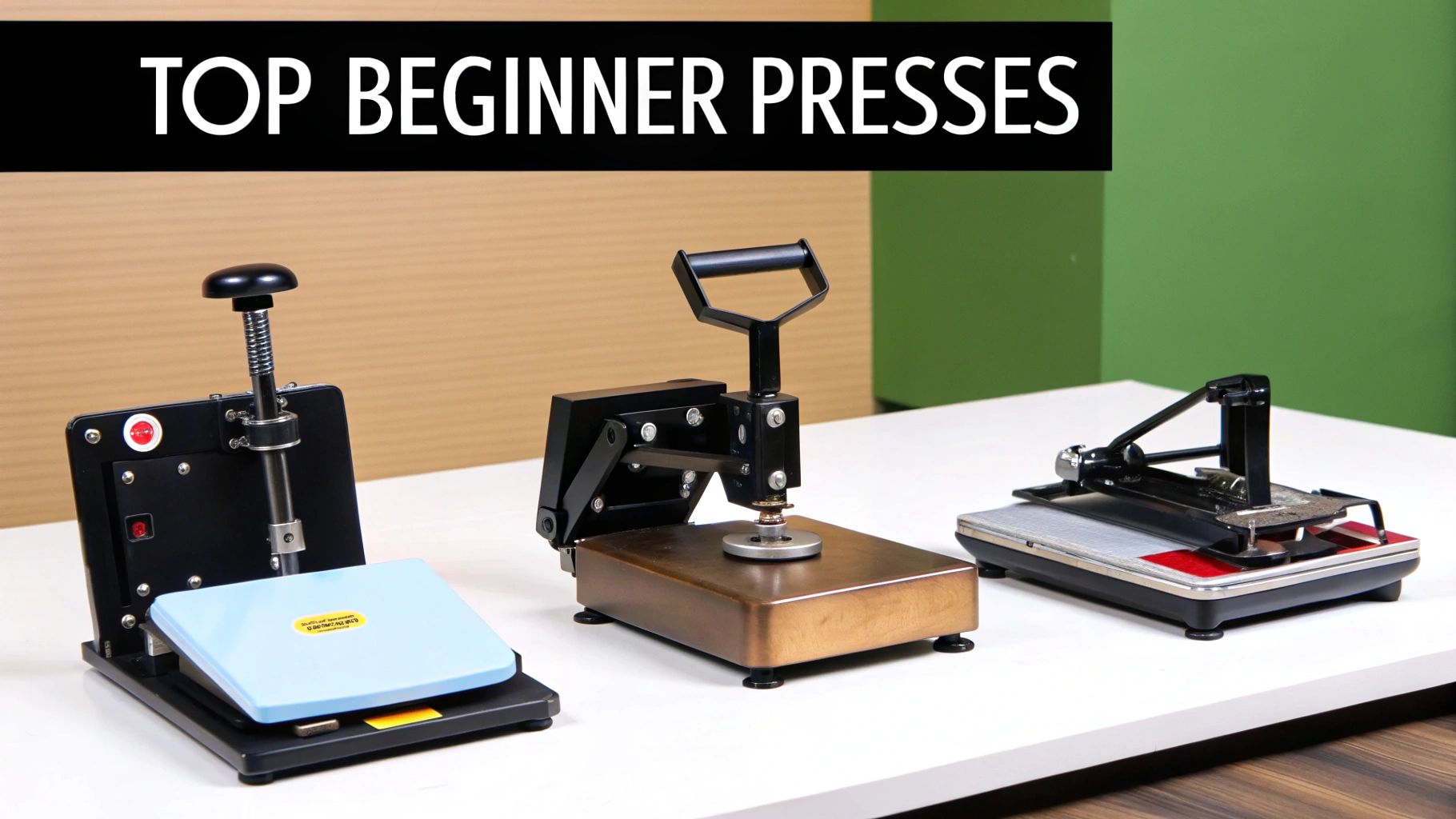
Alright, you've got the theory down. Now, let's talk about how these machines actually feel and perform when you get them home. This is where the rubber meets the road. Instead of just rattling off specs, I'm going to walk you through some of the best heat press for beginners models, focusing on what it’s really like to use them day-to-day.
We’ll look at everything from the unboxing experience to how intuitive the controls are and, most importantly, the quality of the final press. Let’s find the right machine to get your creative journey started on the right foot.
RoyalPress 15x15 Clamshell Heat Press
Think of the RoyalPress 15x15 as the reliable workhorse of the bunch. It’s frequently recommended as a starting point, and for good reason. It has that classic clamshell design, which saves space but is still tough enough to handle plenty of use.
The first thing you’ll notice is the weight—it feels solid and well-built, which is exactly what you want for stability when you're pressing. Getting it set up is a breeze, and the digital control panel is about as straightforward as it gets. You just use simple up-and-down arrows to set your temperature and time, and a loud, clear alarm tells you when the job is done.
I was really impressed with the even heat distribution on a standard cotton tee. No cold spots to be found, which is a common headache with cheaper machines. The pressure adjustment knob is big and easy to grip, giving you good feedback so you can dial in the perfect pressure for thin vinyl or a bulky hoodie. It's a fantastic, reliable choice for anyone who wants consistent results without a lot of fuss.
HTVRONT Auto Heat Press
If you're someone who loves convenience and a touch of modern tech, the HTVRONT Auto Heat Press is a serious contender. It smartly takes one of the trickiest parts of the process—pressure—and completely automates it.
This machine's main selling point is its automated pressing feature. You set the time and temp, slide your project in, push a button, and walk away. The press automatically clamps down with the right pressure and then pops back open when the timer finishes. It's a game-changer for reducing fatigue and pretty much eliminating user error.
It also heats up incredibly fast and holds its temperature steady. The 15x15 platen is the perfect size for most projects, from t-shirts to tote bags. While it does cost a bit more than a basic manual press, the sheer convenience and added safety make it a fantastic option, especially if you plan on multitasking or running small batches.
Key Takeaway: The HTVRONT Auto Heat Press is for the beginner who doesn't mind investing a bit more for a machine that's safer, easier, and more efficient. It's the closest you'll get to a "set it and forget it" experience in this price range.
That said, manual presses like the RoyalPress still own the beginner market for a reason. Their simple mechanics and lower cost are a massive draw for hobbyists and new small businesses. In fact, the manual heat press machine market was valued at roughly USD 1.1 billion in 2023 and is expected to nearly double by 2032, largely thanks to home-based creators. You can dig into the numbers yourself by checking out the full report on DataIntelo.com.
F2C Pro 5-in-1 Combo Heat Press
Do you dream of personalizing more than just t-shirts? If so, a combo press like the F2C Pro 5-in-1 is your gateway to a much bigger world of custom products. This thing is all about versatility.
The core of the unit is a 12x15 inch swing-away press, which is a great feature because it moves the hot platen completely out of your workspace for safer setup. But the real magic is in the attachments. With this one machine, you can press:
- Flat Items: T-shirts, tote bags, and mouse pads.
- Mugs: With the included cylindrical mug press.
- Hats: Using a special curved platen made for caps.
- Plates: It comes with two different-sized plate presses.
Swapping out the attachments takes a little getting used to, but after a few tries, you'll be able to do it in minutes. For a beginner who wants to experiment with all sorts of different items without cluttering their workspace with multiple machines, the F2C offers incredible bang for your buck.
Comparison of Top Beginner Heat Press Models
To make things even clearer, here’s a side-by-side look at the features, pros, and cons of our recommended heat presses for beginners. This should help you quickly see which one aligns best with what you want to create.
| Model Name | Type | Platen Size | Best For | Price Range |
|---|---|---|---|---|
| RoyalPress | Clamshell | 15" x 15" | T-shirts and high-volume flat items | $$ |
| HTVRONT Auto | Automated Clamshell | 15" x 15" | Ease of use and streamlined workflow | $$$ |
| F2C Pro 5-in-1 | Swing-Away Combo | 12" x 15" | Maximum versatility and various projects | $$ |
At the end of the day, the best heat press for beginners really boils down to your creative goals. If you're all-in on apparel, the RoyalPress is a solid, budget-friendly choice. If you want the easiest, most hands-off experience, the HTVRONT is worth the splurge. And if you're an experimenter who wants to try it all, the F2C 5-in-1 gives you the most creative runway.
Your First Project: A Step-by-Step Guide
Alright, you've unboxed your new heat press, and now it's time to put it to work. Let's move past the instruction manual and get hands-on with a simple first project that’ll get you comfortable with your machine: a classic custom t-shirt using heat transfer vinyl (HTV).
Think of this like following a recipe for the first time. The key to success isn't magic; it's about following the steps, getting your settings right, and understanding how your equipment behaves. We'll walk through everything, from setting up your space to that incredibly satisfying moment when you peel the backing off your finished design.
Preparing Your Workspace and Machine
Before you even think about turning up the heat, let's get your station set up properly. A little prep work goes a long way in making sure things run smoothly and safely.
- Find the Right Spot: Your heat press needs a solid, sturdy, and heat-resistant surface. A dedicated workbench is ideal, but a heavy-duty table will do the trick. Just make sure you have plenty of room to move around it without feeling boxed in.
- Power Up Safely: Always plug your machine directly into a wall outlet. It's tempting to grab an extension cord, but they can be a fire risk and often fail to deliver the steady power your press needs to maintain a consistent temperature.
- Pre-Heat and Test: Go ahead and turn on the press. A common temperature for standard HTV is somewhere between 305-315°F (152-157°C), so set it in that range. While it’s heating up, lay your blank t-shirt on the lower platen and press it for about 5-10 seconds. This little "pre-press" is a game-changer—it irons out any wrinkles and zaps any moisture hiding in the fabric, giving you a perfectly flat surface for your transfer.
Setting Up Your First Press
Your machine is hot, your shirt is prepped, and now it's time for the main event. Getting the settings right is where the magic really happens, and it's what separates a professional-looking shirt from a dud.
Most HTV will come with recommended settings, but a fantastic starting point for a basic cotton tee is 315°F for 15 seconds with medium pressure.
Pro Tip: Don't underestimate pressure! It's just as critical as temperature. To find that "medium pressure" sweet spot, put your shirt on the platen and close the press. Turn the pressure knob until you feel solid resistance when you lock it down. It should be firm, but you shouldn't have to wrestle with it.
Now, carefully place your HTV design exactly where you want it on the shirt. A great rule of thumb for chest placement is to measure about three finger-widths down from the collar. Once it's positioned, cover the design with a Teflon sheet or a piece of parchment paper. This protects your shirt from scorching and keeps your heat platen clean.
The Pressing Process and Final Reveal
This is the fun part. Close the press firmly and hit the timer. When you hear that beep, open the press—and be careful, that top platen is seriously hot.
Let the shirt cool down for a few seconds. The next step depends entirely on your vinyl. Some types are a "hot peel" (you peel the backing right away), while others are a "cold peel" (you wait until it's cool to the touch). Always check the instructions that came with your material! When you're ready, peel the clear carrier sheet back at a smooth, 45-degree angle.
And that's it! You've just made your first custom item. This simple process is the foundation for almost everything you'll do with your heat press. To see where you can go from here, you can dive deeper into the different methods of heat transfer shirt printing.
Of course, a great press won't save a bad transfer. Before you even get to this stage, ensuring the perfect print for your transfers is the first step toward getting professional-quality results.
Turning Your Hobby Into a Side Hustle
Let's be honest, buying a heat press isn't just about getting a new toy for your craft room. It's a genuine step into the massive, ever-growing world of personalized goods. Think about it: custom t-shirts, one-of-a-kind gifts, and branded swag for local businesses are everywhere. This demand isn’t going away, which means your new hobby has a real shot at becoming a profitable side business.
Today's heat presses are a world away from the complicated machines of the past. They're built for people like us, making it surprisingly simple for creative folks to start their own brands from a spare room or garage. The key is to start seeing that press as an investment, not just a tool. That mindset shift is where the magic happens.
If you're wondering how it all works, this infographic lays out the basic workflow. You'll see just how simple it is to get started on your first project.
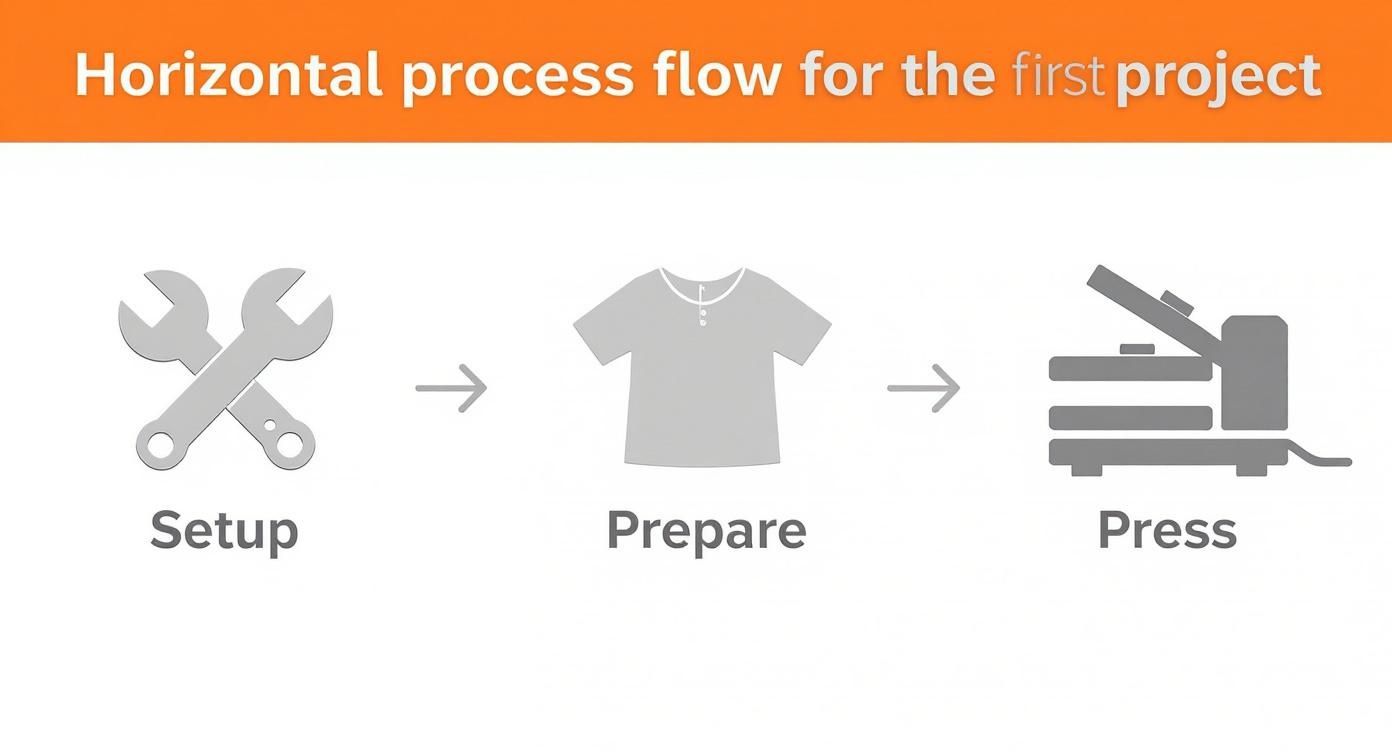
That's really it. Those three steps—setup, prepare, and press—are the core of every single item you'll make and, hopefully, sell.
Seizing the Market Opportunity
The numbers behind this industry are pretty staggering. The global heat press market was valued at around USD 1.2 billion in 2024, and it's on track to nearly double to about USD 2.3 billion by 2033. That explosive growth is being fueled by people wanting exactly what you can make: unique, personalized products created by real people.
This isn't just a fleeting trend. It's a fundamental shift in how people shop. They're tired of mass-produced junk and are actively looking for small creators with unique designs. That’s your opening to find a niche and build something special.
Of course, passion alone doesn't build a business. You need a plan. If you're serious about making this work, putting together a solid t-shirt printing business plan is your next logical step. It will help you define your goals, figure out who you're selling to, and map out how you’ll grow.
Funding Your Growth
Eventually, you'll hit a point where your little-press-that-could can't keep up with demand. That's a fantastic problem to have! It means you're doing something right, but it also means you’ll need to think about upgrading your setup or buying supplies in bulk.
When your hobby starts looking more like a real business, you might need to look into ways to fund that growth. It’s worth exploring equipment financing options for small businesses to see how you can invest in better gear without needing a huge pile of cash upfront.
Got Questions About Heat Presses? We've Got Answers.
Jumping into the world of heat pressing can feel a little overwhelming at first. You've got questions about tools, budgets, and what's really necessary to get started. That's totally normal. Let's walk through some of the most common questions that pop up for beginners.
Can't I Just Use My Iron? What's the Big Difference?
You can technically use a household iron for some heat transfer vinyl (HTV) projects, but the results are worlds apart. Think of it this way: an iron is like trying to bake a cake with a blowtorch. It has hot spots, cold spots, and you’re left guessing how much pressure to apply. That’s why iron-on designs often start peeling or fading after the first wash.
A heat press, on the other hand, is the professional oven. It delivers perfectly even temperature and consistent, heavy pressure across your entire design. This combination is what truly bonds the transfer to the fabric, giving you durable, wash-after-wash quality that looks and feels professional.
What Size Heat Press Should I Get to Start?
For anyone just starting out, a 15x15 inch heat press is the gold standard. Honestly, it’s the perfect sweet spot. It's big enough to handle almost any adult t-shirt design you can throw at it, not to mention tote bags, hoodies, and other popular items.
You might be tempted by a smaller, cheaper press, but you'll likely outgrow it in a matter of months. A 15x15 gives you the versatility to experiment and grow without feeling limited right out of the gate. It's the ideal size for finding the best heat press for beginners.
The goal is to invest in a tool that grows with you. A 15x15 inch press provides enough room for ambitious projects while still being manageable for someone just learning the craft.
So, It's Not Just for T-Shirts, Right?
Absolutely not! This is where the real fun kicks in. A standard flat heat press opens up a huge world of creative possibilities. You can customize all sorts of things, like:
- Hoodies and sweatshirts
- Canvas tote bags
- Mousepads
- Ceramic tiles and coasters
- Puzzles
- Thin wooden plaques
And if you decide to go with a multi-function or combo press, you can add mugs, hats, and even plates to that list. As long as the item is flat, can handle the heat, and has a suitable surface, you can probably press a design on it.
What's a Realistic Budget for My First Heat Press?
You don't need to break the bank, but you also want to avoid the super cheap options that will just cause headaches. A good, reliable beginner heat press will usually fall in the $200 to $500 range.
In this price bracket, you'll get the essential features you need—like digital time and temperature controls and adjustable pressure—from a reputable brand. You might see presses under $150, but they're notorious for uneven heating and poor construction. Spending that little bit extra upfront will save you a ton of frustration and wasted materials down the road.
Ready to bring your designs to life with professional-grade quality? Cobra DTF offers premium, USA-made Direct-to-Film transfers that are vibrant, durable, and easy to press. Explore our collection and get started today at https://cobradtf.com.