

Perfect DTF Prints on White Polyester Shirts
You've probably had this order before. A customer wants clean, bright graphics on lightweight performance tees. You press the job, the shirts look decent on the table, and then the problems start. The print feels too stiff. Corners lift. A shiny press box shows up around the design. Or the whole batch survives the press but looks like a gamble after the first wash.
That's why a lot of shops get cautious around polyester.
The good news is that white polyester shirts are a much friendlier DTF substrate than is often assumed. They remove one of the biggest headaches in polyester printing, which is color movement from the garment into the print. With white garments, you can focus on the things that control quality: shirt construction, moisture removal, press technique, peel timing, and post-press finishing.
Why White Polyester Is Your Next Big Opportunity
Small shops don't need every apparel niche. They need the ones they can produce consistently and profitably. White polyester sits in that category.
Performance apparel keeps expanding, and polyester sits at the center of it. Fact.MR projects polyester will hold an estimated 39.0% market share in performance apparel in 2026, with the performance apparel market projected to reach USD 79.9 billion by 2036 in its report on the performance apparel market. That matters because customers aren't just buying heavy cotton promo tees anymore. They want lightweight gym shirts, event shirts, team warm-up tops, and workwear that dries fast.
Custom printing is growing with that demand. Printful reports the custom t-shirt printing market was valued at USD 5.16 billion in 2024 and is projected to reach USD 9.82 billion by 2030, growing at a 11.5% CAGR, in its roundup of t-shirt industry statistics. If your shop can print polyester cleanly, you're not chasing a side category. You're building around one of the strongest parts of the apparel market.
Why white is the easier polyester
Colored polyester can create trouble even when your transfer is good and your press is dialed in. The fabric dye itself can interfere with the final look. White shirts sidestep that.
That changes the job in a useful way. Instead of fighting garment color, you're working on process control.
- You can judge color output more accurately because the shirt isn't tinting the design.
- You can spot pressure and texture issues faster on white fabric.
- You can standardize your settings across repeat orders with less variation.
- You can sell performance blanks to customers who want a lighter shirt without the usual fear factor around polyester.
White polyester is one of the few substrates that rewards disciplined production fast. If your prep is good, the shirt usually tells you the truth.
Where shops usually go wrong
Most polyester failures aren't caused by polyester itself. They come from rushed prep, uneven pressure, or peeling too early. Shops blame the material when workflow is the issue.
White polyester lets you tighten that workflow. It's also a smart product for decorators who want a dependable lane for team gear, fitness apparel, and basic branded merchandise. When you pair a stable white garment with a well-made transfer and a press that reads accurately, the process becomes repeatable instead of stressful.
Selecting the Best White Polyester Shirts for DTF
Blank selection decides more than most printers want to admit. If the shirt surface is rough, overly slick, thin in the wrong way, or inconsistent from carton to carton, the transfer has to fight the garment before it can even bond correctly.
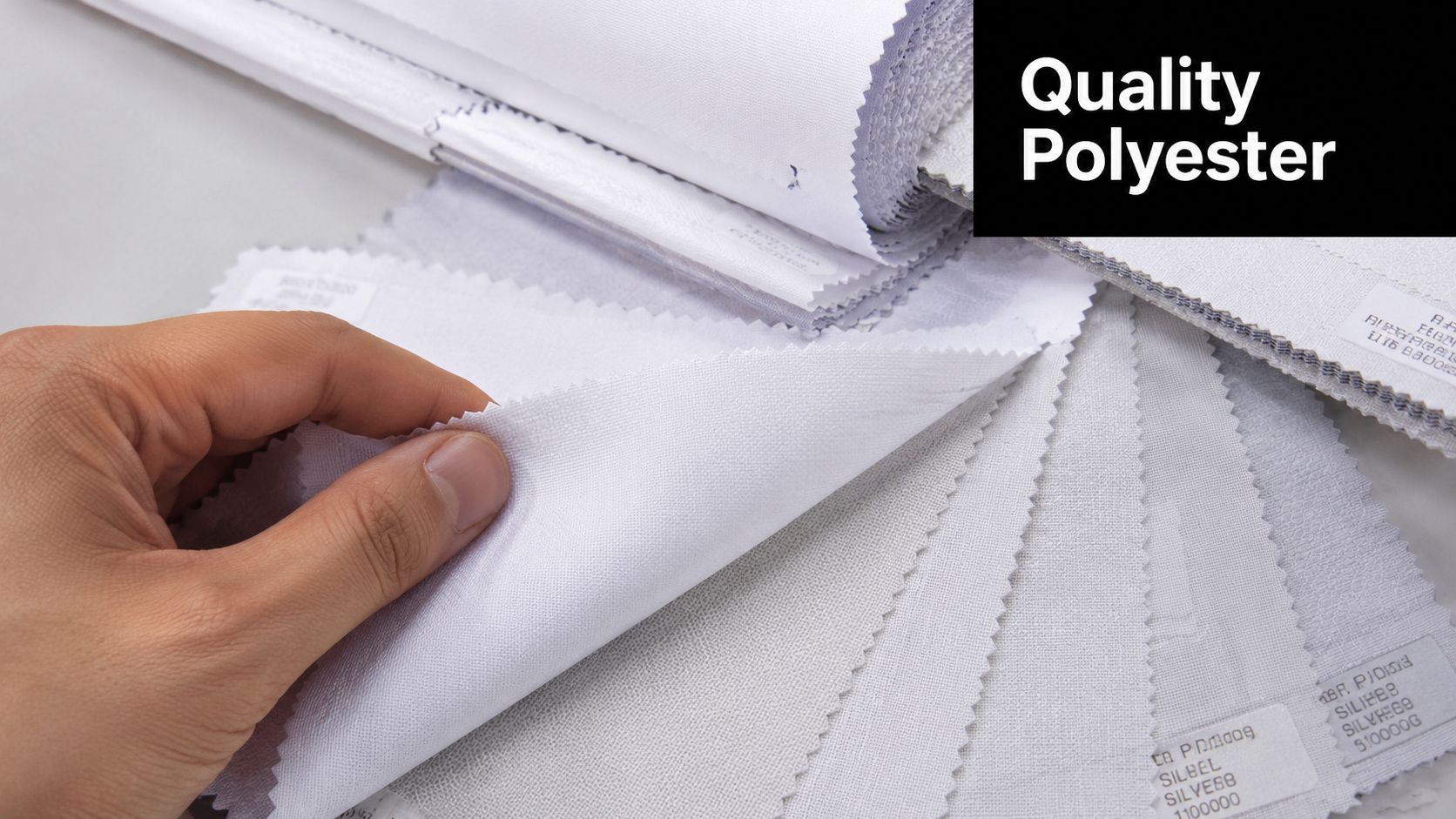
Polyester isn't a niche fabric. It's the backbone of modern performance wear. Fact.MR notes polyester is projected to hold 39.0% market share in performance apparel in 2026, and the category itself is projected to reach USD 79.9 billion by 2036 in its research on the performance apparel market. Shops that learn to source the right white polyester blanks have a direct path into that demand.
For a broader overview of blank selection across fabrics and use cases, this guide to the best shirts for DTF is a good companion read.
Surface matters more than the label
“100% polyester” doesn't tell you enough. Two white polyester shirts can carry the same fiber label and behave very differently on the press.
A few things usually separate an easy shirt from a frustrating one:
- Smooth face fabric helps small text and fine details sit cleaner. If the shirt has a pronounced texture, the transfer may still bond, but edges won't look as crisp.
- Consistent knit or weave gives you even contact across the design. Inconsistent surfaces create hot spots and weak spots.
- Moderate structure is easier to print than clingy, ultra-thin athletic fabric. Very flimsy shirts can shift, wrinkle, and telegraph platen edges.
Spun feel versus slick feel
Some polyester shirts mimic cotton more closely. Others have that classic smooth, shiny athletic finish. Neither is automatically better. The right choice depends on the job.
A spun or cotton-feel polyester usually gives you a softer visual presentation and can be easier for customers who don't like slick athletic fabric. A filament-style performance tee often presses flatter and suits gym wear, team wear, and race shirts well.
Use this quick comparison when you're evaluating samples:
| Shirt characteristic | What it usually means for DTF |
|---|---|
| Smooth, tight face | Better edge definition |
| Slight cotton-like hand | More casual retail feel |
| Shiny athletic surface | Good for performance use, but watch heat shine |
| Loose or textured surface | Lower detail clarity |
| Very thin body | Higher chance of wrinkles and platen marks |
What to inspect before buying deep inventory
Don't judge blanks by catalog photos. Order samples and test them.
Check these points in the shop:
- Lay the shirt on the platen dry. If it won't settle flat without fighting you, production will be slower than it should be.
- Run a pre-press without a transfer. Look for shine, platen edge marks, and how easily the fabric relaxes.
- Inspect the chest area under light. That's where texture problems show up first.
- Stretch the fabric lightly after cooling. You're looking for recovery and surface stability, not just softness.
Better blanks cost less than ruined labor. A shirt that presses cleanly every time is cheaper than a “budget” blank that eats reprints.
What shops should prioritize
For white polyester shirts, prioritize consistency over novelty. You want blanks that arrive the same way every time, hold a flat print area, and don't react badly to moderate heat. Fancy marketing terms don't matter much if the shirt shifts on the platen or develops shine around every transfer.
If you're printing for schools, gyms, fundraisers, or online stores, your safest move is usually a white polyester blank with a smooth face, stable body, and reliable construction. That's the shirt that keeps production moving and complaints low.
Essential Garment Prep Before You Press
Most bad polyester prints were already in trouble before the transfer touched the shirt.
The biggest mistake is treating prep like a courtesy step. On white polyester, prep is a quality-control step. If you skip it, moisture and surface contamination stay trapped in the fabric, and the press turns those hidden problems into adhesion issues, texture defects, and dull-looking prints.
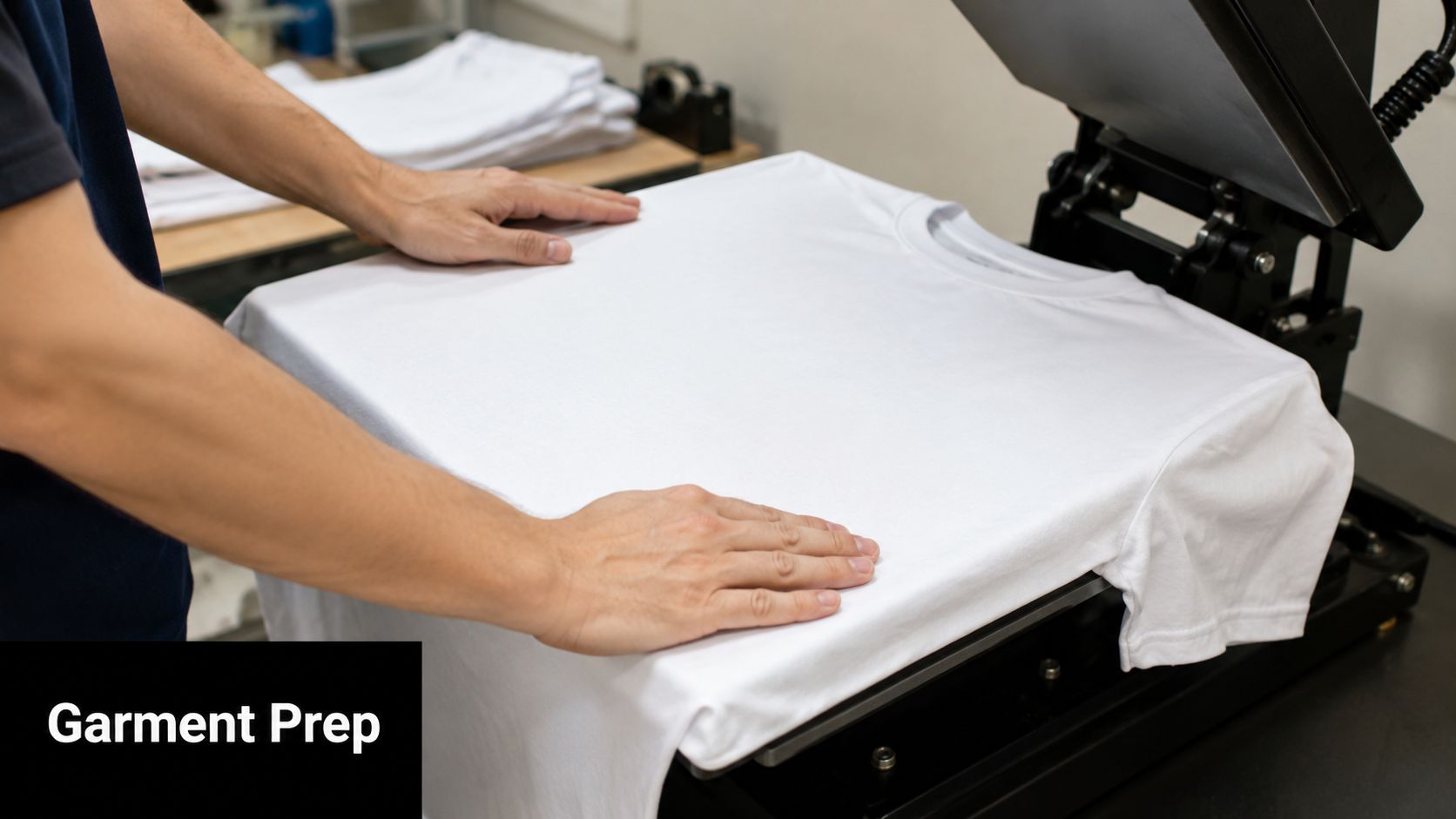
Pre-press is not optional
For 100% polyester, the standardized DTF protocol cited by Printful starts with a 15 to 20 second pre-press at 300°F to remove moisture and flatten the surface. The same source notes the method achieves a 94% success rate for vibrancy and durability, while over 22% of failures are linked to excess fabric moisture in its article on polyester and DTF application.
That matters because polyester can hold moisture you don't see. When heat hits the garment, that moisture turns to steam. Steam interferes with the adhesive bond and can create uneven contact under the film.
The prep routine that saves jobs
A clean workflow for white polyester shirts usually looks like this:
- Lint roll every shirt. Even tiny fibers or dust specks can show through a clean white surface.
- Pre-press long enough to drive out moisture. A quick tap may flatten wrinkles, but it won't do the full job if the garment came from a cool stock room or humid environment.
- Let the shirt settle flat after pre-press. Don't rush into placement while the fabric is shifting.
- Check seams, collars, and side thickness. If they sit on the platen unevenly, the print area can lose pressure.
If a polyester shirt looks perfectly dry, that doesn't mean it's press-ready.
What shops miss on white garments
White shirts make contamination easier to overlook because the fabric reads as “clean” at a glance. But deodorant residue from try-ons, warehouse dust, loose fibers, and handling oils all matter. DTF doesn't forgive debris trapped under a transfer.
Use a repeatable prep order. Don't improvise from shirt to shirt. The shops that get consistent polyester results don't just have good transfers. They have a boring, disciplined setup routine, and that's exactly why their output looks professional.
Applying Cobra DTF Transfers Perfect Settings and Process
If your transfer quality is solid, the press cycle becomes the deciding factor. White polyester rewards careful heat management. Push too hard or peel too early, and you'll create problems that have nothing to do with the artwork.
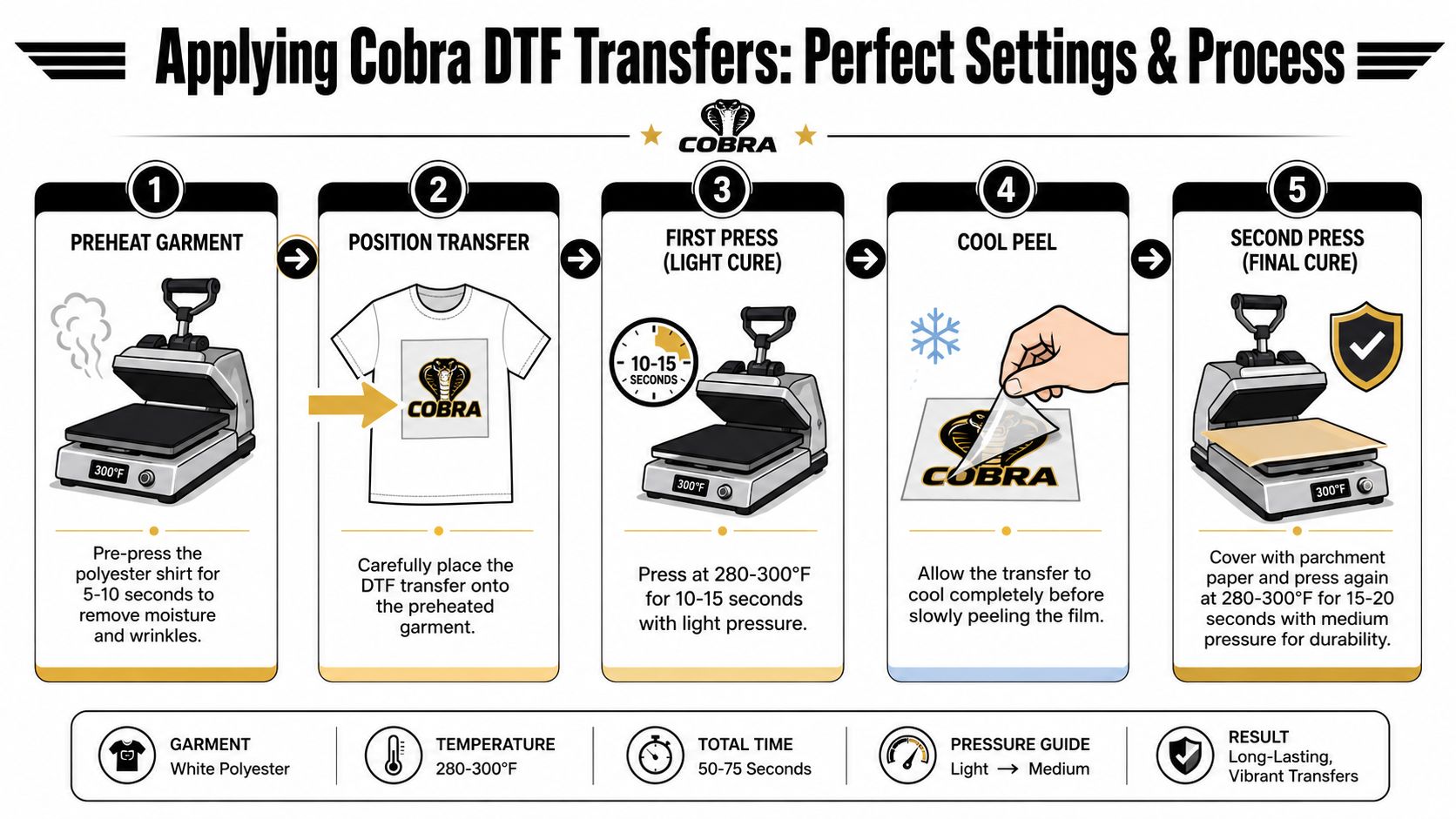
The most reliable baseline comes from the standardized 100% polyester protocol cited by Printful: pre-press the garment, apply a 10-second adhesive layer, then finish with a 15-second press at 300°F. Printful reports this method reaches a 94% success rate for vibrancy and durability, and that over 22% of failures tie back to excess fabric moisture in its guide to polyester DTF settings. That's the benchmark worth respecting.
For a broader technical reference on press variables across transfer types, this resource on DTF printing from Dirt Cheap Headwear does a good job explaining the process in plain language. If you want a shop-focused reference for dialing in your own press, keep this guide to heat press settings for DTF handy.
The two-press method that works
Shops often ruin white polyester by trying to solve everything in one heavy press. Don't do that. A controlled two-press method gives you better bonding and a better finish.
Use this sequence:
- Pre-press the shirt until the print area is flat and moisture is gone.
- Position the transfer carefully on the chest or target area. White garments show crooked placement fast.
- First press at the lower end of the working range with light to medium pressure. The goal is to bond the transfer without over-glossing the shirt.
- Let it cool fully before peeling. Cold peel matters on polyester because the adhesive needs time to set.
- Second press with a protective sheet to finish the surface and improve the hand.
Recommended baseline settings
These are practical shop settings for white polyester shirts using a two-press workflow.
| Step | Temperature | Time | Pressure | Notes |
|---|---|---|---|---|
| Pre-press | 300°F | 15 to 20 seconds | Light to medium | Drives out moisture and flattens the print area |
| First press | 280 to 300°F | 10 to 15 seconds | Medium | Bond the transfer without overcooking the fabric |
| Peel | Cool completely | Until cold | None | Peel slowly and evenly |
| Second press | 280 to 300°F | 15 to 20 seconds | Medium | Use parchment or protective sheet for a more finished feel |
Why cold peel matters
Warm peeling is one of the fastest ways to turn a good transfer into a risky one. The adhesive may look set, but the bond can still be unstable if the film is removed too soon. On white polyester, that can show up as lifted edges, rough surface texture, or a print that looks fine now but won't wash well later.
Let the film cool all the way. Then peel with control, not speed.
Peel timing is part of the cure. It isn't just the moment when you remove the carrier.
The second press is where the print starts feeling professional
A lot of beginners stop after the peel because the graphic looks finished. It isn't. The second press does three useful things. It settles the surface, improves the hand, and helps the design feel less plasticky.
Use parchment paper or another protective cover sheet. Keep pressure even. Don't crush the print. You're finishing it, not flattening the life out of it.
The result should feel integrated with the shirt, not perched on top of it. On white polyester, that cleaner finish is often the difference between a shirt that feels custom and one that feels disposable.
Post-Press Care and Customer Instructions
A shirt can leave your shop looking perfect and still come back as a complaint if the customer washes it badly. Good printers know that part of the job is setting expectations before the garment ever hits the laundry.
For white polyester shirts, care instructions matter for two separate reasons. They protect the print, and they protect the shirt itself from avoidable staining.
What to tell customers
Keep the instructions simple enough that customers will follow them.
You can hand off care guidance like this:
- Wash inside out to reduce abrasion on the print.
- Use cold water to keep the garment and transfer under gentler conditions.
- Skip bleach because it can damage the print and create fabric issues.
- Avoid fabric softeners since residue can affect the surface feel over time.
- Tumble dry on the coolest setting or line dry to reduce unnecessary heat exposure.
These aren't fancy rules. They're the basics that preserve a DTF print on polyester.
The yellow stain problem customers blame on the shirt
White performance shirts often get blamed for underarm yellowing, but the fabric usually isn't the cause. According to the discussion and cleaning recommendation documented in this white undershirt stain thread, yellow stains are typically caused by the oxidation of sweat lipids and deodorant chemicals, not the polyester itself. The same source notes that an 8 to 10 hour overnight soak in hot water with a strong alkaline detergent can effectively neutralize and remove those stains.
That's useful information to pass along because it changes the conversation. The customer doesn't have a defective shirt. They have a common wear-and-care issue.
For more garment-specific care guidance, this article on washing 100 polyester is worth bookmarking.
A simple customer handout format
If you include care cards in orders, keep them short:
Wash inside out in cold water. Don't use bleach or fabric softener. Dry on the coolest setting or hang dry. If yellowing appears under the arms, soak the shirt overnight in hot water with a strong alkaline detergent, then line dry or use the coolest dryer setting.
That kind of guidance cuts confusion and shows customers you know the garment, not just the print.
Troubleshooting Common Polyester DTF Issues
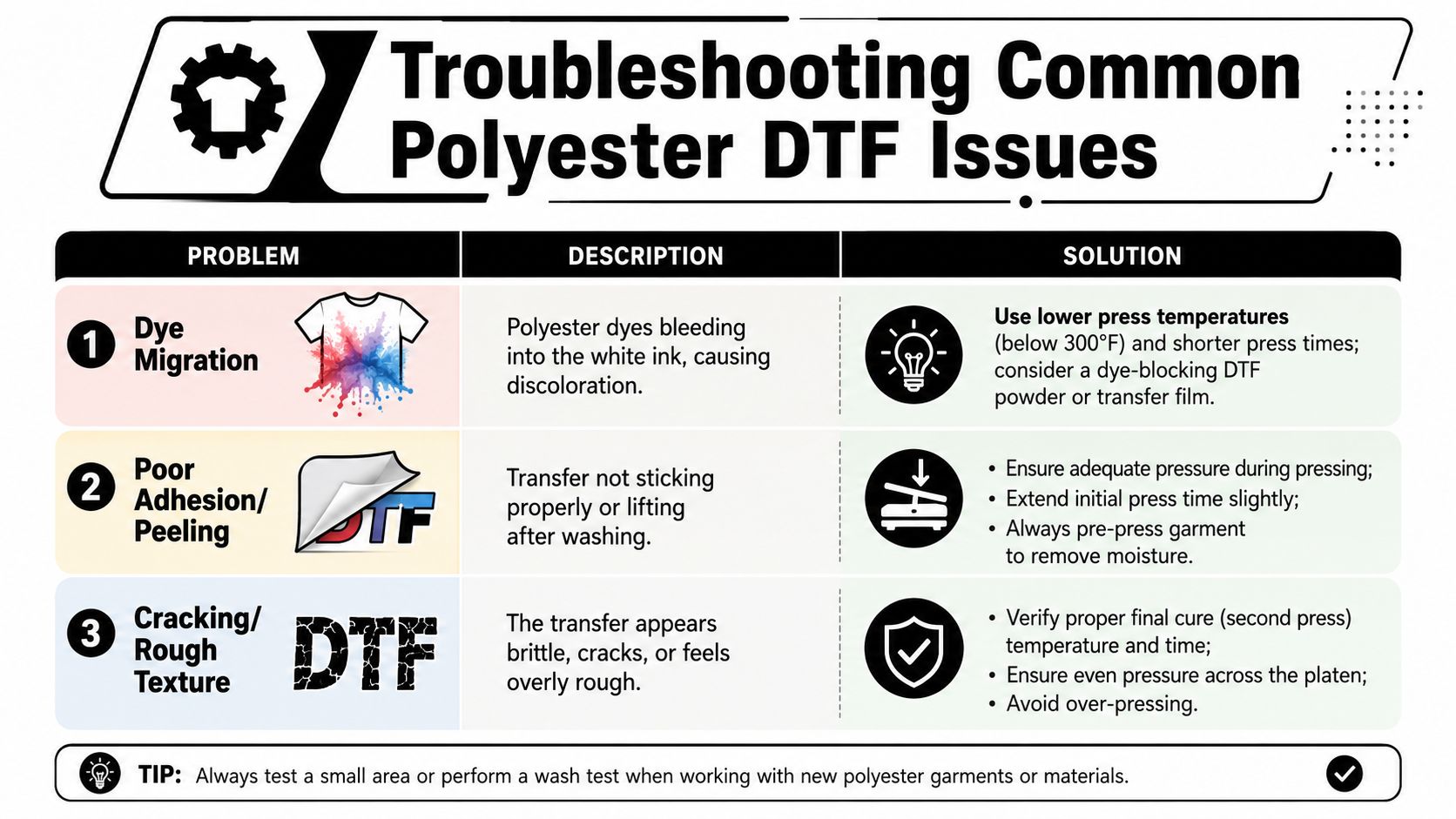
When a white polyester job goes wrong, the symptom usually points straight at the cause. The trick is not overcorrecting. Shops lose time when they respond to every issue by raising heat, extending time, or pressing harder. Polyester punishes that approach fast.
Shiny box around the print
Symptom: A glossy rectangle or platen outline appears around the transfer area.
Likely cause: Too much heat on the exposed shirt surface, pressure spread beyond the design area, or direct platen contact on thin performance fabric.
Fix: Reduce unnecessary exposed pressure. Use a pressing pillow or a setup that isolates the print zone better. Cover the garment properly during the finishing press. Some shirts also respond better when you keep your working settings on the lower side of the acceptable range instead of automatically pushing hotter.
Scorching or yellowing on the shirt face
Symptom: The white fabric picks up discoloration or heat shine.
Likely cause: Heat is too aggressive for that specific blank, dwell time is too long, or the press isn't reading accurately.
Fix: Confirm your press temperature with an independent method before changing technique. If the shirt is reacting badly, shorten the cycle or drop the temperature slightly and test again. White polyester doesn't give you much visual forgiveness, so small overages show up quickly.
A transfer problem and a garment problem can look similar. Check your press first before blaming the film.
Peeling after washing
Symptom: Edges lift, sections separate, or the print starts releasing in the laundry.
Likely cause: Incomplete moisture removal, weak pressure, rushed peel timing, or an under-finished second press.
Fix: Tighten the setup instead of guessing. Make sure the shirt is fully pre-pressed, the platen is level, and the film is peeled only after it cools completely. If pressure is inconsistent because of seams or collars, fix the support under the garment before rerunning settings.
Rough or plastic hand
Symptom: The design feels heavy, stiff, or too much like a sticker.
Likely cause: The print stopped after the peel, or the final press didn't finish the surface evenly.
Fix: Use the second press correctly with a protective sheet. This process allows the print to settle into a more professional feel. Keep pressure even and avoid smashing the transfer harder than necessary.
Fine details look soft
Symptom: Small text or delicate edges don't look sharp, even though the transfer itself is good.
Likely cause: The garment face is too textured, the shirt shifted during pressing, or the print area wasn't fully flat.
Fix: Revisit blank selection first. White polyester shirts with a smoother face produce cleaner detail. Then check prep. Even a slight wrinkle under a small logo can make the print look less precise than it should.
The best troubleshooting habit
Change one variable at a time.
If you lower temperature, change pressure, and extend time all at once, you won't know what solved the problem. Shops that get dependable polyester output build repeatable notes for each blank, then make small corrections instead of emotional ones.
When white polyester is prepped well and pressed with control, it isn't the risky substrate people make it out to be. It's one of the cleaner production lanes a small shop can own.
If you want transfers that help make white polyester jobs more consistent, order from Cobra DTF. Their Texas-based, USA-made transfers are built for shops that care about clean color, fast turnaround, and dependable results on real production schedules.