

A Guide to Types of Material for Shirts
Picking the perfect shirt always comes back to the fabric. Understanding the different types of material for shirts—from natural fibers like soft cotton to performance-driven synthetics like polyester—is the first and most important step. The fabric truly defines everything: comfort, durability, breathability, and how it feels against your skin.
Decoding the Fabric Foundation
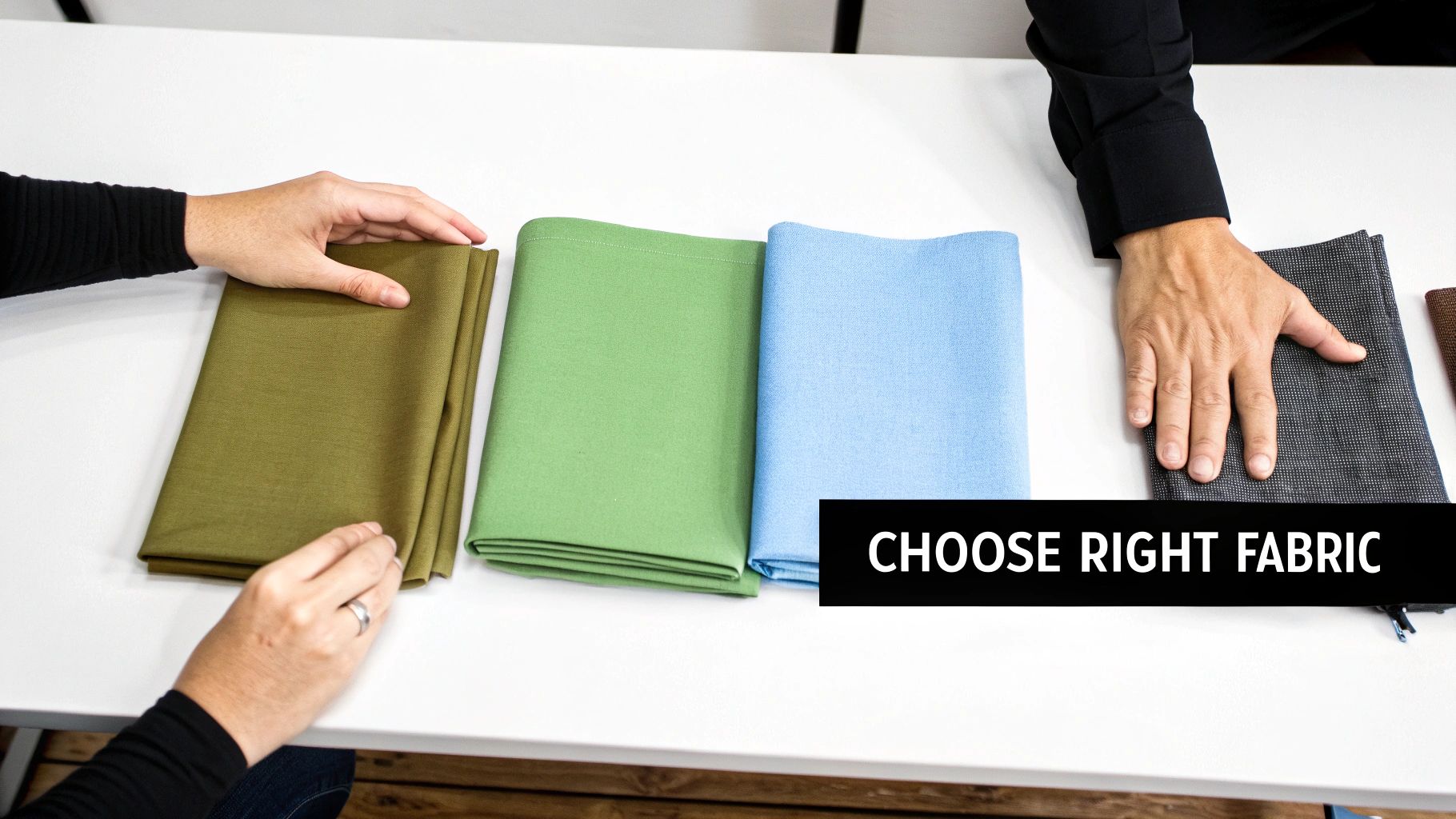
Think of a shirt's material as its DNA. It dictates not just how it looks on the hanger, but how it actually performs when you wear it. The inherent properties of a fabric determine whether it will keep you cool on a hot day, survive a long flight without wrinkling, or feel soft enough to be your go-to weekend tee.
Getting a handle on these properties is your first step to making smarter choices for your wardrobe. This is especially true if you're shopping online; knowing how to shop for clothes online effectively often means being able to judge a fabric's quality and feel through a screen.
The Three Main Fabric Families
The world of textiles can feel overwhelming, but it really boils down to three core categories. Each family has its own unique personality, making them suited for different uses and personal tastes.
- Natural Fabrics: These come straight from plants and animals. We're talking about classics like cotton, linen, silk, and wool. People love them for their amazing breathability and soft touch, though they can sometimes be a bit prone to wrinkling.
- Synthetic Fabrics: These are the result of modern science—engineered fibers created in a lab. Polyester, nylon, and rayon are all in this group. Their big selling points are durability, wrinkle resistance, and fantastic moisture-wicking abilities.
- Blended Fabrics: Just like the name suggests, blends combine natural and synthetic fibers to get the best of both worlds. The classic cotton-polyester blend is a perfect example, giving you the softness of cotton with the strength and resilience of polyester.
Once you get the fundamental differences between natural, synthetic, and blended fabrics, you can pick the right shirt for any occasion with confidence. This knowledge is a game-changer, whether you're buying one shirt for yourself or sourcing garments for a big project.
For a more detailed look at making the right choice, check out our guide on choosing the right T-shirt fabric and material. It’s a great next step in your journey to understanding the different types of material for shirts and building a wardrobe that's both comfortable and functional.
Exploring Natural Shirt Fabrics
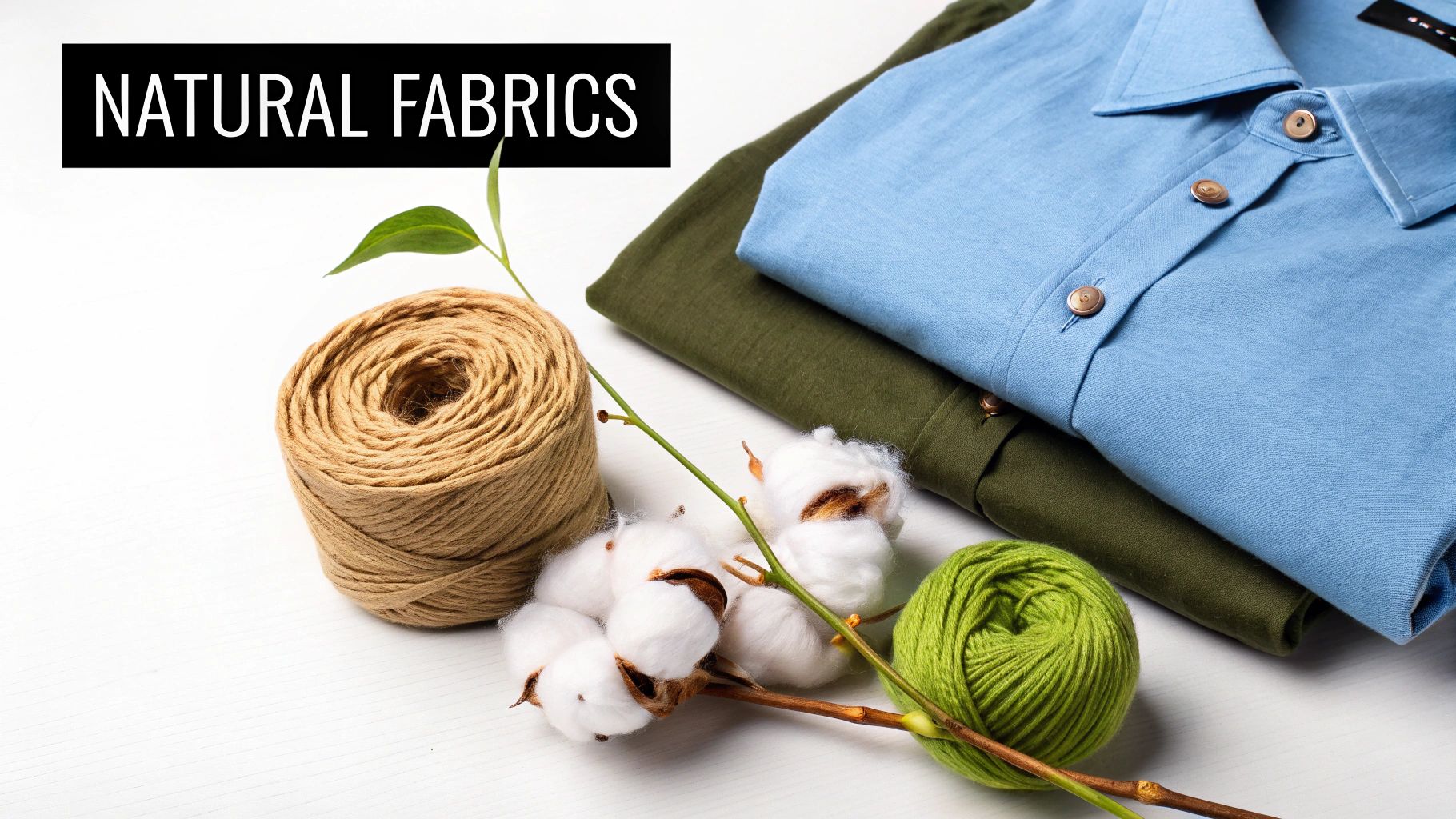
When you get into natural fabrics, you’re not just choosing a shirt; you're connecting with materials that come straight from the earth or from animals. These are the classics, loved for generations because they just feel right. They breathe, they’re comfortable, and they have a timeless quality that synthetics can’t quite match.
Every natural fiber brings its own unique character to the table. You've got the dependable workhorse in cotton, the breezy sophistication of linen, and the surprising performance of wool. Let's dive into what makes each one special.
Cotton: The Undisputed King of Comfort
There’s a reason cotton is the foundation of the apparel world. It’s soft, it breathes, and it’s incredibly versatile. This is the fabric behind your favorite tee and your sharpest dress shirt. Its ability to absorb moisture is a huge plus, wicking it away from your skin to keep you feeling fresh.
But here’s something most people don’t realize: not all cotton is created equal. The secret to a truly great cotton shirt lies in its staple length—that’s the length of the individual fibers. Think of it like coffee beans. You can make coffee with any bean, but the premium, single-origin beans are what create that rich, smooth flavor.
It's the same with cotton. Longer fibers spin into a yarn that's smoother, stronger, and noticeably softer. This is where the premium varieties really stand out.
- Pima Cotton: Grown mostly in the U.S., Peru, and Australia, Pima’s extra-long staple fibers result in a silky-soft yet incredibly durable fabric.
- Egyptian Cotton: This is the gold standard. Famous for having some of the longest fibers in the world, it creates shirts that are exceptionally luxurious and built to last.
Cotton’s dominance is staggering. By 2025, cotton is expected to make up 41.7% of all material used for digitally printed apparel. The global t-shirt market, valued at $46.99 billion in 2025, is built on the back of this fiber, with the US market alone projected to grow by 3.19% annually. You can dig into more of these numbers by checking out the t-shirt industry statistics on Printful.
Linen: The Effortlessly Cool Choice
If cotton is your reliable daily driver, linen is the classic convertible you pull out for a perfect summer day. Made from the fibers of the flax plant, it’s one of the oldest textiles we have, and we still love it for its incredible breathability and cooling feel.
Linen’s magic comes from its open weave, which lets air flow right through, making it the best friend you could ask for in hot, sticky weather. Those signature wrinkles? They’re part of its charm, giving it a relaxed, lived-in look that’s both elegant and effortless. It’s the perfect shirt for a beach wedding or just looking cool when the temperature spikes.
Linen's unique structure makes it highly absorbent and quick-drying. It can absorb a significant amount of moisture before feeling damp, which is why it feels so fresh and cool against the skin in the heat.
Merino Wool: The All-Season Performer
Forget everything you think you know about wool. The word might conjure up images of heavy, itchy sweaters, but Merino wool is a completely different animal. Sourced from Merino sheep, this fiber is so fine and soft that it’s comfortable enough to wear right against your skin.
The real genius of Merino wool is its natural ability to regulate your body temperature. The fibers create tiny air pockets that insulate you in the cold, but they’re also fantastic at wicking moisture to keep you cool and dry when you heat up. This makes it an amazing all-season fabric, perfect for everything from high-performance base layers to refined polo shirts.
Silk: The Pinnacle of Luxury
Nothing says luxury quite like silk. Produced by silkworms, this natural protein fiber has a smooth, soft texture that drapes beautifully without being slippery like many synthetic knock-offs. That subtle sheen and elegant flow make it a go-to for high-end blouses and formal shirts.
While it feels delicate, silk is surprisingly strong. It keeps warm air close to your body in cooler weather but is also absorbent enough to be comfortable when it’s warm. A silk shirt is a true investment piece—it brings a touch of sophistication that’s hard to beat, whether for a special occasion or just when you want to feel incredible.
Getting to Know Synthetic Shirt Materials
While we all love the classic feel of natural fabrics, synthetic materials bring their own unique set of superpowers to the wardrobe. These are the fabrics engineered in a lab, built from the ground up to solve specific problems. Think of them as high-performance gear designed for durability, moisture-wicking, and staying wrinkle-free.
If natural fibers are the sturdy, traditional building blocks like wood and stone, synthetics are the modern composites—often lighter, stronger, and custom-made for the job. Let's break down the most common synthetics you'll encounter and see why they’re so popular, especially for activewear and travel gear.
Polyester: The Durable Workhorse
When you think of synthetic fabrics, polyester is probably the first one that comes to mind. It's an absolute powerhouse, famous for being tough as nails, refusing to wrinkle, and drying in a flash. This makes it the go-to choice for workout clothes and any garment that needs to survive a lot of action.
What's its secret? Polyester fibers are hydrophobic, a fancy way of saying they hate water. So instead of soaking up sweat like a cotton tee, polyester pushes moisture away from your skin to the outside of the shirt, where it can evaporate. This is the "moisture-wicking" magic that keeps you dry during a workout.
- Key Strengths: Unbeatable durability, resists wrinkles and shrinking, and wicks sweat like a champ.
- Ideal For: Athletic gear, travel-friendly clothing, and uniforms that need to look crisp all day long.
- DTF Compatibility: Polyester is a fantastic partner for DTF transfers. It grabs onto color and detail, resulting in prints that are incredibly vibrant and sharp.
One of polyester's most underrated qualities is its colorfastness. Because the fibers are synthetic, they lock in dyes exceptionally well. This means your designs stay bright and bold, wash after wash, without the gradual fading you sometimes get with natural fabrics.
Nylon: The Resilient Powerhouse
Nylon first hit the scene in stockings and parachutes, which tells you everything you need to know about its strength and elasticity. It’s incredibly tough and resists scrapes and tears, making it perfect for outerwear and clothing meant for rough-and-tumble activities.
Like polyester, nylon is great at wicking moisture and drying quickly. The main difference is in the feel; nylon tends to be a bit softer and silkier to the touch. This makes it a popular pick for high-end performance polos and lightweight jackets where you get serious durability without the bulk.
Rayon: The Silky Impersonator
Rayon is the chameleon of the fabric world. It’s a semi-synthetic material made from natural sources like wood pulp, and it’s a master of disguise, able to mimic the feel of silk, cotton, or even linen. It beautifully bridges the gap between natural comfort and engineered performance.
The real standout feature of rayon is its drape. The fabric hangs gracefully, giving shirts a flowing, elegant look that you just can't get with stiffer materials. It's also exceptionally soft and surprisingly absorbent, which makes it feel great in warmer weather. The trade-off? Rayon is a bit more delicate and can wrinkle or shrink if you're not careful with how you wash it.
- Key Strengths: A luxurious, silky-soft feel, beautiful drape, and high absorbency.
- Ideal For: Fashion-forward blouses, flowy tops, and casual shirts where a premium feel is the goal.
- DTF Compatibility: Rayon can handle DTF transfers, but it needs a gentle touch. You'll want to use lower heat and pressure settings to avoid damaging the delicate fibers.
Spandex: The Stretch Specialist
Spandex, often known by its brand name Lycra, is the secret ingredient that gives modern clothing its comfortable stretch. This stuff is incredible—it can stretch up to five times its original size and snap right back into shape. You almost never see a shirt made of 100% spandex; it's the ultimate team player.
Even a tiny amount of spandex—just 2-5%—blended into cotton or polyester can completely change a garment. It adds that perfect amount of give, flexibility, and shape retention that lets your clothes move with you, not against you. It's the reason why everything from fitted t-shirts to dress shirts can offer a tailored look without feeling like a straightjacket. This blend is a perfect example of how different types of material for shirts are combined to create something better than the sum of its parts.
Why Fabric Blends Offer the Best of Both Worlds
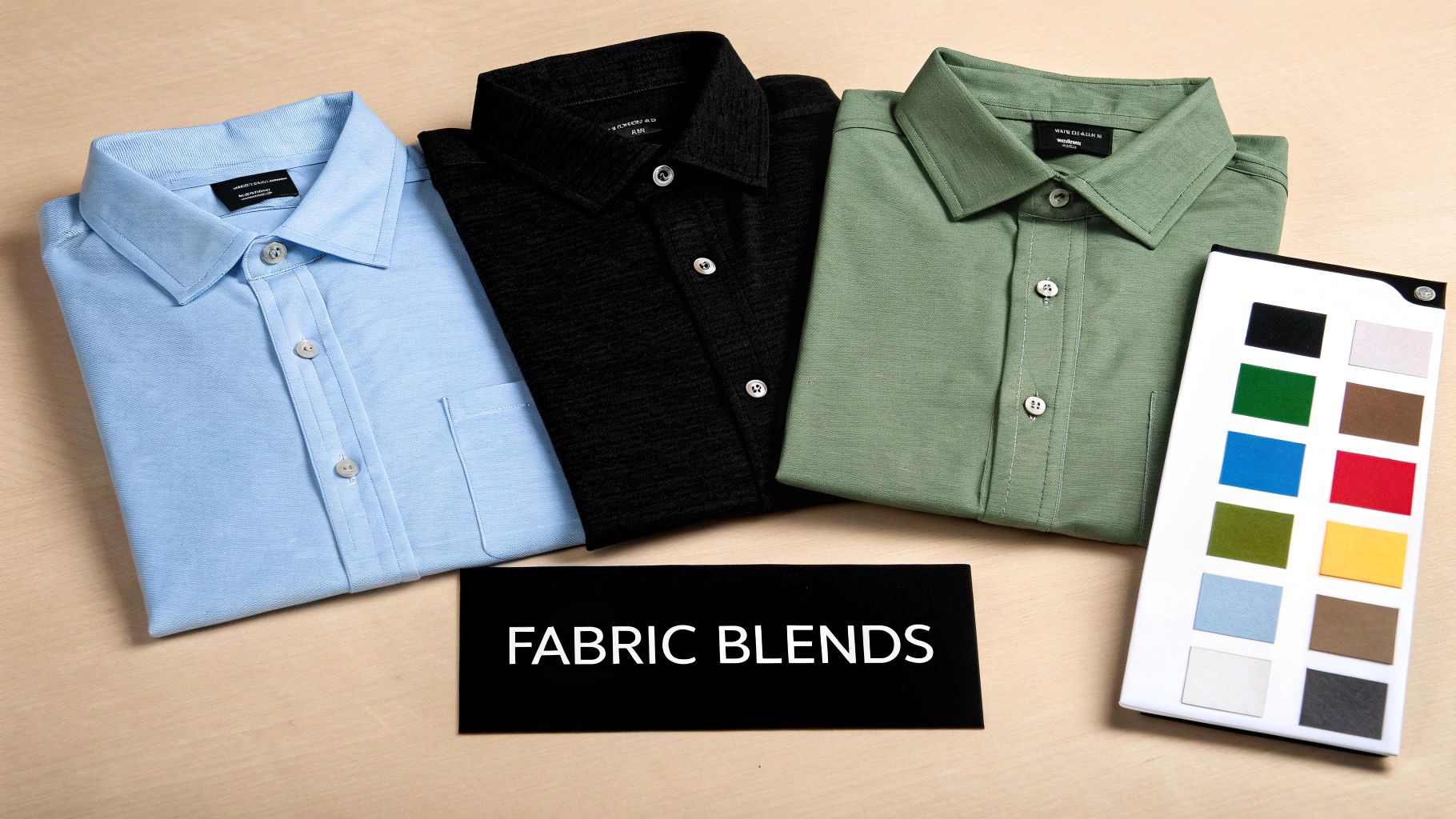
While pure natural and synthetic fabrics each have their place, the real sweet spot for everyday apparel is often found right in the middle. Blended fabrics are engineered to combine the strengths of different fibers, essentially canceling out their individual weaknesses. This teamwork creates materials that are simply more practical, versatile, and high-performing than what a single fiber can offer on its own.
Think of it like this: Cotton brings that incredible softness and breathability we all love, but it can wrinkle easily and takes forever to dry. On the other hand, polyester is tough, wrinkle-resistant, and durable, but it can sometimes lack that soft, natural feel. Mix them together, and you get a fabric that’s soft, breathable, strong, and easy to care for. It’s a true win-win.
The Classic Cotton-Polyester Blend
The most common blend you’ll run into is the classic cotton-polyester mix, usually in a 50/50 or 60/40 ratio. There's a good reason this blend is the backbone of the modern t-shirt and polo industry—it perfectly balances the comfort of cotton with the performance of polyester.
A cotton-poly shirt feels great against the skin, but it resists shrinking and wrinkling far better than a 100% cotton alternative. It also holds its shape and color exceptionally well through dozens of washes, making it a reliable workhorse for everything from company uniforms to your favorite weekend tee. If you want to get into the nitty-gritty of how these two materials compare, check out our detailed cotton vs polyester guide.
This blend also happens to be a fantastic canvas for custom printing. The polyester fibers help lock in dyes, so DTF transfers come out looking vibrant and stay that way.
By combining cotton's comfort with polyester's resilience, the cotton-poly blend offers a practical solution that delivers both feel and function. It's the reason why a blended polo shirt often outlasts and looks crisper than its all-cotton equivalent over time.
The Ultra-Soft Tri-Blend
Taking things a step further, tri-blends introduce a third fiber into the mix: rayon. The standard recipe is a cocktail of cotton, polyester, and rayon, and the result is a fabric famous for its ridiculous softness and luxurious drape.
Rayon is the secret sauce here. It adds a silky, lightweight quality that elevates a shirt from a basic garment to something that feels genuinely premium. Tri-blend shirts are incredibly comfortable and often have a subtle heathered look, giving them a stylish, vintage vibe right off the rack.
- Cotton: Provides that natural, breathable foundation.
- Polyester: Adds durability and shape retention, keeping the shirt from stretching out.
- Rayon: Contributes a silky smoothness and a flattering drape that hangs just right.
Because of that superior hand-feel, tri-blends are a go-to for fashion-forward brands and anyone on a quest to find the absolute softest t-shirt on the market.
Stretch Blends for Ultimate Comfort
Another incredibly popular and effective blend involves adding a small amount of an elastic fiber, like spandex (also known as Lycra), into a cotton or polyester base. It’s amazing what even a tiny percentage of spandex—often just 2-5%—can do for a garment.
This small addition introduces a comfortable stretch that lets the fabric move with you, not against you. It also gives the shirt fantastic shape retention, helping it bounce back to its original form instead of sagging or stretching out after a long day.
That’s why you’ll find stretch blends in everything from fitted athletic tops to modern dress shirts. It’s the key to getting a sharp, tailored look without sacrificing comfort and flexibility. The result is a shirt that looks crisp but feels as easy to wear as your favorite tee.
How Weave and Knit Define a Shirt's Character
Think of it this way: if cotton or polyester is the raw ingredient, the way it's put together is the recipe. You can have the best ingredients in the world, but the recipe determines whether you get a crispy cracker or a soft, fluffy cake. In the world of fabric, the two main "recipes" are weaving and knitting.
Understanding this distinction is the secret to knowing the different types of material for shirts. They start with the same yarn but end up as completely different fabrics with their own unique personalities.
The World of Woven Fabrics
Woven fabrics are all about structure and stability. Imagine a tiny, tight grid where threads interlace at perfect right angles. This construction creates a crisp, durable material that holds its shape exceptionally well.
Because the yarns are locked in place, woven fabrics don't have much natural give or stretch. This makes them the go-to choice for more formal garments like button-down dress shirts or structured jackets.
Here are a few common weaves you’ll run into:
- Poplin: This is your classic, go-to dress shirt fabric. It’s created with a simple over-under weave that results in a smooth, cool, and lightweight material that still feels surprisingly strong. It’s perfect for that sharp, professional look.
- Twill: You can always spot a twill by the faint diagonal lines running across its surface. This unique weave makes the fabric more durable and less prone to wrinkling than poplin. A classic flannel shirt is a great example of a soft, brushed twill.
- Satin: Known for its incredible sheen and buttery-smooth feel, a satin weave is made by "floating" yarns over several others at a time. This technique hides the interlacing points, which is what gives the fabric its signature glossy finish.
The Comfort of Knitted Fabrics
When it comes to comfort and flexibility, knitted fabrics are the undisputed champions. Instead of a rigid grid, knits are made from a single yarn looped together, kind of like a chain-link fence. This structure gives the fabric an inherent, natural stretch that moves with you.
It's no surprise that knits are the foundation of almost all casualwear, from your favorite t-shirt to a cozy hoodie.
The looped construction of a knit fabric creates tiny air pockets. This is a game-changer for comfort, as it helps the fabric breathe in the heat and provides a bit of insulation when it gets cool. It’s this built-in adaptability that makes knits so perfect for everyday apparel.
Let’s look at the two most popular knits you'll see everywhere:
- Jersey Knit: This is the t-shirt fabric. It's lightweight, incredibly soft, and has that familiar one-way stretch that makes it so comfortable. It provides an ideal smooth surface for custom designs, making it a perennial favorite for apparel printing. If you're hunting for the perfect blank, our guide on the best quality tee shirts for printing dives deep into choosing the right jersey tees.
- Pique Knit: Instantly recognizable by its textured, almost waffle-like pattern, pique is the classic choice for polo shirts. This unique knit structure offers fantastic breathability and is more durable than a standard jersey, giving polos a slightly more structured and elevated feel.
A Look at the Global Shirt Fabric Market
It’s one thing to know the different types of material for shirts, but it’s another to understand the massive global machine that produces them. The shirt in your closet didn't just appear out of nowhere; it's the end product of a vast, interconnected industry driven by trends, economics, and a growing environmental conscience.
One of the biggest waves hitting the industry right now is the push for sustainability. More and more, people are looking for fabrics that don’t take such a heavy toll on the planet, like organic cotton or polyester made from recycled bottles. This shift is forcing manufacturers to get creative with greener production methods, which directly impacts the fabrics we all have access to.
The Geography of Fabric Production
If you look at a map of textile production, you’ll see a clear center of gravity. The Asia Pacific region is the undisputed leader in the shirt fabric market, holding the largest share in 2023. This isn't surprising when you consider manufacturing giants like China and India, which have the infrastructure and skilled labor to produce fabric on a massive scale.
This dominance is set to continue, with the region projected to grow at a compound annual growth rate (CAGR) of 4.1%. North America is also a significant player, following with a respectable CAGR of 3.5%, largely fueled by the demand for high-end and custom apparel. For a deeper dive into the numbers, you can explore more findings on the global shirt fabric market.
This infographic gives a fantastic visual breakdown of how threads are turned into the two main types of fabric: woven and knitted.

As you can see, the same raw material can end up as a fabric with completely different characteristics, all depending on how it was constructed.
To make these categories even clearer, let's break them down into a quick-reference table. This will give you a bird's-eye view of how natural, synthetic, and blended fabrics stack up against each other.
Natural vs. Synthetic vs. Blended Fabrics at a Glance
| Fabric Category | Key Properties | Best For | Care Difficulty |
|---|---|---|---|
| Natural | Breathable, soft, absorbent, biodegradable | Everyday wear, hot climates, sensitive skin (e.g., cotton, linen) | Low to Medium |
| Synthetic | Durable, moisture-wicking, wrinkle-resistant, versatile | Athletic wear, performance apparel, fashion (e.g., polyester) | Low |
| Blended | Combines strengths of both, versatile, cost-effective | T-shirts, casual wear, workwear (e.g., poly-cotton, tri-blends) | Low to Medium |
This table simplifies the core differences, helping you quickly identify which fabric type aligns best with your needs, whether you're prioritizing comfort, durability, or a mix of both.
Your Role as a Conscious Consumer
So, what does all this global market talk mean for you? It means you can become a much smarter shopper. When you understand the forces shaping the industry—from sustainability movements to where fabrics are made—you can start asking better questions about the clothes you buy.
Your choices send a message to the market. Opting for shirts made from recycled materials or supporting brands with transparent supply chains contributes to a more responsible and sustainable fashion industry.
At the end of the day, knowing the story behind the fabric is empowering. It transforms a simple purchase into a considered choice, connecting your wardrobe to the bigger picture. This perspective is what separates a casual buyer from someone who truly understands the different types of material for shirts.
A Few Common Questions About Shirt Fabrics
When you start digging into the world of shirt materials, a lot of questions pop up. It's totally normal. You might wonder how to care for a delicate new shirt or what to buy for someone with sensitive skin. Getting these answers right helps you build a collection of clothes that don't just look good, but feel amazing and actually last.
Let's walk through some of the most common questions I hear. We'll clear up the confusion and give you the practical know-how to choose your next shirt with confidence.
What Is the Best Fabric for Sensitive Skin?
If you've got sensitive skin, your main goal is to find something that's soft, breathable, and won't cause irritation. In my experience, natural fibers are almost always the way to go.
100% Cotton is the undisputed king here. It’s naturally hypoallergenic, feels great against the skin, and lets air move freely, which stops that moisture buildup that often leads to rashes. For an even better experience, look for high-end varieties like Pima or organic cotton—their fibers are typically smoother and they're made with fewer harsh chemicals.
Linen is another fantastic choice, especially when it gets warm. Its naturally open weave is like built-in air conditioning, keeping you cool and dry. It might feel a little stiff right off the rack, but trust me, linen gets wonderfully soft after a few washes.
The Bottom Line: Stick with natural, breathable fabrics like cotton and linen. Try to stay away from rougher synthetics like some polyesters, which can trap heat and sweat right against your skin and cause problems.
Which Shirt Material Is Most Resistant to Shrinking?
There's nothing worse than pulling your favorite shirt out of the dryer only to find it's a size too small. If you want to avoid that frustration, synthetic fabrics are your best friend.
Polyester is incredibly stable. It’s engineered to resist shrinking and stretching, holding its shape even when you wash and dry it on high heat. Nylon is another solid performer, maintaining its size and form really well through countless laundry cycles.
Of course, blends offer a great compromise. A good cotton-polyester mix gives you the best of both worlds. The polyester lends its stability, dramatically cutting down on the shrinkage you’d get from a 100% cotton shirt. This makes them a super reliable and low-maintenance option for everyday wear.
How Should I Care for Delicate Fabrics Like Silk or Rayon?
Delicate materials need a little extra TLC to stay looking sharp. Silk and rayon are loved for their buttery-soft feel and elegant drape, but they can be easily ruined by a rough-and-tumble approach to laundry.
Here are a few tips I always follow:
- Hand Wash if You Can: This is the safest bet. Just use cold water and a mild detergent made for delicates. Gently swish the garment around, let it soak for a bit, and then rinse it clean.
- Use the Machine (Carefully): If you have to use a washing machine, pop the shirt into a mesh laundry bag first. Always choose the delicate cycle, cold water, and the lowest possible spin speed.
- Stay Away From the Dryer: The intense heat from a machine dryer is the enemy. It can cause permanent damage, shrinking the fabric or breaking down the fibers. Always hang or lay these pieces flat to air dry, preferably out of direct sunlight.
- Iron with Caution: If you need to iron, turn the shirt inside-out and use the lowest heat setting. For extra peace of mind, place a thin towel or cloth between the iron and the fabric itself.
Following these simple rules will help you keep your delicate shirts beautiful for years to come, so you can continue enjoying them.
Ready to bring your custom shirt designs to life on any fabric? At Cobra DTF, we provide high-quality, USA-made DTF transfers that deliver vibrant, lasting results on cotton, polyester, blends, and more. Explore our premium products at https://cobradtf.com and see the difference American-made quality makes.