
How to Start a Printed T Shirt Business: Step-by-Step From Scratch
So, you're thinking about jumping into the world of printed T-shirts? It’s a great move. Getting started is more straightforward than you might think, and you don’t need a massive investment to get off the ground anymore.
The whole process really boils down to a few key decisions: figuring out who you're selling to (your niche), deciding how you'll make the shirts (like using a service or printing in-house with DTF transfers), creating some killer designs, and then opening up your shop.
Your Launchpad for a Thriving T-Shirt Brand
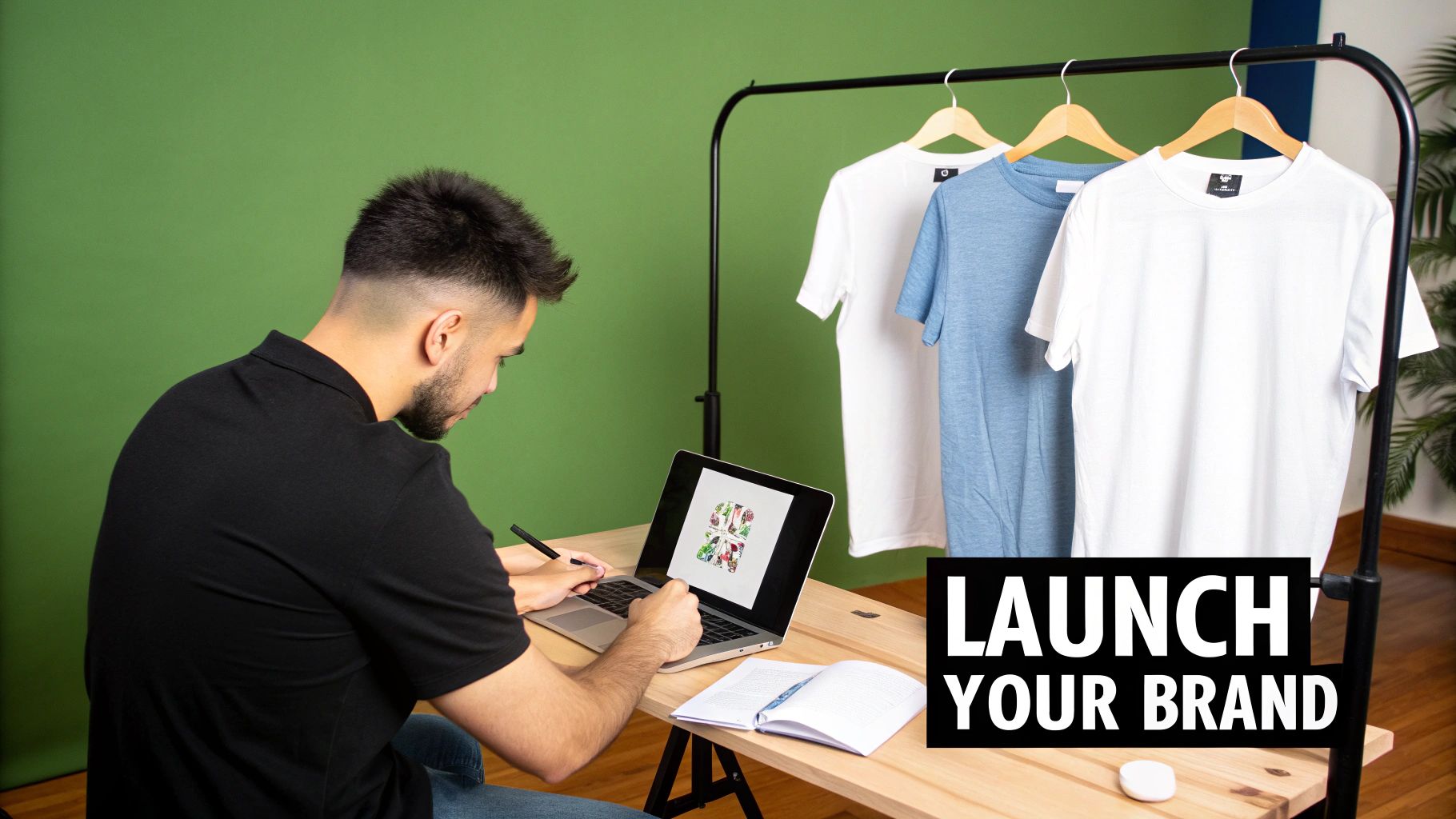
Starting a custom apparel brand can feel overwhelming, but this guide is designed to be your direct, no-fluff launchpad. We’re going to get right into the practical steps that actually matter when you're figuring out how to start a printed T-shirt business. Think of this as your roadmap from a simple idea to your very first sale.
And the good news? You're stepping into a market that's booming. Back in 2024, the global custom T-shirt printing market was already valued between $4.9 and $5.16 billion. Even better, experts predict it could nearly double to $9.82 billion by 2030. That kind of growth means there's plenty of room for new players, especially those who carve out a specific niche for themselves.
Laying the Groundwork for Success
Before you even think about firing up a heat press or sketching a design, you need a solid foundation. This is where you get real about who you want to sell to and how your business will actually run. A little planning now saves a ton of headaches and wasted money later.
For a really detailed look at this stage, our guide on creating a T-shirt printing business plan is a fantastic resource.
Here are the first things you need to nail down:
- Define Your Niche: This is huge. Instead of making generic shirts for "everyone," get specific. Think "T-shirts for rock climbers" or "funny designs for dog groomers." When you target a specific community, your marketing becomes a thousand times easier, and your customers become real fans.
- Choose Your Business Model: Are you going the print-on-demand (POD) route, where another company handles all the printing and shipping for you? Or do you want more control (and better profit margins) by printing in-house with something like Direct-to-Film (DTF) transfers?
- Sketch Out Initial Designs: You don't have to be a world-class artist. Honestly, some of the best-selling shirts are just clever text or simple graphics. What matters is that your designs connect with the niche you chose.
A strong brand is built on focus. It’s better to be the go-to shop for a small, passionate group than to be just another generic T-shirt store lost in the crowd. Your niche is your competitive advantage.
To keep you on track, here's a quick checklist of the essential first moves.
Quick Start T-Shirt Business Checklist
This table breaks down the crucial first phases of launching your brand. Think of it as your high-level game plan.
| Phase | Key Action | Why It Matters |
|---|---|---|
| 1. Ideation | Define Your Niche & Target Audience | Establishes who you're selling to, guiding all future design and marketing decisions. |
| 2. Operations | Choose a Business Model (POD vs. In-House) | Determines your startup costs, profit margins, and level of control over quality. |
| 3. Creation | Develop Your First Collection of Designs | Creates the actual product that will attract and resonate with your target audience. |
| 4. Setup | Build Your Online Store or Marketplace | Gives customers a place to find you, browse your products, and make a purchase. |
Getting these four pieces right from the start sets a strong foundation, making every subsequent step—from marketing to scaling—that much simpler.
Choosing Your Printing Method and Sourcing Materials
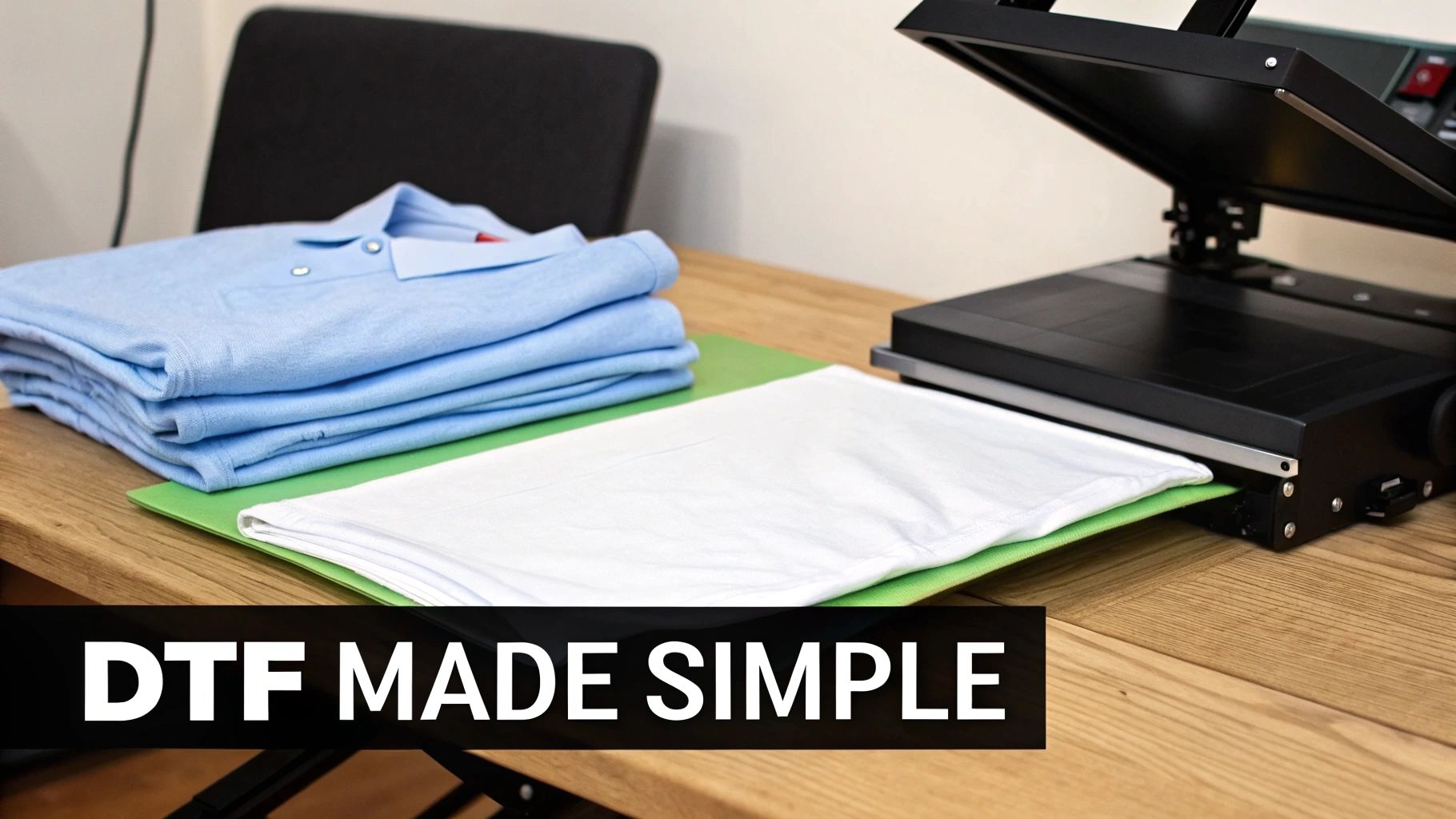
Alright, let's get into the engine room of your new business. The printing technology you choose is one of the biggest decisions you'll make. It directly impacts your startup budget, the quality of your shirts, your day-to-day workflow, and how quickly you can grow.
We’re going to look at the three main players in the T-shirt game: screen printing, Direct-to-Garment (DTG), and Direct-to-Film (DTF). Each has its pros and cons, but one, in particular, stands out for new entrepreneurs.
Comparing the Big Three Printing Methods
When you're figuring out how to start a printed T-shirt business, it's easy to get overwhelmed by the options. To make sense of it all, let’s break down exactly what each method means for you in the real world.
The choice isn't just technical; it defines your business model.
Printing Method Comparison Screen Printing vs DTG vs DTF
This table gives you a quick, at-a-glance look at how these three technologies stack up against each other. Think about what's most important for your business—is it low startup cost, design complexity, or bulk order efficiency?
| Feature | Screen Printing | Direct-to-Garment (DTG) | Direct-to-Film (DTF) |
|---|---|---|---|
| Best For | Large bulk orders (50+ units) of the same simple design. | Small batches, one-offs, and highly detailed, full-color designs. | Small-to-large orders, versatile fabric application, and vibrant colors. |
| Startup Cost | High (equipment for screens, exposure units, presses). | Very High (DTG printer costs can be $15,000+). | Very Low (can start with just a heat press for under $500). |
| Fabric Compatibility | Works on most fabrics but may require different ink types. | Best on 100% cotton; performance on blends varies. | Excellent on cotton, polyester, blends, and even hard surfaces. |
| Feel of Print | Can feel thick on the shirt, especially with many colors. | Very soft and breathable as ink soaks into the fabric. | Soft and flexible, but sits on top of the fabric. |
| Color/Detail | Limited colors per design; each color adds cost and complexity. | Unlimited colors and photorealistic detail are possible. | Unlimited colors, vibrant and sharp details. |
| Durability | Extremely durable; often outlasts the garment itself. | Good, but can fade over time with washing. | Excellent; very resistant to cracking, peeling, and fading. |
| Per-Unit Cost | Very low for large runs, but very high for small orders. | Moderate to high, especially for dark garments. | Low and consistent, regardless of order quantity. |
As you can see, each method has a sweet spot. Screen printing is the king of bulk, DTG excels at intricate one-offs on cotton, but DTF offers a powerful, flexible middle ground that's hard for a startup to ignore.
The DTF Transfer Advantage for Startups
For anyone just getting their feet wet, the DTF transfer model is a total game-changer. It lets you sidestep the biggest financial hurdle in this business: buying an expensive printer.
Instead of dropping $10,000+ on your own DTF machine, you simply partner with a supplier and buy pre-made transfers as the orders roll in. This turns a massive capital expense into a manageable, per-order variable cost.
Here's why this is such a powerful strategy:
- Bare-Bones Startup Costs: Your only essential piece of equipment is a quality heat press, which you can find for under $500.
- Zero Inventory Risk: You don’t have to tie up cash in printed shirts that might not sell. You order the transfers after you get paid by the customer.
- Pro-Level Quality From Day One: You get to offer prints made on commercial-grade machines without the headache or cost of owning and maintaining one.
- Unmatched Versatility: Print on anything! Light shirts, dark shirts, cotton, polyester, hats, hoodies, tote bags—it all works with the same transfer.
The real magic here is freedom. You can test dozens of designs without any financial risk. If a design sells, you order the transfer. If it doesn't, you haven't lost a dime.
If you're thinking about a hands-off approach, you can also explore a full-service model. We've put together a helpful resource on the best print-on-demand suppliers that handle everything from printing to shipping.
Sourcing Your Blank T-Shirts
Your print is only as good as the shirt it's on. The blank apparel you choose is the canvas for your art, and skimping here is a classic rookie mistake. A great design on a scratchy, ill-fitting shirt is a recipe for unhappy customers and no repeat business.
Start by looking into wholesale distributors that are friendly to small businesses. Big names like SanMar, S&S Activewear, and AlphaBroder are the go-to for many in the industry.
When you're comparing your options, zero in on these four things:
- Quality and Feel: Get your hands on some samples. Wear them. Wash them. Does the stitching hold up? Does it shrink into a belly shirt after one wash? A cheap shirt feels cheap, and it will make your brand feel cheap, too.
- Sizing and Consistency: Not all "Mediums" are created equal. Find a brand with a consistent fit that your target audience will appreciate. Nothing kills a sale faster than confusing sizing.
- The Right Fabric: With DTF, you’re free to use almost any material. Super-soft ringspun cotton, sporty polyester blends, and trendy tri-blends are all on the table. Think about who you're selling to. Are they looking for comfort, athletic performance, or eco-friendly options?
- Stock and Speed: Your new favorite shirt is useless if it's always out of stock. Check a supplier's inventory levels for your core styles and colors. Fast, reliable shipping is also critical for keeping your turnaround times competitive.
Getting the Business Side of Things Sorted
Alright, you've got your production method dialed in. Now it's time to tackle the "business" part of the T-shirt business. This stuff can feel a little dry, I know, but getting your legal and financial house in order from day one is non-negotiable. It's what separates a hobby from a real, sustainable company—and trust me, it'll save you a world of headaches down the road.
Let's break down what you actually need to do, without the confusing jargon. The first big decision is how you'll structure your business, which really comes down to how you want to handle taxes and protect yourself.
Choosing Your Business Structure
Think of this as building a firewall between your personal life and your business. It's a crucial step in protecting your personal assets. For most people jumping into the T-shirt game, it boils down to two main options:
- Sole Proprietorship: This is the default. If you just start selling shirts tomorrow without filing any paperwork, congratulations, you're a sole proprietor. It's dead simple, but it comes with a massive catch: there's no legal separation between you and the business. If someone sues your company, your personal assets—your car, your house—could be on the line.
- Limited Liability Company (LLC): This is the path most serious entrepreneurs take. An LLC creates a separate legal entity, shielding your personal assets from business debts and lawsuits. It costs a bit to set up and involves some paperwork, but that peace of mind is worth its weight in gold.
My two cents? Go with the LLC. It’s the sweet spot between simplicity and serious protection. Once you've made that call, you'll need to register your business name and check for any local permits you might need.
Estimating Your Startup Costs
"So, how much money do I really need to get this thing off the ground?" This is the million-dollar question, and the beauty of starting a T-shirt business today is that the answer is flexible. You can get started on a shoestring budget or go all-in.
The smartest way to start lean is by focusing on DTF transfers. This completely removes the need for a pricey printer upfront. Your biggest investment becomes a good heat press, which dramatically lowers the barrier to entry and gets you in the game faster.
Let's look at a couple of real-world budget scenarios:
1. The Lean DTF Transfer Model (Under $1,000)
This is the perfect way to start without breaking the bank. You're buying transfers on demand, not a giant machine.
- A Quality Heat Press: $300 - $600
- Your First Batch of Blank Shirts: $200
- Your First Order of DTF Transfers: $100
- Business Registration (LLC fee): $50 - $200
- E-commerce Platform (first month): $30
2. The Full In-House Print Shop Model ($5,000+)
This gives you total control but requires a much bigger pile of cash to get started.
- DTG or DTF Printer: $4,000 - $20,000+
- Heat Press: $300 - $600
- Bulk Blank Shirt Inventory: $1,000+
- Inks and Supplies: $500+
- Business & E-commerce Setup: $250+
Pricing Your T-Shirts for Actual Profit
Throwing a random price on your shirts is a surefire way to go out of business. To build something that lasts, you have to know your numbers inside and out. The most important number is your Cost of Goods Sold (COGS)—basically, what it costs you to make one finished T-shirt.
Your COGS is the sum of a few key things:
- The cost of the blank T-shirt
- The cost of your DTF transfer
- Your packaging (mailers, thank you cards, etc.)
- Payment processing fees
Let’s say a good blank shirt costs you $4.00, the DTF transfer for your design is $3.50, and packaging adds another $0.50. That means your total COGS is $8.00.
From there, a solid rule of thumb is to aim for at least a 50% profit margin. The simplest way to do that is to double your COGS. In this case, an initial retail price of $16.00 would be a solid starting point. But don't be afraid to go higher. If you've built a strong brand or are selling to a passionate niche, customers will happily pay $25 to $35 for a shirt they love. Price based on value, not just cost.
Building Your Brand and Online Store
A great design on a high-quality shirt is a fantastic start, but it’s only half the story. In the packed world of custom apparel, you need a brand that clicks with people and an online store that’s dead simple to use. This is where your creative spark becomes a real, tangible experience for your customers.
Your brand isn't just your logo. It’s the vibe of your business—the story you tell, the colors you pick, and the tone you use in your product descriptions and Instagram posts. A solid brand identity makes you instantly recognizable and builds a tribe of loyal fans who are here for more than just another tee.
Crafting a Memorable Brand Identity
Before you get bogged down in e-commerce platforms, take a step back and really nail down what your brand is all about. Who are you trying to reach? A brand that sells shirts to retired gardeners is going to feel completely different from one that’s all about teenage skateboarders.
Focus on these core pieces first:
- Logo Design: Simple is almost always better. It needs to be scalable and make sense for your niche. Remember, this logo is going everywhere—your website, social media, maybe even your shipping mailers—so it has to look sharp at any size.
- Color Palette: Pick two or three main colors that set the mood. Are you going for bold and high-energy (think bright reds and oranges)? Or are you more calm and eco-conscious (earthy greens and browns)?
- Brand Voice: How do you sound when you talk to your customers? Witty and a bit sarcastic? Or maybe you're more inspirational and uplifting? Whatever you choose, keep it consistent across the board.
Your brand is your promise. It tells people what to expect from your products and sets you apart from the crowd. Think of it as your most valuable asset.
Choosing Your E-Commerce Platform
Once you have a feel for your brand identity, it’s time to build your digital home base. This is the central hub for your entire operation, so picking the right platform is a huge decision. Most people land on one of these three.
| Platform | Best For | Pros | Cons |
|---|---|---|---|
| Shopify | Entrepreneurs wanting a powerful, scalable, all-in-one solution. | Super easy to use, massive app store, highly customizable. | Monthly fees can add up over time. |
| WooCommerce | People who want total control and already use WordPress. | It's free (but you need hosting), endlessly customizable. | Steeper learning curve, you're on your own for management. |
| Etsy | Beginners who want to tap into a huge, ready-made marketplace. | Built-in audience of millions, incredibly simple setup. | Fierce competition, less brand control, transaction fees. |
For most people just starting a T-shirt business, Shopify is the way to go. It hits that sweet spot between being incredibly user-friendly and packed with powerful features. You can realistically get a professional-looking store up and running in a weekend without knowing a lick of code.
Setting Up Your Store for Sales
Okay, you've picked your platform. Now the real fun begins. Building your store is more than just uploading a few products; it's about creating a smooth, trustworthy shopping experience that turns casual browsers into paying customers.
Think of your product pages as your digital salespeople. They have to be compelling. Killer visuals are non-negotiable, and learning the ropes of good t-shirt product photography can seriously level up your brand's look. You don't need a pro studio—good lighting and a clean background can work wonders.
Next, write product descriptions that actually sell. Don't just list the specs. Tell the story behind the design. Who is this shirt for? What kind of feeling does it give them? Use that brand voice you defined earlier to make a real connection.
Finally, make the checkout process as painless as possible. Get your payment options like Stripe and PayPal set up, and be crystal clear about your shipping policies. A clunky or confusing checkout is the #1 killer of sales. Keep it clean, fast, and transparent to build trust and turn first-time buyers into repeat customers.
Mastering Your Operations and Fulfillment
Your brand is live, your store is open—now comes the real work: getting those custom T-shirts into your customers' hands. This is where the pros separate themselves from the hobbyists. A smooth, repeatable workflow isn't just about efficiency; it ensures every single customer gets the same high-quality product and experience, which is the secret sauce for earning five-star reviews and repeat business.
Let’s walk through the entire process, from the moment a customer clicks "buy" to the second that perfectly packaged tee lands on their doorstep. Think of this as the engine that powers your entire T-shirt business.
From Order Alert to Heat Press
That "New Order" notification is a great feeling, but it's also the starting gun for your fulfillment process. The name of the game here is accuracy and efficiency. Every wasted movement or misused material cuts directly into your profits, which is why having a standard operating procedure (SOP) is non-negotiable, even if you’re a one-person show.
Here’s what a simple, battle-tested workflow looks like:
- Order Review: First thing's first, pop open the order and check the details. What design, size, and shirt color did they pick? Does the shipping address look right?
- Inventory Check: Head to your stock and pull the correct blank T-shirt. This is the first tangible step in bringing that digital order to life.
- Transfer Ordering: If you don’t have the DTF transfer on hand, now’s the time to order it from your supplier. This on-demand model is a massive advantage for your cash flow.
- Prep the Press: While you wait for the transfer to arrive, get your heat press ready. Fire it up and set the temperature and time according to your supplier’s specific instructions. Don't guess on this!
This methodical approach helps eliminate mistakes and keeps you organized, especially when you start getting multiple orders a day. A solid workflow is the bedrock of a business that's built to scale. For a deeper look at keeping your stock lean and mean, check out our guide on inventory management best practices.
The Speed Advantage of Domestic DTF Suppliers
Let's face it, customers today are spoiled by Amazon-level speed. They don't just want their stuff; they want it now. Market research shows fast turnarounds are a huge factor for custom T-shirt buyers, who often expect delivery in just a few days.
This is where you can really shine. By using USA-based DTF transfer suppliers that ship within 1–3 days, you can realistically get a finished shirt out the door within the same week. This gives you a massive leg up on competitors who are stuck waiting 2–3 weeks for international shipments. You can jump on trends instantly and absolutely delight your customers with your speed.
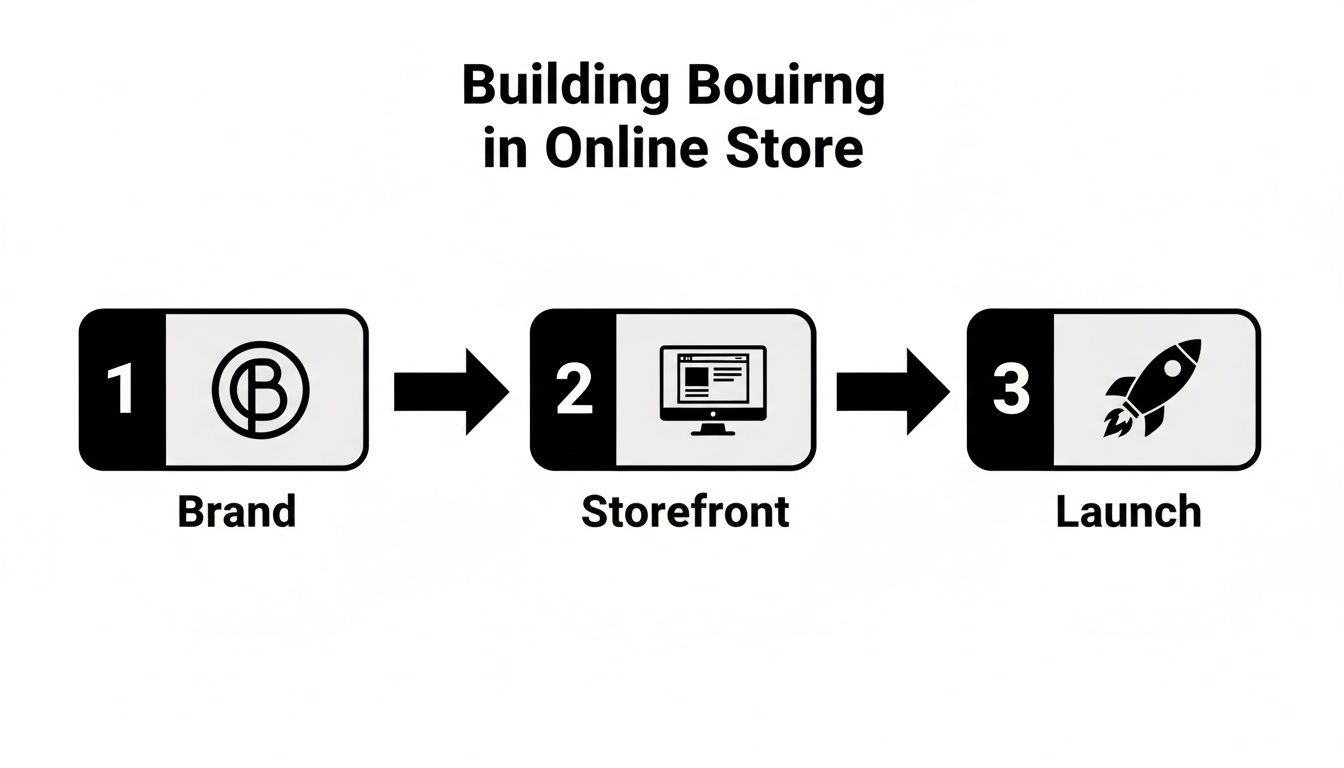
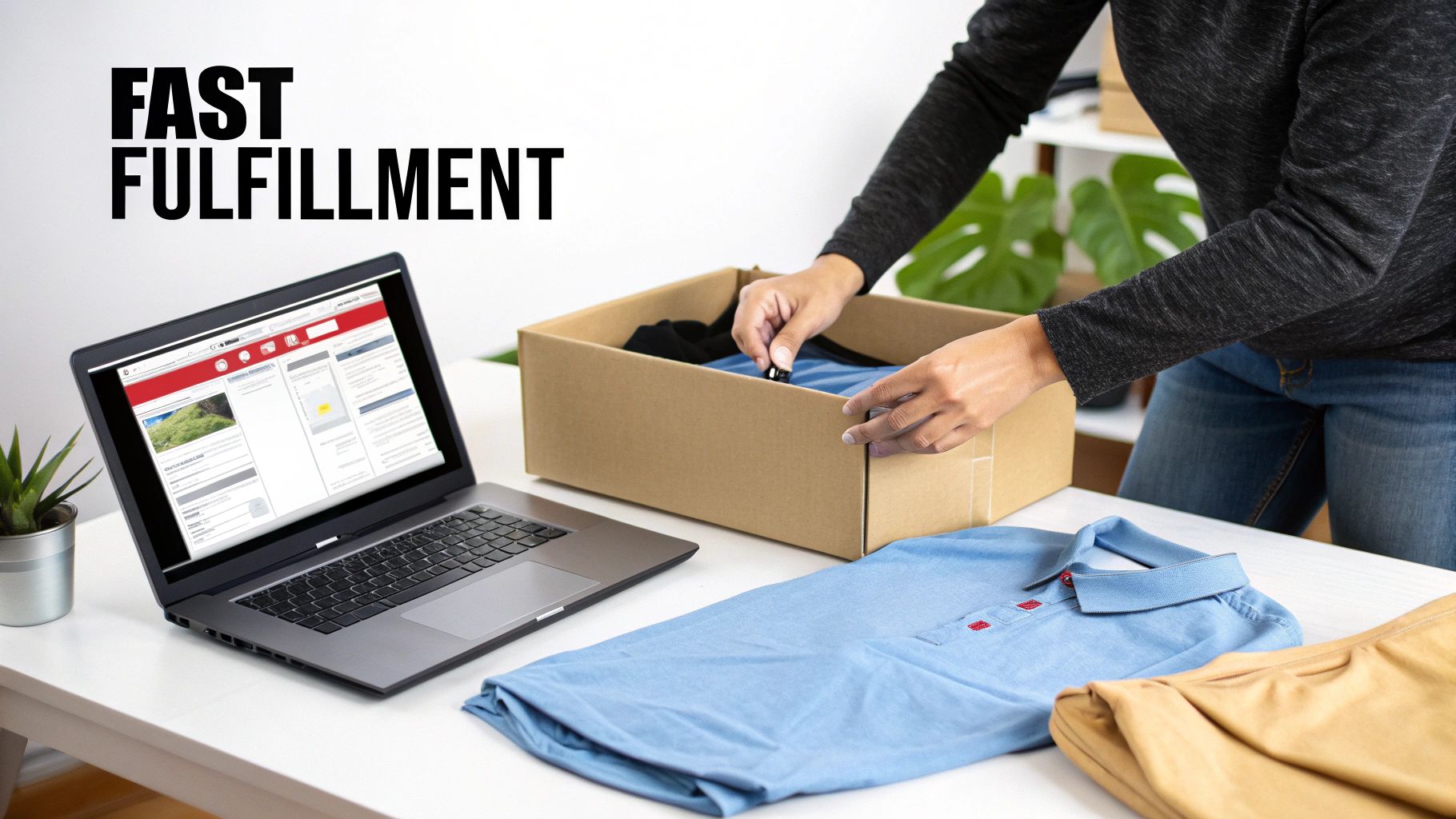
As this shows, it's all about building a solid brand, a great-looking store, and then launching with confidence because you know your operations can back it up.
Pro Tip: Your ability to get a quality product into a customer's hands quickly is a powerful marketing tool in itself. Fast shipping is one of the most common things people mention in positive reviews, and it builds immediate trust in your brand.
Packaging, Shipping, and Customer Service
You're on the home stretch, but don't get sloppy now. The final steps are just as critical as the first because this is the last impression you'll make. A great unboxing experience can turn a one-time buyer into a lifelong fan.
Packaging and Presentation
Anyone can stuff a shirt in a plain bag. You're better than that.
- Good Mailers Matter: Poly mailers are the standard—they're lightweight and tough. As you grow, consider getting some with your logo on them.
- Add a Personal Touch: A simple, hand-signed "thank you" card or a branded sticker costs pennies but makes a huge impact. It shows there's a real person behind the business.
- Include Care Instructions: Pop in a small card explaining how to wash and dry the shirt to keep it looking great. It shows you care about the product long after the sale.
Choosing a Shipping Carrier
For most domestic orders under a pound, you probably can't beat the rates from USPS. If you're using a platform like Shopify, you get access to discounted shipping labels that are way cheaper than paying at the post office counter. Always, always provide a tracking number. It reduces customer anxiety and cuts down on "Where's my order?" emails.
Handling Customer Inquiries
Great customer service is your secret weapon against the big guys. Respond to emails and social media DMs quickly and professionally. If a customer has an issue—maybe they ordered the wrong size or an item arrived damaged—handle it with grace. A clear, fair, and easy-to-find return policy on your site builds trust and makes people feel safe buying from you. Sometimes, a super-smooth return process can actually win you more loyalty than a perfect first order ever could. For a practical guide on this, learn how to manage inventory for small businesses, which is key to handling returns and exchanges smoothly.
Common Questions About Starting a T-Shirt Business
Diving into any new business is going to come with a few big questions. When you’re figuring out how to get a printed T-shirt business off the ground, those questions usually come down to cost, creativity, and customers. Let's tackle the big ones head-on so you can move forward with confidence.
Think of this as your no-nonsense Q&A for getting past those initial roadblocks.
What Does It Really Cost to Get Started?
This is always the first question, and the answer is surprisingly flexible. Your startup cost is completely tied to the business model you pick. You definitely don’t need a massive bank loan to get your foot in the door.
-
The Lean DTF Transfer Model (Under $1,000): Honestly, this is the smartest way for most people to start. Your main costs will be a quality heat press ($300-$600), a starter pack of blank shirts, your first order of DTF transfers, business registration fees, and maybe a basic e-commerce subscription.
-
The Full In-House Production Route ($5,000 to $20,000+): If you’re dead set on owning the entire production line with your own DTG or screen printing equipment from day one, the price tag jumps dramatically.
The best advice I can give is to start lean. The DTF transfer model keeps your financial risk incredibly low, letting you reinvest your profits and grow the business naturally.
Do I Need to Be an Artist to Create T-Shirt Designs?
Absolutely not. While being a great artist is a nice bonus, it's far from a deal-breaker. Success in this game is much more about having a good eye for what your audience wants than it is about being able to draw it yourself.
You have plenty of options for sourcing killer designs:
- Hire Freelancers: Platforms like Fiverr and Upwork are full of talented designers who can turn your ideas into reality for a pretty reasonable price.
- Buy Pre-Made Designs: Creative marketplaces are goldmines for commercially licensed graphics and design packs you can use or adapt.
- Lean into Text: Some of the best-selling shirts are all about clever text. You can easily create these yourself with beginner-friendly tools like Canva.
Your role is to be the creative director, not necessarily the hands-on artist.
The most important skill isn't illustration; it's curation. Knowing what your niche wants to wear is way more valuable than being able to design it yourself.
What’s the Most Profitable Niche for a T-Shirt Business?
There’s no single magic answer here, but the most successful niches are almost always super specific and serve a passionate community. Trying to sell "funny T-shirts" is just too broad—you'll get lost in the noise.
The real money is in the details. Instead of a general store, you need to drill down.
- Hobbies and Passions: Think "shirts for vintage camera collectors" or "designs for urban gardeners." These people are obsessed with their interests.
- Professions: People take pride in their work. "Funny T-shirts for librarians" or "designs for veterinary technicians" can be huge hits.
- Local Pride: City, state, or even neighborhood-themed gear always has a built-in audience ready to buy.
Spend some time digging around on social media, Etsy, and Reddit. You'll quickly find underserved communities with a ton of demand and way less competition.
How Do I Handle Copyright and Trademarks?
This is one area where you absolutely cannot cut corners. Using copyrighted or trademarked stuff without permission is the fastest way to get a nasty legal letter.
The rule is simple: you cannot use logos, characters, or phrases you don't own. This means no sports team logos, no movie characters, no famous brand names, and no song lyrics. Period.
To keep yourself safe and build a brand that lasts, just stick to these rules:
- Create 100% original artwork.
- Use images and fonts from the public domain.
- Purchase commercial licenses for any stock graphics or fonts you use.
When in doubt, just don't use it. Focusing on your own unique creativity is not only the safest path—it’s also the most rewarding.
Ready to get started with professional-grade quality from day one? At Cobra DTF, we provide vibrant, durable, USA-made DTF transfers that let you launch your business with just a heat press. Enjoy fast, 1-3 day shipping and the confidence that comes with American-made quality. Explore our products and start building your brand today at https://cobradtf.com.