

How Long Do DTF Transfers Last? a Complete Durability Guide
A well-applied DTF transfer typically lasts 50 to 80 wash cycles, while high-quality materials and proper care can push that lifespan well beyond 100 cycles. Poor application or harsh laundering can shorten the life considerably, sometimes reducing it to 20 to 40 washes.
You've probably seen the complaint arrive before you've finished the morning's orders: “The shirt looked perfect, but the print started peeling after washing.” The customer may attach a photo showing a lifted corner, a faded color, or a design that feels rougher than it did on delivery. From their perspective, the transfer failed. From a printer's perspective, the cause could be the adhesive, curing, fabric, press settings, washing method, or drying temperature.
The useful question isn't just whether DTF lasts. It's what conditions allow it to last, and whether the garment itself will remain wearable long enough to outlive the decoration. Wash-test evidence offers a more practical way to answer both questions.
The Customer Complaint That Changes Everything
A customer brings back a favorite shirt, points to one cracked area, and says it failed after only a few washes. They are not assessing film composition or curing. They are judging the money spent, the garment's appearance, and whether they can trust the next order.
That complaint often reveals a process gap rather than a single defective transfer. A design can leave the shop looking excellent, then develop lifting or cracking after heat, water, tumbling, and stretching expose a weak adhesive bond. The printer must trace the failure through the transfer, fabric, press settings, application pressure, and care instructions.
Practical rule: A print that looks good immediately after pressing has not proven its durability.
A wash test should begin before the customer reports a problem. Recent testing has shown that a transfer can remain visually clean while the shirt shrinks, loses its shape, thins, or no longer fits properly. That distinction changes the complaint you need to investigate. Print failure is visible, but garment failure can end the product's useful life first.
The transfer's lifespan still depends on the production and care conditions. Material quality, artwork size, fabric flexibility, press setup, laundering, and drying all change the stress placed on the design. A left-chest logo on a sturdy shirt faces different demands from a large graphic on a flexible garment that is worn and washed constantly. The DTF transfer durability guide provides useful background, but your own workflow needs its own testing.
Reduce complaints by setting expectations around the complete product. Explain that print durability depends on application and care, provide instructions customers will follow, and inspect the garment as closely as the transfer. Test samples through repeated washing before shipping production orders. That process shows whether the weak point is the print, the garment, or both.
Rethinking DTF Longevity and Garment Failure
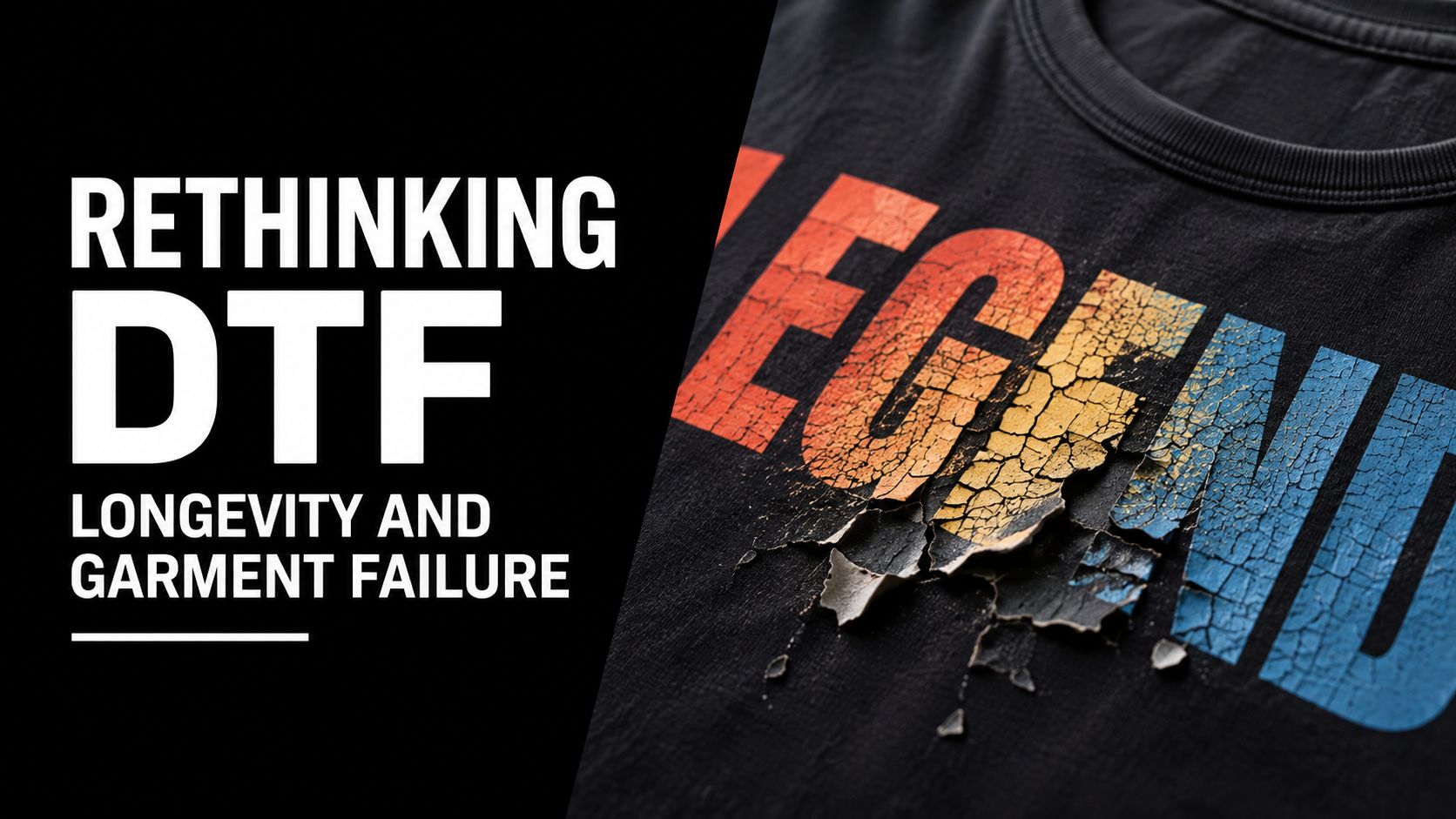
DTF failure is commonly defined as cracking, peeling, or fading. Those are genuine print problems, but they're only one part of garment longevity. A shirt can become misshapen, shrink, thin out, or lose its original fit while the transfer remains bonded and visually clean.
A 2026 wash test reported that a DTF transfer still looked clean after 100 wash cycles, while the shirt itself shrank by about two inches during those cycles, as documented in the 100-wash DTF test results. The result changes how printers should evaluate durability. The decoration survived the laundering process, but the garment no longer had the same dimensions.
Print degradation and garment wear are different failures
Print degradation affects the decoration itself. You'll see:
- Fading: Color loses intensity after repeated washing or exposure to harsh conditions.
- Cracking: The ink film breaks as the garment flexes, stretches, or experiences abrasion.
- Peeling: The adhesive bond weakens, often beginning at an edge or poorly pressed area.
- Surface wear: Friction gradually changes the finish of the printed design.
Garment wear affects the base textile. Seams can weaken, fabric can become thin, and repeated laundering can alter the shirt's size or shape. A customer may stop wearing the item because it no longer fits properly even though the print still looks acceptable.
Why the garment may fail first
A well-cured transfer creates a flexible bond with the fabric. If the printer uses suitable materials, applies even heat and pressure, and the customer avoids excessive heat and abrasion, the print can remain intact through substantial use. The textile still has to endure every wash, dry cycle, stretch, and movement around the design.
That's why wash counts shouldn't be treated as the only measure of value. A transfer that remains attractive after extensive laundering has done its job, even if the garment eventually changes shape. For customer conversations, distinguish between the service life of the print and the service life of the garment. That distinction produces more honest expectations and helps identify the true cause when a complaint arrives.
The Five Factors That Dictate Transfer Lifespan
A durable transfer depends on several linked decisions. A strong-looking graphic can still fail early if the ink, film, curing, fabric, or care routine is mismatched.
Ink quality
Ink must flex with the garment while holding its color through laundering. Inconsistent ink can make the design look dull sooner and leave a surface that feels brittle. Inspect the finished transfer after pressing, not just the artwork on the film. A print that looks clean before application may reveal weak stretch or poor color retention only after bonding.
Film composition
Film controls how the printed image and adhesive release during application. Consistent film helps the adhesive spread across the design instead of leaving thin or weak areas. Those weak areas often become the first places to lift, particularly around fine details and exposed edges.
Curing
Curing gives the adhesive time and heat to form the bond required for regular wear. Check powder coverage and heating consistency before blaming the press or garment. Bare spots, clumped powder, or uneven curing across the sheet are warning signs that the bond may vary within one graphic.
Use a fingernail lift test at an unchecked edge before shipping the garment. If the edge lifts easily, bonding is incomplete and a final press should not be treated as a guaranteed repair. Apply a final press only when the transfer supplier's instructions call for it, then retest the edge.
Fabric type
Fabric changes how the transfer stretches, flexes, and responds to heat. Cotton, blends, polyester, and performance materials can behave differently under the press and during washing. Smooth, treated, or highly elastic fabrics deserve a sample test before a large order, because the garment may limit practical service life even when the transfer itself remains intact.
For a practical starting point, review this guide to choosing the best shirts for DTF. Match the fabric surface and stretch to the transfer and the customer's intended use rather than searching for one universal shirt.
Post-application care
Care controls the abrasion and heat stress applied after production. Cold washing, gentle cycles, inside-out laundering, and low-heat or air drying reduce strain on the ink film compared with harsh washing and high-temperature drying.
For shop owners, troubleshoot the full process after a failure. Check the artwork, garment, press surface, temperature, pressure, dwell time, curing, and care instructions. A repeatable workflow prevents more returns than a last-minute reprint policy, and it also shows whether the garment failed before the print did.
What the Wash Tests Really Tell Us
A wash test should measure two failures, not one: the transfer's condition and the garment's condition. A design can remain bonded while the shirt shrinks, twists, pills, or loses its shape. Customers often call that a print failure because the finished garment no longer looks right, even though the transfer film is still intact.
Available testing gives a useful range rather than a promise. A well-applied transfer may withstand about 50 to 80 wash cycles, and some prints retain about 90% color vibrancy through 50 cycles under suitable conditions. Another report describes black DTF prints still looking fresh after approximately 52 washes, while separate testing found no cracking or peeling after about 20 washes. These results appear in this DTF durability and case-study report.
| Test variable | What to record | Why it matters |
|---|---|---|
| Fabric type | Cotton, blend, polyester, or performance fabric | Stretch, heat response, and shrinkage can change the result |
| Garment placement | Chest, sleeve, back, or seam-adjacent area | Movement, rubbing, and seam pressure vary by position |
| Wash method | Water temperature, cycle, detergent, and drying method | Heat and abrasion can accelerate visible wear |
| Inspection points | Adhesion, edge lift, cracking, fading, and garment shape | Separates transfer failure from garment failure |
The reported ranges in the DTF transfer durability guide and 2026 wash-test guidance work best for setting expectations. They cannot account for every fabric, artwork size, press setup, or laundry routine.
Translating wash cycles into everyday use
Suppliers sometimes estimate that roughly 50 wash cycles may represent around 1 to 3 years of normal casual wear, depending on wear frequency and laundering, according to the industry durability report cited earlier. Calendar life therefore says less than the garment's actual workload.
A frequently worn work shirt faces repeated friction, sweat, stretching, and drying heat. An occasional fashion shirt may see far less stress. The same transfer can perform differently because the garment fails first through shrinkage, distortion, or surface wear.
The pattern behind early failures
Early failure usually indicates a process or care problem. Incomplete curing, weak adhesive or film, uneven pressure, and harsh laundering all raise the risk. Test the exact combination sold, including transfer, fabric, artwork coverage, placement, and pressing workflow.
Record both the print and the garment after each inspection. Give customers clear DTF washing instructions that match the tested conditions. A transfer that survives while the shirt deforms is still a poor customer outcome, so quality control must judge the whole garment.
How to Maximize DTF Transfer Life
Long-lasting results start before the garment reaches the washing machine. Printers need a controlled application process, and customers need instructions that are clear enough to follow without special equipment.
Stage one application
Start with a clean, dry garment. Lint, moisture, seams, zippers, and uneven surfaces can interfere with contact between the transfer and fabric. Position the artwork carefully, then use the supplier's specified temperature, pressure, and press time rather than relying on appearance alone.
After the initial press, follow the recommended peel method and inspect the design. Look for incomplete adhesion, raised edges, or areas that didn't receive even pressure. If the transfer instructions call for a second press, use a protective sheet and complete that step. A second press can help secure the ink and adhesive layers.
For detailed guidance on DTF heat-press settings, keep a written setting sheet beside the machine. That makes it easier to reproduce a successful result across different operators and garment types.
Stage two washing
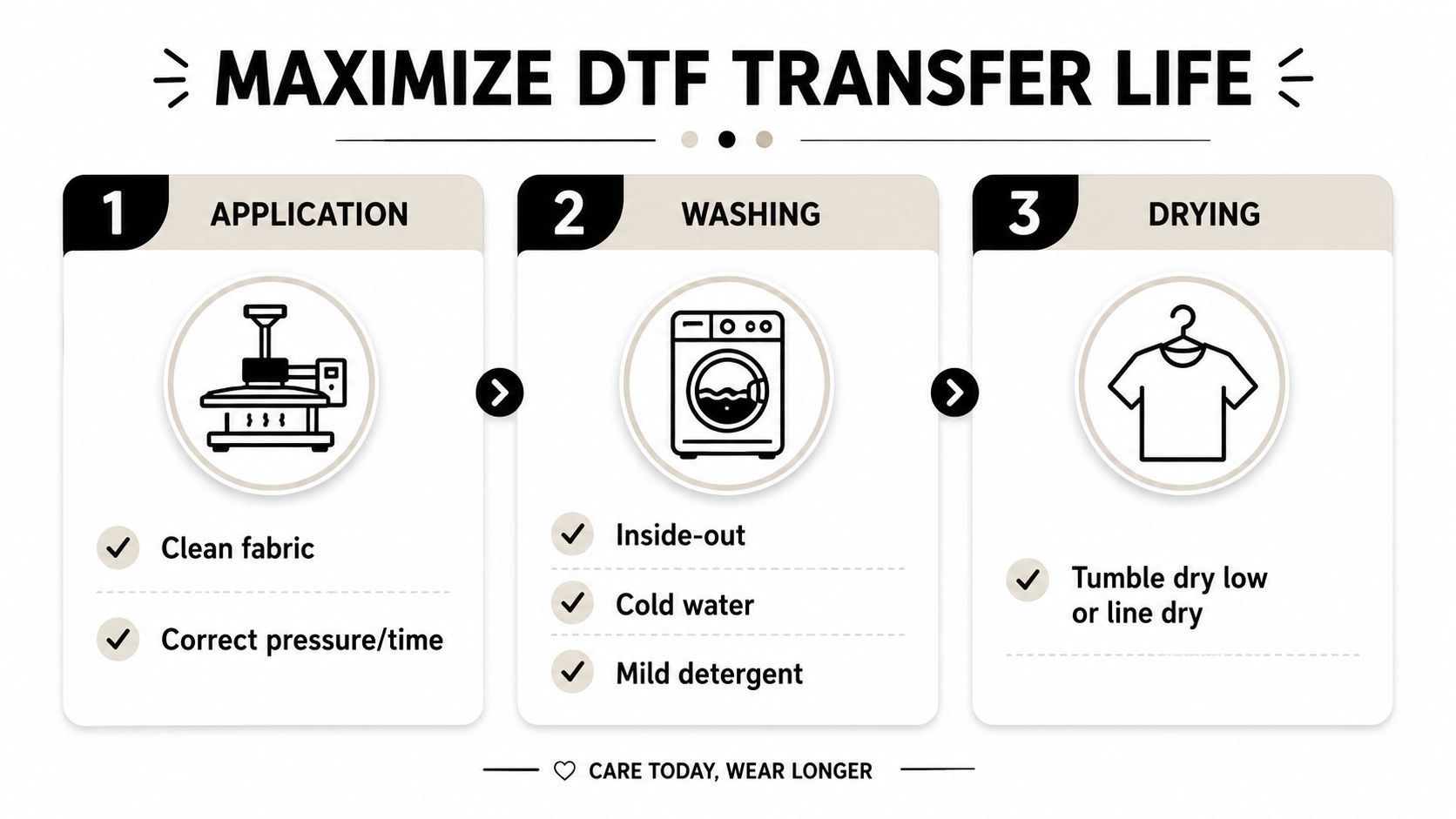
The customer's laundry routine can either preserve the transfer or accelerate wear. Recommend washing the garment inside out in cold water on a gentle cycle. This reduces direct rubbing between the design and the washer drum, other garments, and detergent-loaded water.
A short care card should say exactly what to do:
- Turn it inside out before placing it in the machine.
- Use cold water and a gentle cycle.
- Choose mild detergent and avoid scrubbing directly over the design.
- Don't use bleach on the decorated area.
- Avoid soaking the garment for extended periods.
You can point customers to these DTF washing instructions after delivery. Clear instructions reduce the chance that a customer treats a decorated shirt like a heavily soiled work rag.
Stage three drying
High heat creates unnecessary stress on the ink film and adhesive. Air drying is the gentlest option. If a dryer is necessary, use low heat and remove the garment before excessive over-drying.
Don't iron directly over the transfer. If pressing is needed after washing, turn the garment inside out or place a protective sheet between the iron and print. These small habits protect the surface from direct heat and friction.
For printers, document the complete workflow and test new garments before scaling. For customers, the message is simple: wash gently, reduce direct abrasion, and avoid high heat.
Common DTF Durability Myths Debunked
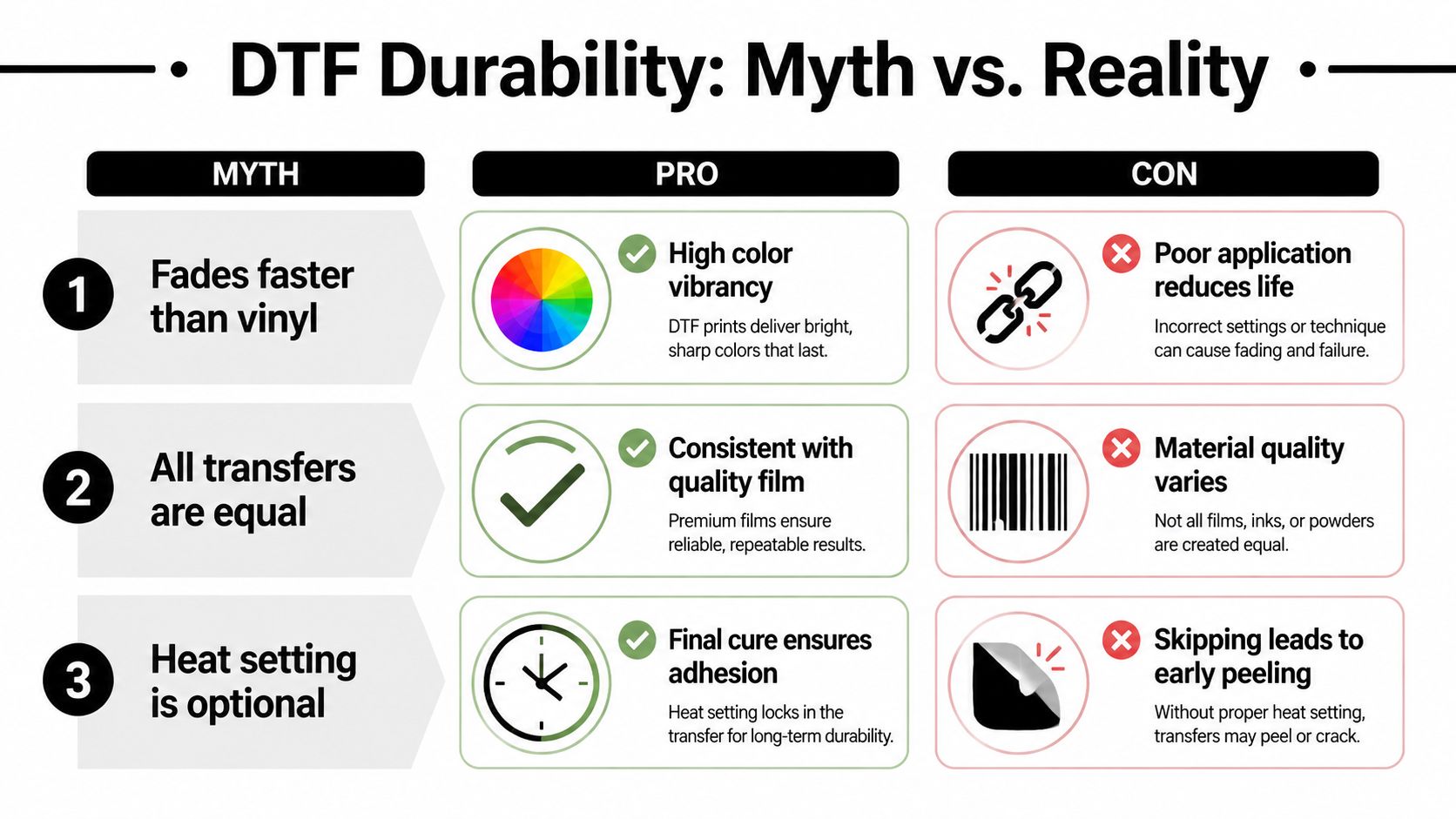
Myth one, DTF always fades faster than vinyl
That comparison is too broad to be useful. DTF durability depends on materials, curing, application, fabric, and care. A properly applied transfer can retain strong color and resist cracking through repeated laundering, while a poorly applied decoration of any type can fail early.
The relevant question isn't which method wins in every situation. Ask whether the selected process suits the artwork, fabric, expected movement, and care routine.
Myth two, all DTF transfers are equal
They aren't. Film, ink, adhesive, curing, and production consistency all affect the finished bond. Two transfers can carry the same artwork yet perform differently if one uses a weaker adhesive layer or receives incomplete curing.
The DTF durability guidance identifies incomplete curing and low-quality film or adhesive among the main causes of early cracking and peeling. Material selection matters, but so does the operator's process.
Myth three, wash count tells the entire story
A wash count measures laundering exposure, not the complete life of the product. It doesn't tell you whether the garment shrank, lost its shape, became uncomfortable, or suffered abrasion from daily work.
The 100-wash test cited earlier is the clearest reminder. The print remained clean while the shirt changed size. Evaluate print condition and garment condition separately, then explain that distinction to customers.
Investing in Lasting Quality for Your Business
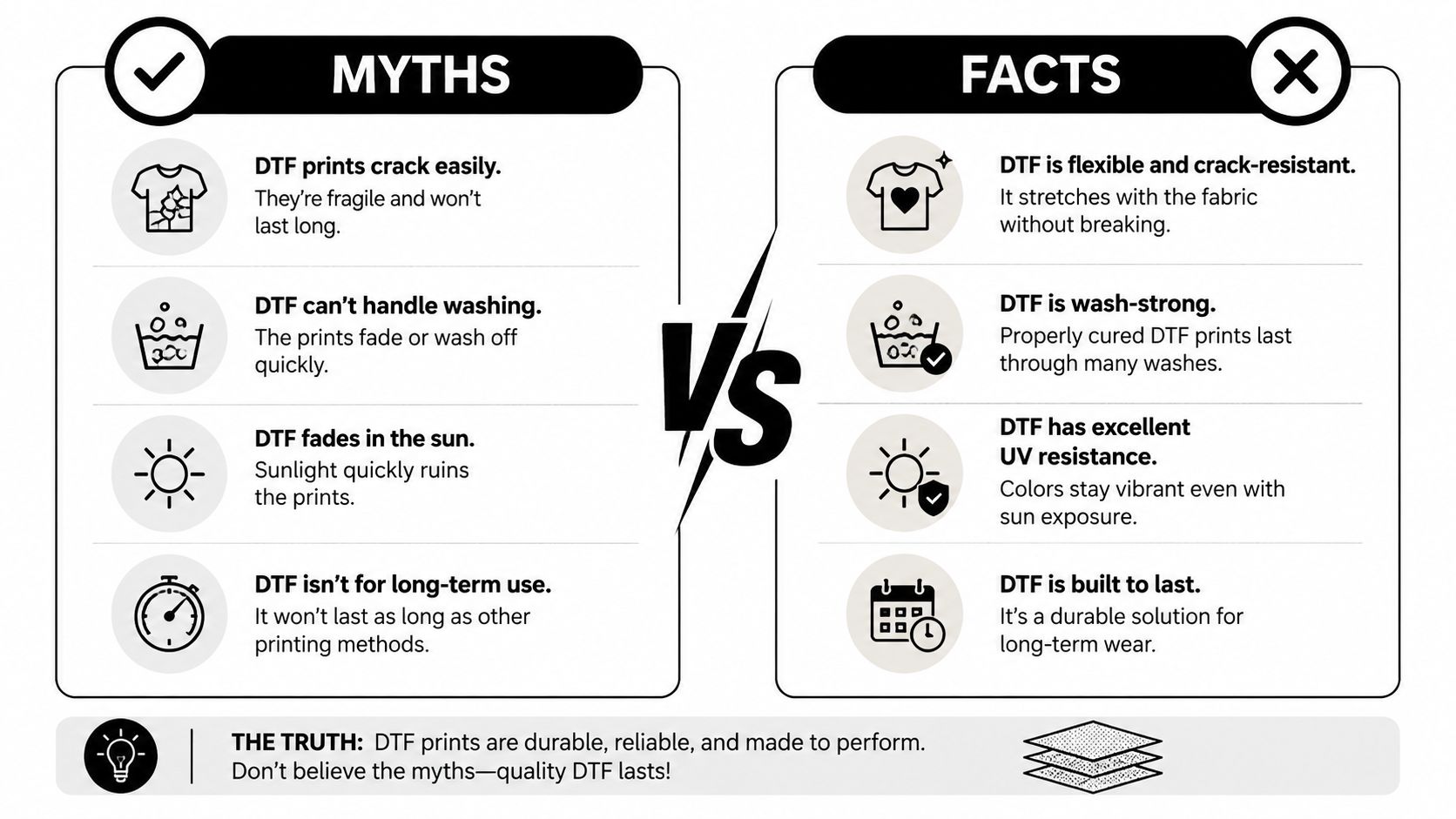
A durable DTF product starts with suitable film, ink, adhesive, fabric, curing, and pressing. It stays durable when customers wash inside out, use cold water, and avoid high drying heat. Judge the garment and the print as separate parts of the same product. In many well-controlled applications, the garment's fit or fabric condition can change before the decoration fails.
For business owners, that standard protects repeat sales and reduces avoidable complaints. Cobra DTF offers DTF transfers with application and care guidance that supports consistent pressing and longer-lasting results.
If you need transfers built around dependable application and practical wash-care expectations, visit Cobra DTF to review its DTF transfer options and production guidance. Order samples, test them on the garments you sell, and make durability part of your quality-control process before expanding a customer order.