

Fleece Crewneck Pullover Guide for Custom Printing
You've just received a fleece crewneck pullover order that looked excellent on the worktable. The fabric feels soft, the blank has a comfortable fit, and the DTF artwork appears bright. Then the customer washes it. The body changes shape, the surface starts to pill, and the print no longer sits as cleanly against the fleece. You're left replacing garments, answering complaints, and wondering whether the problem came from the transfer, the press, or the blank.
For a retailer or print shop, that risk makes fleece more than a simple seasonal product. A fleece crewneck pullover has strong everyday appeal, but its construction affects fit, wash durability, surface texture, and decoration quality. The right buying decision starts before you compare colours or wholesale prices.
Introduction to the Fleece Crewneck Pullover Opportunity
A small apparel retailer often chooses a fleece crewneck pullover because it seems easy to sell. Customers understand the shape, the garment works for casual wear, and the uninterrupted front creates a useful canvas for a logo, illustration, team mark, or retail graphic. That simplicity can be deceptive. Two pullovers can look almost identical in a supplier catalogue while behaving very differently after washing and pressing.
Consider a retailer preparing staff apparel for a café. The buyer selects the softest blank available and orders a dark polyester-rich fleece. The first samples look attractive, but the brushed surface makes fine lettering less distinct, and heat exposure during decoration creates a risk of dye migration. If the garment also changes dimensions after washing, the artwork changes with it. The retailer hasn't just bought a sweatshirt. They've bought a chain of possible production problems.
Practical rule: Judge the blank and the decoration as one product, not as two separate purchases.
The opportunity is still substantial. The broader fleece clothing category was valued at approximately USD 8.2 billion in 2023 and is projected to reach USD 14.5 billion by 2033, with the source estimating about 5.6% CAGR from 2025 to 2033. A related estimate places the fleece sweater segment at roughly USD 10 billion in 2024, with a projection of around USD 15 billion by 2033 and approximately 6.0% CAGR, according to DataHorizzon Research's fleece clothing market overview. These figures describe broader categories, not fleece crewneck pullovers alone, but they show why retailers and decorators keep returning to this garment family.
This guide is for anyone buying blanks for resale, uniforms, merchandise, or custom orders. You'll learn how fleece is built, how fabric choices influence comfort, why weight alone can mislead you, and how to test a garment before committing to inventory. You'll also see why a clean DTF result depends on the fleece surface, not just the artwork file.
What Makes a Fleece Crewneck Pullover Different
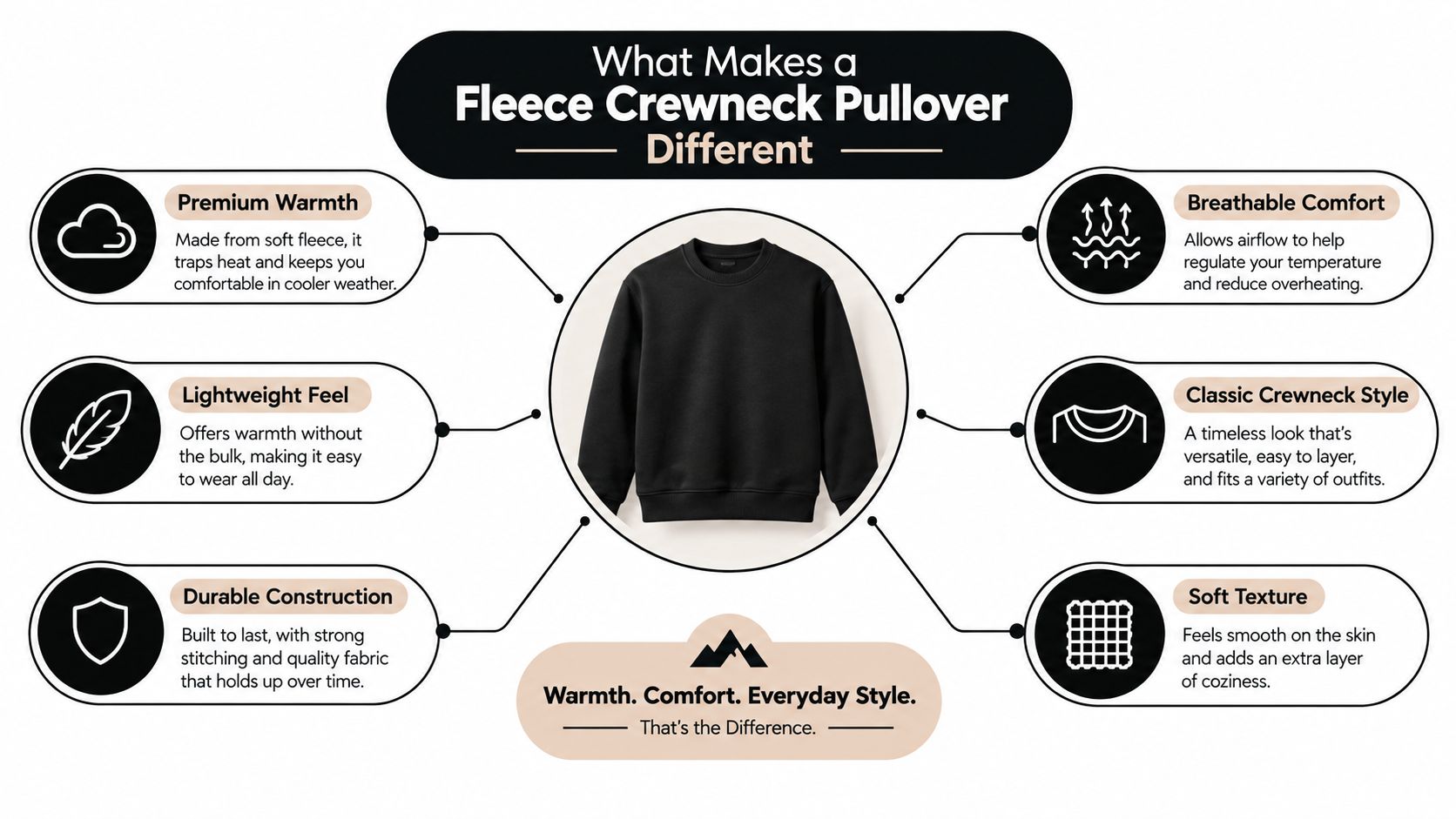
A fleece crewneck pullover combines three basic elements: a crew neckline, a knitted sweatshirt body, and a soft inner surface created by brushing or other finishing. The crew neckline sits close to the base of the neck without a hood or drawcord. That gives the front a continuous panel, which makes the garment useful for centre-chest artwork and simple staff branding.
Think of the fabric as a layer of tiny air pockets. Fleece construction creates space that can hold still air, and that trapped air contributes to warmth. A dense, soft interior may feel cosy immediately, while a more structured surface may feel less plush but give printed artwork a firmer foundation. The wearer notices comfort first. The printer notices the surface.
The front and back of the knit also serve different jobs. The outer face is usually smoother and more stable, so it presents the visible garment surface. The inside may be brushed into a raised nap. That nap improves softness and warmth, but its loose fibres can also interfere with small printed details or make the final hand feel less even.
The sweatshirt lineage
The modern fleece version belongs to a longer sweatshirt tradition. Russell Athletic traces the sweatshirt's origin to 1926, when Benjamin Russell Jr. looked for a more comfortable alternative to itchy wool football jerseys. The company says it began producing what it describes as the iconic crew neck sweatshirt in its mills in 1930, helping establish the crewneck as a defined sweatshirt format. You can review that history in Russell Athletic's account of who invented the sweatshirt.
That history matters because the crewneck's appeal comes from function as much as fashion. It's easy to layer, doesn't have a hood competing with a coat collar, and offers a broad front for decoration. For family events or seasonal apparel, a cozy vintage sweatshirt guide for parents can also help retailers think about how colour, fit, and nostalgic styling affect the buying decision.
Start your evaluation with the garment's basic anatomy. Check whether the collar rib lies flat, whether the shoulder seams sit evenly, and whether the waistband returns to shape after stretching. Those details won't tell you everything about wash performance, but they'll help you separate a considered blank from one that only looks good in a product photograph.
Fleece Fabric Types and How They Perform
A fleece crewneck can feel soft in the fitting room yet pill quickly, hold moisture, or produce uneven DTF results after washing. Fibre content is only the starting point. The face construction, yarn type, and finishing determine how the garment wears and how a printed design sits on it.
Fleece works by moving moisture away from the skin while holding still air for insulation. Filament-based structures can wick faster than spun-yarn versions because continuous filaments create more efficient capillary pathways, according to the textile information cited by Snowcountry's technical fleece product reference. That difference matters more in active clothing than in a casual retail pullover, but it explains why two garments with similar thickness can feel different in use.
A practical comparison
| Fabric Type | Warmth and Breathability | Best Use Case |
|---|---|---|
| Polyester fleece | Often has a smooth, stable face with dependable moisture movement. Finishing can make the hand feel sleek or plush. | Active midlayers, branded outer layers, and designs needing a consistent synthetic surface |
| Cotton-polyester blend | Combines cotton's familiar softness with polyester's dimensional stability. Results depend on the blend and construction. | Staff apparel, everyday retail, and repeat-wash uniforms |
| Recycled polyester fleece | Can provide technical fleece performance while using recycled fibre content. Yarn structure and finishing still shape the result. | Performance-conscious retail and lower-impact product lines |
| Recycled polyester jacquard with hollow-core yarns | Hollow-core yarns increase trapped air for warmth without requiring a dense, heavy knit. A patterned surface can support moisture movement and drying. | High-output midlayers and lightweight insulation |
| Cotton-rich fleece | Usually has a soft, substantial hand and familiar sweatshirt feel. Check shrinkage, pilling, and finishing before committing to bulk. | Lifestyle merchandise and premium-feeling casual apparel |
Technical fleece examples commonly use recycled polyester jacquard fleece with hollow-core yarns. The hollow structure holds air without relying on a dense knit, while the patterned surface supports moisture transport and drying. Patagonia describes this construction in its R1 Air Fleece Crew product information.
For a retailer working with a print shop, the face matters as much as the fibre label. A smooth face gives artwork a cleaner foundation and usually makes fine details easier to preserve. A raised nap can soften edges, hide small elements, and change the feel of a transfer after pressing. It can also create more opportunities for surface fibres to catch during washing, which may make pilling or fuzzy print edges more noticeable.
Before buying a case, inspect the blank under direct light and run your hand across the face. Look for a consistent nap rather than relying on the product description. If the surface is uneven or strongly raised, make a test print first. Confirm adhesion, edge definition, hand feel, and wash appearance before setting production settings or promising a finished result to a customer.
Fibre content also affects buying decisions, but it should be read alongside construction and care expectations. This cotton versus polyester sweatshirt comparison provides a useful purchasing reference. The practical question is which fabric suits the customer, decoration method, expected washing, and desired surface life.
Why Durability and Wash Performance Matter More Than Weight
A heavier fleece crewneck pullover isn't automatically a better fleece crewneck pullover. Fabric mass affects warmth and drape, but yarn type, knitting structure, finishing, and wash conditions can determine whether the garment keeps its shape and surface quality. Retailers who compare GSM alone may miss the variables that create post-wash complaints.
Textile testing illustrates the difference. Economy carded fleece around 290 GSM showed approximately 6.2% width shrinkage, 7.8% length shrinkage, and Grade 2 pilling in the cited research. Premium ring-spun fleece around 345 GSM improved to roughly 1.7% width shrinkage, 2.3% length shrinkage, and Grade 4 pilling, as reported in the evidence summarized by One Trendy Closet's crewneck sweatshirt discussion. The comparison doesn't prove that every ring-spun garment will perform the same way. It does show why construction can matter as much as weight.
What those results mean at the counter
Shrinkage changes more than the blank. A printed design moves with the fabric. If the body shortens or narrows unevenly, a centred graphic may no longer look centred, and a large transfer can develop a different visual relationship with the collar and waistband.
Pilling creates a separate problem. It changes the garment's perceived value, especially around areas that experience rubbing. Customers usually don't care whether the issue began in the yarn, brushing process, or finishing stage. They see a garment that looks older than expected.
A useful sample test should include more than touching the fabric. Measure the body and sleeve positions before washing, apply the planned decoration, then wash according to the care label. Compare the garment's shape, surface, and artwork afterward. If you're evaluating a supplier, ask for construction details rather than accepting “premium” as a complete specification.
The costly mistake: Treating GSM as a quality score instead of one clue among several.
The research also challenges the idea that acceptable performance means zero dimensional change. Some fleece structures can still show approximately ±3% dimensional change while remaining broadly serviceable. For a print shop, the practical question is whether that change fits the product promise. A promotional garment may tolerate more variation than a premium retail piece with a precise oversized graphic.
Care guidance matters too. Share the supplier's washing instructions with the customer, and point them toward reliable DTF washing instructions. Good care can reduce avoidable wear, but it can't repair a blank whose construction was unsuitable from the beginning.
How to Choose the Right Fit and Fabric Weight
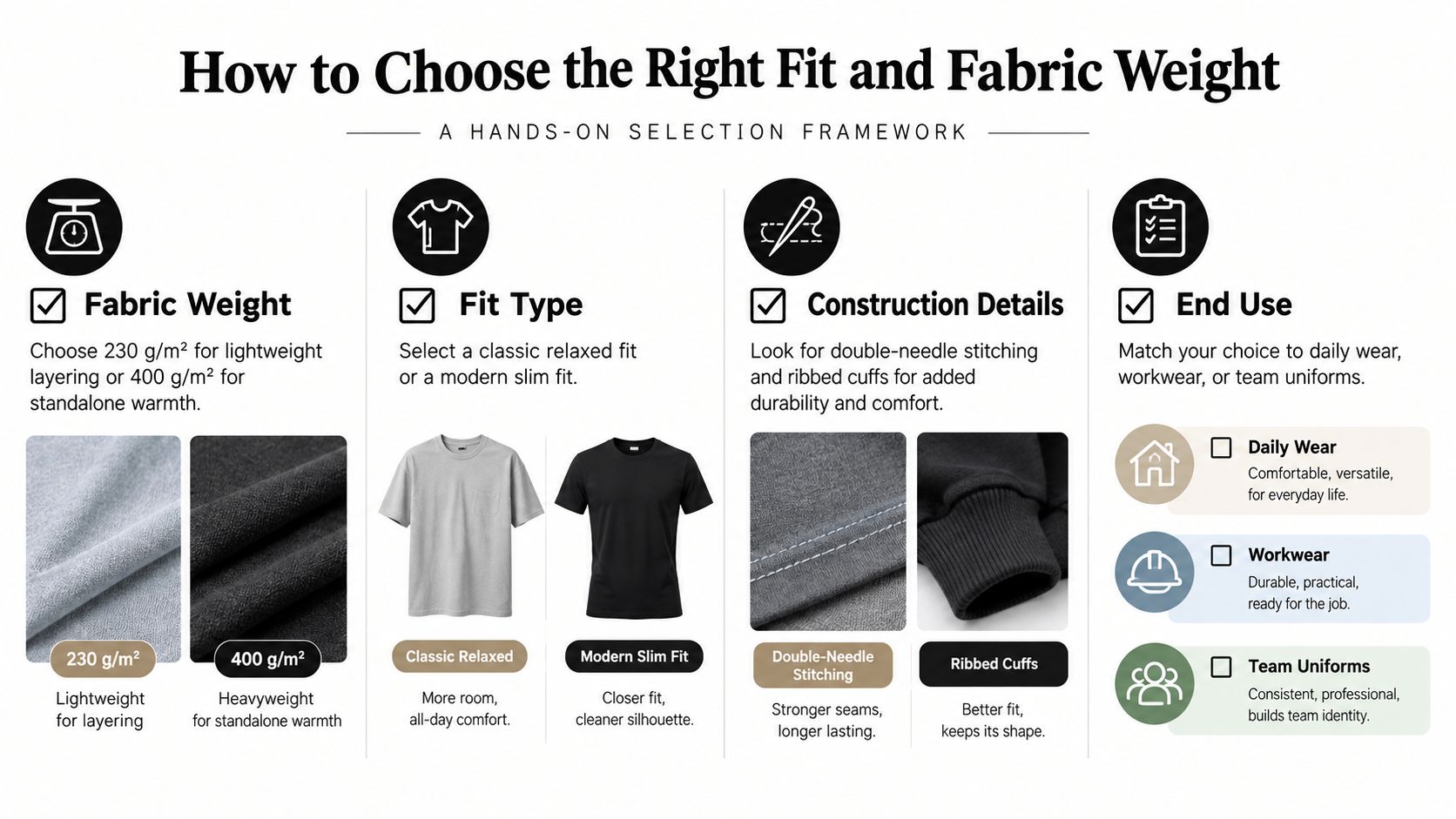
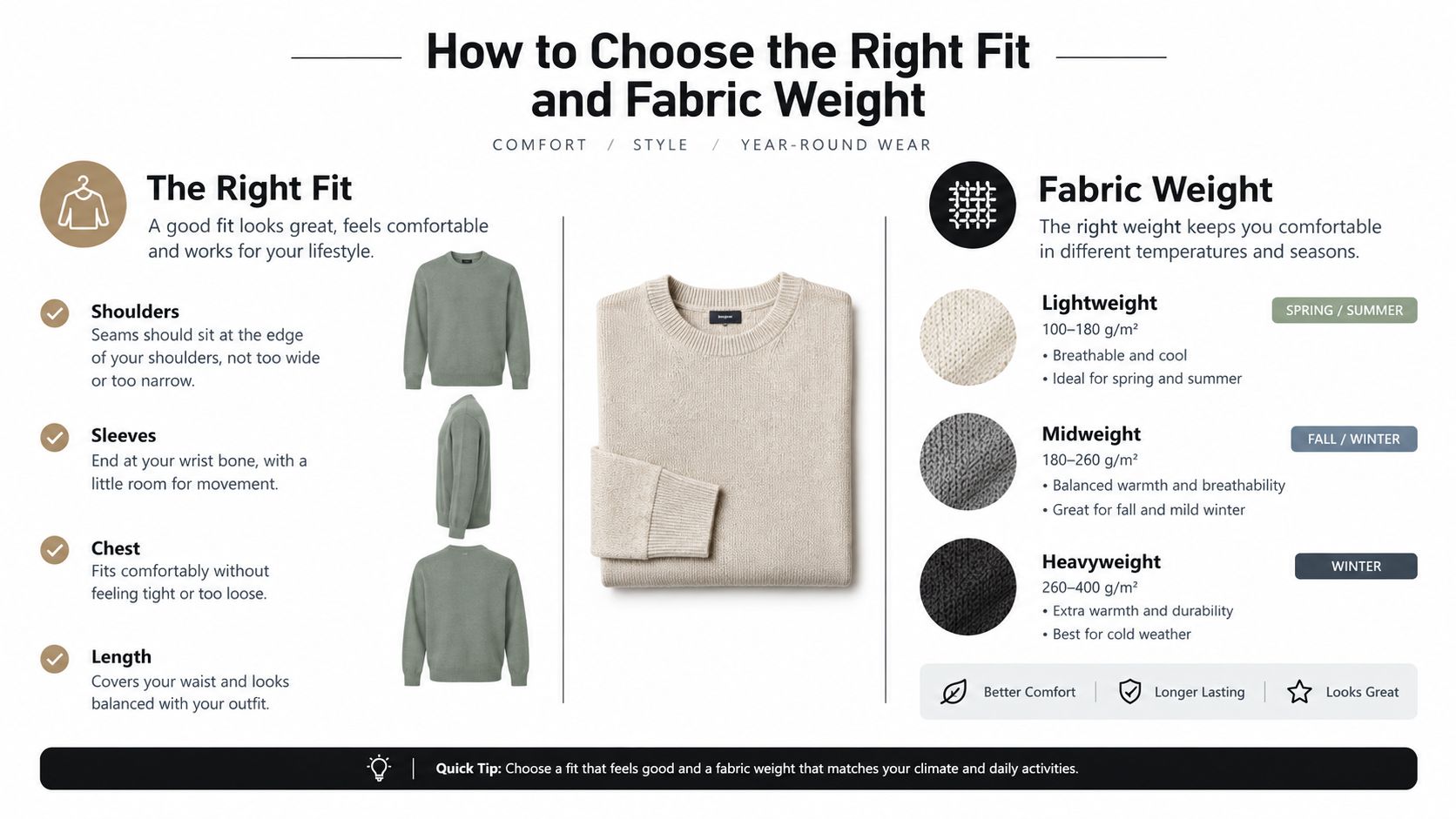
Start with the customer's use, not the catalogue. A fleece crewneck pullover for indoor staff wear needs a different balance from one sold as a standalone cold-weather layer. Ask how it will be worn, what sits underneath it, and whether the customer expects a classic fit or a deliberately oversized silhouette. Fit is like setting type on a press: a small mismatch becomes obvious across the finished order.
Read GSM as a starting point
Fabric mass helps estimate warmth, structure, and drape. Technical fleece around 230 g/m² is generally positioned as light-to-mid insulation, while heavier crew fleece can reach approximately 400 g/m² and provide greater thermal comfort. Use these figures as practical comparison points, not universal quality grades.
A lighter fabric may layer more comfortably and dry more readily. A heavier fabric may hold a boxier shape and feel more substantial, but it can become too warm indoors. Weight also changes how the blank hangs around a transfer, so choose it alongside the decoration method and the customer's intended use.
Inspect the sample in your hands
Before approving a production blank, check the garment as both a retailer and a print operator:
- Fit and proportion: Try it over the shirt customers will wear underneath. Check shoulder width, body length, sleeve volume, and collar tension.
- Rib construction: Stretch the collar, cuffs, and waistband gently. They should recover without looking wavy or overstressed.
- Seam quality: Examine stitching at the shoulder, armhole, side seam, and waistband join. Uneven seams can affect fit and print placement.
- Interior finish: Rub the brushed side lightly and look for loose fibres. A plush interior may feel attractive, but shedding can signal a surface that needs careful wash testing.
- Face smoothness: Place a ruler or transfer mockup on the front. An irregular nap can make fine artwork appear less precise.
If you choose a filament-based technical fleece for layering, verify that its smoother face still provides the hand feel your retail customer expects. A technical surface may suit movement and moisture management while feeling less traditionally soft. That difference can matter at the fitting stage, before the customer ever notices the label.
Match the garment to the order
Choose a lighter, flexible construction for layering and transitional retail. Choose a heavier option when customers want structure and warmth without another outer layer. For uniforms, prioritise dimensional stability, comfortable ribbing, and a face that reproduces the logo consistently across the full order.
Order samples in the actual colours you plan to sell. Dark polyester-rich fleece can behave differently under heat from a light cotton-rich blank, and one colour cannot answer every production question. Test the garment, artwork, and care routine together, then compare fit, surface, pilling, and print appearance after washing.
Print Compatibility and DTF Results on Fleece
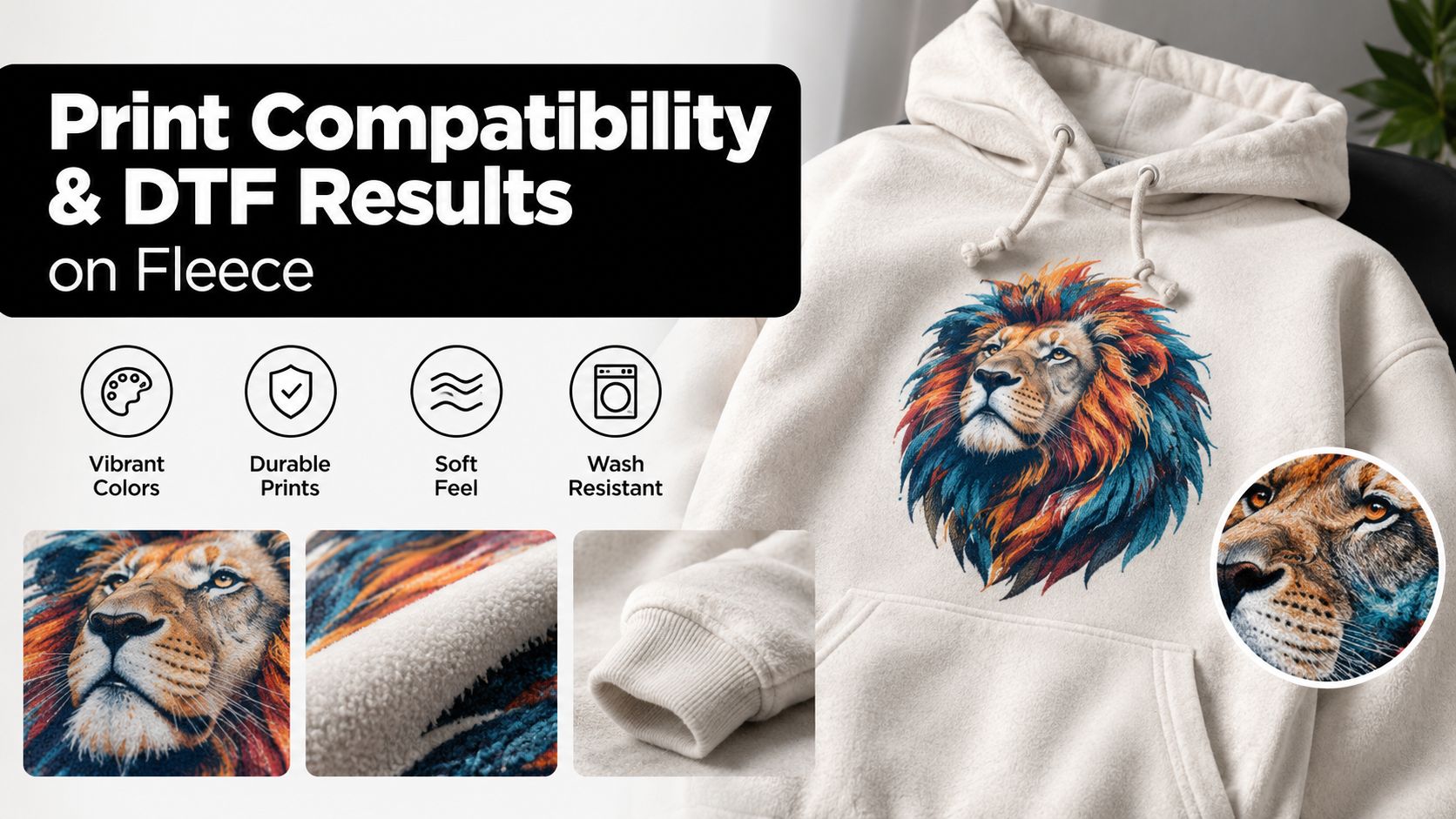
DTF printing can work well on fleece, but the garment's surface changes the result. A smooth outer face gives the transfer a more predictable base. A raised nap can show through visually around the edges, soften the perceived detail, or make a large solid design feel heavier to the touch.
Consider two sample garments. The first has a smooth cotton-rich face and a compact logo with bold shapes. The second has a plush polyester blend with a pronounced nap and a detailed illustration. The same transfer may look crisp on the first and less defined on the second, even when the artwork file and press are unchanged.
Surface and fibre checks
Before pressing, identify the blank's fibre content and face texture. Polyester-rich garments can present a dye migration risk under heat, particularly when dark dyes move into a light print. Cotton-rich garments may provide a familiar print surface, but the retailer must still account for shrinkage and surface change after washing.
The nap also affects pressure and contact. A soft, raised surface may compress under the platen, then relax afterward. If the transfer doesn't bond evenly across that texture, edges may look less secure or the finish may feel inconsistent. A test press reveals more than a supplier description.
Build a fleece-specific press routine
Use the manufacturer's recommended settings as your starting point, then verify the result on the exact blank. Check temperature, pressure, dwell time, peel instructions, and any required second press. The DTF heat press settings guide provides a useful reference for establishing that process.
Pre-pressing can help flatten surface moisture and compress the nap, but it shouldn't replace testing. Place the garment carefully so seams, ribbing, and thick areas don't create uneven pressure under the transfer. A pressing pillow or suitable platen setup may help keep the decoration area level, depending on the garment and equipment.
Design choices should follow the surface. Bold shapes, strong contrast, and readable line weights usually survive fleece texture better than delicate hairlines or tiny text. For a large graphic, inspect the hand feel as well as the visual result. A transfer can look vibrant while still feeling too heavy for a soft, plush pullover.
After pressing, allow the design to settle before evaluating it. Check for edge lift, texture show-through, colour change, and alignment. Then wash a decorated sample according to the intended care instructions. That final step protects you from approving a result that looks good immediately but fails the customer's first real wash.
Final Takeaways for Retailers and Print Shops
A reliable fleece crewneck pullover starts with a clear product brief. Decide whether the garment is meant for layering, daily indoor wear, work use, team apparel, or premium retail. Then choose the fabric construction, fit, and decoration method around that purpose instead of selecting the softest or heaviest blank by instinct.
Use this buying sequence:
- Define the wearer: Identify the climate, activity level, layering needs, and expected care routine.
- Inspect the construction: Check the face, nap, collar, cuffs, seams, yarn type, and finishing information.
- Compare fabric mass carefully: Treat approximately 230 g/m² and 400 g/m² as useful light-to-heavy reference points, not automatic quality rankings, based on the technical fleece information cited earlier.
- Test the decoration: Press the actual transfer on the actual colour and fabric. Evaluate detail, adhesion, colour stability, and hand feel.
- Wash before stocking: Measure the sample before and after washing, and inspect both the garment and the print for shape change, pilling, or distortion.
- Document the result: Record the blank style, colour, press settings, transfer version, and care instructions so reorders remain consistent.
The most important insight is that construction and finishing often matter more than weight alone. A heavier fleece can still pill or change dimensions if the yarn and finishing are poor. A lighter technical fleece can provide useful warmth and a more manageable decoration surface when its structure is well chosen.
Retailers should also sell the garment as part of a broader product experience. Clear sizing, honest care guidance, strong product photography, and consistent decoration help customers understand why one pullover deserves a higher price than another. For ideas on connecting product visibility with customer acquisition, retail marketing from SEO to social commerce offers useful context.
Before your next bulk order, request a sample, apply the intended design, and run a wash check. That small review can prevent an entire inventory problem and gives your team evidence to use when comparing suppliers.
Cobra DTF provides DTF transfers for fleece crewneck pullovers, helping print shops apply detailed artwork to soft and textured garments with a repeatable production process. Review your next design and transfer options at Cobra DTF, then test the result on your chosen blank before committing to a larger order.