
A Complete Guide to DTF Ready to Press Transfers for Your Business
So, what exactly are ready-to-press DTF transfers? Think of them as a game-changer for anyone in the custom apparel business. They are high-quality, full-color graphics that show up at your door pre-printed and ready to be applied to a garment with a simple heat press.
It's like getting professional-grade, custom "stickers" for fabric, but with a soft feel and incredible durability. This approach completely cuts out the tedious prep work—no weeding tiny vinyl pieces, no messy screen printing inks, and no complex multi-step layering. It's designed to be straightforward, letting you create stunning products without the headache.
Breaking Down DTF Transfers
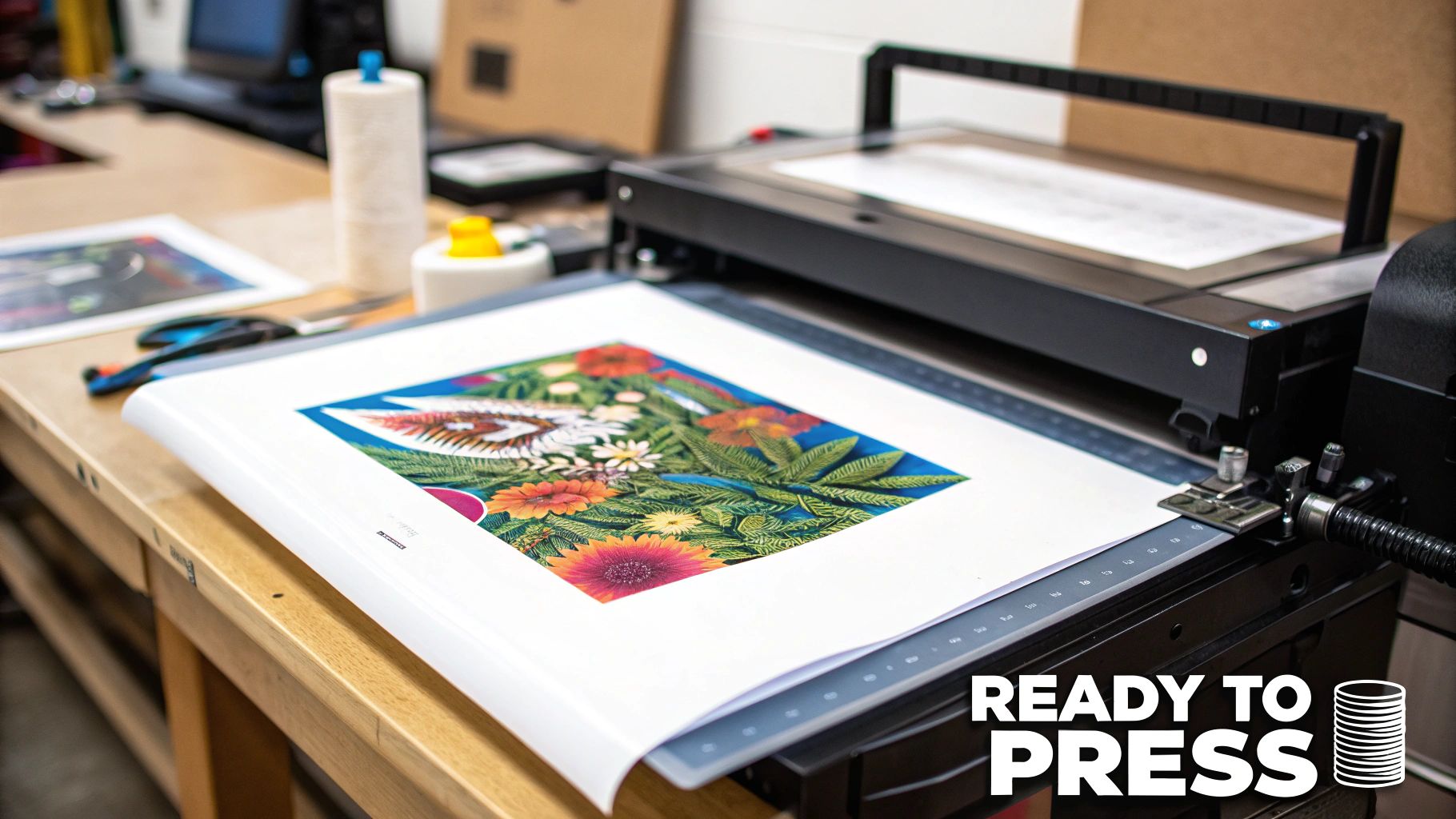
If you've ever found yourself bogged down by the traditional methods of decorating apparel, DTF technology is a breath of fresh air. Instead of being chained to a vinyl cutter or dealing with the steep learning curve of screen printing, you get a finished transfer that's ready for action the moment you unbox it. The name itself, Direct-to-Film, hints at the elegant simplicity of the process.
At its core, a DTF transfer is made of two main components that, when combined with heat and pressure, create a graphic that's not only eye-catching but built to last.
The Anatomy of a DTF Transfer
First, you have the specialized PET (polyethylene terephthalate) film. This isn't your average plastic sheet; it’s a carrier film specifically engineered to hold the ink in perfect registration until you're ready to press. Your design gets printed onto this film using vibrant, water-based inks. The secret weapon here is the layer of white ink printed behind the colors, which acts as a base. This is what makes your designs pop with incredible opacity and brightness, even on the darkest fabrics.
The second key ingredient is a hot-melt adhesive powder. Right after printing, this fine powder is spread over the wet ink. It cleverly sticks only to the printed areas. The transfer is then cured, melting the powder to form a solid yet flexible backing for your design.
What 'Ready to Press' Really Means: When you order a DTF transfer, all of this intricate work has already been handled. The transfer arrives with the ink and adhesive perfectly fused and prepared. Your job is simple: place it on your item, press it, and you're done.
How the Magic Happens Under Heat
The application process is where it all comes together. When you position the transfer on a garment and bring down your heat press, the heat reactivates that adhesive backing. It melts just enough to create a super-strong bond with the fibers of the fabric.
After pressing for a few seconds, you peel away the clear carrier film. What's left behind is just the ink—a soft, pliable, and brilliantly colored design that feels like part of the shirt.
This streamlined system lets you sidestep the expensive equipment and frustrating learning curves tied to other decorating methods. You don't need years of experience to get it right. If you're curious about the nitty-gritty of the technology, you can dive deeper into what DTF printing is and see the entire process from start to finish.
This simplicity is precisely why DTF ready-to-press transfers are such a fantastic tool for everyone, from Etsy shop owners testing out new ideas to high-volume print shops looking to add efficiency to their workflow. You get the quality and feel of a premium print with an application process that couldn't be easier.
So, Why Are DTF Transfers Such a Big Deal for Small Businesses?
If you're running a small print shop, an Etsy store, or a boutique brand, you know the struggle. You're trying to find a way to create amazing products that balances quality, cost, and the flexibility to actually create what your customers want. Traditional methods like screen printing often feel like a trap—they demand big upfront investments, have complicated setups, and lock you into high minimum orders.
This is exactly where DTF ready to press transfers come in and change the entire equation. They offer a genuinely powerful and accessible way to make professional-grade custom gear.
Instead of guessing which designs will be a hit and sinking money into hundreds of shirts, DTF lets you print on demand. It’s a simple shift, but it fundamentally changes the economics for a small business and puts you back in control.
Smart Money: Say Goodbye to Inventory Risk
The biggest nightmare for any new apparel brand? Inventory. Ordering a huge batch of screen-printed shirts for a new design is a massive financial gamble. If that design doesn't sell, you're stuck with a pile of dead stock and a hole in your budget.
DTF transfers make that problem disappear. There are no minimum order quantities (MOQs). You can order a single transfer for a one-off custom job or a thousand for a blockbuster release.
This flexibility means:
- No Wasted Cash: You only buy what you've already sold or what you know people are asking for. Your money isn't tied up in boxes of unsold t-shirts.
- Risk-Free Creativity: Got a wild new idea? Want to test a different color scheme? Go for it! If a design flops, you've only lost the tiny cost of a single transfer.
- Less Clutter, Lower Overhead: Without stacks of inventory taking up space, you can run your business from just about anywhere, keeping your costs way down.
This isn't just about convenience; it’s a powerful business strategy. It allows the little guys to be more nimble and responsive to trends than the big, established brands. It's no wonder the global DTF printing market, valued at USD 2.56 billion in 2023, is expected to hit USD 4.57 billion by 2033. The growth is being driven by printers who need that perfect blend of cost-effectiveness and high-quality results.
Print on Almost Anything, In Any Color
One of the most frustrating things about other printing methods is their limitations. Sublimation, for instance, only works on light-colored polyester. DTF blows those doors wide open.
With DTF, the question stops being "What can I print on?" and becomes "What do I want to create today?"
Whether you’re working with a classic 100% cotton tee, a polyester sports jersey, a tough denim jacket, a leather patch, or a soft cotton/poly blend, a DTF transfer will apply cleanly and beautifully.
Most importantly, this includes dark and black garments. The white ink layer in a DTF transfer acts as a primer, making sure your colors pop with full opacity and vibrancy. There's no need for messy pre-treatments, which saves you time and simplifies your whole workflow.
Quality That Keeps Customers Coming Back
For a small business, reputation is everything. You need your products to not just look good, but to feel good and last. This is where DTF ready to press transfers really shine.
- Jaw-Dropping Color and Detail: DTF can handle it all—photorealistic images, super-fine lines, and gradients with millions of colors, all with stunning accuracy.
- A Genuinely Soft Feel: Forget those stiff, plastic-like vinyl patches. A well-pressed DTF transfer is incredibly soft and flexible, stretching and moving with the fabric. It makes the final garment truly comfortable to wear.
- Built to Last: These transfers are tough. They can easily handle 50+ washes without cracking, peeling, or fading, often outlasting the shirt itself.
While DTF offers an incredible path for customizing apparel, it's always good to know your options. For a comparison with another popular customization method, consider exploring top embroidery machines for small businesses.
At the end of the day, DTF just makes sense. It combines smart economics, incredible versatility, and top-tier quality into one package, giving small businesses the tools they need to build amazing product lines with very little risk.
Your Step-by-Step Guide to a Perfect Application
Getting a flawless, professional finish with ready-to-press DTF transfers is surprisingly straightforward. It doesn't come down to having the fanciest equipment or years of experience—it’s all about nailing a consistent process. This guide walks you through the exact steps we use, so you can confidently produce durable, high-quality custom apparel every single time.
Think of it like following a recipe. A few key prep steps with your heat press are all it takes to get that perfect result.
Step 1: Prep Your Heat Press and Garment
Before you even think about placing the transfer, you need to get your workspace ready. The goal is to create the ideal environment for the transfer's adhesive to fuse completely with the fabric fibers.
First things first, fire up your heat press. For most cotton, polyester, and blended fabrics, you'll want to aim for a temperature between 280°F and 320°F (138°C - 160°C). As it’s heating up, lay your garment flat on the press and smooth out any wrinkles.
Now for the most important—and most often skipped—step: the pre-press. Simply press the garment by itself for about 5-10 seconds. This little move does two big things: it zaps any moisture hiding in the fabric and creates a perfectly smooth canvas for your design. Moisture is the number one enemy of a good transfer; it turns into steam under heat and can ruin the adhesion.
Step 2: Position and Press the Transfer
With your garment prepped and ready, it’s time for the main event. Carefully place your DTF transfer onto the shirt, making sure the glossy, printed side is facing up. You can use an alignment tool or even a heat-resistant ruler to get it perfectly centered and straight.
Once you’re happy with the placement, cover the transfer with a Teflon sheet or a piece of parchment paper. This protective layer is crucial—it keeps the transfer's film from sticking to the hot upper platen and helps distribute the heat evenly.
Alright, you're ready to press. Close the machine, lock it down, and let the magic happen. It's this combination of heat, time, and firm pressure that activates the adhesive and makes the transfer permanent.
Pro Tip: Pressure is just as important as temperature. If your press doesn't have a digital pressure gauge, aim for a setting that takes a good, firm effort to close and lock. It should feel snug, not like you're forcing it shut.
For a complete breakdown of the best settings for different materials, check out our detailed guide on DTF press instructions.
Step 3: The Peel and Final Finish
When the timer beeps, open the press and carefully slide the garment out. This is the moment of truth. Most quality ready-to-press DTF transfers, like ours, are a hot or warm peel. This just means you only need to wait a few seconds for it to cool down a bit before peeling the film.
Peel the carrier film back at a low angle in one smooth, steady motion. If you feel any resistance or see the design lifting, stop right there. The most common cause is not enough pressure or heat. No worries—just lay the film back down, cover it, and press again for another 5-10 seconds.
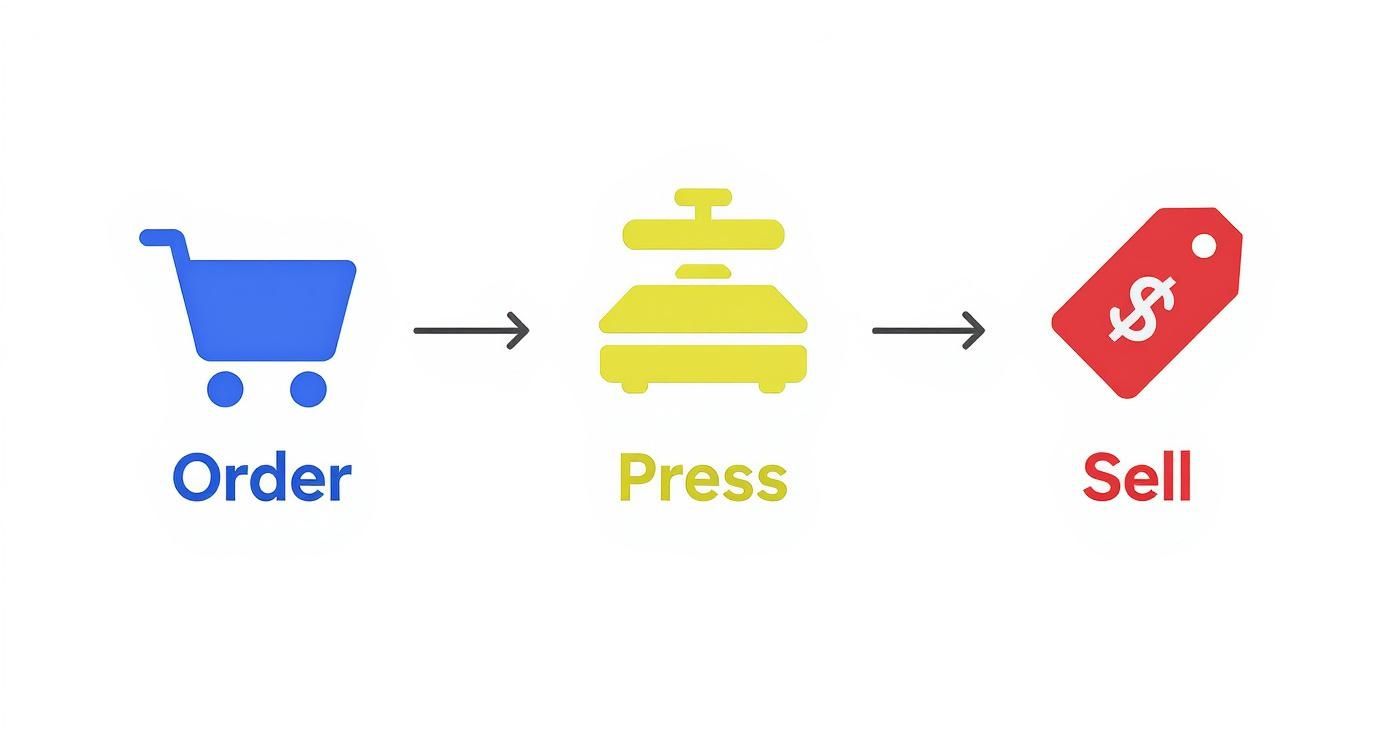
This simple workflow is what makes DTF so powerful for small businesses. You just order, press, and sell.
To really lock in the design and give it that buttery-soft feel everyone loves, do one last quick press. Place the parchment or Teflon sheet back over the exposed design and press for just 5-7 seconds. This final step helps meld the ink right into the fabric, making the print incredibly durable and flexible.
Follow these steps, and you'll be cranking out products that not only look fantastic but also hold up wash after wash. That's how you keep customers happy and coming back for more.
Recommended Heat Press Settings by Fabric Type
While the general guidelines work for most projects, dialing in your settings for specific fabrics can take your quality from good to great. Here's a quick reference table to get you started.
| Fabric Type | Temperature Range (°F/°C) | Press Time (Seconds) | Pressure Level |
|---|---|---|---|
| 100% Cotton | 300-320°F / 149-160°C | 10-15 | Medium to Firm |
| 50/50 Cotton/Poly Blends | 280-300°F / 138-149°C | 10-12 | Medium |
| 100% Polyester | 270-290°F / 132-143°C | 8-10 | Medium |
| Tri-Blends & Synthetics | 260-280°F / 127-138°C | 8-10 | Light to Medium |
Always remember to do a test press on a scrap piece of fabric if you're working with a new material. These settings are a solid starting point, but slight adjustments might be needed depending on your specific garment and heat press.
Expand Your Product Line with DTF Printing
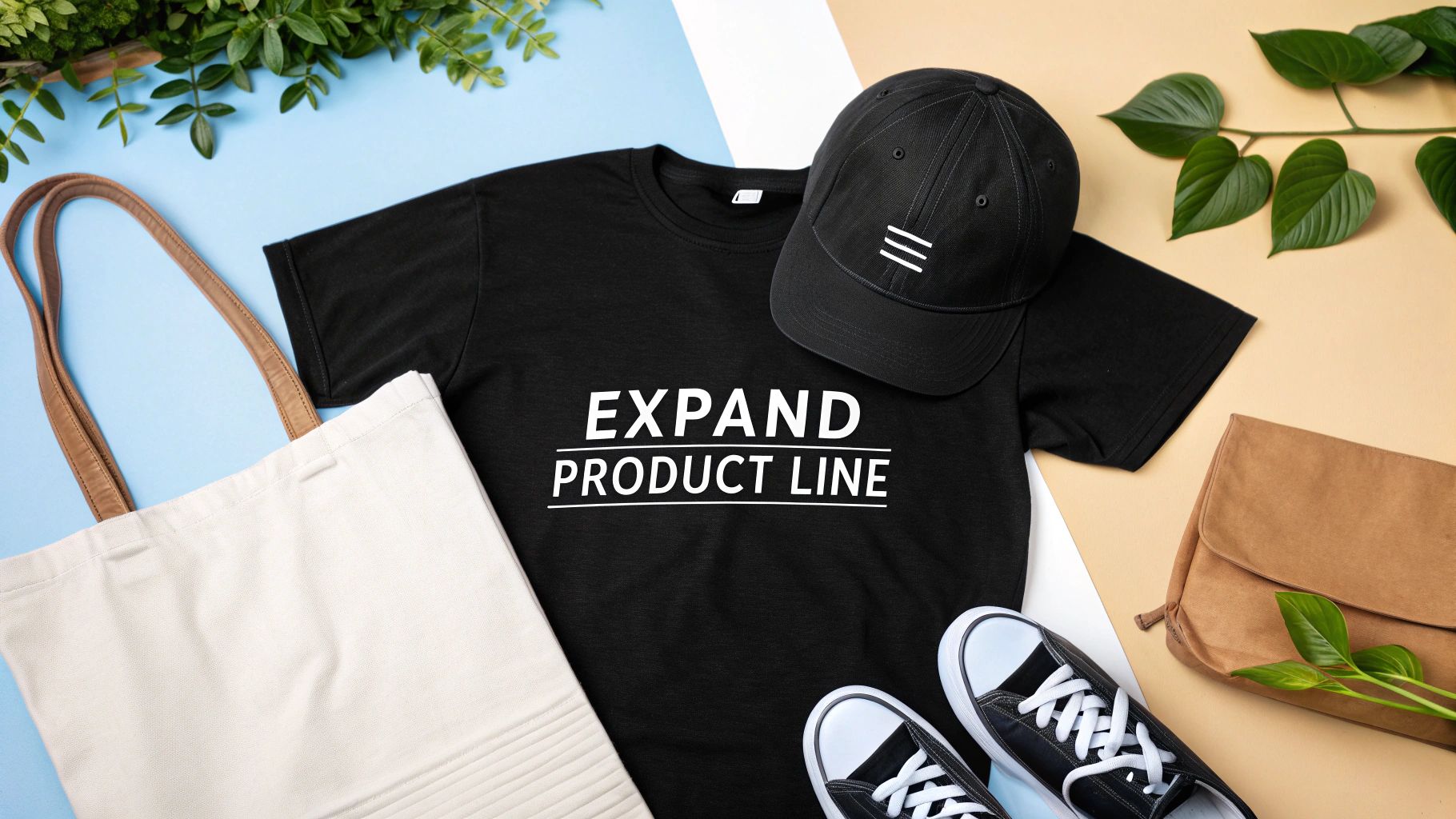
When someone says “custom apparel,” what’s the first thing that comes to mind? For most, it’s the classic t-shirt. And while tees are the bread and butter of any print shop, sticking only to them when you have DTF ready to press transfers is like owning a Ferrari just to drive to the corner store. You're missing out on all the fun.
The real magic of DTF is its incredible versatility. It gives you the power to turn a massive range of everyday items into unique, high-profit products. This adaptability is a huge part of why the global DTF market is exploding. Valued at USD 2.72 billion this year, it's on track to hit USD 3.92 billion by 2030, all thanks to creators pushing the limits of what's possible. You can discover insights about the growth of DTF printing on grandviewresearch.com to see the trends for yourself.
A World of Materials at Your Fingertips
Let's be honest, other print methods can be incredibly picky about fabrics. DTF, on the other hand, isn't. It's the jack-of-all-trades. The unique ink and adhesive system is built to bond with a huge variety of surfaces, opening up product lines that used to be a major headache or simply out of reach.
The Big Idea: It's time to stop thinking of yourself as just a t-shirt printer. You're a custom product creator, and DTF is the key that unlocks that potential.
This flexibility is your ticket to new markets. Instead of only selling to the casual apparel crowd, you can now create gear for sports teams, corporate clients, and all sorts of niche communities.
Fresh Ideas to Grow Your Catalog
So, what can you really make? The list is practically endless, but here are a few proven, high-margin ideas that work perfectly with DTF ready to press transfers.
- Custom Headwear: Hats, beanies, and visors are always a hit. The flexibility of DTF films makes them perfect for applying crisp, detailed logos to the curved surfaces of caps without any distortion.
- Branded Bags and Totes: Canvas totes are everywhere—they’re eco-friendly and act as walking billboards for brands. DTF applies beautifully to canvas, denim, and even many types of nylon, letting you create anything from simple grocery bags to high-end promotional gear.
- Team and Spirit Wear: Think beyond the basic jersey. You can easily add custom names, numbers, and sponsor logos to polyester athletic wear, hoodies, and warm-up jackets. The transfers stretch right along with the fabric, so they won't crack under pressure.
- Footwear Customization: The custom sneaker scene is massive, and DTF is a game-changer. It allows you to press incredibly detailed designs onto leather, canvas, and synthetic shoe materials, creating one-of-a-kind footwear that people will pay a premium for.
- Unique Promotional Goods: Get creative for your corporate clients. You can press logos onto items like leatherette notebooks, can koozies, and even wooden plaques (with the right heat press and technique), offering a full suite of branded merchandise.
Once you embrace this versatility, you're no longer just a print shop. You become a one-stop customization solution. You can take on more interesting orders, attract a much wider customer base, and build a more resilient, profitable brand. Your heat press is no longer just a t-shirt machine; it’s a gateway to a whole new world of creative products.
Troubleshooting Common Problems and Best Care Practices
Even the most experienced printers run into a snag every now and then. When you're working with DTF ready to press transfers, a perfect press is the goal, but sometimes things just don't go according to plan. The good news? Almost every issue is an easy fix, usually just a small tweak to your heat press settings.
Think of your heat press like a chef's oven—a little too hot, not enough time, or uneven pressure, and the result isn't quite right. We'll walk through how to spot the common problems and fix them fast. Plus, we'll cover the best way to care for the finished product, so you can pass those tips on to your customers and keep them coming back.
Solving Common Application Issues
When a transfer goes wrong, it almost always comes down to three key factors: temperature, pressure, or time. Getting these three elements dialed in is the secret to a flawless application every single time. Let's break down what to look for.
Common DTF Application Problems and Solutions
Running into issues during the press can be frustrating, but a quick diagnosis is usually all it takes to get back on track. This table covers the most frequent problems we see and how to solve them in seconds.
| Problem | Potential Cause | Solution |
|---|---|---|
| Transfer Won't Stick at All | Not enough heat or pressure. The adhesive isn't melting into the fabric fibers. | Increase press temperature by 10-15°F. Bump up the pressure. Always pre-press the shirt for 5-10 seconds to remove moisture. |
| Edges Are Lifting or Peeling | Uneven pressure. The press isn't making full contact across the entire design, often due to seams or collars. | Use a heat press pillow to raise the print area. This ensures the transfer gets even pressure, away from any obstructions. |
| Design Looks Cracked or Faded | Too much heat or pressure. The ink and fabric are literally getting scorched. | Lower the temperature by 10-15°F and reduce your pressure setting. The goal is to melt the adhesive, not cook the design. |
| Film Lifts Part of the Design | Peeled too soon or too late. The timing of the peel is critical for a clean release. | For a warm peel, wait about 5-15 seconds. If it's still lifting, press again for 5 seconds, let it cool a bit more, and try again. |
| Finish Looks "Textured" or Uneven | Moisture in the garment or uneven pressure from seams. | Always pre-press to get rid of hidden moisture. Again, a pressing pillow is your best friend for avoiding texture from the fabric weave. |
Remember, every heat press and every garment is a little different. Don't be afraid to make small adjustments to find what works best for your specific setup. Once you find that sweet spot, you'll be pressing perfectly every time.
A Quick Word on Pressure: Uneven pressure is the number one culprit behind failed applications. Things like thick seams, collars, pockets, and zippers create an air gap, preventing the press from making solid contact. A simple heat press pillow solves this by elevating the print area, guaranteeing a firm, even press.
Best Practices for Garment Care and Longevity
You've just created an amazing-looking custom garment. The final step is making sure it lasts. Giving your customers simple, clear washing instructions is a game-changer for building brand trust and ensuring your work stays vibrant for 50+ washes.
Here are the essential care instructions to share with every order:
- Turn It Inside Out: Before washing, always turn the garment inside out. This creates a protective barrier for the graphic against the rubbing and friction from other clothes.
- Wash Cold, Gentle Cycle: Use cold water and a gentle cycle. Hot water is the enemy of the transfer's adhesive and can cause colors to fade prematurely.
- Mild Detergent Only: Stick to a mild detergent. Harsh chemicals, bleach, and even fabric softeners can break down the ink and make the transfer feel stiff or start to crack.
- Hang Dry is Best: The absolute best way to preserve the print is to hang it up to air dry. If you have to use a dryer, choose the tumble dry low setting. High heat will ruin the print over time.
- Never Iron the Design: If you need to iron the garment, make sure it’s turned inside out and use a low heat setting. A hot iron placed directly on the transfer will melt it instantly.
By mastering these quick troubleshooting fixes and providing top-notch care instructions, you'll ensure that every product you sell is a testament to your quality and expertise.
How to Choose a High-Quality DTF Transfer Supplier
The quality of your finished shirts doesn't start at your heat press. It begins the moment you choose your supplier for DTF ready to press transfers. Honestly, this is probably the single most important decision you'll make for your printing business. It affects everything—your efficiency, the quality of what you sell, and ultimately, how happy your customers are.
Let's be real: not all transfers are created equal. Trying to save a few bucks with a cheap supplier can end up costing you a fortune in reprints, missed deadlines, and a trashed reputation.
When you're checking out a potential partner, get your hands on some samples and really look at them. Are the colors popping and true to the digital file? Are the tiny details and fine lines sharp? Or are the edges a little fuzzy? A top-tier supplier uses premium inks and film, and it shows. Every single detail of your design should be captured perfectly.
The Domestic Advantage
There's a strong case for sticking with a US-based supplier like Cobra DTF instead of sourcing from overseas. The biggest win? Quality control you can count on. American manufacturers operate under much stricter standards, which means the transfers you get will be consistent batch after batch. This takes the expensive guesswork out of the equation.
Beyond the quality, think about logistics. In a business built on quick turnarounds, waiting weeks for a shipment to clear customs just doesn't work. A domestic partner committed to fast, same-day shipping means you can keep your promises to customers and jump on new trends without missing a beat.
Curious about sourcing transfers locally versus online? We break down the pros and cons in our guide to finding DTF transfers near me.
Key Factors That Signal a Great Supplier
As you start comparing your options, there are a few things that are absolutely non-negotiable. These are the tell-tale signs that separate the real professionals from the pop-up shops.
- Eco-Friendly Inks: When a supplier invests in certified, eco-friendly inks, it's a huge green flag. It shows they care about the planet, but it also means the product is safer for you and your customers, and often more durable.
- Transparent Pricing: You need to see clear, upfront pricing with no hidden fees. A great supplier makes it easy for you to calculate your margins and know exactly what you're paying for.
- Satisfaction Guarantee: This isn't just a nice-to-have; it's essential. A company that offers a satisfaction guarantee is a company that stands behind its product. They're confident in what they sell and are invested in your success.
While technology like roll-to-roll printing has made high-volume production possible, the best suppliers never let quality slide. As you can read in this report on the DTF printing industry from 360iresearch.com, these systems help reliable printers meet huge demand without sacrificing consistency. At the end of the day, you're not just looking for a supplier; you're looking for a partner who will deliver the quality and reliability you need to grow.
Your Top Questions About DTF Transfers Answered
Thinking about giving DTF ready to press transfers a shot, but still have a few questions? You're not alone. Let's tackle some of the most common things we hear from creators and print shop owners.
DTF vs. Sublimation: What’s the Real Difference?
This is a big one. The main things that set DTF and sublimation apart are what fabrics they work on and how they feel.
Sublimation is fantastic, but it has its limits. It actually dyes the fibers of the fabric, so you get a print with absolutely zero feel or texture. The catch? It only works on light-colored, high-polyester materials.
DTF, on the other hand, is the all-rounder. It works on just about anything you can throw at it—cotton, poly, blends, leather, you name it—and on any color, even black. The transfer sits on top of the fabric, but it has a surprisingly soft and flexible feel that holds up incredibly well.
How Long Do DTF Transfers Actually Last?
So, how long will a DTF transfer last on a shirt? When you press them correctly, these things are built like a tank. You can easily expect a quality transfer to handle 50 to 100 washes before you see any signs of cracking, peeling, or fading.
Honestly, the print often outlasts the shirt itself. Its durability is right up there with traditional screen printing. The secret is just following simple care instructions, like washing the garment inside-out in cold water.
What Kind of Heat Press Do I Need?
Do you need to run out and buy a special "DTF" heat press? Absolutely not. Your trusty standard heat press, whether it's a clamshell or a swing-away model, will do the job perfectly.
What really matters is having a press that can hold a consistent temperature and apply even, steady pressure across the entire design. A regular home iron just can't do that, which is why you'll need a real heat press to get that permanent, professional-grade bond.
Ready to create vibrant, durable custom apparel with less hassle? Order your premium, USA-made transfers from Cobra DTF and see the difference quality makes. Get started with your custom DTF transfers today!