

7 Custom T Shirt Examples Worth Studying
A strong shirt isn't defined by attractive artwork alone. The best custom T-shirt examples solve a specific job: identify an event team, test a retail concept, raise money, outfit employees, or let a decorator fulfill a small order without carrying excess inventory. Before choosing a design, evaluate the audience, quantity, deadline, print feel, customization needs, and selling model.
That changes how you read an inspiration gallery. A minimalist chest logo may work for employee apparel but disappear on an event photo. A detailed photo tee may impress as a prototype yet create production and durability questions at scale. The seven examples below are evaluated through audience fit, production method, visual execution, and business use. Each section explains what the example demonstrates, where it fits, how DTF can support it, and which tactic you can replicate.
For businesses that need domestic production flexibility, Cobra DTF's transfer collection is relevant because the Texas-based, family-owned company produces transfers in the USA, uses USA-sourced inks and films, offers vibrant, fade-resistant results, and supports small-batch decoration. Orders placed by 1 PM CST can ship the same day, with typical delivery in 1–3 days, according to the company's supplied product details.
1. Collections DTF Transfers
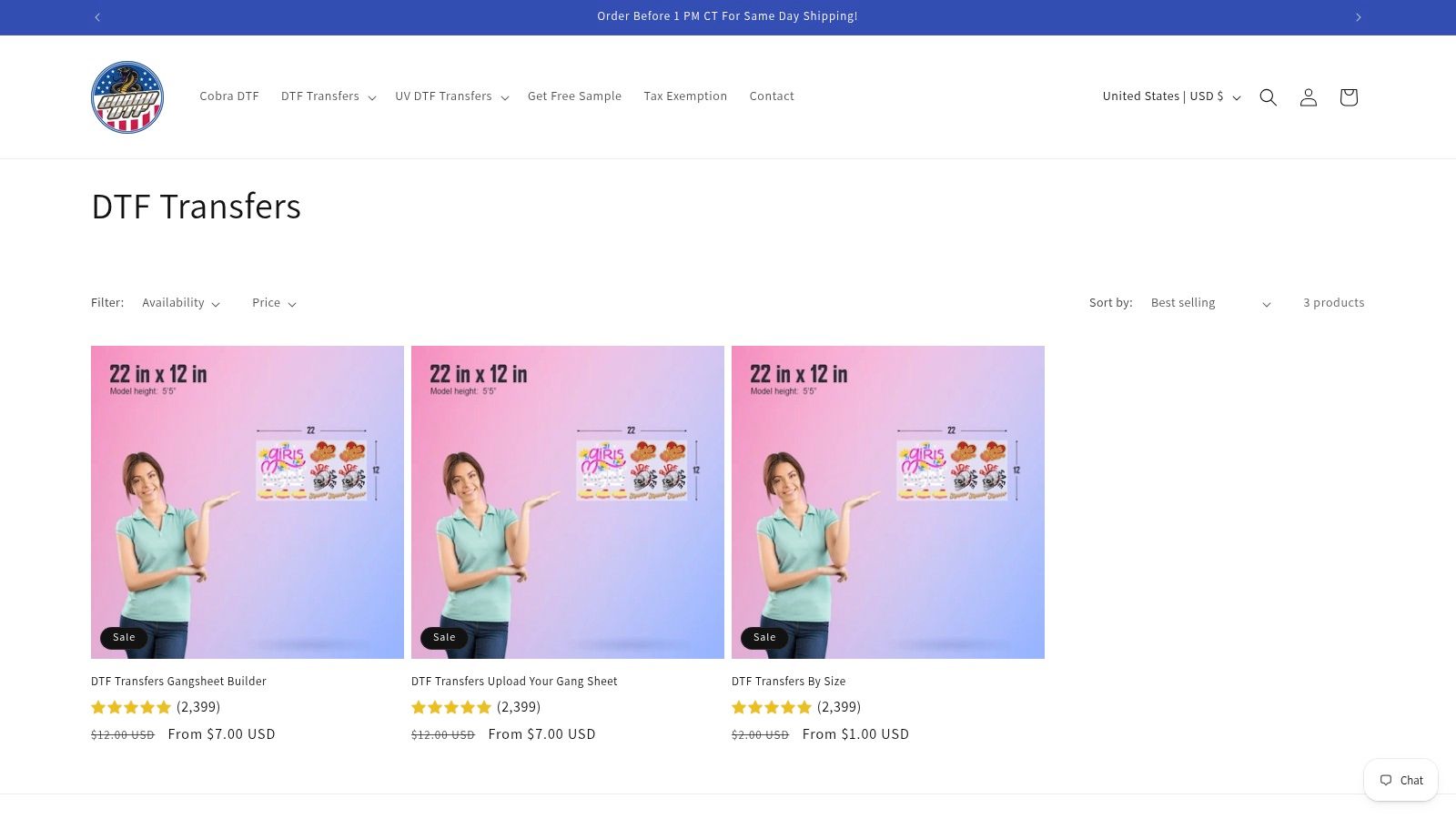
The first example is less about one shirt graphic and more about the production system behind many shirt graphics. A DTF transfer collection gives decorators a way to separate artwork creation from garment decoration, which matters when a business needs to apply the same design across different shirt colors, sizes, or product drops.
Cobra DTF's collection is designed for small and mid-size decorators, apparel businesses, and print shops that prioritize domestic fulfillment. The company describes its transfers as 100% made in the USA, with USA-sourced inks and films, vibrant color, fade resistance, and reliable adhesion. Domestic manufacturing also avoids the tariff and customs complications associated with overseas sourcing, a practical advantage when a deadline matters more than theoretical unit savings.
Why this example works
The strongest use case is a design that must repeat accurately without forcing the decorator into a large inventory commitment. Think of a local brand testing a hand-drawn logo, an event organizer preparing staff shirts, or an e-commerce seller producing several designs in small batches. DTF is especially useful when the artwork includes gradients, multiple colors, fine detail, or personalized names that would be less convenient in a traditional bulk workflow.
Cobra DTF lists same-day shipping for orders placed by 1 PM CST and typical delivery in 1–3 days. Those are company-provided fulfillment terms, not a guarantee that every finished garment will reach a customer on the same schedule. The decorator still needs to account for pressing, quality control, packaging, and carrier transit.
Production lesson: Choose the transfer source before finalizing the garment promise. A fast design launch fails if materials arrive late or the print method doesn't match the artwork.
The collection may not show every product-level specification or atypical customization option, so buyers may need to inspect individual products or contact support. For a practical overview of how transfers fit into a custom apparel workflow, review Cobra DTF's guide to custom transfers.
2. Custom Ink
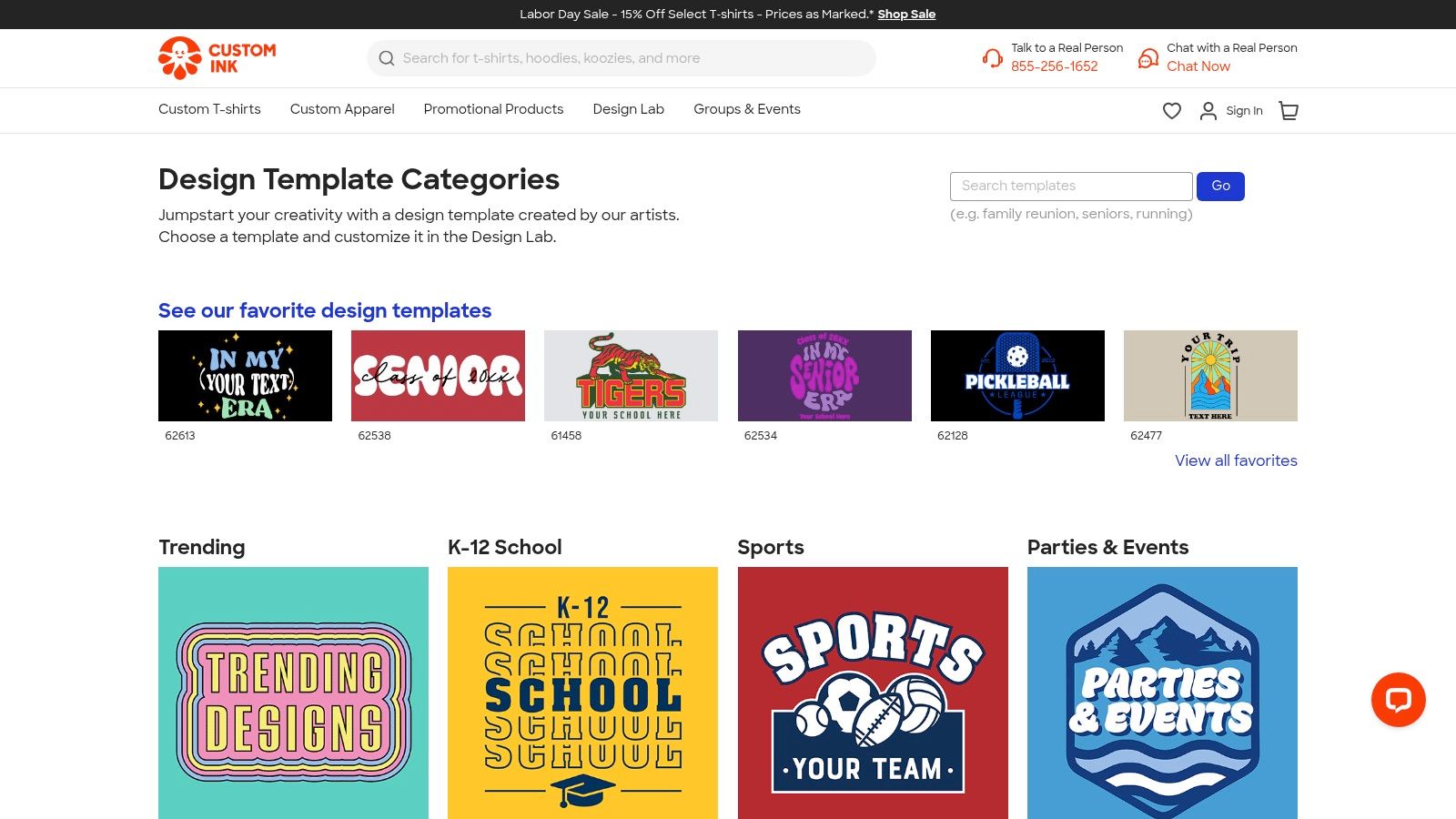
Custom Ink is strongest when the buyer needs to move from vague inspiration to a complete order without designing from a blank canvas. Its searchable gallery organizes pre-made ideas by common categories, and templates open in the platform's Design Lab, where users can change text, artwork, colors, and uploaded logos.
That makes the platform a good fit for teams, businesses, schools, and event organizers whose primary constraint is decision time. The examples are not merely visual references. They act as editable starting points, so a user can take a familiar event layout and adapt the message instead of commissioning an entirely new composition.
Where it fits
Custom Ink offers upfront pricing, volume discounts, and products with no minimum order requirements. That combination supports both one-off testing and larger coordinated orders. Its broad blank selection also lets buyers compare the same artwork on different garment types rather than treating the shirt color and fabric as afterthoughts.
The tradeoff appears when the design needs advanced placements, unusual inks, or complex production handling. Those requests may require speaking with a representative. Product-page images can also be basic, and buyers who need a physical printed sample may have to plan for that separately.
A useful tactic is to treat the Design Lab as a briefing tool, not only an ordering tool. Build two or three versions of the same idea, such as a left-chest logo, a full-front graphic, and a back-centered event design. Then evaluate which version remains legible at the intended viewing distance and which one suits the garment's role.
For businesses comparing fulfillment routes, this guide to print-on-demand suppliers helps frame the difference between ordering finished products and managing decoration in-house. Readers looking for broader web to print branding advice from MD can use the same principle: the design interface should support the brand system, not replace it.
3. RushOrderTees
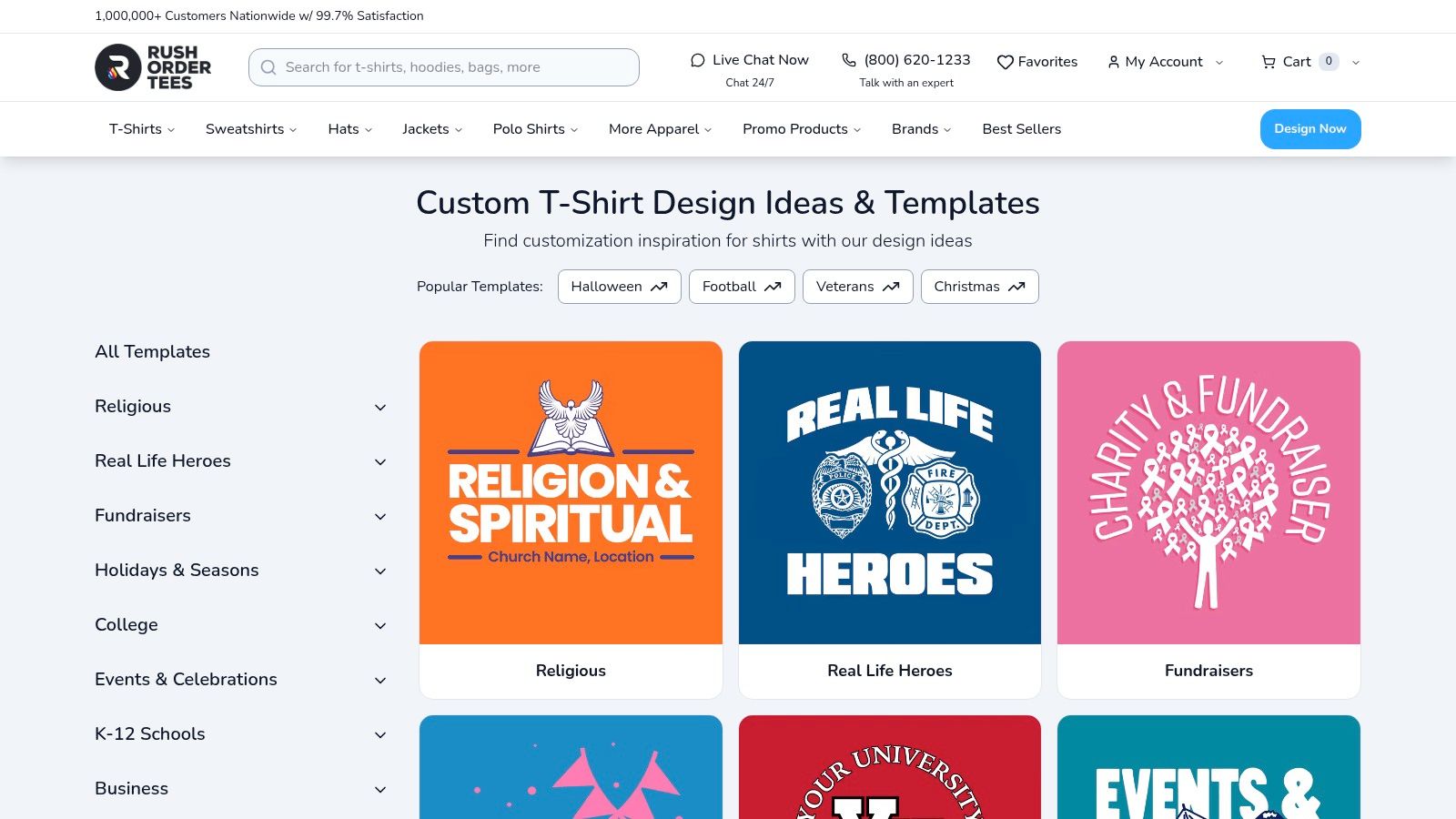
RushOrderTees is built around urgency. Its gallery organizes a very large range of editable shirt ideas by events, sports, business types, and other use cases, so a buyer can search by the job the shirt must perform rather than by visual style alone.
That distinction makes it useful for time-sensitive team orders and event merchandise. A race organizer, school group, or workplace team often doesn't need an original visual language. It needs a design that communicates the occasion quickly, accommodates names or roles, and can be approved before the deadline.
The operational advantage
The platform presents ready-to-edit templates, use-case hubs, volume pricing on product pages, and no-minimum options on many products. Those features reduce the number of separate decisions between selecting an example and placing an order. The fast-turnaround focus is valuable when the design itself is straightforward but the delivery window is tight.
Speed shouldn't eliminate quality control. Third-party feedback can be mixed, and print consistency may vary across orders. A sample is the safer choice when the shirt represents a paying client, a public event, or a repeatable brand program.
Deadline rule: A quick ordering interface doesn't remove the need to verify the sample, garment color, print placement, and delivery window.
This example also clarifies when a domestic transfer workflow may be more useful than a finished-garment marketplace. If a decorator already owns a heat press and needs control over final garment selection, same-day printing guidance from Cobra DTF provides a useful comparison point. The central question is whether the business needs a turnkey shirt or a fast material input it can apply locally.
4. UberPrints
UberPrints is a practical example for prototypes and one-off shirts. Its template catalog connects to an editable Design Studio that covers sports, events, schools, Greek life, holidays, and other recognizable categories. Users can upload logos, adjust templates, and review a design without needing advanced design software.
The important feature isn't the breadth of themes by itself. It's the relationship between the example and the test order. A small business can use a template to produce a physical sample, check the artwork on an actual garment, and decide whether the design deserves a larger production commitment.
Prototype before scale
UberPrints supports no-minimum digital printing for single shirts and very small orders. That makes it a better fit for concept validation than a workflow that assumes a bulk run from the start. A retailer can test a graphic with staff, a creator can assess a sample before promoting a drop, and an apparel maker can compare placement options before preparing production files.
The limitation is method-specific. Screen printing, which can be efficient for larger runs, requires minimums. A one-off digital sample therefore may not reproduce every tactile or color characteristic of a later screen-printed production run.
A strong prototype review should examine more than whether the artwork looks attractive on screen:
- Scale: Confirm that the design reads correctly on the intended garment size.
- Contrast: Check whether the print remains visible against the shirt color.
- Placement: Assess how the artwork sits when the wearer moves, sits, or layers the shirt.
- Feel: Decide whether the print surface matches the price and positioning of the product.
UberPrints demonstrates a valuable buying habit: use the example as a testable hypothesis. Don't ask only whether customers might like the graphic. Ask whether the design survives the physical conditions of the product you plan to sell.
5. BlueCotton
BlueCotton's Design Ideas gallery is suited to buyers who know the audience but aren't confident creating artwork from scratch. Its categories include schools, sports, businesses, events, military and first responders, and charities. Templates open directly in the design tool, giving non-designers a clear path from an example to a customized shirt.
The business job here is guided customization. A school group can begin with a recognizable team layout, a charity can adapt an awareness-oriented concept, and a company can create staff apparel without building an entire design system internally.
Why proofing matters
BlueCotton highlights human-checked proofs and U.S.-based customer support. For inexperienced buyers, that support can be more useful than an oversized template library. The buyer still has to provide accurate artwork and approve the proof carefully, but a human review can help surface obvious placement or customization problems before production.
The platform may offer fewer ultra-niche or trend-driven concepts than larger marketplaces. Most custom apparel orders also cite a minimum quantity of six, so it isn't the natural first choice for a single experimental shirt.
That minimum changes the design decision. If you're ordering for a defined group, prioritize shared identity and repeat wear over short-lived visual novelty. A clean team name, readable year or event identifier, and a garment color connected to the organization may outperform a more elaborate design that only makes sense in one photograph.
The example also shows why audience fit should come before artwork complexity. A first responder group may need clear recognition at a distance. A charity may need a design supporters will wear outside the campaign. A business may prefer a restrained logo that works as staff apparel rather than a graphic that competes with the customer experience.
6. Bonfire
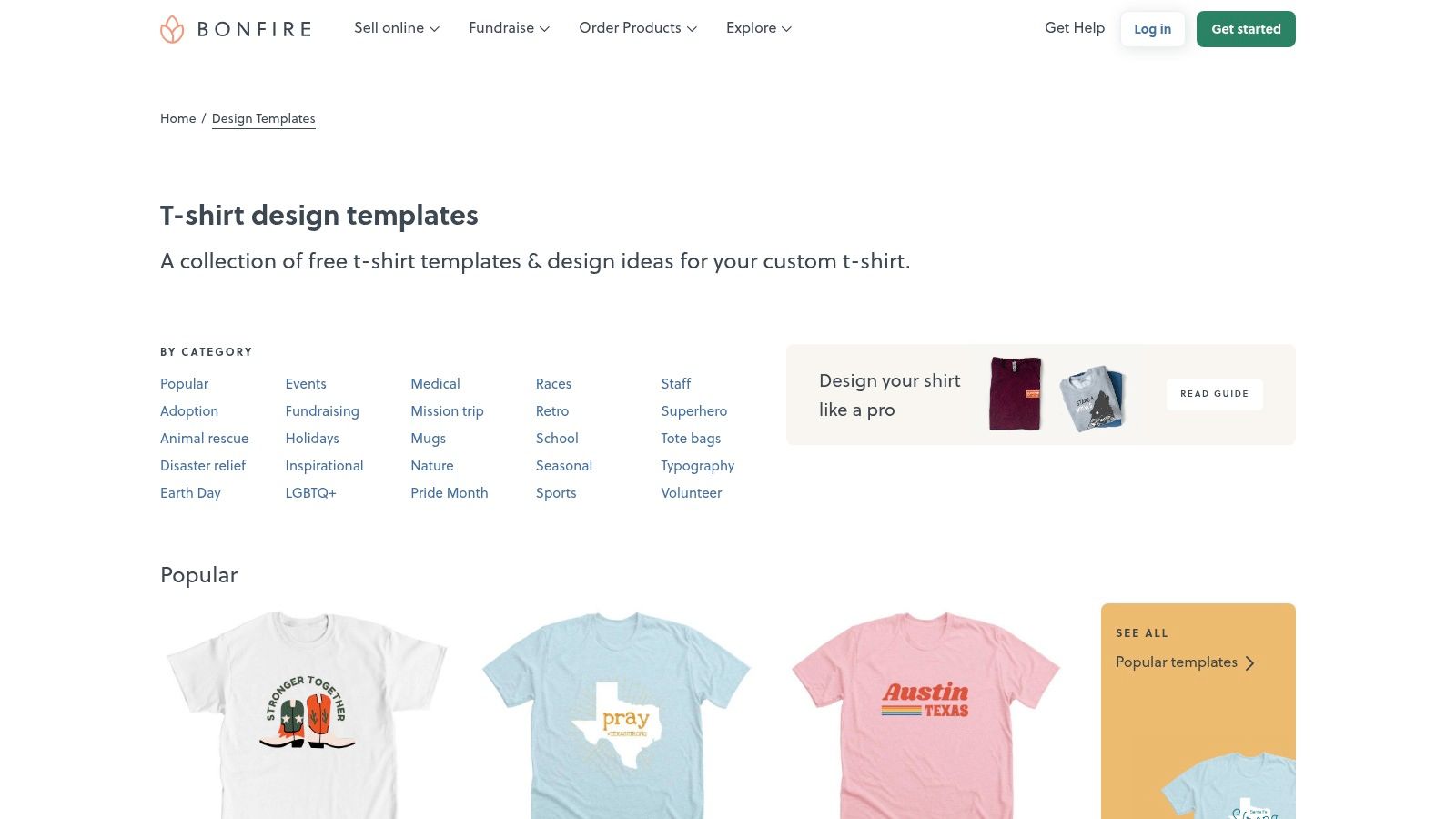
Bonfire's templates are designed for a different job: turning a shirt concept into a fundraising campaign or creator storefront. Users can customize a template, publish it online, and let the platform handle campaign sales and fulfillment. The design therefore has to work as both apparel and a sales-page product image.
That creates a different evaluation standard. A fundraising shirt needs a message supporters understand quickly, artwork that represents the cause, and a price structure the organizer can explain. Bonfire displays the base cost and selling price for fundraising campaigns, which helps organizers understand the relationship between the garment and the amount raised.
The campaign advantage
Bonfire's library includes ready-to-edit templates organized by theme and season, with embedded design tips. Campaigns can run without upfront inventory or minimums for campaign sales. That structure lets a nonprofit, community group, or creator test demand through actual buyers instead of guessing how much stock to purchase.
The platform is less appropriate when the organizer needs complete control over garment sourcing, decoration, packaging, or retail finishing. DTG color vibrancy and quality can also vary with the artwork, so ordering a sample is sensible before promoting the shirt widely.
Fundraising lesson: A design must communicate the cause before it communicates the designer's style. If a supporter can't identify the message quickly, the storefront loses persuasive power.
For organizations that already have a customer base and want to decorate garments themselves, DTF can provide a different route. A transfer workflow supports controlled small-batch production, but it shifts responsibility for pressing, inspection, inventory, and fulfillment back to the business. Bonfire is therefore strongest for hands-off campaigns, while domestic DTF is stronger when the organizer wants operational control.
7. Real Thread
Real Thread represents the premium end of the examples because it treats the shirt as a finished retail product, not a printed blank. Its samples page showcases water-based screen printing, embroidery, specialty finishes, hem tags, and other add-ons. Buyers can request physical samples to inspect color, detail, and the feel of the ink.
That makes it useful for retail brands and planned apparel runs where the hand feel is part of the product promise. A customer buying a boutique shirt evaluates the garment, artwork, label treatment, and print surface together. A basic marketplace preview can't answer all of those questions.
Study the tactile finish
Real Thread's water-based screen printing is positioned around soft-hand results, while embroidery and specialty finishing create additional ways to distinguish a product. The samples page also lets a buyer study how print styles and add-ons work together. That matters for logos, small chest marks, sleeve details, and designs that need a refined rather than oversized appearance.
The tradeoff is operational. Real Thread is better suited to planned runs and premium outcomes than to a one-click order made under immediate deadline pressure. Sample orders and specialty work generally require contact with a representative and quote-based planning.
Retail buyers should compare a sample against four criteria:
- Ink feel: Decide whether the print remains comfortable and matches the garment's positioning.
- Detail retention: Check whether small elements remain clean at the selected size.
- Finishing: Evaluate tags, embroidery, and specialty details as part of the product identity.
- Repeatability: Confirm that the approved sample can become a consistent production standard.
Real Thread shows why “looks good” is an incomplete approval criterion. A premium shirt has to feel deliberate in the hand, on the body, and on the retail shelf.
Top 7 Custom T-Shirt Services Comparison
| Service | Implementation Complexity 🔄 | Resources & Speed ⚡ | Expected Outcomes ⭐📊 | Ideal Use Cases 💡 | Key Advantages |
|---|---|---|---|---|---|
| Collections - Dtf Transfers (Cobra DTF) | Low for stock transfers; custom jobs may need consultation 🔄 | Requires heat-press & blanks; same-day shipping if ordered by 1 PM CST ⚡ | High, vibrant, fade‑resistant, reliable adhesion ⭐📊 | Small–mid decorators, print shops needing fast domestic turnaround 💡 | 100% USA-made, fast fulfillment, competitive pricing, eco-friendlier materials |
| Custom Ink | Very low, beginner-friendly Design Lab; turnkey ordering 🔄 | Minimal, online ordering/fulfillment; transparent volume pricing ⚡ | Consistent for common blanks; limited specialty ink options ⭐📊 | Teams, businesses, fast ideation and small/no-min orders 💡 | Huge template library, upfront pricing, easy customization |
| RushOrderTees | Low, large template gallery + online designer; fast workflows 🔄 | Minimal, rapid production options and visible per-qty pricing ⚡ | Fast turnaround; generally good but some variability, sample recommended ⭐📊 | Time-sensitive team/event orders and quick runs 💡 | Extensive templates, clear pricing, quick production paths |
| UberPrints | Very low, clean catalog integrated with Design Studio 🔄 | Minimal, no-min digital printing for singles; fast prototyping ⚡ | Good for one-offs/prototypes; less efficient for large screen-print runs ⭐📊 | Prototypes, single shirts, very small runs 💡 | No-min digital orders, user-friendly editor, easy logo uploads |
| BlueCotton | Low, designer plus human-checked proofs; straightforward flow 🔄 | Minimal online needs; typical minimums (~6) for many items ⚡ | Reliable quoting/shipping and consistent results with proofs ⭐📊 | Non-designers, schools, sports, small groups needing guidance 💡 | Curated templates, human-checked proofs, U.S.-based support |
| Bonfire | Low, template-to-campaign flow with storefront publishing 🔄 | Minimal, no upfront inventory or minimums; platform fulfillment ⚡ | Good for fundraising conversion; DTG vibrancy can vary, sample advised ⭐📊 | Nonprofits, creators, fundraising campaigns looking for turnkey merch 💡 | Built-in campaign workflow, pricing transparency, no inventory risk |
| Real Thread | Medium, planned runs, specialty finishes, and quoting workflows 🔄 | Higher, sample orders and coordination for premium finishes; longer lead times ⚡ | Premium, retail-quality results with soft water-based inks and specialty finishes ⭐📊 | Brands seeking retail-quality apparel, premium campaigns, tactile samples 💡 | Soft-hand water-based printing, specialty finishes, physical sample options |
Turn Inspiration Into a Repeatable Shirt System
The seven examples point to one conclusion: the right custom T-shirt example depends on the business job, not on the gallery's visual appeal. A template marketplace can accelerate ideation, a campaign platform can remove inventory risk, a premium printer can improve tactile presentation, and a domestic DTF transfer supplier can give decorators more control over small-batch production.
Use this selection framework before approving artwork:
- Event teams: Start with a readable design that identifies the group from a distance. Choose a fast-turn route when the date is fixed, and verify the sample if the shirts will appear in public photos.
- Fundraisers: Select a message that supporters can understand and wear beyond the campaign. A storefront model such as Bonfire suits hands-off fulfillment, while in-house DTF suits organizations that already manage pressing and shipping.
- Retail brands: Treat the garment, print feel, placement, and finishing as one product. A sample is essential when softness, labels, embroidery, or specialty effects affect the selling price.
- Prototypes and creators: Use no-minimum digital ordering to test a single idea before committing to a larger run. Review the physical shirt, not only the online mockup.
- Decorators and print shops: Choose a transfer source based on color requirements, garment flexibility, turnaround, and the amount of production control you need.
Durability also belongs in the decision. Technical DTF guidance reports that well-executed transfers can survive roughly 50 wash cycles, with one case summary noting black prints retained their appearance after about 52 washes and another reporting no cracking or peeling after about 20 washes. These results come from DTF durability case summaries, and they point to process control as the key variable. Curing, pressing, garment preparation, and washing instructions matter as much as the artwork.
Independent guidance adds further benchmarks, professionally cured DTF prints can reach AATCC TM61-2A wash-fastness performance around grade 4–4.5 after 10 test cycles, which the source equates to roughly 50 home washes. The same guidance cites ISO 12947-2 Martindale abrasion resistance of about 15,000–25,000 rubs before visible thinning of the white underbase, according to this DTF print durability explanation. Treat those figures as practical reference points, not promises for every transfer.
Document the final production choice. Save the approved artwork, placement dimensions, garment style, color, transfer specification, pressing instructions, proof, and fulfillment route. That record turns one successful shirt into a repeatable system instead of another isolated example.
The broader market context supports taking custom apparel seriously. The first promotional T-shirt is commonly traced to 1939, and adoption accelerated in the late 1960s as companies began using logo tees as marketing tools. A 2009 U.S. survey of 1,000 adults found that 79% still kept an old promotional T-shirt, with the figure reaching 93% among ages 18–24 and 70% among ages 65+, as reported in Printful's history and T-shirt industry statistics. The practical lesson is simple: a shirt can keep working as branded merchandise long after the original event ends.
Cobra DTF fits the system when a business needs vibrant, fade-resistant transfers, domestic production, small-batch flexibility, and predictable dispatch. The company says it ships qualifying orders the same day when placed by 1 PM CST, typically delivers within 1–3 days, uses USA-sourced inks and films, and backs its products with a satisfaction guarantee. Those features make it a practical material option for decorators who want to control final garment selection and fulfillment without relying on overseas sourcing.
If you're ready to turn a strong custom T-shirt example into a repeatable production workflow, explore Cobra DTF for USA-made DTF transfers with vibrant color, fade-resistant performance, competitive pricing, and small-batch flexibility. Review the transfer options for your next event, prototype, fundraiser, or retail drop, then build the finished shirt around the audience and business job it needs to perform.