
Choosing the best printing method for t shirts: A guide
So, what's the best way to print a t-shirt? The honest answer is: it depends entirely on what you're trying to achieve.
If you need a massive batch of shirts for an event and your design is fairly simple, screen printing is almost always the most economical choice. But if you're after a single, photorealistic print on a cotton tee, Direct-to-Garment (DTG) is king. Then there's Direct-to-Film (DTF), a game-changer that delivers stunningly vibrant prints on nearly any fabric you can throw at it, from cotton to polyester and beyond.
Navigating Your T-Shirt Printing Options
Picking the right printing method is the single most important decision you'll make. It affects everything—the look, the feel, the cost, and how long the design will last. Once you understand the sweet spot for each technique, you can match your project's needs to the perfect printing process.
Key Factors in Your Decision
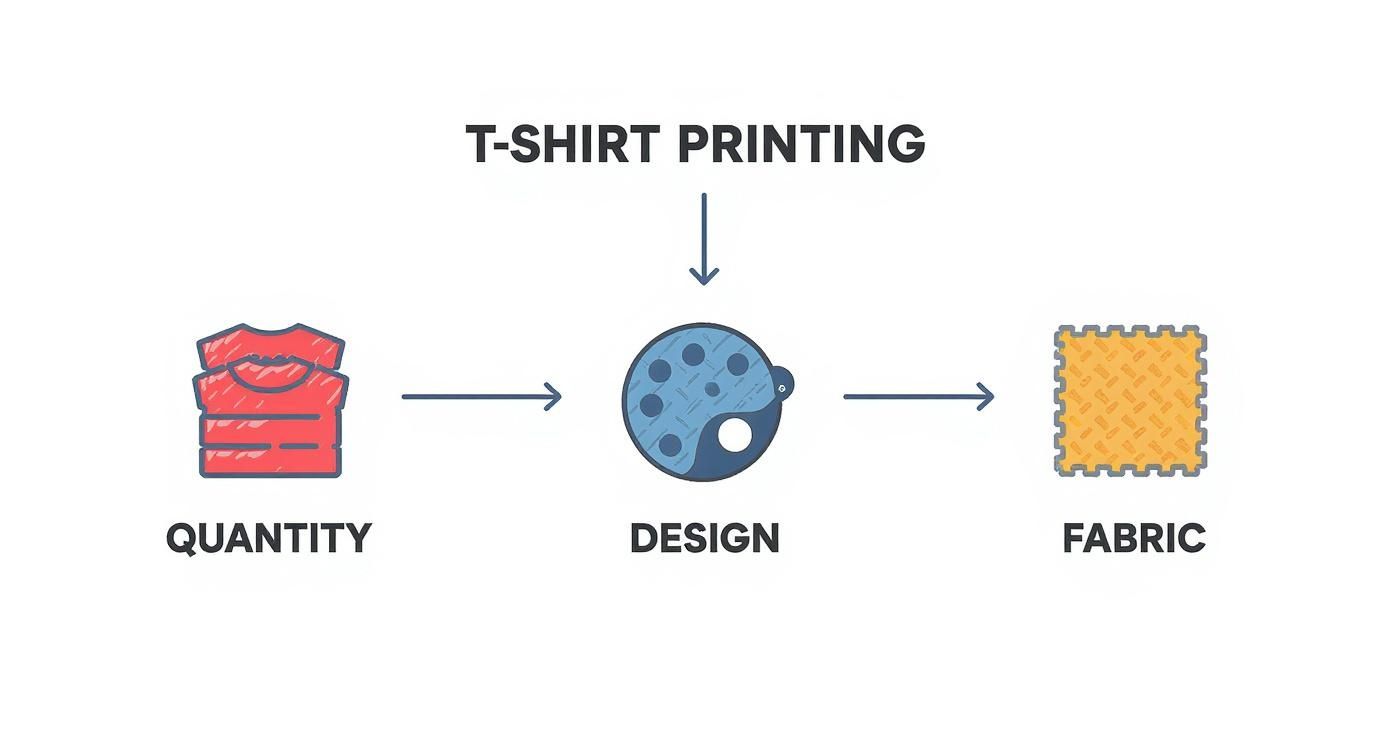
To narrow down the options, ask yourself four simple questions:
- How many shirts do you need? Are you making one special gift or 500 for a company giveaway?
- What does your design look like? Is it simple text or a complex photograph full of gradients?
- What's the shirt made of? You'll get different results on 100% cotton versus polyester or a blend. The right t-shirt material makes a significant difference.
- What's your budget? How much are you willing to spend per shirt?
Your answers will point you in the right direction. For instance, there's a reason screen printing dominates the custom apparel world, commanding a massive 53.9% of the market share. It's incredibly efficient for large runs, making it the go-to for businesses, bands, and events that need a lot of shirts without breaking the bank.
The bottom line: There isn't one "best" method. The goal is to find the best method for your specific job. Matching the technology to your project's needs is the secret to getting a fantastic, cost-effective result every time.
To make things even clearer, let's break down the top contenders in a quick-glance table. This will help you see exactly where each method shines.
T-Shirt Printing Methods at a Glance
| Printing Method | Best For | Durability | Feel on Fabric |
|---|---|---|---|
| Screen Printing | Bulk orders (50+) with simple designs | Very High | Slightly raised, thick ink layer |
| DTG Printing | Detailed, full-color designs on cotton | Good | Soft, ink is absorbed into fibers |
| DTF Printing | Vibrant designs on various fabric types | Excellent | Flexible, smooth layer on top |
| Sublimation | All-over prints on 100% polyester | Permanent | Undetectable, ink becomes part of the fabric |
This table is a great starting point, but now let's dive deeper into what makes each of these methods unique.
Screen Printing for Durability and Volume
When it comes to printing t-shirts in bulk, screen printing is the undisputed OG. It's the classic, time-tested method that has powered the merchandise industry for decades, and for good reason. Think about your favorite band tee or that event shirt from five years ago that still looks great—chances are, it was screen printed.
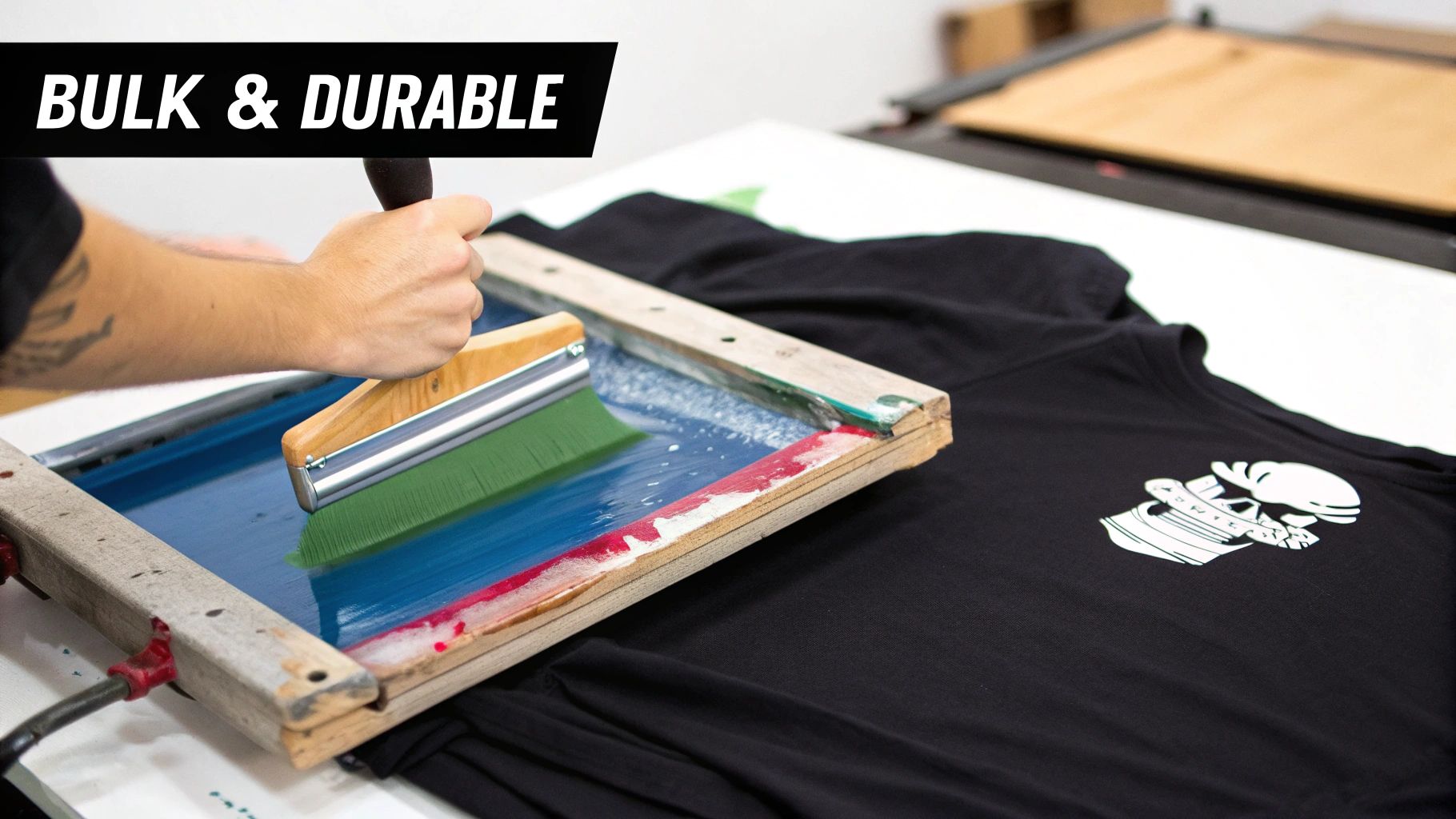
The process itself is what gives it such a durable finish. It involves creating a stencil (or "screen") for each color in a design and then pushing a thick layer of ink through that stencil directly onto the fabric. This technique creates an incredibly strong bond between the ink and the garment, resulting in a print that feels substantial and can handle wash after wash without cracking. The colors are bold, vibrant, and really pop, especially on dark shirts.
Why Volume Is Everything
The real genius of screen printing is its economy of scale. The setup is quite involved; you have to create a separate screen for every single color in your artwork. That makes printing just one shirt completely impractical. But once those screens are made, the cost per shirt plummets as you print more.
This is why screen printing is the go-to choice for large batches. Printing 500 shirts with the same one-color logo? It's ridiculously efficient.
Screen printing is the perfect fit for situations like:
- Corporate Events: Outfitting an entire company for a trade show.
- Band Merchandise: Printing hundreds of tees for a concert tour.
- School Spirit Wear: Creating uniforms for sports teams or clubs.
- Promotional Giveaways: Making branded shirts for a big marketing campaign.
In high-volume scenarios, the per-unit cost of screen printing is almost impossible to beat. The initial time and money spent preparing the screens get spread out over the whole run, making each individual shirt far more affordable than any digital alternative.
Understanding the Trade-Offs
But screen printing isn’t the right tool for every job. The very thing that makes it so good for bulk orders also creates its biggest limitations. Since every color needs its own screen, designs with tons of colors, complex gradients, or photorealistic images get complicated and expensive—fast.
A simple two-color logo is a dream for screen printing. But a full-color photograph of a landscape? That would require a wild number of screens, sending the cost through the roof. This is where you can really see the method’s age when compared to newer digital options.
The heavy setup also means it's a non-starter for one-off prints or very small orders. If you want to dive deeper into the craft, there are great guides on how to start screen printing that walk you through everything. Once you see the steps involved, it becomes crystal clear why volume is the key.
At the end of the day, if you have a simple design and a large order, the durability and cost-effectiveness of screen printing are still unmatched.
Direct-to-Garment (DTG) for Photorealistic Detail
Think of Direct-to-Garment (DTG) printing like a highly specialized inkjet printer, but instead of paper, it prints directly onto fabric. This digital technique sprays water-based inks straight into the garment's fibers, allowing it to recreate incredibly complex designs with millions of colors. Its real power lies in printing photorealistic images, smooth color gradients, and detailed art with amazing precision.
Since the entire process is digital, there are practically no setup costs. You can print a single custom t-shirt just as easily as ten, which is why DTG is the engine driving the massive print-on-demand industry. This is a huge advantage for small businesses, artists, and e-commerce brands who want to test out new designs without risking a pile of unsold inventory.
The Signature Soft-Hand Feel
One of the most loved qualities of a DTG print is its soft-hand feel. The ink soaks into the cotton fibers instead of sitting on top like a thick, heavy layer, so the final print feels exceptionally soft and breathable. On light-colored shirts, you can barely feel the design at all.
This makes DTG a fantastic choice for fashion-forward apparel where comfort is just as important as the design. The print moves and stretches with the fabric, so you don't get that stiff, plastic feeling that some other printing methods can leave behind.
The rise of e-commerce and the consumer demand for unique, personalized apparel have fueled the growth of digital printing. DTG is the fastest-growing segment in the industry, with a projected compound annual growth rate (CAGR) of 12.5% through 2030. Discover more insights about the custom t-shirt market on Grand View Research.
Key Limitations to Consider
Even with its incredible detail and softness, DTG printing has its trade-offs. The biggest one is fabric compatibility. This method shines on 100% cotton because the natural fibers do an excellent job of absorbing the water-based inks. While you can get away with high-cotton blends, the quality drops sharply on polyester and other synthetics, which often leads to faded or blotchy prints.
DTG can also be a slow grind for large batches. Printing a single shirt takes a few minutes, which is fine for one-offs but quickly becomes inefficient if you need to produce hundreds of the same design. The cost per shirt also stays pretty consistent and doesn't drop with larger orders the way it does with screen printing.
When to Choose DTG Printing
Trying to decide between printing methods can get tricky, especially when comparing two similar technologies. For a much deeper dive into how DTG stacks up against another popular digital option, take a look at our guide on DTF vs DTG printing. It will help you figure out which method is the right fit for your specific fabric and design needs.
Ultimately, DTG is your go-to printing method for t-shirts when your project calls for:
- Complex, Full-Color Designs: Perfect for photographs, detailed illustrations, or art with lots of color blending.
- Small Orders or One-Offs: The ideal choice for personalized gifts, design samples, or print-on-demand businesses.
- 100% Cotton Garments: Its performance is truly at its best on natural fibers.
- Softness is a Priority: When you want a design that feels like it’s a natural part of the shirt.
Direct-to-Film (DTF) for Ultimate Versatility
Think of Direct-to-Film (DTF) printing as the clever hybrid of the t-shirt world. It essentially takes the full-color detail of digital printing and combines it with the simple application of a transfer, bridging the gap between DTG and traditional screen printing. For this reason alone, it's quickly become a go-to for shops that need flexibility.
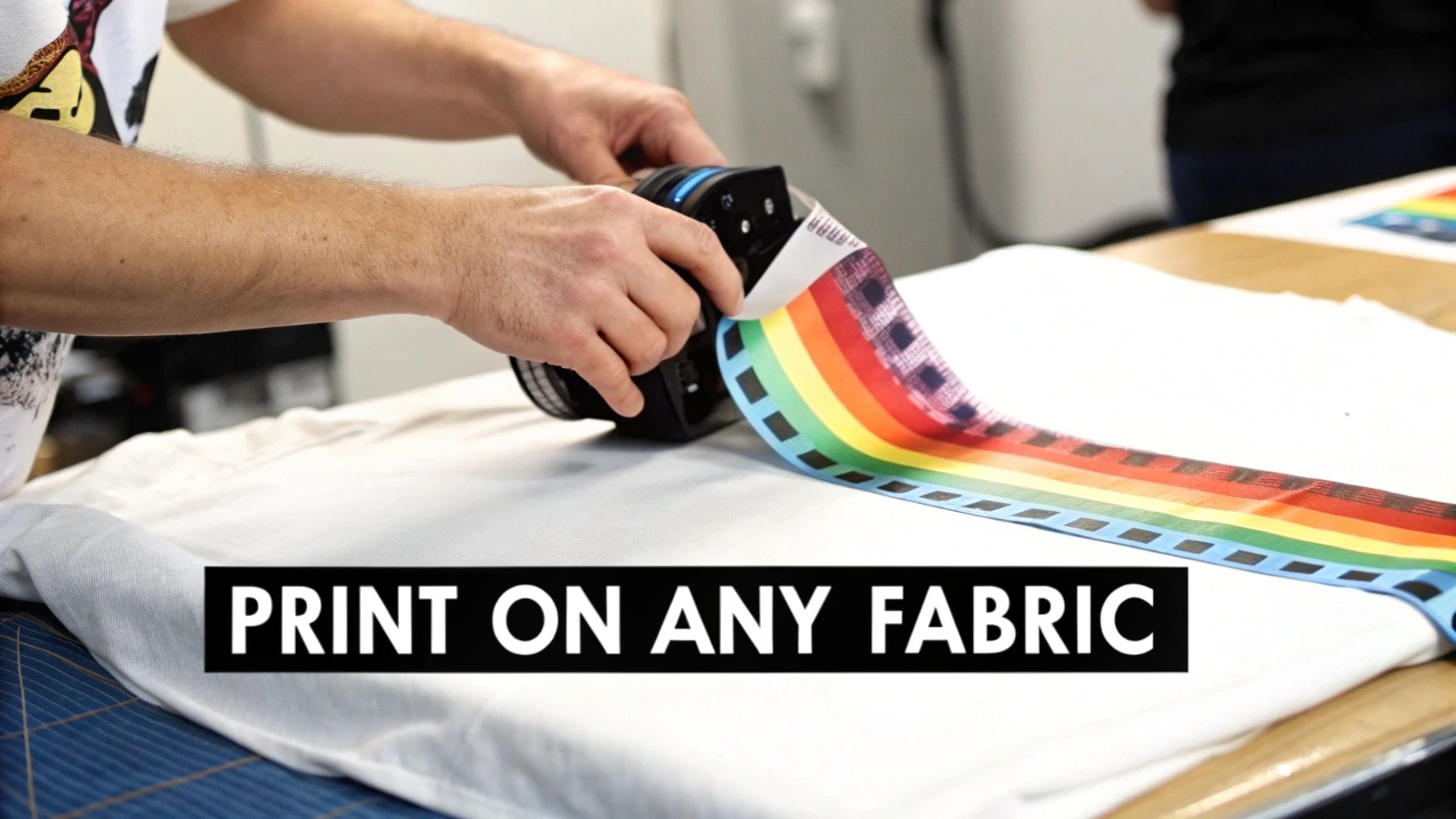
The process is pretty straightforward. First, you print your design onto a special PET film with water-based inks. While the ink is still wet, a fine adhesive powder is sprinkled over it, which is then melted and cured. What you're left with is a durable, ready-to-go transfer that you can apply to almost any garment with a standard heat press.
Unmatched Fabric Compatibility
Here's where DTF really shines: it works on just about anything. If you've ever been frustrated by DTG's cotton-only rule or sublimation's need for polyester, DTF is the solution you've been looking for.
This versatility completely changes the game for custom apparel. You can create one batch of transfers and apply them across your entire product line.
- 100% Cotton: You get sharp, vibrant colors that sit right on top of the fabric.
- Polyester and Performance Wear: Unlike DTG, DTF bonds perfectly to synthetics. This makes it a fantastic choice for athletic jerseys and moisture-wicking gear.
- Blends (Cotton/Poly): It handles blended fabrics without any of the usual headaches, giving you consistent results every time.
- Even Hard Surfaces: Your options aren't even limited to clothing. DTF transfers can be applied to hats, tote bags, and all sorts of other promo items.
This adaptability makes DTF a seriously efficient option for anyone wanting to offer a wide range of products without investing in half a dozen different machines.
DTF printing solves the biggest limitation of DTG by freeing you from the "cotton-only" constraint. It allows for the same full-color, detailed designs but gives you the freedom to print on virtually any garment, dark or light.
Vibrant Colors and a Flexible Feel
DTF prints are known for being incredibly bright and detailed. Since the design is printed on the film first, the ink doesn't get muted or absorbed by the fabric's color. This advantage is most obvious on dark shirts, where DTF delivers a brilliant, opaque design that really pops.
The finished print has a smooth feel and moves naturally with the fabric. It does sit on top of the fibers rather than soaking in like DTG, but modern DTF transfers are impressively thin and soft to the touch. They also hold up incredibly well, resisting cracking and peeling through dozens of wash cycles, making them great for everything from fashion tees to durable workwear.
When you weigh its color quality, durability, and fabric versatility, DTF emerges as a powerful all-rounder. It gives you the full-color freedom of digital printing but without the high setup costs of screen printing, making it a fantastic choice for small-to-medium-sized runs with complex designs headed for all kinds of different apparel.
Comparing Printing Methods Head-to-Head
Alright, let's get into the nitty-gritty. Choosing the right printing method for your t-shirts isn't just about picking the cheapest or fastest option—it’s about understanding the trade-offs. Each technique, from classic screen printing to modern DTG and DTF, has its own sweet spot. To make the right call, you have to look past a simple pro/con list and really dig into how they perform on the factors that matter for your project.
We'll break this down across five key criteria: cost, design complexity, durability, fabric compatibility, and pure speed. This head-to-head comparison will show you exactly where each method shines and where it falls short, so you can match the right technique to your vision.
Cost Per Unit and Order Volume
Money talks, and this is where these methods couldn't be more different. Screen printing is the classic example of economies of scale. The setup is a beast—you have to create a separate screen for every single color in your design, which costs time and money upfront. For a one-off shirt, it's totally impractical. But once you hit an order of 50 shirts or more, the cost per shirt plummets, making it the undisputed king for big batches.
On the other end of the spectrum is DTG. It's a digital process, so there are basically zero setup costs. You can print one highly detailed, full-color shirt just as easily as you can print twenty, with the same price per piece. This is why it's the engine behind most print-on-demand businesses. The catch? That per-unit price never really goes down, so it gets expensive fast when you need a large quantity.
DTF lands right in the middle, offering a fantastic balance. You still have material costs for the film and powder, but the setup is a fraction of what screen printing demands. This makes DTF a great, scalable option for small-to-medium runs without the high entry fee of screen printing or the flat-rate cost of DTG.
The bottom line on cost is simple: Screen printing is for bulk. DTG is for one-offs. DTF is your flexible friend for almost everything in between.
Design Complexity and Color Vibrancy
The artwork itself often dictates the best printing method. Screen printing is built for bold, graphic designs with a limited number of solid colors. Think brand logos or simple illustrations. While you can create gradients using halftones, trying to reproduce a photograph or a design with tons of colors gets complicated and expensive in a hurry, since every color needs its own screen.
This is where DTG completely takes over. As a digital printer, it's essentially an inkjet for fabric, capable of reproducing millions of colors, fine details, and silky-smooth gradients with incredible precision. If you want to print a photograph on a cotton tee and have it feel like it's part of the fabric, DTG is your answer.
DTF also brings full-color, high-detail printing to the table, but its secret weapon is vibrancy. The colors pop, especially on dark garments. Because the ink is printed onto a white adhesive layer first, the design sits on top of the fabric with an intensity that’s hard to beat. DTF gives you the full color freedom of DTG, but with an extra punch.
Durability and Feel on Fabric
A great t-shirt has to last, and how the print feels is a huge part of its quality. Screen printing is famous for its durability. That thick layer of plastisol ink cures right into the fabric, creating a bond that can survive wash after wash for years without cracking or fading. The only downside is that you can definitely feel that layer of ink on the shirt.
DTG prints, on the other hand, have an incredibly "soft-hand feel" because the ink soaks directly into the cotton fibers. On a light-colored shirt, you can barely feel the print at all. While the quality is great, DTG prints can be more prone to fading over time compared to a screen print, especially if not washed carefully.
DTF transfers create a print that's both durable and flexible. It sits on top of the fabric like a screen print but feels much smoother and has amazing stretchability, so it won't crack or peel easily. In many tests, it outlasts DTG. The feel is a nice middle ground—softer than a thick screen print, but more noticeable than a DTG print.
Fabric Compatibility and Production Speed
Finally, what are you printing on, and how fast do you need it? Screen printing is most at home on cotton and cotton blends, but with the right inks, it can be adapted for all sorts of materials. And for big jobs, its speed is insane. Once the press is running, you can crank out hundreds of shirts an hour.
DTG is the pickiest of the bunch. It really only works well on 100% cotton or garments with a very high cotton content. The water-based inks just don’t play nicely with synthetic fibers like polyester. It's also a much slower process, with each shirt taking a few minutes to print, making it a poor choice for bulk orders.
When it comes to versatility, DTF is the clear winner. It works beautifully on cotton, polyester, blends, nylon—you name it. This flexibility is a game-changer. Plus, you can print dozens of transfers ahead of time and press them onto shirts as orders come in, which is a huge advantage for managing inventory and speeding up fulfillment.
To help you visualize these differences, the table below breaks down the key features side-by-side.
T-Shirt Printing Methods A Detailed Feature Comparison
| Feature | Screen Printing | Direct-to-Garment (DTG) | Direct-to-Film (DTF) |
|---|---|---|---|
| Best Order Size | Large batches (50+) | Single items to small runs (1-20) | Small to medium runs (1-100+) |
| Cost Dynamics | High setup, low per-unit cost at volume | No setup, consistent per-unit cost | Low setup, scalable per-unit cost |
| Design Complexity | Best for simple graphics, limited colors | Excellent for photos and complex, full-color art | Excellent for vibrant, detailed, full-color art |
| Color Vibrancy | Very vibrant, especially on dark fabrics | Good, but can appear less saturated on darks | Extremely vibrant and opaque on all colors |
| Durability | Excellent; highly resistant to fading and cracking | Good; can fade over time with repeated washing | Excellent; flexible and resistant to cracking |
| Feel on Fabric | Thick, slightly raised ink layer | Very soft, ink is absorbed into fibers | Smooth, flexible layer on top of fabric |
| Fabric Compatibility | Primarily cotton, but adaptable to others | Almost exclusively 100% cotton | Works on cotton, polyester, blends, and more |
| Production Speed | Very fast for large quantities | Slow per shirt, inefficient for bulk | Moderate; transfers can be pre-made |
This comparison should give you a solid foundation for deciding which method aligns best with your budget, design, and production needs. Each one has a purpose, and the "best" choice is always the one that fits the job at hand.
How to Choose the Right Printing Method
Jumping into the world of t-shirt printing can feel overwhelming. With so many options, how do you pick the right one? The secret isn't finding one single "best" method, but matching the right technology to what you actually need.
It all boils down to three key things: how many shirts you need, what your design looks like, and the type of fabric you're printing on. By figuring out the answers to these questions, you can cut through the noise and find the perfect fit for your project. This way, you get the quality, cost, and durability you’re looking for every single time.
This decision tree infographic is a great visual guide for seeing how your project details point you to the best printing method.
As you can see, the path to the perfect print starts with your order size and then branches out based on your design and fabric choice.
Scenario-Based Recommendations
Let’s put this into practice and walk through a few real-world examples. Seeing how different needs lead to different printing solutions will make it all click.
Scenario 1: The Charity Run
- The Project: You’re organizing a local 5K and need 500 t-shirts. The design is straightforward: a two-color logo on the front and a list of sponsors on the back, all going on standard 100% cotton tees.
- The Recommendation: Screen Printing.
- Why it Works: This is a classic job for screen printing. The large quantity makes the initial setup costs practically disappear on a per-shirt basis, driving your overall cost way down. A simple, two-color design is what screen printing was made for, and the result will be a tough, durable print that easily outlasts the event.
Scenario 2: The E-commerce Brand Launch
- The Project: You're starting an online shop featuring ten different highly-detailed, full-color designs. You plan to sell them on premium 100% cotton shirts but have no clue which designs will be popular.
- The Recommendation: Direct-to-Garment (DTG).
- Why it Works: DTG is the heart of print-on-demand. Since there are no setup fees, you can print a single shirt as soon as an order comes in. This completely removes the financial risk of getting stuck with a mountain of unsold stock. DTG is also brilliant at handling complex, photorealistic art, and the print feels soft to the touch—perfect for a retail-quality fashion brand.
Choosing a printing method is a strategic decision that directly impacts your project's profitability and quality. Aligning the technology with your order volume, design complexity, and fabric choice is the key to a successful outcome.
Scenario 3: The Local Sports Team
- The Project: A local soccer team needs uniforms for 25 players. You need a full-color team crest, individual player numbers, and sponsor logos printed on 100% polyester performance jerseys.
- The Recommendation: Direct-to-Film (DTF).
- Why it Works: DTF’s versatility is a total game-changer here. DTG wouldn't work on polyester, and screen printing would get expensive fast with a small run, multiple colors, and personalization. DTF, on the other hand, delivers that vibrant, detailed crest on synthetic fabric without a problem and remains cost-effective for this medium-sized, custom order.
Frequently Asked Questions
After breaking down all the different printing methods, a few key questions always seem to pop up. Let's tackle them head-on so you can feel confident you're making the right call for your project.
What Is the Most Durable T-Shirt Printing Method?
If you’re looking for a print that will truly stand the test of time, screen printing is the classic heavy-hitter. The ink literally cures into the fabric, creating a bond that can handle years of machine washing without cracking up. It's built to last.
That said, Direct-to-Film (DTF) is hot on its heels. DTF transfers are impressively tough, offering a flexible feel that resists peeling and fading, especially on tricky fabrics like polyester and blends. You can't go wrong with either if durability is your top priority.
How Does Fabric Type Affect My Choice?
Fabric choice is a huge deal—it can make or break your print. For instance, Direct-to-Garment (DTG) printing looks its absolute best on 100% cotton. The water-based inks need to soak into natural fibers to look vibrant, so printing on polyester with DTG is a recipe for a faded, muddy-looking design.
DTF and screen printing, on the other hand, are way more forgiving. DTF is the real MVP here; it works beautifully on cotton, polyester, blends, and even nylon. This makes it perfect for a huge range of products, from your standard cotton tees to performance athletic wear.
Think of your fabric as the canvas. You wouldn't use watercolors on a glossy photo, right? The same logic applies here. A DTG print on polyester will look dull and disappointing, while a DTF print will pop. Matching the ink to the material is non-negotiable for a professional result.
Which Printing Method Is Best for Small Businesses?
For small businesses, especially those in the e-commerce and print-on-demand space, DTG and DTF are the clear winners. DTG is fantastic for dipping your toes in the water. You can test out dozens of designs on cotton shirts with zero inventory and no setup costs.
But if you want to offer more than just cotton tees, DTF gives you a serious advantage. Its ability to print on almost anything lets you expand your product line to include hoodies, hats, and polyester jerseys, all with one simple process. That kind of versatility can really set a small brand apart.
Ready to create stunning, durable custom apparel on almost any fabric? Cobra DTF offers premium, American-made DTF transfers with vibrant colors and quick turnarounds. Explore our high-quality DTF solutions today!