
Best Blank T Shirts for Printing A Complete Guide
If you're looking for the single best, all-around blank t-shirt for printing, a 100% ringspun cotton tee is your safest bet. Why? It has an incredibly smooth surface that acts as the perfect canvas for sharp, vibrant designs. But for athletic apparel or if you're chasing that soft, vintage look, a cotton/polyester blend is often the better choice. It all boils down to your printing method and the final vibe you're going for.
Your Quick Guide to the Best T-Shirt Blanks
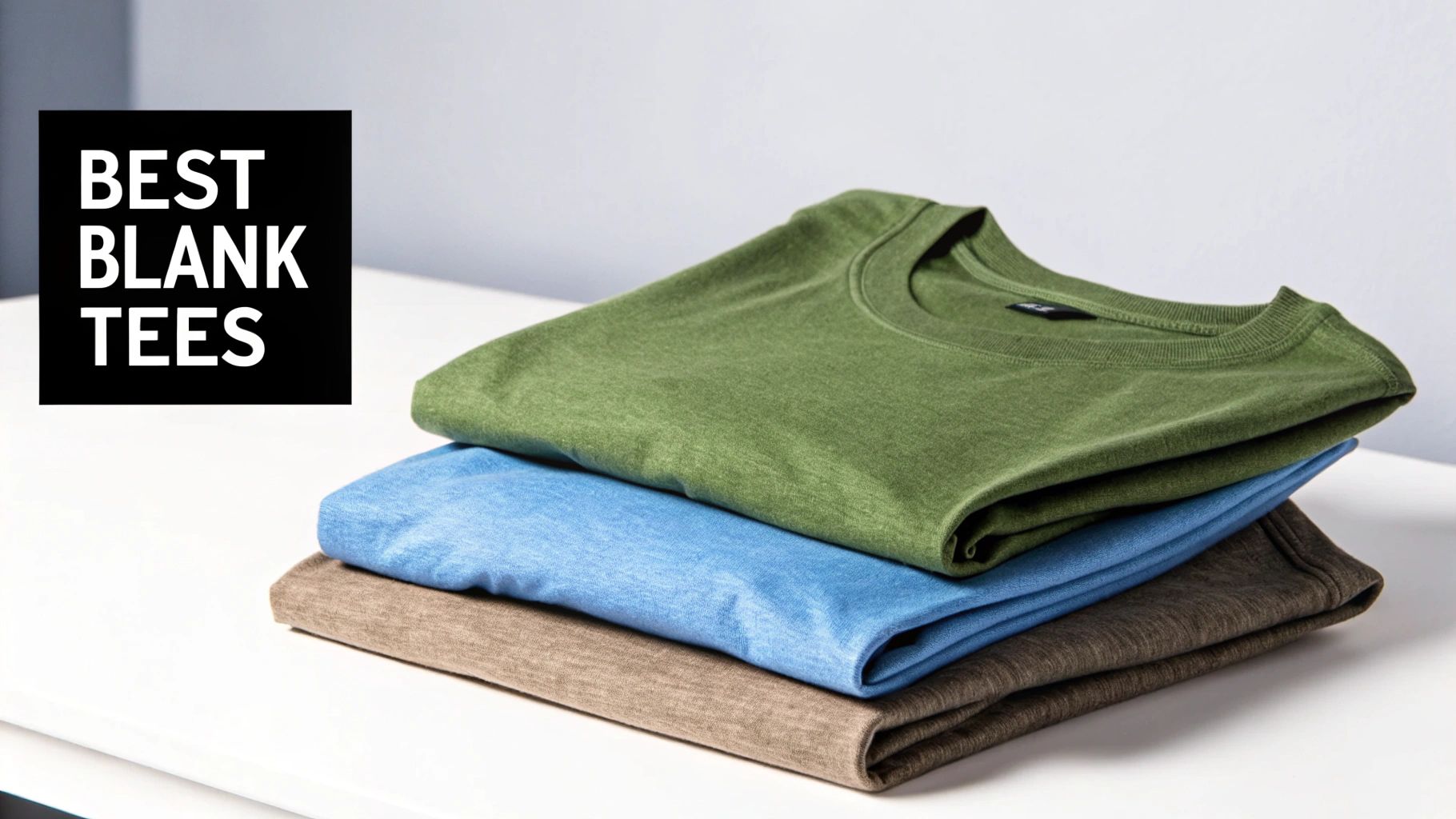
Picking the right blank t-shirt is the most important decision you'll make for any apparel project. It's the foundation. Think of it like a painter choosing a canvas—a cheap, poorly made canvas will ruin even the most amazing artwork. The shirt's material, weight, and construction directly control how the ink sets, how the finished print feels, and how long the whole thing lasts.
This guide is here to help you cut through the jargon and make a smart choice. We'll walk through the most important factors to consider, giving you the confidence to select a blank that truly matches your creative vision and quality standards.
Key Factors for Your Decision
Before you hit "buy," you have to match the shirt's specs to your project's goals. The wrong pairing can lead to prints that fade after one wash, poor durability, or a shirt that’s just plain uncomfortable to wear.
Here are the big three to focus on:
- Fabric Composition: Is it 100% cotton, a 50/50 blend, or a tri-blend? Every fabric interacts with ink in its own unique way.
- Fabric Weight: Lighter shirts are great for breathability and drape, while heavyweight options feel more premium and are built to last.
- Printing Method: The perfect shirt for screen printing is often a terrible choice for sublimation, and vice-versa.
The hunger for top-notch custom apparel isn't slowing down. In fact, the global custom t-shirt printing market is expected to jump from USD 5.16 billion in 2024 to USD 9.82 billion by 2030. This boom means customers expect quality, and that starts with choosing the best blank t shirts for printing. For a deeper dive into these numbers, you can find more market growth insights at Technavio.
Pro Tip: Never, ever commit to a bulk order without getting samples first. The only way to truly know if a shirt works is to print on it yourself. Testing how a specific brand and fabric takes your ink will save you a world of headaches down the road.
To make things easier, I've put together a quick reference chart below. It matches common t-shirt fabrics with the printing methods they're best suited for, so you can quickly find the ideal canvas for your next project.
T-Shirt Fabric vs Printing Method Compatibility
| Fabric Type | Best For Printing Method | Print Feel & Vibe | Ideal Use Case |
|---|---|---|---|
| 100% Ringspun Cotton | Screen Printing, DTG, Heat Transfer | Bold, opaque, and vibrant colors. Classic, solid feel. | Band merch, brand apparel, events, and detailed graphic tees. |
| Cotton/Poly Blends | Screen Printing, Heat Transfer, DTF | Softer, slightly faded "heather" or vintage look. | Athletic wear, lifestyle brands, and fashion-forward apparel. |
| Tri-Blends | Screen Printing (with additive), DTF | Extremely soft, drapey, and a distinct retro aesthetic. | Premium retail brands, fitness apparel, and comfort-focused lines. |
| 100% Polyester | Sublimation, Screen Printing (poly ink) | Seamless, full-color prints that dye the fabric itself. | Performance sportswear, all-over prints, and photo-realistic designs. |
This table should give you a solid starting point. As you can see, the fabric you choose is directly tied to the printing technique you plan to use and the final product you envision. Getting this right is the first step toward a professional-looking, long-lasting garment that people will actually want to wear.
Choosing the Right Fabric for Flawless Prints
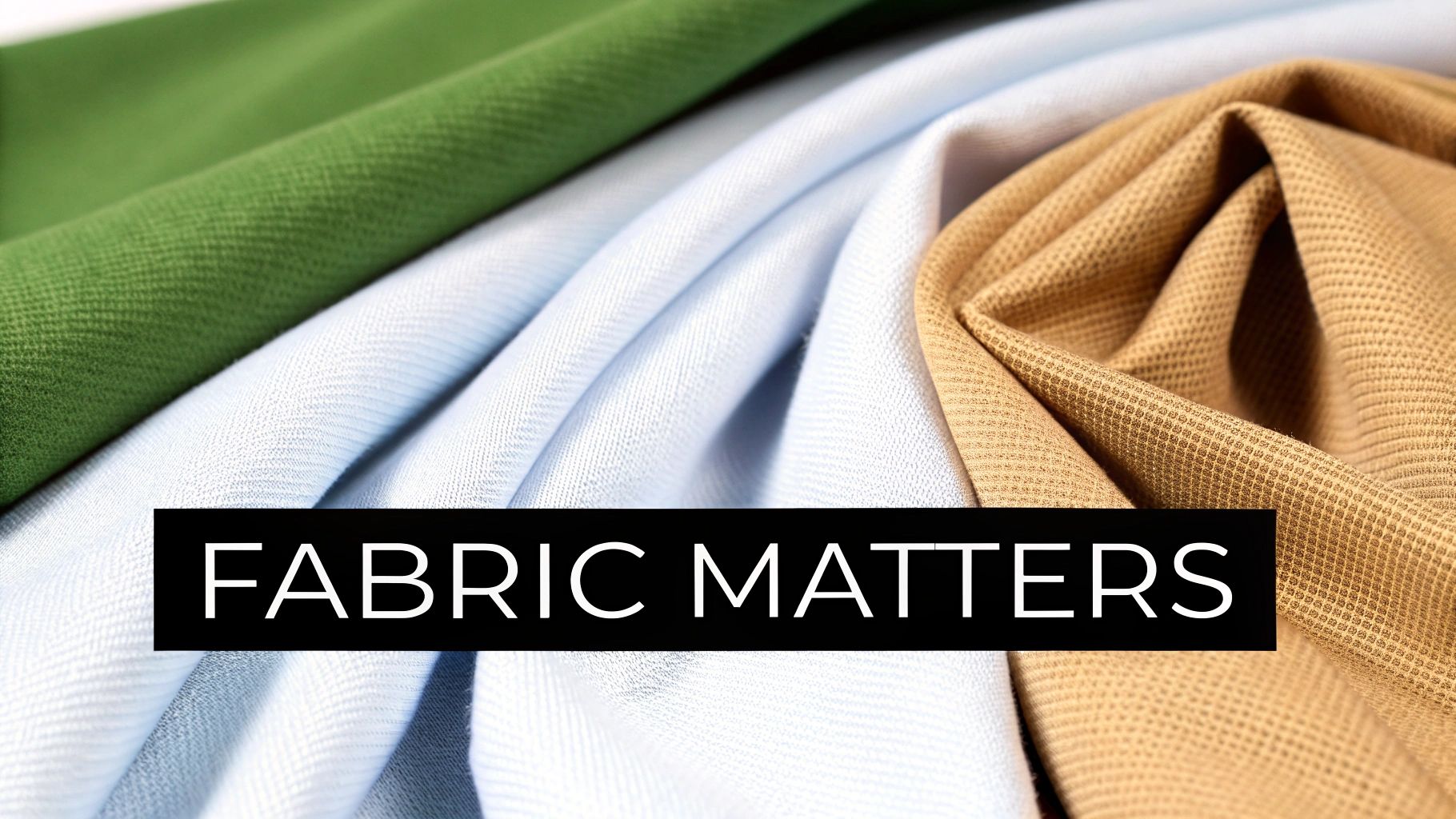
Think of a blank t-shirt as your canvas. If you give an artist a smooth, premium canvas, they can create sharp lines and stunningly detailed images. But if you hand them a rough, textured surface, the paint will bleed and blur, leaving you with a muddy mess. The fabric of your t-shirt works the exact same way—it’s the foundation that determines the final quality of your print.
Getting the material right is the single most important step in making sure your design looks as good on the shirt as it does on your screen. Different fibers react to ink in completely different ways. What works perfectly for one printing method might be a total disaster for another. This is why you have to know the difference between cotton, polyester, and blends before you even think about firing up the press.
The Gold Standard: 100 Percent Cotton
For most printers, especially if you’re using Direct-to-Garment (DTG), 100% cotton is king. But don't be fooled—not all cotton is the same. The way it's made drastically changes the texture of your "canvas," which is why you’ll run into two main types.
- Ringspun Cotton: This is the good stuff. The cotton fibers are twisted and thinned out, creating a yarn that's incredibly strong, soft, and smooth. This tight, even surface is exactly what DTG printers need. The ink sits cleanly on top of the fabric, giving you super-crisp details and colors that really pop.
- Carded Open-End Cotton: This is your more standard, budget-friendly cotton. The fibers aren't combed as finely, which leaves the fabric with a slightly rougher and more textured hand-feel. It's durable and can be great for some screen printing styles, but that uneven surface can make highly detailed DTG prints look a little fuzzy.
Imagine ringspun cotton as a 4K display where every pixel is perfectly sharp. Carded open-end is more like standard definition—it gets the job done, but you lose that fine detail. If you’re aiming for a retail-quality print that feels amazing, ringspun is almost always your best bet. You can dive deeper by checking out our in-depth guide to t-shirt material choices.
The Power of Polyester and Sublimation
As great as cotton is, it has a major weakness: it can’t handle sublimation printing. This process uses heat to turn ink into a gas, which then permanently bonds with synthetic fibers. If you try to sublimate on cotton, you’ll end up with a faded, ghost-like design that will vanish after a couple of trips through the laundry.
This is where 100% polyester steps into the spotlight. Its synthetic fibers are literally engineered to soak up sublimation ink, letting you create unbelievably vibrant, full-color prints that become part of the fabric itself. Because the ink is infused into the fibers instead of sitting on top, the print has no feel, will never crack or peel, and stays completely breathable. For athletic gear, all-over prints, or photorealistic designs, polyester isn’t just the best choice—it’s the only choice.
Finding Balance with Blended Fabrics
Don't want to choose just one? Blended fabrics give you the best of both worlds, mixing the strengths of different fibers to create shirts with a unique feel, texture, and printing profile. They're massively popular for good reason.
The real magic of a blend is its ability to solve problems that a single-fiber shirt can’t. For instance, a cotton/poly blend is fantastic at preventing "dye migration" in screen printing, a nasty issue where dye from a 100% polyester shirt can bleed into your white ink, turning it pink.
Here’s a quick look at the most common blends you’ll encounter:
- 50/50 Cotton/Polyester: This is a true industry workhorse. You get the softness of cotton plus the durability and moisture-wicking power of polyester. The result is a soft, lightweight shirt that resists shrinking and wrinkling far better than pure cotton. Its slightly heathered texture also provides a perfect canvas for that popular vintage look.
- Tri-Blends (Cotton/Polyester/Rayon): When you add rayon to the mix, you get something special. Tri-blends are exceptionally soft, have a beautiful drape, and feel like a premium, worn-in favorite right off the rack. They can be a bit more challenging to print on, but they're a top choice for high-end lifestyle brands that want a distinct, comfortable feel.
With around 2 billion t-shirts sold annually worldwide, the demand for high-quality, customizable apparel is huge. This has pushed manufacturers to innovate, creating fabrics like these that are perfectly suited for modern printing. Each material, from pure ringspun cotton to a sophisticated tri-blend, gives you a different tool to create the perfect final product.
Why T-Shirt Weight and Construction Matter
If the fabric type is your canvas, then the shirt's weight and construction are the frame holding it all together. These are the unsung heroes that dictate how a shirt hangs, how long it lasts, and whether it feels like a premium piece or a cheap giveaway. Get this part wrong, and even the best design can end up on a shirt that falls apart after one wash.
Think of fabric weight like paper thickness. You wouldn't print a wedding invitation on flimsy printer paper, right? You'd want heavy cardstock. T-shirt fabric is the same. Its weight is measured in ounces per square yard (oz) or grams per square meter (GSM), and those numbers tell a story.
Decoding Fabric Weight
Don't let the numbers intimidate you; it's pretty straightforward. Each weight class creates a totally different experience for both the wearer and the printing press.
- Lightweight (Under 5 oz / 150 GSM): These are your soft, breathable shirts with a relaxed drape. They’re perfect for fashion-forward brands or summer apparel. The only catch is they can be a bit sheer, which might wash out certain ink colors.
- Midweight (5.0 - 6.0 oz / 170-200 GSM): This is the industry's sweet spot. It hits that perfect balance between being sturdy enough for great prints but comfortable enough for everyday wear. It’s a workhorse for most screen printing and DTG jobs.
- Heavyweight (Over 6.0 oz / 200+ GSM): Built like a tank. These shirts are incredibly durable with a more structured, classic fit. They give you a solid, opaque canvas to print on, making them a go-to for workwear, skate brands, or streetwear.
Heavier isn't always better. It’s all about context. A rugged heavyweight tee is ideal for a construction company but would feel stiff and out of place for a yoga studio. Choosing the right fabric weight is a key part of selecting the best blank t shirts for printing because it sets the entire tone for your final product.
Construction Details That Signal Quality
Beyond the numbers, the real secret to a great t-shirt is in how it’s put together. These are the details that separate a quality garment from a disposable one, and they’re easy to spot once you know what to look for.
The biggest giveaway is how the body of the shirt is made.
Key Insight: A shirt's construction tells you everything about its intended quality. Side-seamed shirts are tailored for a superior fit, while tubular shirts are built for speed and economy.
Here’s a breakdown of the two construction styles you'll run into:
- Tubular Body: This is the fast-and-cheap method. A machine knits a single tube of fabric, which is then just cut and sewn. It’s efficient, but the lack of tailoring results in a boxy fit that often twists and loses its shape after a few washes.
- Side-Seamed Body: This is the sign of a premium garment. The front and back are cut from separate panels and then sewn together along the sides. This process creates a much more flattering, structured fit that contours to the body and holds its shape wash after wash.
For a deeper dive into what makes a garment truly top-tier, check out our complete guide on the best quality tee shirts for printing.
But the quality clues don't stop there. Look for shoulder-to-shoulder taping—a thin strip of fabric sewn over the shoulder seams. It's a small detail, but it adds serious reinforcement and stops the collar from stretching out. Another thing to check for is double-needle stitching on the hem and sleeves. Those two parallel rows of stitches are what keep the edges from unraveling. These details might seem minor, but they’re what give a printed shirt a truly professional finish that lasts.
Matching Your T-Shirt to the Printing Method
Picking the right blank t-shirt for your printing project is a lot like choosing the right tires for a car. You wouldn't put slick racing tires on an off-road truck and expect good results, right? It’s the same idea here. The perfect tee for a vibrant screen print could be a total disaster for a sublimation job, leading to faded designs, wasted cash, and unhappy customers.
Every printing method has a unique relationship with fabric. Getting this pairing right isn't just a suggestion—it's the first and most critical step to creating a professional, durable, and awesome-looking product. Once you understand why certain inks play well with specific materials, you'll sidestep costly mistakes and make sure your designs pop exactly the way you imagined.
Best Blanks for Screen Printing
Screen printing is the trusty workhorse of the industry, but even it has its favorites. The process involves pushing thick ink through a mesh screen directly onto the fabric. Since that ink layer is relatively heavy, it needs a sturdy canvas to sit on.
This is why 100% cotton, especially the soft and smooth ringspun or combed varieties, is a phenomenal choice. Its stable surface allows for incredibly crisp and opaque prints. But don't count out blends! For certain jobs, a cotton/poly blend actually performs better. A 50/50 blend, for example, is a secret weapon against "dye migration"—that annoying issue where dye from a 100% polyester shirt bleeds into the screen printing ink and ruins the color. This makes blends a much safer bet when you're printing light-colored inks on dark synthetic garments.
This decision tree helps visualize how your goals for fit and durability should guide your t-shirt choice.
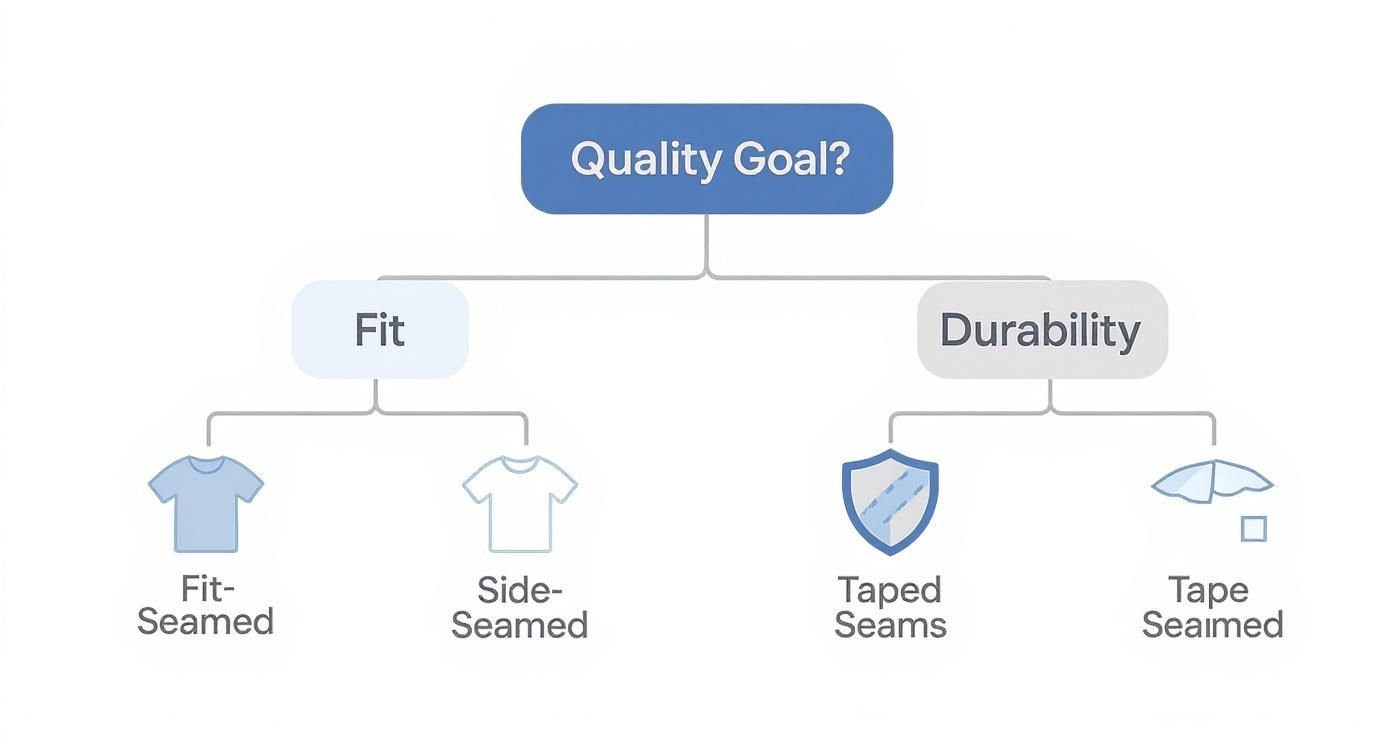
As you can see, a premium-feeling fit often comes from side-seamed construction, while maximum durability is all about features like taped seams.
Perfect Shirts for Direct to Garment (DTG)
Think of Direct-to-Garment printing as an inkjet printer designed specifically for fabric. It sprays specialized water-based inks right onto the shirt, which means the fabric needs a tight, smooth weave. This keeps the ink sitting right on top of the surface instead of sinking in and looking dull.
For this reason, 100% ringspun cotton is the undisputed champion for DTG. Its ultra-smooth surface is like high-quality photo paper, producing prints that are incredibly detailed, vibrant, and sharp. While some high-cotton blends can get the job done, nothing beats pure, high-quality cotton for consistent, brilliant results. Just be sure to avoid carded open-end cotton; its looser, fuzzier weave can lead to blurry, undersaturated prints.
Crucial Takeaway: For DTG, the mantra is "smoother is better." The tighter the knit, the more precisely the ink droplets land, resulting in a higher-resolution image that truly pops.
Ideal Choices for Heat Transfer Vinyl (HTV)
Heat Transfer Vinyl (HTV) is a bit more forgiving than other methods. The process is straightforward: cut a design from a sheet of vinyl, then use a heat press to stick it onto the garment. Because you're essentially applying a separate layer on top of the fabric, HTV works with a huge range of materials.
You can successfully press HTV onto just about anything:
- 100% Cotton: A reliable and super popular choice.
- 100% Polyester: Works great, especially for athletic wear.
- Cotton/Poly Blends: A fantastic option that gives you the best of both worlds.
The real key with HTV isn't so much the fiber content, but the fabric's texture. If a shirt is extremely ribbed or has a coarse, rough surface, the vinyl might not get a solid, even bond. This can lead to peeling down the road. For the longest-lasting results, stick with shirts that have a relatively smooth face.
The Non-Negotiable Pick for Sublimation
Unlike the other methods, sublimation has one very strict, non-negotiable rule: you absolutely must use a shirt with a high polyester content. Ideally, 100% polyester.
Here’s why. Sublimation ink isn't just sitting on top of the fabric. It’s a chemical process where heat turns the ink into a gas that permanently dyes the actual polyester fibers. If you try to sublimate on cotton, the ink has nothing to bond with. The design will look faded and washed-out from the get-go and will pretty much disappear after the first wash.
For those stunningly vibrant, permanent, and photorealistic results, you need a light-colored, 100% polyester blank. This is the magic behind those amazing all-over prints and performance sports jerseys that have zero "hand feel." Want to dive deeper into how these methods stack up? Check out our complete guide to the best t-shirt printing method.
To help you get started, we've put together a list of go-to t-shirt models that pros in the industry trust for specific printing techniques.
Top Recommended T-Shirt Brands by Print Method
| Printing Method | Top Brand/Model Pick | Key Feature | Price Point |
|---|---|---|---|
| Screen Printing | Bella + Canvas 3001 | 100% Airlume combed & ringspun cotton | $$ |
| DTG Printing | Next Level 3600 | 100% combed ringspun cotton, tight knit | $$ |
| HTV | Gildan G500 Heavy Cotton | Versatile 100% cotton, durable | $ |
| Sublimation | A4 N3142 | 100% polyester, moisture-wicking | $ |
These are just a few tried-and-true options, but they represent the kind of material and construction quality you should be looking for.
This careful matching of material to method is a cornerstone of the custom apparel industry, which is seeing some serious growth. North America is expected to hold a 39.3% share of the global custom t-shirt printing market by 2025. In the U.S. alone, the market is projected to expand at an 11.8% CAGR through 2032, driven by the soaring popularity of digital methods like DTG and a growing demand for sustainable fabrics. You can read more about this expansion over at Coherent Market Insights.
Beyond the Basics: Fit, Sourcing, and Tags
You can have a killer print, but if it’s on a shirt that fits like a cardboard box, you’ve wasted your effort. We’ve covered the technical stuff—fabric and construction—but the details like fit, branding, and ethical sourcing are what turn a printed shirt into a product people actually want to wear again and again.
Think about the standard, old-school unisex tee. It’s usually a "tubular" construction, meaning it's just a tube of fabric with sleeves sewn on. It gets the job done, but it’s boxy and rarely looks great on anyone.
Now, compare that to a modern retail fit. These shirts are built differently, usually with side-seams that give the garment structure and shape. It’s a more tailored, flattering look that feels intentional and high-quality right off the rack. For any brand that wants to feel premium, a retail fit is a must.
Let's Talk About Tags
If you're building your own brand, the last thing you want is someone else's logo staring back from the collar. This is where a tiny detail—the tag—becomes a huge deal.
- Sewn-in Tags: These are the worst. They’re scratchy, they’re a pain to remove, and you often end up damaging the shirt trying to get them out. Avoid these if you plan on rebranding.
- Tear-Away Tags: This is the feature you should always look for. They’re designed to be ripped out cleanly in one go, leaving you with a perfect blank slate to add your own custom neck label. It's a non-negotiable for a professional look.
Opting for a tear-away tag just makes life easier. It saves you the time and cost of having to de-tag every single shirt before you can even think about adding your own branding.
A tear-away tag isn't just about convenience. It's a clear sign that the manufacturer gets it. They know their shirts are being used by printers and brand builders, and they designed them specifically for that purpose.
Where Your Shirts Come From Matters
People care about where their stuff comes from, now more than ever. The story behind your shirt—who made it, how they were treated, what it’s made of—is a huge part of your brand identity. Leaning into ethical and sustainable practices can be a powerful way to connect with your customers.
Keep an eye out for manufacturers who are open about their supply chain and have the certifications to back up their claims.
Key Certifications to Look For:
- WRAP (Worldwide Responsible Accredited Production): This is a big one. It certifies that factories are safe, lawful, and treat their workers humanely.
- Fair Labor Association (FLA): This group is all about protecting workers' rights and improving conditions in garment factories across the globe.
The materials themselves are just as important. Eco-friendly fabrics like organic cotton and recycled polyester are in high demand. Offering these options isn't just good for the planet; it shows your customers you're a brand that cares.
Once you’ve got your perfect tees printed and ready to go, the next challenge is getting them to customers. If you’re ready to dive into that side of the business, you’ll find some fantastic expert tips for selling clothes online that can help you turn your hard work into a real success.
How to Care for Your Printed T-Shirts
Your job isn't done when the press opens and the perfect shirt comes out. The real test is making that print last. Proper care is the difference between a shirt that looks amazing for a month and one that's a wardrobe staple for years.
If you skip the aftercare, you'll watch even the best prints crack, fade, and peel away. It’s a sad sight. Think of the ink and fabric as a single unit—they have to be treated carefully to stay that way.
The number one enemy? High heat. It’s the villain in this story. Heat can reactivate inks, melt adhesives, and shrink the fabric, which puts a ton of stress on your design. But a few simple habits will keep your shirts looking brand new.
Universal Best Practices for Longevity
It doesn't matter what printing method you used; these rules are your new commandments for custom apparel. They're easy, they work, and they’ll save you a lot of frustration.
- Turn It Inside Out: Always, always, always turn the shirt inside out before it hits the water. This simple flip shields the print from getting scraped and battered around in the wash cycle.
- Wash with Cold Water: Hot water is just too aggressive. Cold water is gentle, prevents colors from bleeding all over each other, and stops the kind of shrinkage that will stretch and crack your design.
- Use a Mild Detergent: Ditch the harsh stuff. Strong detergents, fabric softeners, and especially bleach will attack the inks and adhesives, breaking them down until your print is a faded mess.
Once the wash is done, the next step is just as critical.
The single biggest mistake you can make is throwing your printed shirt into a hot dryer. That’s where beautiful, crisp prints go to die. The heat will shrink the cotton, crack the ink, and completely ruin the design faster than anything else.
Drying and Special Care Tips
The absolute best way to dry your shirt is to hang it up or tumble dry on the lowest heat setting available. Honestly, air drying is your safest bet—it takes heat completely out of the equation.
If you're in a hurry and have to use a machine, just make sure to pull the shirt out while it’s still a tiny bit damp. Better safe than sorry.
And one last thing: never iron directly on the print. If you’ve got wrinkles, just turn the shirt inside out and use a low heat setting. You can also place a piece of parchment paper over the design as a buffer. Follow these tips, and your investment in the best blank t shirts for printing will give you a final product that actually lasts.
Your T-Shirt Printing Questions, Answered
Alright, we've covered a lot of ground. But even with all the details on fabrics and construction, a few key questions always come up when it’s time to actually buy the blanks. Let’s tackle those head-on so you can place your order with confidence.
What Is the Best All-Around Shirt for Printing?
If I had to pick one MVP for both DTG and screen printing, it would be a 100% ringspun cotton tee. No question.
The incredibly smooth and tight knit of ringspun cotton is the perfect canvas for DTG’s water-based inks, letting all those fine details come through sharp and clear. That same stable surface is exactly what you need for the thicker inks used in screen printing, too.
Sure, a 50/50 blend can be fantastic for getting that soft, vintage vibe with screen printing. But when it comes to DTG, you just can't beat the color pop you get from pure cotton. If you need one shirt to handle everything, a quality cotton blank is your best bet.
How Much Should a Good Blank T-Shirt Cost?
You should expect a solid, print-ready blank t-shirt to cost somewhere in the $4 to $8 range when buying wholesale. If you see shirts advertised for under $3, be wary. They're almost always made from scratchier carded open-end cotton and have a boxy, tubular construction that just doesn't print or wear as well.
Those few extra dollars for a premium shirt get you a lot. We're talking softer ringspun cotton, side-seams that create a much more flattering fit, and nice finishing touches like shoulder taping that help the shirt last. The price tag really is a reflection of the raw materials and the attention to detail during manufacturing.
The Bottom Line: It might be tempting to save a couple of bucks per shirt, but that small investment in a better blank pays off big time. You'll get a final product that looks and feels more professional, which leads to happy customers who come back for more.
Are Expensive T-Shirts Always Better?
Not always! A higher price tag can mean a lot of things—premium fabrics, a trendier cut, or just a big brand name—but it doesn't automatically make it the right choice for your project.
For example, an expensive, super-soft tri-blend tee might feel incredible, but it can be a real headache for a beginner to screen print on compared to a straightforward cotton shirt.
The "best" shirt isn't the most expensive one; it's the one that aligns with your printing method, your design's aesthetic, and what your customers are looking for. Focus on the specs—fabric, weight, and construction—not just the price.
What Shirt Colors Are Best for Vibrant Designs?
For designs that absolutely need to pop with color, nothing beats a white or light-colored shirt. Think of it like this: printing on a white shirt is like painting on a fresh canvas. Every color shows up exactly as intended, pure and vibrant.
When you print on dark shirts, you first have to lay down a white underbase to make the other colors visible. It's a great technique, but the colors can sometimes look a little less intense than they would on a bright white background. And if you're doing sublimation, light-colored polyester shirts are the only way to go.
Once you've picked the perfect blanks and nailed your printing process, you need a place to sell your amazing creations. To get started, you can learn how to start an e-commerce business and begin building your brand.
At Cobra DTF, we're here to supply the premium transfers that will make your products shine. Check out our high-quality DTF transfers at https://cobradtf.com today.